
 Jia Lissa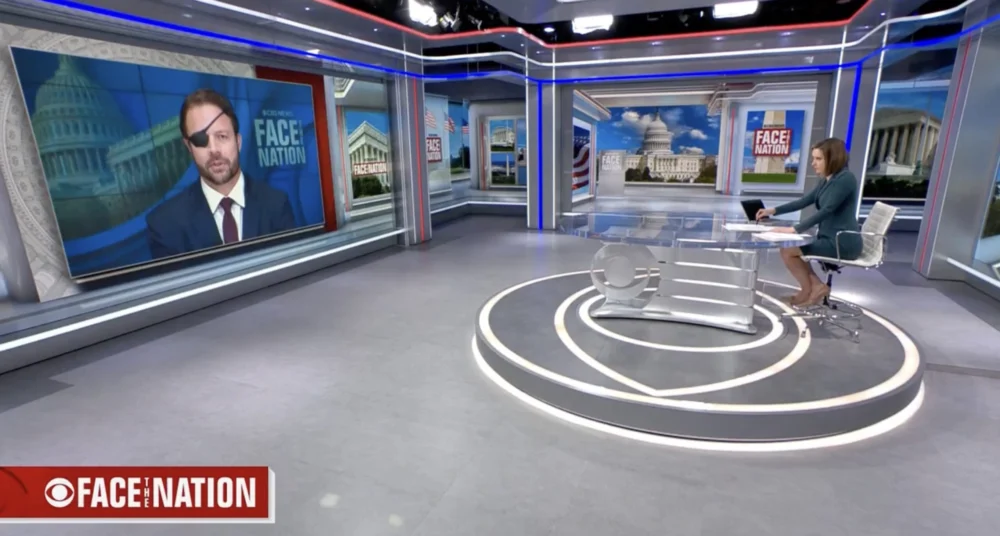
The landscape of Texas politics shifted significantly following the 2026 primary elections, as three-term incumbent Representative Dan Crenshaw (R-TX) suffered a decisive defeat in his bid for re-election to Texas’s 2nd Congressional District. The loss, characterized by a 15-point margin in favor of state Representative Steve Toth, has sent ripples through the Republican Party, prompting a debate over the role of digital media, internal party fracturing, and the efficacy of traditional political communication. In the wake of the results, Crenshaw has emerged as a vocal critic of what he describes as a pervasive "misinformation" ecosystem that he claims successfully distorted his legislative record and personal finances in the eyes of the electorate.
The primary contest was defined by a sharp ideological and stylistic divide between Crenshaw, a former Navy SEAL who gained national prominence for his measured yet staunchly conservative rhetoric, and Toth, a state legislator aligned with the populist, far-right wing of the GOP. While Crenshaw had long been viewed as a rising star within the party, his tenure was increasingly marked by friction with the more reactionary elements of the Republican base. This friction culminated in a campaign where the central themes were not merely policy differences, but accusations of ethical lapses and "establishment" betrayal.
The Catalyst of Defeat: Insider Trading Allegations and the "Clickbait" Economy
Central to the campaign against Crenshaw were allegations that he had engaged in "insider trading"—a charge frequently leveled against members of Congress in recent years. These accusations were amplified by high-profile conservative media figures, most notably podcaster Tucker Carlson and state Representative Steve Toth himself. During the campaign, these critics suggested that Crenshaw had utilized non-public information to profit from the stock market, a narrative that Crenshaw has repeatedly and vehemently denied.
Addressing reporters following the certification of the primary results, Crenshaw pointed to the "power of clickbait" as the primary driver of his loss. He argued that in the modern digital age, complex financial truths are often discarded in favor of easily digestible, albeit inaccurate, social media memes. "Memes became truth," Crenshaw stated. "Too many people are not discerning through the clickbait. People voting—one after the other—literally thought I was making millions in the stock market doing inside trading."
To counter these claims, Crenshaw provided specific financial data, noting that he had not executed a stock trade in three years and that his total capital gains over seven years in office amounted to less than $46,000. Despite these disclosures, the Representative lamented that "the truth didn’t matter to people," suggesting that once a narrative takes hold in the digital sphere, factual corrections often fail to reach or persuade the intended audience.
Chronology of the 2026 Texas 2nd Congressional District Primary
The path to Crenshaw’s primary defeat was paved over several months of escalating tension within the district and the broader Republican ecosystem.
- Early 2025: Rumors of a high-profile primary challenge began to circulate as local activists expressed dissatisfaction with Crenshaw’s stances on certain "America First" priorities and his occasional willingness to criticize fellow Republicans.
- Late 2025: State Representative Steve Toth officially entered the race, positioning himself as the "true conservative" alternative to an incumbent he characterized as part of the Washington establishment.
- January 2026: National media figures, including Tucker Carlson, began highlighting Crenshaw’s financial disclosures. Podcaster Shawn Ryan also engaged in a public feud with Crenshaw, further intensifying the online scrutiny of the incumbent.
- February 2026: Advertising spending in the district surged. Crenshaw’s campaign focused on his military service and legislative achievements, while Toth and various outside groups focused on the "insider trading" narrative and Crenshaw’s alleged ties to liberal media outlets.
- March 6, 2026: Primary Day results showed a significant shift in voter sentiment. Steve Toth secured the nomination with a margin of approximately 15 percentage points, a stark departure from Crenshaw’s previous comfortable primary victories.
Supporting Data: Voter Turnout and Financial Disclosures
The data surrounding the 2026 primary offers a clearer picture of the environment in which Crenshaw operated. According to election returns, voter turnout in the Republican primary for Texas’s 2nd District hovered around 20% of registered Republican voters. Crenshaw highlighted this statistic during an interview on CBS News’s Face the Nation, arguing that low-turnout elections are particularly susceptible to being swayed by highly motivated, often misinformed, minority segments of the electorate.
Financially, the "insider trading" narrative appears to conflict with public disclosures filed by Crenshaw’s office. Under the STOCK Act (Stop Trading on Congressional Knowledge Act), members of Congress are required to report transactions within 45 days. A review of Crenshaw’s filings over the 2023–2025 period shows a marked decrease in trading activity, supporting his claim that he had stepped back from the market. However, the political damage was sustained not by the filings themselves, but by the interpretation of those filings by political opponents and digital influencers.
Furthermore, Crenshaw alleged that the misinformation was not solely the product of Republican infighting. He claimed that Democratic-aligned groups spent nearly $1 million on television advertisements designed to amplify the "smear" headlines. This tactic, often referred to as "meddling" in the opposing party’s primary, is intended to elevate a candidate perceived as more extreme or more vulnerable in a general election, or simply to weaken a prominent incumbent.
Official Responses and the "Face the Nation" Interview
Appearing on Face the Nation with host Margaret Brennan, Crenshaw was asked to reflect on the lessons other Republicans should draw from his experience. His response painted a picture of a party at a crossroads with its relationship to information and truth.
"I’m a unique Republican," Crenshaw told Brennan. "I’ve been the target of online smears and conspiracies for a long, long time and my election was basically a product of that." He emphasized that the challenge for future candidates is not just about having the correct policy positions, but about surviving an information environment where "dozens of online smears and conspiracies" are taken as fact by voters entering the booth.
Crenshaw’s critique extended to the voters themselves, posing a rhetorical question about the future of American civic engagement: "Are you going to believe everything that you read online or that is sent to you in your mail?" He characterized the situation as a systemic failure of discernment, where Republican voters, in some instances, were "believing what a Democrat told them on TV based on a smear headline written by a liberal reporter in D.C."
While Steve Toth has not issued a direct point-by-point rebuttal to Crenshaw’s post-election comments, his campaign messaging throughout the primary focused on "accountability" and "transparency." Toth’s supporters have argued that the election result was not the product of misinformation, but a genuine grassroots rejection of Crenshaw’s "neo-conservative" leanings and a demand for a representative more closely aligned with the populist direction of the modern GOP.
Broader Impact and Implications for the GOP
The defeat of Dan Crenshaw serves as a significant case study in the evolving nature of political incumbency. For decades, incumbents enjoyed a "name recognition" advantage that typically insulated them from all but the most well-funded challengers. However, the 2026 Texas primary suggests that in the current era, high name recognition can be a double-edged sword if it is coupled with a concentrated "anti-endorsement" campaign from influential digital personalities.
Several key implications emerge from this electoral shift:
- The Fragility of the "War Hero" Archetype: Crenshaw’s background as a Navy SEAL and his visible sacrifice (losing an eye in combat) were once considered an impenetrable political shield. The primary results indicate that personal biography is increasingly secondary to perceived ideological purity and adherence to specific party narratives.
- The Disruption of Traditional Media Gatekeepers: The influence of Tucker Carlson and independent podcasters over the primary electorate appears to outweigh that of traditional news outlets or even local party endorsements. This shift allows for the rapid dissemination of narratives that may lack the rigorous fact-checking of traditional journalism but possess higher emotional resonance.
- The Rise of "Information Warfare" in Primaries: The use of Democrat-funded ads to influence Republican primaries—and vice versa—is becoming a standard, albeit controversial, strategic tool. This complicates the ability of candidates to define their own identities, as they must compete with "smear" campaigns funded by both their primary opponents and the opposing party.
- A Warning for Moderates and Institutionalists: Crenshaw’s loss suggests that Republicans who attempt to bridge the gap between the traditional wing of the party and the "MAGA" movement may find themselves without a home. His "unique Republican" status, which once made him a sought-after speaker and fundraiser, eventually became a liability in a primary focused on internal loyalty.
As the 2026 general election approaches, the Republican Party must grapple with the fallout of this primary. While Steve Toth is expected to hold the seat in this safely Republican district, the methods of his victory have highlighted a deep-seated anxiety within the party’s establishment regarding the long-term viability of candidates who are subjected to the "clickbait" pressures of modern politics. For Dan Crenshaw, the loss marks the end of a high-profile chapter in the House of Representatives, but his post-election commentary ensures that his voice will remain a central part of the conversation regarding the intersection of technology, truth, and the American voter.



 Yuyun Lusiyani
 Joko Widodo
 Eva Lovia
 Pevita Pearce