
 Jia Lissa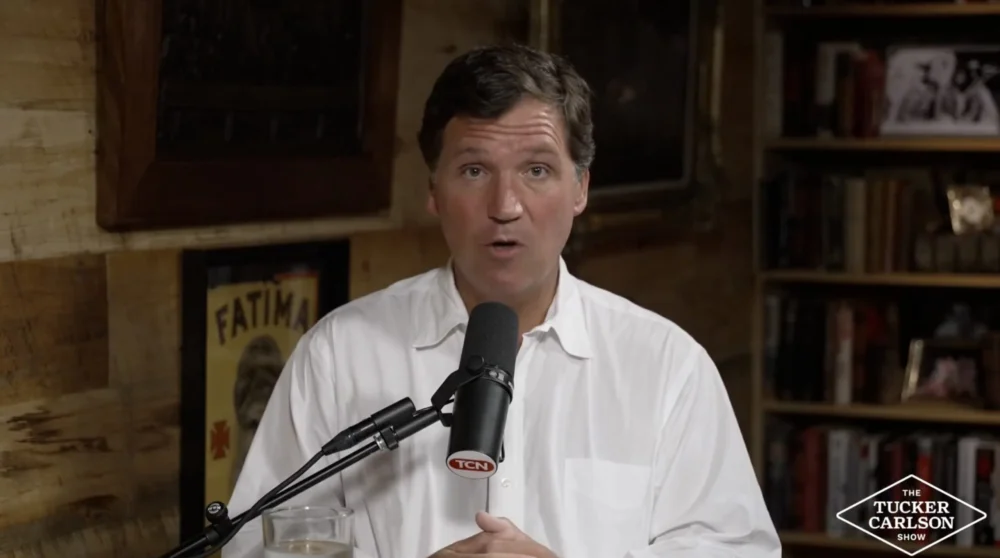
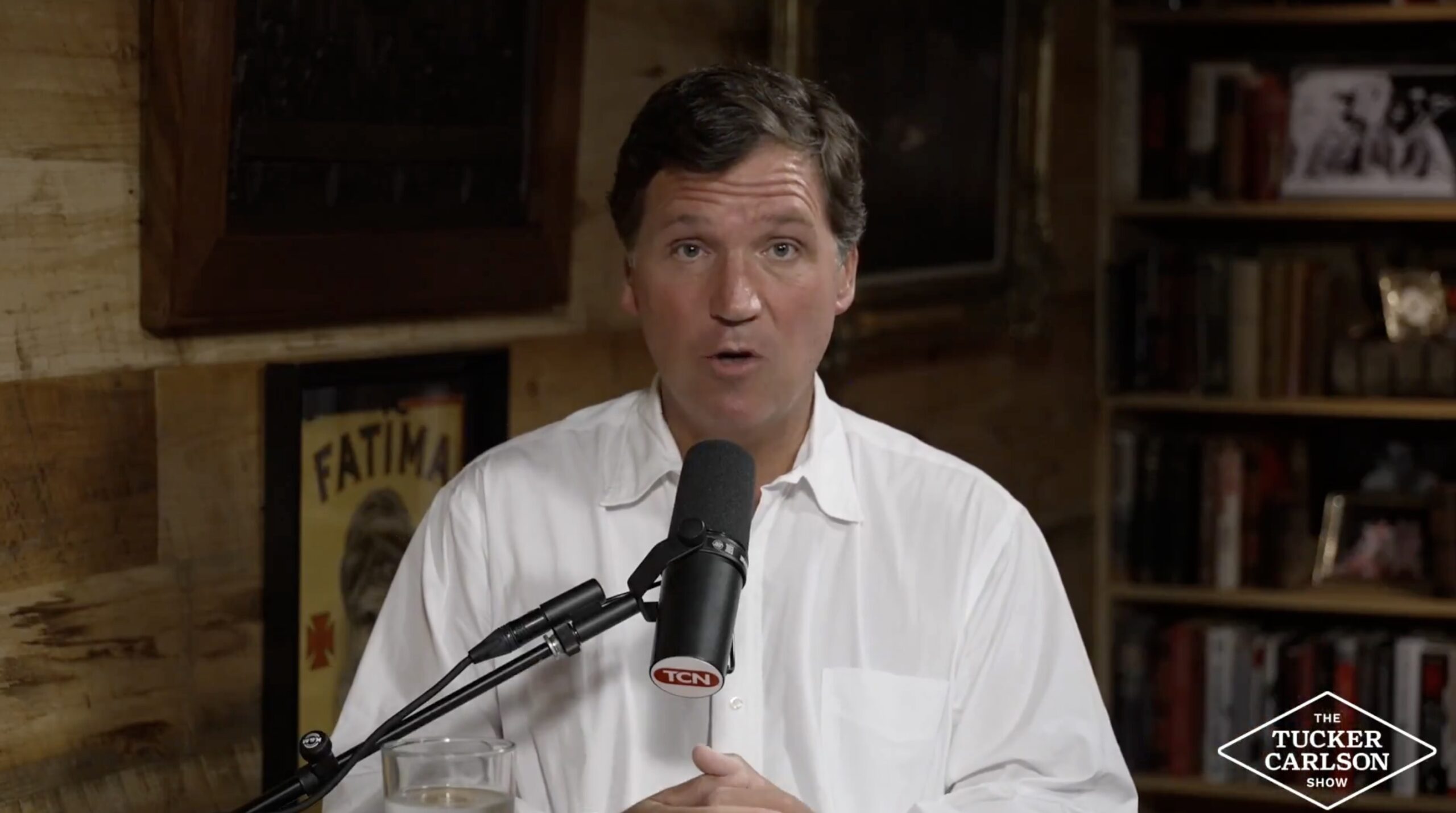
Tucker Carlson, the prominent media personality and former Fox News host, announced on Saturday evening that the United States Department of Justice (DOJ) is allegedly preparing to file criminal charges against him for failing to register as a foreign agent. In a five-minute video address broadcast via the social media platform X, Carlson claimed that the Central Intelligence Agency (CIA) initiated a criminal referral to the DOJ after monitoring his private communications with Iranian officials in the period leading up to the recent military conflict between the United States and the Islamic Republic of Iran. Carlson suggested that the move is a politically motivated attempt to silence his dissent regarding U.S. foreign policy, specifically his critical stance on the joint U.S.-Israeli military operations that have reshaped the Middle East over the past several weeks.
According to Carlson, the basis for the potential prosecution stems from the Foreign Agents Registration Act (FARA), a 1938 law that requires individuals or entities acting as agents of foreign principals in a political or quasi-political capacity to make public disclosure of their relationship with the foreign government. Carlson asserted that the CIA’s interest in his activities peaked after the agency reviewed his text messages, which documented his discussions with various figures in Tehran. "The CIA is preparing some kind of criminal referral against me, a crime report to the Department of Justice, on the basis of a supposed crime I committed," Carlson stated in the video. "What’s that crime? Well, talking to people in Iran before the war. They read my texts."
The Legal Framework of the Foreign Agents Registration Act
The Foreign Agents Registration Act (FARA) was originally designed to combat pro-Nazi propaganda in the United States prior to World War II. In recent decades, however, its application has expanded significantly, becoming a central tool for the DOJ in monitoring foreign influence in American political discourse. Under FARA, individuals who engage in lobbying, public relations, or political advocacy on behalf of a foreign government or political party must register with the DOJ. Failure to do so can result in felony charges, carrying penalties of up to five years in prison and substantial fines.
Carlson’s potential entanglement with FARA appears to center on the definition of "agency." The DOJ must typically prove that a person acted at the order, request, or under the direction or control of a foreign principal. Carlson vehemently denied these characterizations, maintaining that his interactions with Iranian officials were conducted in his capacity as a journalist and an American citizen interested in averting a catastrophic war. "I’m not an agent of a foreign power," Carlson said. "Unlike a lot of people commenting on U.S. politics and global affairs, I have only one loyalty and that’s the United States and have never acted against it." He further clarified that he has never accepted financial compensation from any foreign entity, a key factor often used by the DOJ to establish an agency relationship.
Geopolitical Context: Operation Epic Fury and the Death of Ali Khamenei
The allegations against Carlson come at a time of unprecedented geopolitical volatility. The United States and Israel recently concluded a series of high-intensity strikes, dubbed Operation Epic Fury, which resulted in the death of Iranian Supreme Leader Ali Khamenei. This military action marked a definitive escalation in the long-standing tensions between Washington and Tehran, effectively transitioning from a "shadow war" to an overt conflict.
Carlson has been a vocal critic of the escalation, describing the strikes as "absolutely disgusting and evil." He argued that the military campaign was being waged primarily to serve the interests of Israel rather than the national security of the United States. His opposition to the war put him at odds with the current administration and much of the Washington foreign policy establishment. Carlson’s narrative suggests that his communications with Iranian officials were part of a private effort to understand the diplomatic landscape and potentially find avenues for de-escalation before the onset of hostilities.
The Fracturing of the Carlson-Trump Relationship
The looming legal threat against Carlson coincides with a public and acrimonious split between the media figure and President Donald Trump. Despite their long-standing alignment on "America First" principles, the war in Iran created an irreconcilable rift. Reports from The New York Times indicate that Carlson met with President Trump at least three times in the month preceding the launch of Operation Epic Fury, acting as one of the few voices in the president’s inner circle lobbying against military intervention.
President Trump ultimately disregarded Carlson’s counsel, a decision that led to Carlson’s formal expulsion from the "Make America Great Again" (MAGA) movement. In a recent interview with ABC’s Jonathan Karl, Trump was blunt in his assessment of Carlson’s standing. "Tucker has lost his way," Trump stated. "I knew that a long time ago, and he’s not MAGA. MAGA is saving our country. MAGA is making our country great again. MAGA is America first, and Tucker is none of those things. And Tucker is really not smart enough to understand that."
The tension between the two was further exacerbated by Carlson’s suggestion that the U.S. was "forced" into the conflict by Israeli influence. Trump responded to these claims by asserting his own agency in the decision-making process. Speaking to ABC’s Rachel Scott, the president remarked, "If anything, I might’ve forced Israel’s hand," rejecting the notion that he was a passive participant in the regional escalation.
Chronology of Events Leading to Alleged DOJ Referral
The timeline of Carlson’s involvement and the subsequent fallout suggests a rapid deterioration of his standing within the U.S. political and intelligence apparatus:
- January – February 2026: Carlson engages in private communications with Iranian officials and diplomatic intermediaries as tensions between the U.S. and Iran reach a boiling point.
- February 2026: Carlson meets with President Trump on three separate occasions to argue against military strikes, citing the potential for global economic instability and loss of American life.
- Late February 2026: Operation Epic Fury is launched. Joint U.S.-Israeli strikes kill Iranian Supreme Leader Ali Khamenei. Carlson denounces the action on his platform, calling it "evil."
- March 5, 2026: President Trump publicly disavows Carlson, stating he is no longer part of the MAGA movement and criticizing his intelligence and loyalty.
- March 10–20, 2026: Intelligence reports begin to leak to various media outlets suggesting that the CIA is reviewing "unusual" communications between American citizens and the Iranian regime.
- March 28, 2026: Carlson releases a video on X claiming that the CIA has referred him to the DOJ for FARA violations based on his pre-war text messages.
Analysis of the CIA and Intelligence Community’s Role
Carlson’s allegations bring renewed scrutiny to the relationship between the U.S. intelligence community and domestic political figures. He argued that the CIA uses criminal referrals not only as a legitimate law enforcement tool but as a pretext for surveillance and public humiliation. "[There are] some people who are mad at me for my views about Israel and they have some latitude," Carlson claimed. "One of the reasons they pass on criminal complaints in effect to law enforcement is to justify warrants for spying. And so that is an absolutely real thing."
This narrative taps into a broader debate regarding the "Deep State"—a term frequently used by Carlson and his allies to describe a permanent bureaucracy of intelligence and military officials who they believe subvert the will of elected leaders and punish dissenters. By framing the DOJ’s potential move as a CIA-led retaliation for his "views about Israel," Carlson is positioning himself as a martyr for free speech and an opponent of wartime authoritarianism. He argued that during periods of conflict, the government’s tolerance for dissent diminishes, leading to the weaponization of legal statutes like FARA.
Implications for Press Freedom and Political Advocacy
The potential prosecution of a high-profile media figure under FARA raises significant constitutional questions. Historically, journalists have been granted broad latitude to communicate with foreign officials—including those from hostile nations—without being classified as "agents." If the DOJ proceeds with a case against Carlson, it may have to navigate the fine line between "political advocacy" and "journalistic inquiry."
Legal experts suggest that for a FARA charge to stick, the government would need to produce evidence that Carlson’s actions were not merely an expression of his own opinions, but were directed by the Iranian government to influence U.S. policy. Given Carlson’s long-standing history of isolationist and "America First" views, proving that his opposition to the Iran war was a result of foreign direction rather than his established ideology would be a high bar for prosecutors to clear.
Furthermore, the case could set a precedent for how the U.S. government treats "citizen diplomacy." In an age of digital communication, the ability of private citizens to interact with foreign leaders is greater than ever. If such interactions are automatically flagged by the CIA as potential FARA violations, it could have a chilling effect on the ability of journalists and policy analysts to gather information from international sources.
Official Responses and Next Steps
As of Sunday morning, neither the Department of Justice nor the Central Intelligence Agency has issued a formal statement regarding Carlson’s claims. It is standard practice for the DOJ to refrain from confirming or denying the existence of ongoing investigations or criminal referrals. However, the silence of these agencies has allowed Carlson’s narrative to gain significant traction among his followers and within conservative media circles.
Critics of Carlson argue that his claims are a preemptive strike designed to frame a legitimate investigation as a political "witch hunt." They point to the severity of the conflict with Iran and the possibility that any unauthorized communication with a hostile regime during wartime could be viewed as a threat to national security.
The situation remains fluid. If the DOJ moves forward with an indictment, it will likely become one of the most high-profile and controversial legal battles in modern American history, intersecting with issues of national security, foreign policy, and the First Amendment. For now, Carlson remains defiant, concluding his video by stating that he believes the case is "ludicrous" and unlikely to result in a conviction, though he maintains that the process itself is being used to "humiliate and terrify" those who challenge the prevailing foreign policy consensus.


 Yuyun Lusiyani
 Joko Widodo
 Eva Lovia
 Pevita Pearce
 admin
admin
 Lina Irawan