
 Jia Lissa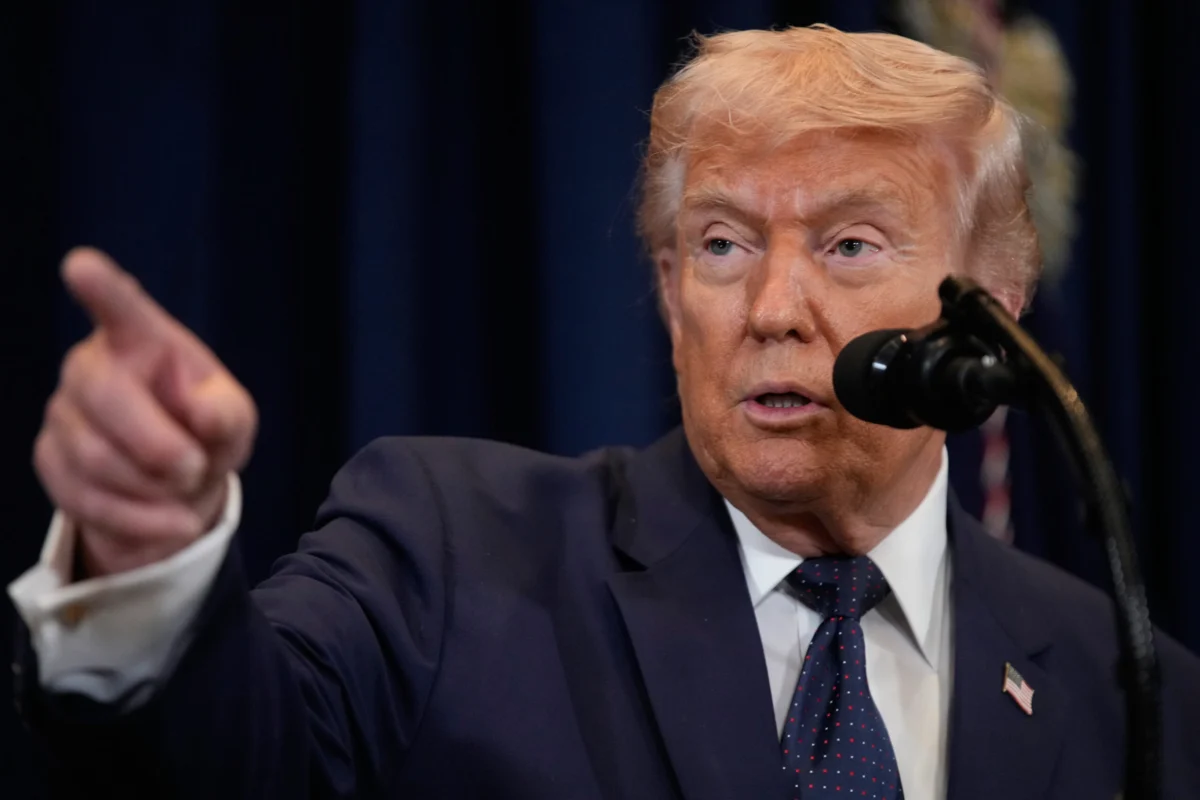
President Donald Trump escalated his long-standing conflict with the American press corps on Sunday evening, issuing a stinging rebuke of mainstream media outlets for their coverage of the ongoing military conflict with Iran. In a lengthy communication shared via Truth Social, the President characterized several news organizations as the "Radical Leftwing Press" and accused them of acting as a conduit for Iranian-led disinformation campaigns. Specifically, the President alleged that major media outlets have been "fed" artificial intelligence-generated (AI) videos and false reports designed to create the illusion that U.S. military efforts, organized under the banner of Operation Epic Fury, are faltering.
The President’s remarks, which spanned 401 words, contained a stark warning for the Fourth Estate. He suggested that media organizations that knowingly or unknowingly disseminate Iranian-peddled "FAKE NEWS" should face severe legal repercussions. "The story was knowingly FAKE and, in a certain way, you can say that those Media Outlets that generated it should be brought up on Charges for TREASON for the dissemination of false information!" Trump wrote. The rhetoric marks a significant escalation in the administration’s efforts to control the narrative surrounding the conflict in the Middle East, placing the blame for domestic skepticism of the war effort directly on the shoulders of news broadcasters and publishers.
The Strategic Context of Operation Epic Fury
Operation Epic Fury, the massive U.S.-led military campaign aimed at neutralizing Iranian maritime threats and dismantling its regional proxy networks, has entered a critical phase. While the Pentagon has maintained that the operation is achieving its strategic objectives with minimal casualties, the information environment has become a secondary battlefield. The administration asserts that as Iran’s conventional military capabilities diminish under the weight of U.S. precision strikes, the Islamic Republic has pivoted toward sophisticated psychological operations (PSYOPs).
According to the President, Iran has recognized its inability to compete with U.S. naval and air power, leading them to prioritize "Media Manipulation and Public Relations." In his Sunday post, Trump described the Iranian leadership as "militarily ineffective and weak," but conceded they are "really good" at exploiting the appetite of the American media for sensationalist content. The administration’s central argument is that the "Fake News Media" is so eager to portray the administration’s foreign policy as a failure that they have become vulnerable to sophisticated digital forgeries produced by Iranian intelligence services.
The Rise of AI-Generated Combat Disinformation
The crux of the President’s grievance lies in the proliferation of high-fidelity AI-generated videos appearing to show U.S. assets under fire. One specific example cited by the President involved footage of "Kamikaze Boats" allegedly targeting various ships at sea. Trump noted that while these clips appear "wonderful, powerful and vicious," they are entirely fabricated. "It’s all false information to show how ‘tough’ their already defeated Military is!" he stated.
Independent verification efforts have partially corroborated the President’s claims regarding the use of AI in this conflict. Agence France-Presse (AFP) recently conducted a fact-check on a widely circulated video appearing to show the USS Abraham Lincoln engulfed in flames following an Iranian strike. The AFP report concluded that the footage was an AI-generated deepfake, noting inconsistencies in the ship’s silhouette and the physics of the smoke and fire. The President highlighted this specific instance, noting that the aircraft carrier was not only not burning but had not even been targeted.
The use of generative AI in wartime creates a unique challenge for newsrooms. In previous conflicts, verification might involve cross-referencing satellite imagery or eyewitness accounts. However, modern AI can simulate realistic environments and damage patterns that can deceive even experienced editors working under tight deadlines. The administration argues that the media’s failure to adequately vet this content constitutes a betrayal of the public trust and, in the President’s view, a threat to national security.
The Dispute with The Wall Street Journal
While the President’s post took aim at the media landscape generally, he singled out The Wall Street Journal for a specific report published on Saturday. The report in question alleged that five U.S. Air Force refueling planes had been struck and significantly damaged during an Iranian missile barrage targeting facilities in Saudi Arabia.
The President directly contested this reporting, providing a different assessment of the Air Force’s operational status. "The five U.S. Refueling Planes that were supposedly struck down and badly damaged, according to The Wall Street Journal’s false reporting, and others, are all in service, with the exception of one, which will soon be flying the skies," Trump posted. He further asserted that other media reports showing buildings and ships on fire were similarly "FAKE NEWS, generated by A.I."
The discrepancy between the Journal’s reporting and the White House’s official stance highlights the difficulty of reporting from a theater of war where access is restricted and both sides have a vested interest in the narrative. While the Journal has not yet issued a formal retraction, the administration has used the incident to paint the broader media establishment as unpatriotic and complicit in foreign propaganda efforts.
Regulatory Pressure and the Role of the FCC
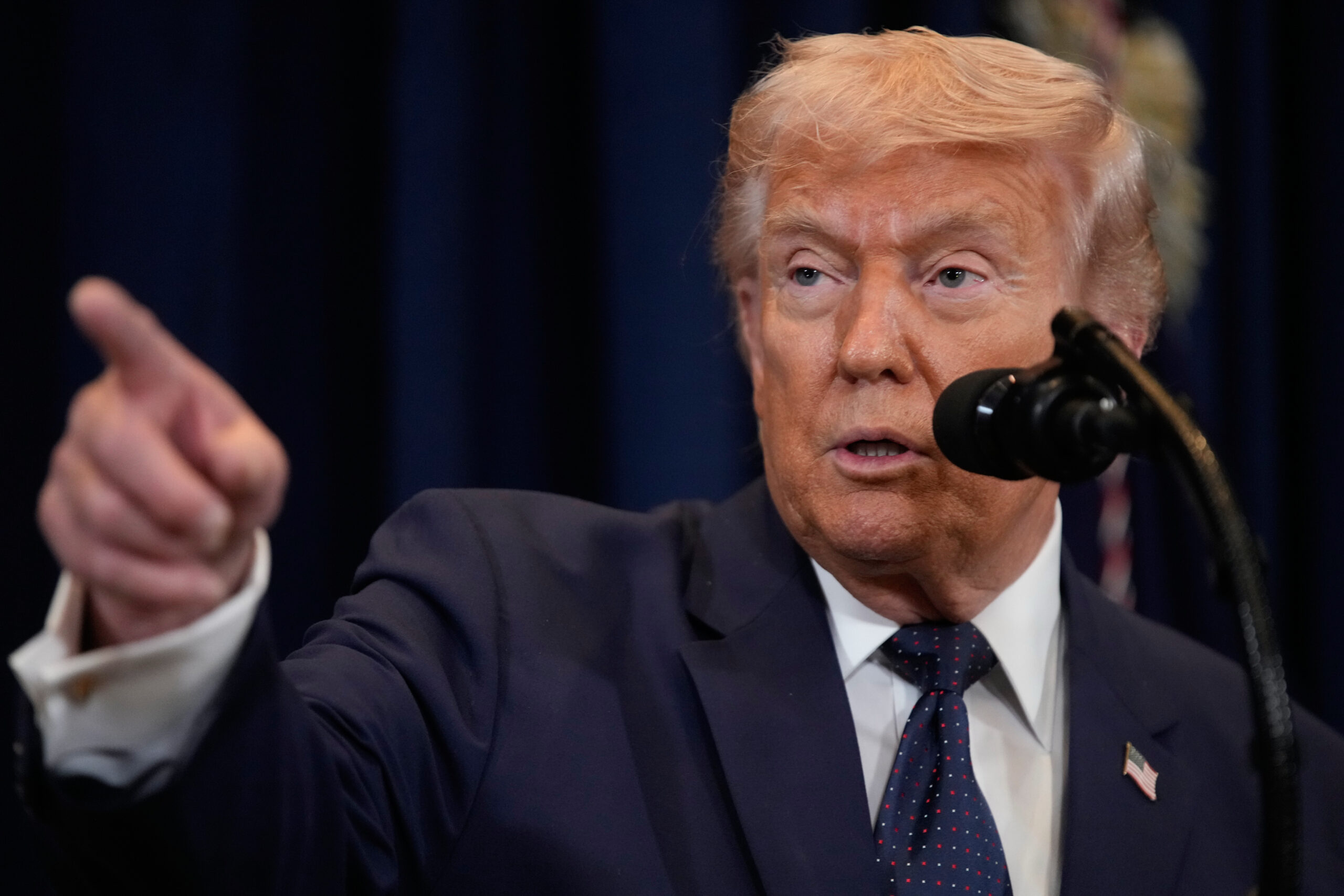
The President’s Sunday night missive also signaled a potential regulatory crackdown on broadcasters. He expressed support for Federal Communications Commission (FCC) Chair Brendan Carr, who has reportedly begun an inquiry into the licenses of various broadcasters. Trump praised Carr for "looking at the licenses" of what he termed "Corrupt and Highly Unpatriotic" broadcasters.
Brendan Carr, who was appointed to lead the FCC under the Trump administration, has recently fired a series of warning shots at major media networks. Carr’s focus appears to be on whether broadcasters are meeting their public interest obligations, particularly regarding the accuracy of their reporting on matters of national importance. While the FCC does not traditionally have the power to revoke licenses based on the content of news broadcasts—a protection afforded by the First Amendment—the administration appears to be exploring new legal avenues to hold networks accountable for what it deems "willful dissemination of foreign disinformation."
Critics and civil liberties advocates have expressed concern over this approach, suggesting that using the FCC to police news content could have a chilling effect on investigative journalism. However, supporters of the administration argue that the unique threats posed by AI and foreign state-sponsored propaganda require a more aggressive regulatory posture to ensure the integrity of the American information ecosystem.
Legal Implications: Treason and the First Amendment
The President’s suggestion that journalists should be "brought up on Charges for TREASON" has sparked intense debate among legal scholars. Under Article III, Section 3 of the U.S. Constitution, treason is narrowly defined as "levying War against [the United States], or in adhering to their Enemies, giving them Aid and Comfort." Historically, the bar for a treason conviction is exceptionally high, requiring the testimony of two witnesses to the same overt act or a confession in open court.
Legal experts note that for a media outlet to be guilty of treason, prosecutors would have to prove that the organization intentionally sought to aid Iran with the specific intent of harming the United States. Simply reporting false information, even if that information originated from an enemy state, generally falls under the protection of the First Amendment unless it meets the "actual malice" standard established in New York Times Co. v. Sullivan.
However, the President’s rhetoric suggests a desire to redefine these boundaries in the context of "hybrid warfare," where the dissemination of digital disinformation is viewed as an act of aggression. By framing the media’s reporting as a form of "aid and comfort" to Iran, the administration is challenging the traditional immunity that news organizations have enjoyed when covering international conflicts.
Timeline of Key Information Events in Operation Epic Fury
To understand the current friction between the White House and the press, a timeline of the information war is essential:
- Week 1: Operation Epic Fury commences. The Pentagon reports successful strikes on Iranian drone manufacturing sites. Simultaneously, unverified videos appear on social media showing "U.S. bases in flames."
- Week 3: The "Kamikaze Boat" videos begin circulating. Several cable news networks air the footage during primetime segments discussing the risks to U.S. sailors.
- Week 5: The USS Abraham Lincoln incident occurs. Iranian state media claims a direct hit; AI-generated footage of a burning carrier goes viral. AFP and other fact-checking organizations debunk the footage 48 hours later.
- Saturday: The Wall Street Journal publishes its report on the five refueling planes in Saudi Arabia, citing "unnamed defense officials."
- Sunday Night: President Trump issues his 401-word Truth Social post, accusing the media of treason and calling for license reviews.
Broader Implications for Media and National Security
The escalating tension between the Trump administration and the media reflects a broader shift in how modern wars are fought and perceived. In an era where "deepfake" technology can create indistinguishable forgeries of combat operations, the traditional role of the media as an objective observer is under siege.
For news organizations, the challenge is twofold: they must maintain the speed required by the 24-hour news cycle while implementing rigorous new verification protocols for digital media. The risk of being "tricked" by an AI-generated video is no longer just an editorial embarrassment; in the current political climate, the administration has signaled it will be treated as a matter of national security and potential criminal liability.
For the public, the result is an increasingly fragmented reality. When the Commander-in-Chief labels the reporting of major newspapers as "treasonous" and "AI-generated," it further erodes the shared set of facts necessary for democratic discourse. As Operation Epic Fury continues, the battle over the truth of the conflict appears set to be just as volatile as the kinetic engagements in the Persian Gulf.
The administration’s focus on the FCC and the potential for treason charges suggests that the final months of the campaign against Iran will be accompanied by an unprecedented domestic effort to reshape the legal and regulatory landscape for the American press. Whether these threats result in actual legal filings or remain a potent form of political pressure, the relationship between the White House and the media has reached a historic nadir, with "AI" and "Disinformation" serving as the new front lines.


 Pevita Pearce
 admin
admin
 Lina Irawan
 Yuyun Lusiyani
 Joko Widodo