
 Eva Lovia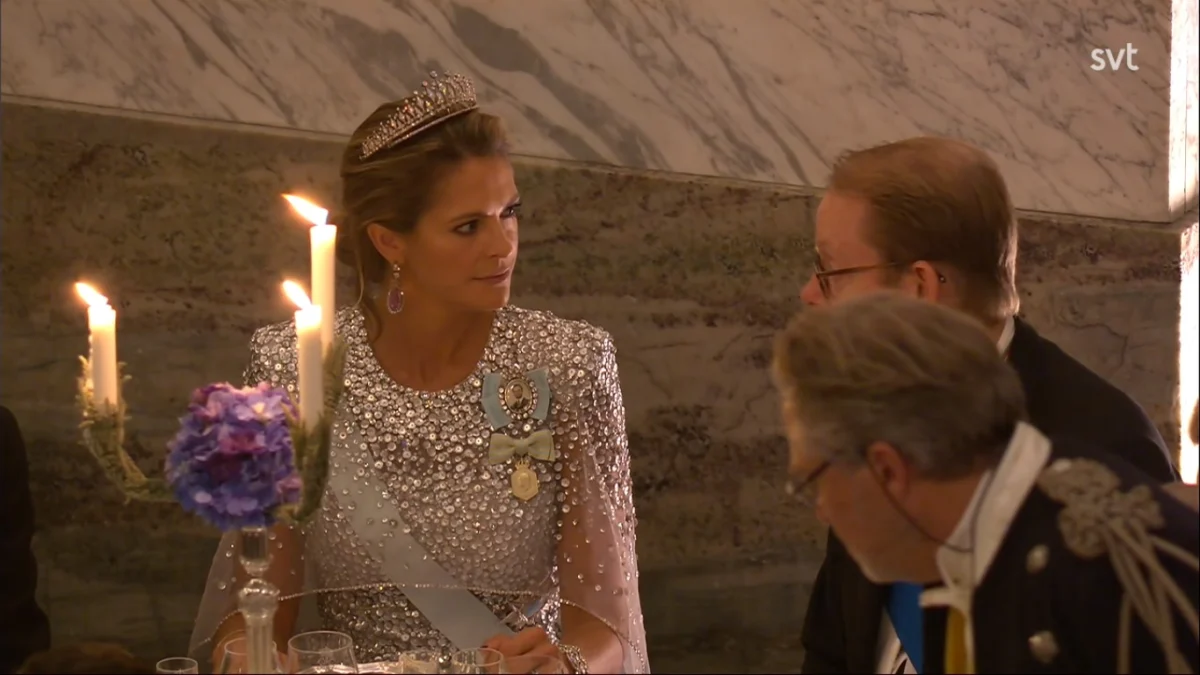
The celebration of King Carl XVI Gustaf’s Golden Jubilee on September 15, 2023, marked a significant moment in Swedish history, as he became the first Swedish monarch to reach this remarkable milestone. The accompanying gala dinner, held on the same evening, provided a glittering backdrop not only to honor the King’s fifty years on the throne but also to showcase the enduring legacy of royal jewelry. For several prominent royal women, the event offered a cherished opportunity to don pieces steeped in family history, with a select few choosing to re-wear their own wedding tiaras, thus weaving a thread of personal celebration into the national commemoration. This tradition of passing down and repurposing significant jewels underscores the continuity and deep-rooted heritage within European royalty.
A Legacy of Jewels: The Royal Tiara Tradition
The practice of wearing tiaras for state occasions and significant family events is a long-standing tradition among European royal houses. These ornate headpieces are more than mere adornments; they are often symbolic of a royal woman’s status, her lineage, and her connection to generations past. Wedding tiaras, in particular, hold a special place, representing the union of two individuals and the continuation of royal lines. The King’s Golden Jubilee gala served as a poignant reminder of this enduring tradition, with several royal attendees choosing to honor the occasion by wearing pieces that hold profound personal and historical significance. The selection of these particular tiaras speaks volumes about the individuals who wore them and the families they represent, offering a glimpse into the intricate tapestry of royal heritage.

Queen Anne-Marie of Greece and the Khedive of Egypt Tiara: A Centuries-Old Masterpiece
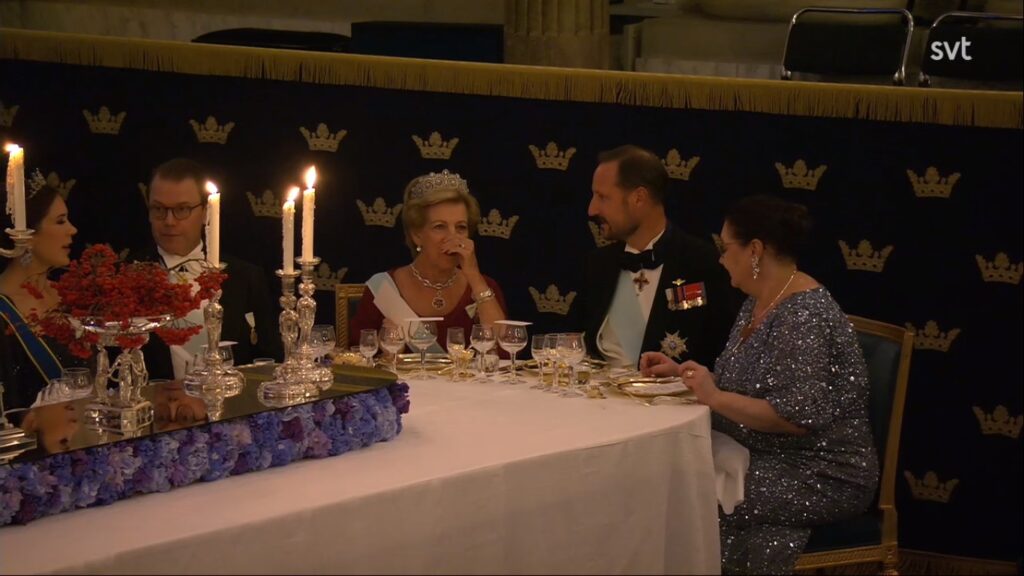
Among the most historically significant pieces worn was the Khedive of Egypt Tiara, gracing the head of Queen Anne-Marie of Greece. This exquisite Cartier creation, dating back to the early 20th century, is a testament to a bygone era of opulent craftsmanship. Commissioned as a wedding gift for Queen Anne-Marie’s grandmother, Princess Margaret, by the last Khedive of Egypt, the tiara is a stunning example of a laurel scroll design, meticulously crafted with brilliant diamonds. Its origins are intrinsically linked to the history of the Egyptian monarchy and the prominent European royal families.
Upon Princess Margaret’s passing, the tiara was inherited by her only daughter, Ingrid. When Ingrid married into the Danish royal family in 1935, she brought this magnificent piece to Denmark. Queen Ingrid, recognizing the tiara’s intrinsic value and sentimental importance, generously loaned it out to various members of the extended royal family. This act fostered a significant tradition, with the Khedive of Egypt Tiara becoming a cherished heirloom worn by women across the Danish, Greek, and Sayn-Wittgenstein-Berleburg families on their most significant days.
The lineage of wearers of the Khedive of Egypt Tiara is impressive, encompassing a roll call of prominent royal brides. Queen Margrethe of Denmark, Queen Anne-Marie herself, Princess Benedikte, Princess Alexandra of Sayn-Wittgenstein-Berleburg, Princess Nathalie of Sayn-Wittgenstein-Berleburg, and Princess Alexia of Greece and Denmark have all had the honor of wearing this historic tiara on their wedding days.

Queen Anne-Marie’s own wedding ceremony, held on September 18, 1964, when she was just 18 years old, saw her pair the Khedive of Egypt Tiara with an antique lace veil. This veil, itself a piece of history, was originally worn by Princess Margaret for her wedding in 1905 and has since become a nearly ubiquitous part of the bridal trousseau for many brides within the family, further cementing the tiara’s connection to generations of royal unions. The inheritance of the tiara by Queen Anne-Marie upon the death of her mother, Queen Ingrid, in 2000, solidified its place as a central piece of her personal jewelry collection and a continuing symbol of her family’s enduring legacy.
Queen Mary of Denmark’s Personal Sparkle: A Bespoke Wedding Tiara
Crown Princess Mary of Denmark, now Queen Mary, received a truly personal and significant wedding gift from Queen Margrethe and Prince Henrik on the occasion of her marriage to Crown Prince Frederik on May 14, 2004. This was not a loan from the royal vaults, but a bespoke diamond tiara created specifically for her. The exact provenance and design details of this tiara have remained a closely guarded secret, adding to its mystique. It stands as a symbol of her integration into the Danish Royal Family and a unique piece of personal adornment, rather than a historical loan that would eventually return to the Crown Jewels.
Mary’s Wedding Tiara, as it has come to be known, is characterized by its delicate design, featuring intricate motifs of hearts and fleurs-de-lis mounted on a slender band. Its versatility is a notable feature; it can be elegantly converted into a necklace, a transformation Queen Mary has utilized on numerous occasions. Further enhancing its adaptability and aesthetic appeal, the tiara underwent a subtle alteration in 2011. Undertaken by Marianne Dulong, a distinguished Danish jeweler, the modification involved the addition of a row of pearls along the base and pearl toppers for the shorter elements, allowing for further customization and stylistic variations. This personalized approach to royal jewelry underscores the evolving nature of royal traditions and the desire to create pieces that are both historically resonant and personally meaningful.
Princess Sofia of Sweden: A Surprise Gift of Dazzling Design
Princess Sofia of Sweden received a particularly touching and significant wedding present from King Carl XVI Gustaf and Queen Silvia on her marriage to Prince Carl Philip on June 13, 2015. The tiara, reportedly fashioned from elements of one of Queen Silvia’s own necklaces, was created in complete secrecy, ensuring a breathtaking surprise for the new royal. This clandestine operation, allegedly carried out in Thailand by Queen Silvia to prevent any leaks to the press, highlights the immense care and thought invested in this special gift.
Princess Sofia’s Wedding Tiara is a striking piece, characterized by its diamond palmettes and diamond spikes arranged on a petite frame. Since her wedding day, this tiara has proven to be an exceptionally versatile accessory in Princess Sofia’s royal wardrobe. For her wedding, she famously wore it adorned with vibrant emerald attachments. However, her ability to swap out these gemstones for pearls, diamonds, turquoises, and, as notably debuted recently, a dazzling array of citrines, showcases the tiara’s adaptable design. This feature allows Princess Sofia to tailor her headpiece to a wide range of occasions and ensembles, demonstrating a modern approach to the traditional royal tiara.
Princess Madeleine of Sweden and the Modern Fringe Tiara: An Enigmatic Heirloom
Princess Madeleine of Sweden chose the Modern Fringe tiara for her wedding to Christopher O’Neill on June 8, 2013. Similar to Queen Mary’s wedding tiara, the exact origins of Princess Madeleine’s chosen headpiece remain somewhat enigmatic. The tiara first made its appearance within the Swedish Royal Family’s collection around 1986. A prevalent theory suggests that it may have been a tenth wedding anniversary gift from King Carl XVI Gustaf to Queen Silvia, a gesture of enduring affection and commitment.

The Modern Fringe tiara is a personal gift bestowed upon Queen Silvia and does not belong to the Swedish Royal Family’s official jewel foundation, which oversees the maintenance and ownership of the state’s collection of royal jewels. The tiara’s design features stylized diamond elements that bear a striking resemblance to floral motifs. Its adaptability is another notable characteristic, as it can also be converted into a necklace, offering a different mode of wear. Over the years, the Modern Fringe tiara became increasingly associated with Princess Madeleine, its elegant lines complementing her personal style. The Swedish Royal Court eventually confirmed that the tiara had been personally gifted to her by her parents, solidifying its status as a cherished family heirloom passed down to the princess.
The Broader Significance of Royal Adornment
The reappearance of these significant wedding tiaras at King Carl XVI Gustaf’s Golden Jubilee gala was more than just a display of magnificent jewelry; it was a powerful visual narrative of continuity, lineage, and the enduring bonds within European royal families. Each tiara, with its unique history and provenance, tells a story of love, marriage, and inheritance. The Khedive of Egypt Tiara, with its deep historical roots and widespread adoption by multiple royal branches, exemplifies a shared heritage. Queen Mary’s and Princess Sofia’s tiaras, as personal gifts from their respective in-laws, symbolize their warm embrace into their new families and the creation of new royal traditions. Princess Madeleine’s Modern Fringe tiara, a personal gift from her parents, underscores the intimate family connections and the passing down of treasured heirlooms.
In an era where monarchies are increasingly focused on projecting a modern and accessible image, the continued reverence for these historical pieces serves as a bridge between the past and the present. They remind the public of the centuries-old institutions that these royal families represent, while also showcasing the personal lives and significant moments of the individuals who wear them. The Golden Jubilee gala, therefore, provided not only a platform for national celebration but also an intimate glimpse into the personal histories and enduring traditions that shape the lives of European royalty. The sparkle of diamonds and the gleam of precious metals on this historic evening served as a radiant testament to a legacy that continues to evolve and endure.




 Yuyun Lusiyani
 Joko Widodo
 Pevita Pearce
 admin
admin
 Lina Irawan