Pevita Pearce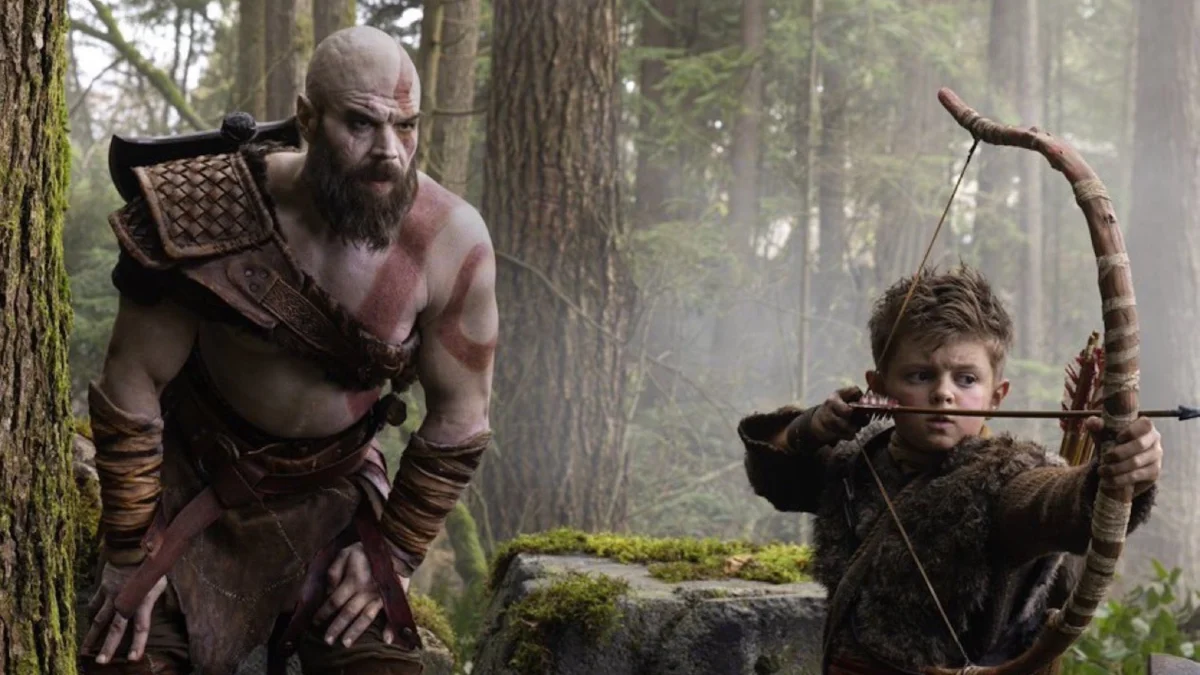
The highly anticipated live-action adaptation of the iconic PlayStation franchise, God of War, has encountered a significant production hurdle as lead actor Ryan Hurst is set to be recast following a debilitating injury sustained on set. The news, first reported by Deadline, indicates that Hurst suffered a torn bicep while performing a complex stunt during filming in June. While the injury is not life-threatening, the recovery timeline and the physical demands of the role have made it impossible for the actor to continue with the production under its current schedule.
Medical assessments suggest that Hurst’s recovery could take upwards of six months to reach full functionality, with a return to the high-intensity physical performance required for the role of Kratos not expected until early 2027. Given the logistical and financial pressures of a major streaming production, Amazon Prime Video and Sony Pictures Television have reportedly determined that the project cannot sustain a hiatus of that duration. Consequently, the search for a new actor to portray the Ghost of Sparta has begun, marking a pivotal and challenging moment for one of the most ambitious video game adaptations in recent years.
The Nature of the Injury and Production Impact
The incident occurred during the filming of a high-stakes action sequence, a staple of the God of War narrative known for its visceral and demanding choreography. Stunt-related injuries, while managed with rigorous safety protocols in modern Hollywood, remains a risk in productions of this scale. A torn bicep is a particularly restrictive injury for an actor playing a character defined by immense physical strength and proficiency with heavy weaponry, such as the Blades of Chaos and the Leviathan Axe.
Prior to the accident, production had successfully completed filming for four episodes spanning the show’s first two seasons. In an effort to maximize efficiency and maintain narrative continuity, Amazon had opted to shoot the two seasons back-to-back. However, the decision to recast Hurst necessitates a significant overhaul of the existing footage. According to sources close to the production, the four completed episodes will be entirely reshot once a successor is cast. This move is intended to ensure visual and performance consistency throughout the series, though it introduces substantial costs and delays to the project’s timeline.
The current production roadmap anticipates a resumption of filming in October 2026. This window allows the studio several months to conduct a global casting search, finalize contracts, and permit the new lead actor to undergo the necessary physical conditioning and stunt training required to embody Kratos.
Ryan Hurst’s Contribution and Fan Reaction
The news of Hurst’s departure has been met with a mixture of sympathy and disappointment from the gaming and television communities. Hurst, a veteran actor known for his roles as Opie Winston in Sons of Anarchy and Beta in The Walking Dead, was considered a formidable choice for the role. His connection to the franchise was already established through his critically acclaimed performance as Thor in the 2022 video game God of War: Ragnarök, where his deep, gravelly voice and imposing presence earned him significant praise.
Hurst’s commitment to the live-action role was evident in his physical preparation. Reports indicate the actor had gained approximately 40 pounds of muscle to match the legendary physique of Kratos. This transformation was a key element of the production’s strategy to deliver a faithful representation of the character, who transitioned from a vengeful Greek god to a more contemplative, yet still lethal, father figure in the Norse wilderness.
Despite some initial online debate regarding the first promotional images released for the series, Hurst’s casting was largely viewed as a "safe pair of hands" due to his proven ability to portray complex, physically imposing characters with deep emotional undercurrents. His exit leaves a void that the production team must fill with an actor capable of balancing the character’s brutal past with his evolving humanity.
The Challenges of Adapting God of War
The God of War series represents a cornerstone of Sony’s intellectual property. Since its debut in 2005, the franchise has sold over 60 million units worldwide, evolving from a hack-and-slash epic rooted in Greek mythology to a sophisticated, narrative-driven exploration of fatherhood and redemption in the 2018 reboot and its sequel, Ragnarök.

Adapting such a beloved and visually distinct property for television is a high-risk endeavor. Unlike traditional drama, God of War relies heavily on "larger-than-life" set pieces and a protagonist whose physical presence is as important as his dialogue. The casting of Kratos is particularly difficult because the character carries the weight of decades of player expectations. The actor must possess the frame of a warrior, the voice of a god, and the subtle acting chops to convey the internal struggle of a man trying to outrun his own bloody history.
Furthermore, the show’s setting—the unforgiving realms of Norse mythology—requires extensive location scouting, practical effects, and high-end CGI. Any delay in production, such as the one caused by Hurst’s injury, ripples through the entire creative pipeline, affecting post-production schedules, visual effects delivery, and the marketing rollout.
Potential Candidates for the Role of Kratos
As the industry looks toward the October 2026 restart, speculation regarding Hurst’s replacement has intensified. Several names have consistently appeared in fan-casting discussions and industry rumors:
- Christopher Judge: The most logical choice for many fans is the actor who voiced and provided motion capture for Kratos in the 2018 and 2022 games. Judge’s performance is widely credited with redefining the character. While his age and the physical toll of the role have been points of discussion, his deep connection to the material is unparalleled.
- Dave Bautista: The former professional wrestler turned actor has frequently expressed interest in the role. With his background in action cinema (Guardians of the Galaxy, Dune) and his impressive physique, Bautista fits the visual profile of Kratos. He has also demonstrated the dramatic range necessary for the character’s more somber moments.
- Jason Momoa: Known for Aquaman and Game of Thrones, Momoa possesses the "warrior energy" often associated with Kratos. His experience with high-budget fantasy productions makes him a viable candidate for a series of this magnitude.
- Travis Fimmel: The Vikings star has been a dark-horse favorite among fans who appreciate his ability to portray intense, stoic characters. Fimmel’s familiarity with Norse-themed narratives provides him with a unique stylistic advantage.
The casting director, alongside executive producers and representatives from Sony’s Santa Monica Studio, will likely prioritize an actor who can commit to a multi-season arc, given Amazon’s long-term investment in the franchise.
The Broader Context of Video Game Adaptations
The God of War production is unfolding during a "golden age" for video game adaptations. Following the massive critical and commercial success of HBO’s The Last of Us and Amazon’s own Fallout, the pressure to deliver a high-quality product is immense. These series have set a new standard, proving that video game stories can be translated into prestige television when handled with respect for the source material and high production values.
Amazon Prime Video has been aggressive in securing major gaming IPs, and God of War is intended to be a flagship series for the platform. The decision to recast and reshoot, while costly, reflects a commitment to quality over expediency. By choosing to restart production rather than compromising on the lead performance or rushing an injured actor back to the set, the studio is signaling its intent to protect the integrity of the franchise.
Timeline and Future Outlook
The revised timeline for the God of War series suggests a significant shift in the expected release date. With production not resuming until late 2026, a premiere in late 2027 or early 2028 seems most probable. This allows for the extensive post-production work required for a series that will undoubtedly feature mythological creatures, magical landscapes, and epic battles.
In the interim, the remaining cast members, including Callum Vinson as Atreus and Ed Skrein as Baldur, remain attached to the project. The chemistry between the new Kratos and Callum Vinson will be of paramount importance, as the relationship between father and son is the emotional core of the modern God of War narrative.
While the recasting of Ryan Hurst is a setback, it also offers the production a chance to recalibrate. The lessons learned during the initial four episodes of filming may lead to refinements in script, tone, and visual direction. As the search for the next Kratos begins, the industry and the fans will be watching closely, hoping that the next actor to take up the axe can weather the storms of Midgard and the pressures of a global audience.



 Jia Lissa
 Yuyun Lusiyani
 Joko Widodo
 Eva Lovia