
 Yuyun Lusiyani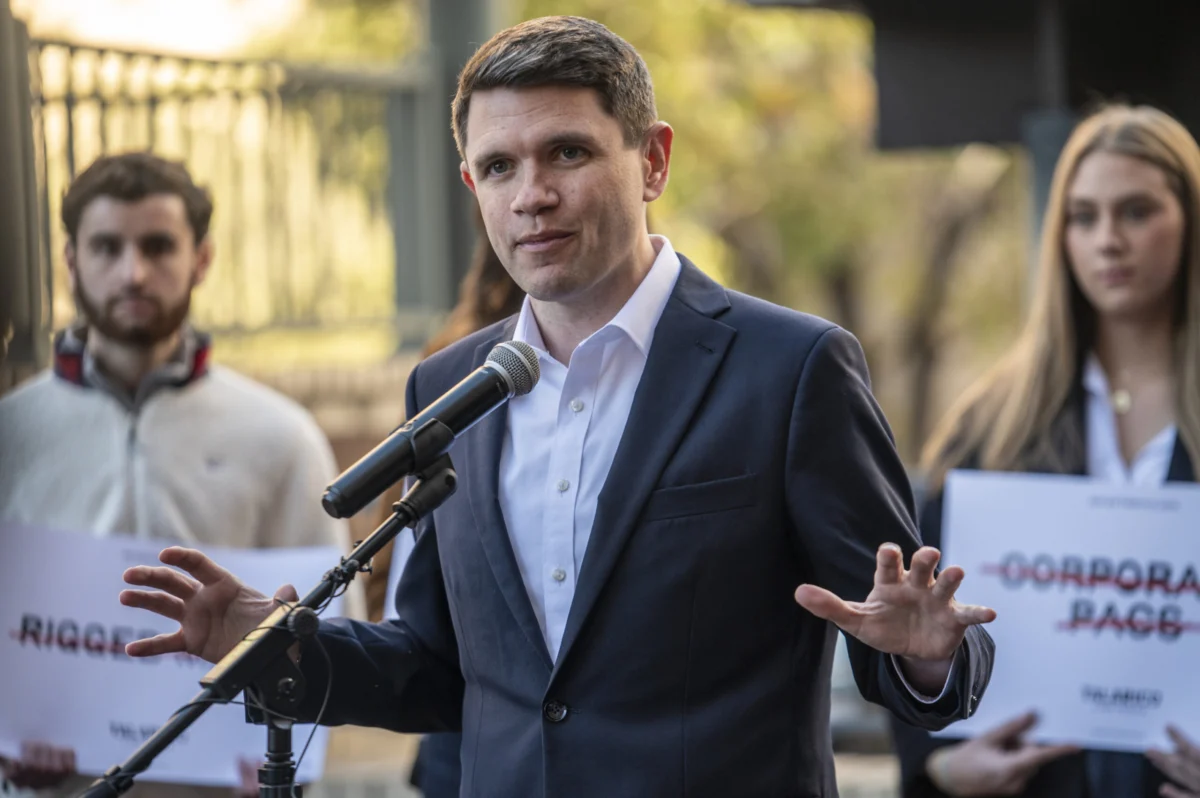
The Democratic candidate for U.S. Senate in Texas is attempting to leverage a cornerstone talking point of his Republican opponent, alleging that Attorney General Ken Paxton is culpable of the very type of voter fraud he has consistently and aggressively sought to eradicate. State Representative James Talarico, who is challenging Paxton in the high-stakes contest to succeed U.S. Senator John Cornyn, publicly asserted that Paxton engaged in illegal voting practices over multiple elections. This accusation introduces a profound irony into the political discourse surrounding election integrity in Texas, a state where voter fraud has been a prominent issue championed by the incumbent Attorney General.
The Genesis of the Allegations: An Investigative Revelation
The foundation for these serious accusations was laid by a joint investigation conducted by ProPublica and The Texas Tribune. The investigative report, published recently, unveiled compelling evidence suggesting that Ken Paxton relocated from the residence he shared with his wife, State Senator Angela Paxton, in 2024. Despite this move, the report detailed that Paxton continued to cast his ballot using the address of their former shared home. This pattern of voting, which included the significant March Republican primary where he ultimately defeated Senator Cornyn, has raised considerable legal and ethical questions. According to three independent election experts consulted by the news organizations, Paxton’s actions potentially constitute a violation of state election law, specifically concerning voter registration and residency requirements.
State Representative Talarico did not mince words during a recent campaign event held in Houston, directly addressing the implications of these findings. "As our state’s attorney general, Ken Paxton has gone on a voter fraud witch hunt," Talarico declared, framing the allegations against Paxton as a stark example of hypocrisy. "Turns out, he was committing voter fraud the whole time, voting illegally in six elections in a row from the wrong address." This statement underscores the central narrative Talarico’s campaign is pushing: that Paxton, the state’s chief law enforcement officer and a vocal advocate for stringent election security, has himself flouted the very laws he pledges to uphold. The six elections in question span a period during which Paxton was actively engaged in various political capacities, including his tenure as Attorney General, raising further scrutiny about his adherence to electoral regulations.
Paxton’s History and the Irony of Election Integrity
Ken Paxton has built a significant portion of his political brand on the rigorous pursuit of voter fraud. Since taking office as Attorney General in 2015, his office has been notably active in investigating and prosecuting alleged instances of electoral malfeasance. He has frequently highlighted the importance of securing Texas elections, often invoking the specter of widespread fraud to justify stricter voting laws and increased enforcement efforts. His office has dedicated considerable resources to an "election integrity unit," which has pursued numerous cases, often involving minor infractions or misunderstandings of complex voting rules, leading to high-profile arrests and prosecutions.
This aggressive stance on voter fraud creates a profound and damaging irony in the face of the current allegations. For years, Paxton has been a leading voice in the national conservative movement advocating for robust election security measures, frequently echoing claims of widespread irregularities, particularly following the 2020 presidential election. His office has consistently emphasized that every illegal vote dilutes the legitimate votes of others and undermines public trust in the democratic process. To now face accusations of illegally voting himself, particularly over a sustained period and across multiple elections, strikes at the core of his public credibility and his self-proclaimed role as a guardian of election integrity.
Beyond his focus on voter fraud, Paxton’s career has been punctuated by a series of high-profile legal challenges and controversies. He has been under indictment for securities fraud since 2015, a case that has remained in legal limbo for nearly a decade. More recently, in 2023, he faced impeachment by the Texas House of Representatives on charges of bribery, corruption, and abuse of public trust, stemming from allegations made by former senior aides. While the state Senate ultimately voted to acquit him, these recurring legal entanglements have fostered an image among critics of an official who operates with a perceived disregard for legal boundaries. Southern Methodist University political science professor Cal Jillson noted that this latest reporting "is just another example of playing fast and loose with a law you must be familiar with as attorney general," reinforcing a long-standing pattern of accusations that Paxton uses his office for personal gain or operates above the law.
Navigating Texas Election Law: Residency and Intent
Understanding the specific nuances of Texas election law is crucial to grasping the gravity of the allegations against Paxton. Texas Election Code Section 1.015 defines "residence" for voting purposes, generally requiring a voter to register at their "domicile," which is typically where they live and intend to remain. However, the law does permit voters to temporarily cast ballots using an address where they do not physically reside, provided they maintain an "intent to return" to that address. This exception is commonly applied to individuals such as college students attending school out of state, military personnel deployed abroad, or individuals temporarily living elsewhere for medical reasons, all of whom typically maintain a clear intention to return to their established domicile.
Election lawyers who have reviewed Paxton’s situation, as cited in the ProPublica and Texas Tribune report, have largely concluded that it is highly improbable Paxton could credibly invoke the "intent to return" argument. His situation is complicated by his ongoing and widely publicized acrimonious divorce from State Senator Angela Paxton. This marital dissolution strongly suggests a permanent separation from the shared residence, undermining any claim of a temporary absence with an intent to return. Without a clear and demonstrable intent to return, continuing to vote from an address where one no longer resides could indeed be interpreted as a violation of state law, potentially constituting illegal voting. The legal threshold for such a violation often hinges on the deliberate misrepresentation of one’s residency, which, if proven, could carry significant penalties, including fines and potential jail time, depending on the specifics of the charge.
The Official Complaint and the Bureaucratic Labyrinth
In response to the investigative findings, the Collin County Democratic Party took formal action, filing a complaint with the Texas Secretary of State’s office. The complaint, lodged last week, formally urged the Secretary of State to launch an investigation into Paxton for alleged election fraud. This move transforms the media revelations into an official matter, demanding a formal response from state authorities.
The process for handling such complaints in Texas is prescribed by law. State statute mandates that the Secretary of State "promptly" refer complaints to the Attorney General’s office if there is "reasonable cause to suspect that criminal conduct occurred." This particular legal framework presents an immediate and profound conflict of interest, as the complaint directly implicates the sitting Attorney General. The question then arises: How can the Attorney General’s office impartially investigate its own head? This ethical dilemma typically necessitates the appointment of a special prosecutor or an independent investigative body to ensure impartiality and avoid the appearance of impropriety.
Further complicating the matter is the recent change in leadership at the Secretary of State’s office. Secretary of State Jane Nelson’s last day in office was Friday, just three days after the complaint against Paxton was filed. Governor Greg Abbott subsequently appointed Robert Howden, one of his senior advisers, to replace her. This transition introduces a period of adjustment and potential delay in addressing sensitive matters like the Paxton complaint. As of recent reports, the Secretary of State’s office has continued to decline direct questions from reporters regarding the complaint. However, Mary Higbe, Vice Chair of the Collin County Democratic Party, reported receiving an email from the Secretary of State’s office indicating that the complaint "remains under review by one of our staff attorneys." This suggests that the initial procedural steps are being taken, but the ultimate disposition and referral remain uncertain.
The Attorney General’s office, for its part, has maintained a notable silence on the issue. It has not responded to inquiries about whether it has received the complaint, nor has it addressed questions regarding the potential necessity of hiring a special prosecutor to investigate the allegations involving the Attorney General himself. This lack of transparency from the very office tasked with upholding the state’s laws and investigating election fraud only amplifies concerns about potential political interference or a deliberate effort to delay action.
Paxton’s Evasion and Political Maneuvering
Ken Paxton’s public response to the allegations has been characterized by strategic evasion. Following the publication of the ProPublica/Texas Tribune report, Paxton held a rare news conference. However, instead of addressing the voter fraud claims, he chose to focus on touting the endorsement of nearly two dozen sheriffs and launched an attack on Talarico, labeling him as "soft on crime." Talarico swiftly denied this charge at his own subsequent news conference, asserting that he had consistently voted for billions of dollars in law enforcement funding as a member of the Legislature.
During Paxton’s news conference, when a political writer from The Dallas Morning News directly questioned him about why he voted in Collin County despite his reported move, Paxton visibly shook his head. A campaign aide promptly interceded, redirecting the press conference. "We’re just going to answer questions on law enforcement today," the aide stated, effectively shutting down any further inquiries on the voter fraud allegations. This tactic of deflection has continued, with Paxton’s office and campaign consistently declining to answer questions from various news organizations regarding his voter registration, residency, or Talarico’s critical comments. This pattern of avoidance fuels the perception among critics that Paxton has something to hide and is actively trying to suppress scrutiny of his actions.
Broader Implications: Trust, Hypocrisy, and the Rule of Law
The unfolding situation carries significant implications for public trust in election integrity, the rule of law, and the upcoming U.S. Senate race. As political science professor Jon Taylor from the University of Texas at San Antonio observed, the silence and perceived slow-walking of the investigation by the Republican-led state government are difficult to reconcile with the consistent rhetoric from Paxton and the Secretary of State’s office regarding the paramount importance of securing Texas elections. "You push the idea that you’re going to be really tough on election wrongdoing, and yet here you are with allegations in which you seem to be uninterested in pursuing," Taylor commented, concluding that such a discrepancy "smacks of rank hypocrisy."
For voters, particularly those who have been swayed by Paxton’s vigorous anti-voter fraud campaigns, these allegations could erode confidence in the very system he claims to protect. The perception that the state’s top legal officer might be immune to the laws he enforces could foster cynicism and distrust. Professor Cal Jillson highlighted that the longevity of Paxton’s various legal challenges, even if he has "slipped out of" them, means voters are "at least vaguely aware of them." This latest controversy simply adds another layer to an existing narrative of an official who, according to his critics, operates without sufficient accountability.
In the context of the U.S. Senate race, these allegations provide James Talarico with a powerful line of attack. He can directly challenge Paxton’s moral authority and credibility, arguing that Paxton is unfit to represent Texans in the Senate if he cannot even adhere to basic election laws. The Democratic strategy is clear: to paint Paxton as a hypocrite who abuses his power and is disingenuous in his public pronouncements. This narrative could resonate with independent voters and even some Republicans who prioritize adherence to the law and ethical conduct from their elected officials.
Conversely, Paxton’s campaign will likely attempt to dismiss the allegations as politically motivated attacks, a common tactic for high-profile figures facing scrutiny. They may argue that Talarico is simply trying to distract from his own policy positions or that the allegations are baseless and lack sufficient legal merit. However, the documented findings from ProPublica and The Texas Tribune, coupled with expert legal opinions, make such a dismissal more challenging to sustain.
The Road Ahead: Unresolved Questions and Potential Consequences
The immediate future of the complaint against Ken Paxton remains uncertain. The newly appointed Secretary of State, Robert Howden, will face early pressure to demonstrate the impartiality and efficiency of his office in handling such a sensitive matter. The decision to refer the case to the Attorney General’s office, and then the subsequent decision within that office regarding a special prosecutor, will be critical junctures that will be closely watched by legal experts, political observers, and the public.
Should an investigation proceed and ultimately find Paxton guilty of illegal voting, the consequences could be severe. Beyond potential criminal penalties, a finding of guilt would undoubtedly have a devastating impact on his political career, particularly his U.S. Senate aspirations, and would further cement the perception of a pattern of legal and ethical transgressions. Even if the investigation is stalled or dismissed, the allegations themselves have already cast a significant shadow over his campaign and his legacy as Attorney General, raising fundamental questions about the consistency of his rhetoric with his actions and the equal application of justice in Texas. The ongoing saga promises to be a defining feature of the Texas political landscape as the U.S. Senate race heats up.



 Joko Widodo
 Eva Lovia
 Pevita Pearce
 admin
admin
 Lina Irawan