
 Yuyun Lusiyani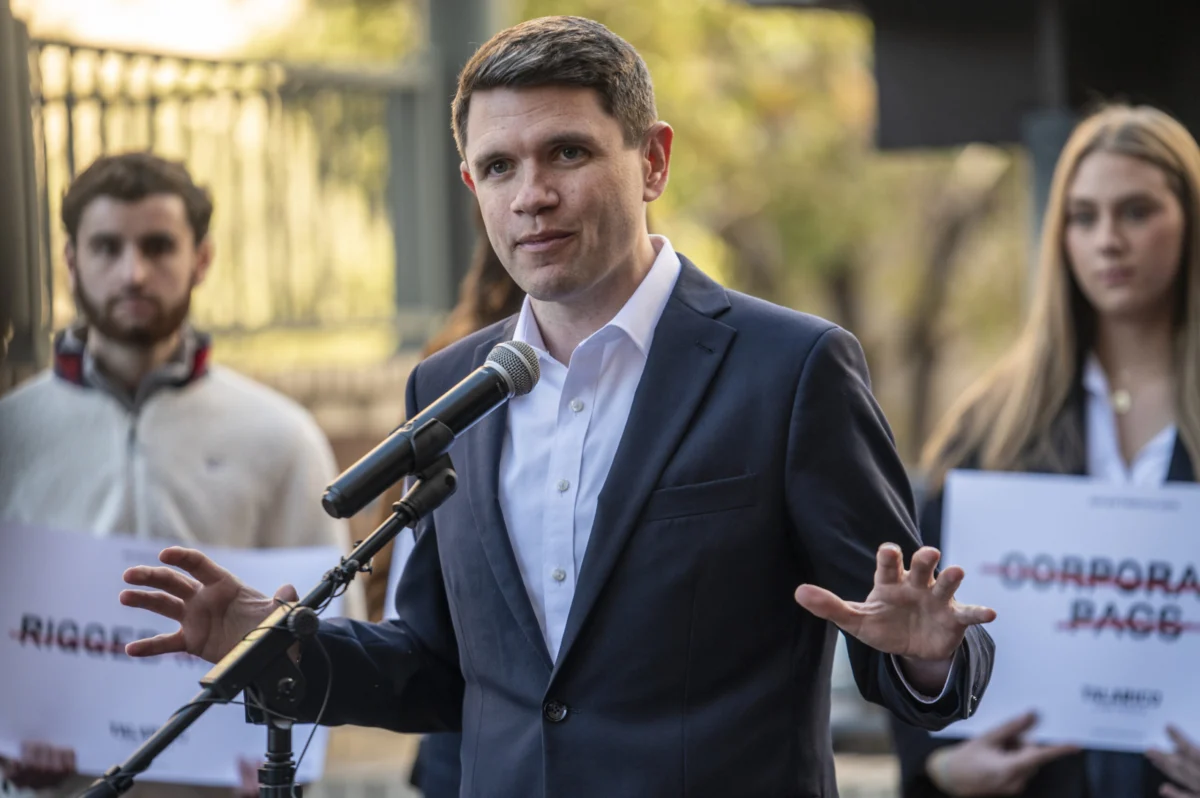
A significant political storm is brewing in Texas, as the Democratic candidate for U.S. Senate, state Representative James Talarico, has leveled serious accusations of voter fraud against incumbent Attorney General Ken Paxton. These allegations are particularly potent, as they directly contradict Paxton’s long-standing public campaign against voter irregularities, turning a key talking point of his political career squarely against him. Talarico claims Paxton engaged in illegal voting practices over six consecutive elections, using an address where he no longer resided, a revelation that has ignited controversy and raised questions about the integrity of the state’s chief law enforcement officer.
The Allegations Unveiled and the Democratic Challenge
During a recent campaign event in Houston, Rep. Talarico, who is challenging Paxton in the high-stakes race to replace U.S. Sen. John Cornyn, did not mince words. "As our state’s attorney general, Ken Paxton has gone on a voter fraud witch hunt," Talarico declared, framing the current situation as a profound irony. "Turns out, he was committing voter fraud the whole time, voting illegally in six elections in a row from the wrong address." This direct assault on Paxton’s credibility comes at a crucial juncture in the Senate race, aiming to paint the Attorney General as a hypocrite who preaches one standard while allegedly practicing another.
Talarico’s comments are not without foundation. They stem from a meticulous investigation conducted by ProPublica and The Texas Tribune, which revealed that Paxton moved out of the home he shared with his wife, state Sen. Angela Paxton, in 2024. Despite this change in residency, Paxton reportedly continued to cast ballots using that former address, including during the pivotal March Republican primary where he successfully defeated Senator Cornyn. The investigative report consulted with three independent election experts, all of whom concluded that Paxton’s actions potentially constitute a violation of state law, thereby lending significant weight to Talarico’s accusations.
Background on Texas Election Law and Residency Requirements
Texas election law is explicit regarding voter registration and residency. To be eligible to vote in a particular precinct, an individual must be a resident of that precinct. The law defines "residence" as the fixed habitation of a person, to which, whenever absent, the person intends to return. While Texas law does permit voters to temporarily cast ballots using an address where they do not permanently reside, this provision is typically applied under specific circumstances, such as individuals attending out-of-area colleges or serving in the military, with a clear and demonstrable intent to return to their registered address.
Election lawyers familiar with Texas statutes have indicated that it would be highly improbable for Paxton to successfully argue the "intent to return" clause in his defense, given the publicly known details of his ongoing and acrimonious divorce from Angela Paxton. The context of a separation and move, rather than a temporary absence for work or education, fundamentally alters the legal interpretation of residency. Violations of these residency requirements, particularly if proven to be intentional, can carry serious penalties, ranging from misdemeanor charges to felony offenses, depending on the specifics and intent. The Attorney General’s office, under Paxton’s leadership, has historically taken a very aggressive stance on prosecuting alleged voter fraud, often highlighting minor infractions as significant threats to election integrity. This history now places Paxton under an uncomfortable spotlight, as his own alleged actions are being scrutinized through the very lens he has championed.
A Pattern of Scrutiny: Paxton’s Extensive Legal History
The current allegations against Ken Paxton do not exist in a vacuum. They fit into a broader narrative of legal challenges and ethical questions that have consistently shadowed his political career. Paxton, a Republican who has served as Texas Attorney General since 2015, has faced a series of high-profile legal battles.
Perhaps most notably, in 2015, just months after taking office, Paxton was indicted on three felony securities fraud charges. These charges alleged that he persuaded investors to buy stock in a technology company without disclosing that he was being paid by the company to promote it. This case has been mired in legal delays for nearly a decade, with Paxton continually denying wrongdoing and fighting the charges. Despite the gravity of these felony indictments, he has successfully fended off conviction, largely through legal maneuvering and a strategy of delay.
More recently, in 2023, Paxton faced an impeachment trial in the Texas Senate, following a historic vote by the Republican-controlled House of Representatives. The impeachment articles included allegations of bribery, abuse of public trust, and other forms of corruption, stemming from accusations by former top aides that Paxton used his office to benefit a political donor. While the Senate, also controlled by Republicans, ultimately voted to acquit Paxton, the proceedings laid bare a wealth of testimony and evidence suggesting a pattern of ethical lapses and potential misconduct. This highly public and politically charged trial, though ending in acquittal, further cemented a public perception among many critics that Paxton frequently operates on the edge of legal and ethical boundaries.
Southern Methodist University political science professor Cal Jillson articulated this sentiment, noting, "There’s been a whole series of legal challenges he’s been able to slip out of, but voters are at least vaguely aware of them." Jillson further elaborated that the latest reporting about Paxton’s voting practices "is just another example of playing fast and loose with a law you must be familiar with as attorney general." This history makes the current voter fraud allegations particularly damaging, as they reinforce a long-standing narrative that Paxton views himself as above the laws he is sworn to uphold.
The Political Battlefield: U.S. Senate Race Dynamics
The U.S. Senate race in Texas is one of the most closely watched contests in the nation. Texas, a traditionally red state, has seen increasing competitiveness in recent cycles, making every statewide election significant. The seat currently held by Senator John Cornyn is highly coveted, and the primary contest saw Paxton successfully unseat Cornyn, indicating a powerful, if sometimes controversial, base of support.
James Talarico, a relatively young but prominent Democratic state representative, is now seeking to capitalize on Paxton’s vulnerabilities. Talarico’s strategy to turn Paxton’s own rhetoric against him is a calculated move designed to appeal to moderate voters and independents who may be weary of constant political scandal. By highlighting alleged hypocrisy, Talarico aims to erode Paxton’s credibility, not just on election integrity but on his broader suitability for higher office. The Democratic Party in Texas has consistently struggled to win statewide elections, but high-profile controversies surrounding Republican leaders often provide an opening for challengers. This particular scandal, given its direct link to an issue Paxton champions, presents a unique opportunity for the Talarico campaign to define Paxton negatively in the eyes of voters.
Official Responses and Evasion
In the wake of the ProPublica and Texas Tribune revelations, and Talarico’s subsequent accusations, the response from Attorney General Paxton and his campaign has been characterized by consistent evasion. Paxton has repeatedly declined to answer questions from news organizations regarding his voter registration and residency.
Last week, the Collin County Democratic Party formally filed a complaint with the Texas Secretary of State, urging that office to launch an official investigation into Paxton for election fraud. This move ratchets up the pressure, transforming the allegations from media reports and campaign rhetoric into a formal legal request.
When confronted directly, Paxton and his campaign have adopted a defensive and deflective posture. During a rare news conference held on a Tuesday, Paxton chose to tout the endorsement of nearly two dozen sheriffs, strategically shifting the focus to law enforcement and public safety. He then directly attacked Talarico, accusing him of being "soft on crime." Talarico, in turn, denied the charge at his own news conference the following day, asserting that he has voted for billions of dollars in law enforcement funding as a member of the Legislature.
The most telling moment of evasion occurred when a political writer from The Dallas Morning News directly asked Paxton why he voted in Collin County. The Attorney General conspicuously shook his head, and a campaign aide immediately interceded, stating, "We’re just going to answer questions on law enforcement today." This refusal to address the core allegation has been consistent. Paxton’s office and campaign have similarly not responded to subsequent questions from ProPublica, The Tribune, or other media outlets regarding the voter fraud allegations or Talarico’s comments.
The Complaint and Bureaucratic Labyrinth
The formal complaint filed against Paxton now enters a bureaucratic maze within the Texas state government. Texas law mandates that the Secretary of State’s office "promptly" refer complaints to the Attorney General if "there is reasonable cause to suspect that criminal conduct occurred." This legal requirement presents an immediate conflict of interest, as the complaint involves the Attorney General himself.
The timing of the complaint also coincided with a leadership transition at the Secretary of State’s office. Secretary of State Jane Nelson’s last day in office was Friday, just three days after the complaint against Paxton was filed. Governor Greg Abbott subsequently appointed Robert Howden, one of his senior advisers, to replace her. This change in leadership could potentially impact the speed and direction of any investigation.
The Secretary of State’s office has largely maintained a policy of declining to answer reporters’ questions about the complaint. However, Mary Higbe, Vice Chair of the Collin County Democratic Party, reported that she received an email from the Secretary of State’s office on a Thursday, confirming that the complaint "remains under review by one of our staff attorneys." This indicates that the complaint is at least being processed, though the pace and depth of the review remain uncertain.
Crucially, the Attorney General’s office itself has not responded to questions regarding whether it has received the complaint or, more significantly, whether it would consider hiring a special prosecutor to investigate the allegations, given the inherent conflict of interest. The lack of a definitive statement or action from Paxton’s own office further fuels suspicions of an attempt to downplay or slow-walk the investigation.
Expert Commentary on Hypocrisy and Broader Impact
Political science professors and legal experts have weighed in on the implications of these developments, often highlighting the glaring hypocrisy inherent in the situation. Jon Taylor, a political science professor at the University of Texas at San Antonio, articulated this sentiment clearly. He pointed out that the silence from the Republican-led state government regarding the investigation suggests an effort to delay or obstruct the process. Taylor finds this difficult to reconcile with the consistent rhetoric from Paxton and the Secretary of State’s office, which frequently emphasizes that securing Texas elections and prosecuting voter fraud are top priorities.
"You push the idea that you’re going to be really tough on election wrongdoing, and yet here you are with allegations in which you seem to be uninterested in pursuing," Taylor stated, adding, "That smacks of rank hypocrisy." This perceived double standard, where the state’s top law enforcement official is accused of the very crime he aggressively prosecutes, could significantly damage public trust in the fairness and impartiality of the state’s legal and electoral systems.
The allegations reinforce a narrative among critics that Paxton views himself as operating under a different set of rules than ordinary citizens. This perception, coupled with his long history of legal skirmishes, could resonate with voters beyond partisan lines, particularly those who value accountability and equal application of the law. For the Republican Party in Texas, the situation presents a delicate balance. While Paxton maintains a strong base of support, particularly among conservative voters who appreciate his combative style, repeated scandals risk alienating more moderate segments of the electorate, potentially impacting other races down the ballot.
Looking Forward: Potential Outcomes and Political Fallout
The path forward for the complaint against Ken Paxton is uncertain. The Secretary of State’s office could dismiss the complaint, refer it to a different agency, or, as required by law, refer it to the Attorney General’s office. If referred to the AG’s office, the critical question will be whether Paxton’s office recuses itself and appoints an independent special prosecutor to avoid a clear conflict of interest. The precedent for such actions in Texas, especially involving a sitting Attorney General, is limited, adding to the complexity.
Should an investigation proceed and find evidence of wrongdoing, Paxton could face criminal charges, which would undoubtedly trigger another major political crisis and potentially impact his eligibility for office. Even without a criminal conviction, the ongoing controversy is likely to become a central theme in the U.S. Senate campaign. Talarico will undoubtedly continue to press the issue, aiming to chip away at Paxton’s public image and make the case that he is unfit for the Senate.
For Ken Paxton, who has consistently demonstrated a remarkable ability to weather legal and political storms, this latest challenge tests his resilience once again. However, the nature of these allegations – voter fraud – directly undermines the very foundation of his political brand and advocacy. In a state that has championed election integrity as a paramount concern, the Attorney General now finds himself at the center of a controversy that threatens to expose the deepest layers of political hypocrisy and erode public confidence in the principles he claims to uphold. The unfolding events promise to keep Texas politics firmly in the national spotlight as the general election approaches.



 Joko Widodo
 Eva Lovia
 Pevita Pearce
 admin
admin
 Lina Irawan