
 Yuyun Lusiyani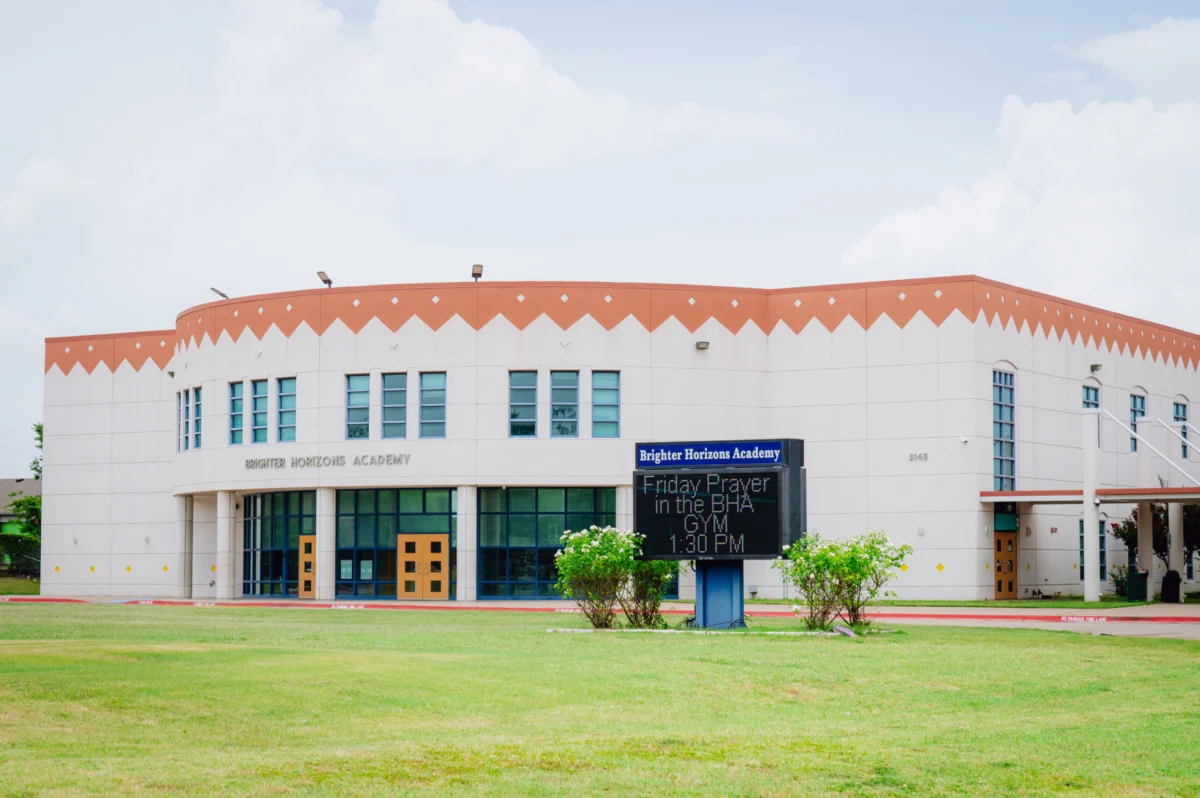
Nearly a decade ago, a British court ordered a man named Sam Westrop to pay the equivalent of more than $173,000 in libel damages after he published an article on his website calling the founder of a London-based Islamic TV channel a "convicted terrorist." Westrop eventually admitted the underlying evidence for the claim was not reliable, according to court filings, and corrected the story on his website. The judge in the case underscored the severity of the misrepresentation, writing, "There simply was no evidence to support the allegation of terrorism." Years after this definitive ruling, Westrop has re-emerged in a similar controversy, this time impacting a critical education initiative in Texas. His allegations concerning connections between Islamic private schools and extremist groups, including Hamas, prompted a wide-ranging, taxpayer-funded investigation by the Texas Comptroller of Public Accounts, which oversees the state’s new voucher program. This extensive probe, whose scope and reliance on Westrop’s claims have only recently come to light through new legal filings, has ignited a significant legal challenge from four Islamic school campuses, raising profound questions about religious liberty, due process, and the integrity of state-administered programs.
The Genesis of Allegations and Westrop’s Background
Sam Westrop’s history of making unverified claims with serious repercussions is central to the unfolding controversy in Texas. His 2014 libel judgment in the UK served as a stark warning about the need for rigorous factual verification, especially when accusations of terrorism are involved. The British court’s decision was unequivocal: Westrop’s assertion that a prominent figure was a "convicted terrorist" lacked any reliable basis, leading to a substantial financial penalty and a public admission of error. Despite this precedent, Westrop has continued to engage in similar investigative journalism, focusing on alleged links between various Muslim organizations and extremism.
Last fall, Westrop turned his attention to Texas, sharing his research with the Texas Comptroller of Public Accounts. His allegations claimed that leaders of several Islamic private schools seeking to participate in the state’s newly established voucher program had ties to Islamic extremist or terrorist groups. These claims specifically mentioned organizations like Hamas and also extended to general associations with "radical Islamic organizations" and even the Chinese Communist government, broadening the scope of his concerns. Westrop’s influence was significant; his allegations were among the primary reasons the comptroller’s office initiated its extensive investigation into these schools. Notably, Westrop was hired this year by the Texas Public Policy Foundation, an influential conservative think tank based in Austin, lending his work a degree of institutional backing within the state’s political landscape. He has continued to vocalize his concerns, including on podcasts, about the potential for extremist groups to exploit school voucher program funding, and published his research on the Middle East Forum website, an organization dedicated to "promotes American interests in the Middle East and protects the West from Middle Eastern threats."
Texas’s Education Freedom Accounts Program and Initial Scrutiny
The context for these investigations is the Texas Education Freedom Accounts program, a hallmark initiative of Governor Greg Abbott and conservative lawmakers, launched with the aim of expanding parental choice in education. The program, often referred to as a school voucher program, allows eligible families to receive taxpayer dollars to offset the costs of private education or homeschooling. It represents a significant policy shift, channeling public funds into private educational institutions, and thus requires a robust system for vetting participating schools to ensure accountability and proper use of public money. By mid-2025, over 2,600 private schools had been approved for the program, signaling its broad reach and potential impact on the state’s educational landscape.
In December, acting Comptroller Kelly Hancock, who was overseeing the program, formally sought legal advice from the state’s top lawyer, Attorney General Ken Paxton. Hancock inquired whether the agency possessed the authority to exclude an unspecified number of schools from the voucher program based on alleged ties to the Chinese Communist government or for hosting events for the Council on American-Islamic Relations (CAIR). CAIR, a prominent Muslim civil-rights group, has often been a target of such accusations, despite its stated mission of advocating for Muslim civil rights and promoting understanding. A month later, Attorney General Paxton issued an opinion confirming the comptroller office’s full authority to prevent taxpayer dollars from flowing to such entities. This ruling provided the legal framework for the comptroller’s office to act on the allegations it had received, setting the stage for the unprecedented investigations.
The State’s Investigation Unveiled: Scope and Contradictions
New legal filings, stemming from a lawsuit filed in March by four Islamic private school campuses against the state comptroller, have peeled back the curtain on the true extent and nature of the state’s probe. These filings reveal that the investigations were far broader and more targeted than previously acknowledged by state officials. Contrary to earlier assertions by the comptroller’s office that it did not purposefully single out certain schools, the new evidence indicates a highly specific and expensive undertaking.
The state used taxpayer money to contract with two external investigators, Reuben Katz and Lara Burns – a retired FBI agent now associated with George Washington University’s Program on Extremism – to delve into the histories of nearly 50 private schools across the state. These schools were explicitly targeted due to alleged ties to "radical Islamic organizations and the Chinese government." This number significantly exceeds what had been reported publicly and starkly contrasts with the comptroller’s earlier narrative that the Islamic schools were merely "swept up" in a wider, non-discriminatory review of approximately 700 schools accredited by Cognia, a global nonprofit accreditation body. The comptroller’s office had previously claimed that the wider review was initiated due to concerns that not all Cognia-accredited schools had up-to-date accreditations, which are mandated for the voucher program. The deposition of Murl Miller, the comptroller’s chief counsel for general litigation, taken in May as part of the lawsuit, directly contradicts this explanation.
Key Revelations from Legal Filings and Deposition
Miller’s eight-hour deposition proved to be a pivotal moment, offering a candid glimpse into the agency’s decision-making process and reliance on external information. He confirmed that the comptroller’s office began receiving information identifying almost 50 schools with alleged links to the Chinese Communist Party or extremist groups as far back as last summer. Crucially, Miller stated that the third-party researchers hired by the comptroller only examined those particular campuses, despite over 2,600 private schools being approved for the voucher program statewide. This selective investigation directly undermines the state’s claim of a broad, non-discriminatory review.
The filings also exposed a specific instance of immediate action taken based on Westrop’s research. Bayaan Academy, one of the Islamic schools represented in the lawsuit, was initially approved for the voucher program. However, its approval was rescinded just two hours after Westrop shared some of his research via email in January. This rapid reversal highlights the direct and potent influence Westrop’s allegations had on the comptroller’s operations.
Miller’s deposition also detailed the diverse sources that prompted the comptroller’s investigations. These included Westrop himself, a regional Homeland Security Task Force launched last summer to "combat emerging threats from transnational criminal organizations in Southeast Texas," congressional hearings probing potential terrorist activities in Texas, and the RAIR Foundation, an activist and investigative journalism organization combating "the threats from Islamic supremacists, radical leftists and their allies." During the deposition, Miller admitted to speaking with Westrop on the phone and finding him credible, yet conceded under questioning from Eric Hudson, an attorney representing the Islamic schools, that he had not "Googled Mr. Westrop." When asked if the investigators hired by the state had made him aware of the UK defamation judgment against Westrop for falsely accusing someone of being a terrorist, Miller unequivocally replied, "No, they did not." This omission raises significant questions about the due diligence performed by the state in vetting its sources and investigators. Miller further clarified that the comptroller’s office is "not readily prepared to do investigations and to do deep research into foreign terrorist organizations or any other accusation," explaining why they outsourced this sensitive work to Katz and Burns, who provided dossiers on each school, cross-referencing school leaders against government terrorism and extremist group databases.
The Broader Political Climate and Anti-Muslim Rhetoric
The controversy surrounding the Islamic schools unfolds against a backdrop of increasing anti-Muslim rhetoric among some elected officials and prominent political candidates in Texas and across the country. This broader political climate provides a critical lens through which to understand the state’s actions. Examples of this rhetoric are numerous and concerning:
- At the state Republican Party convention last month, members attempted to remove Muslims as delegates. Dr. Rick Scarborough, a former Southern Baptist pastor, notably told a Muslim attendee he wanted him to leave the event, later clarifying he meant leave the country and expressing some regret for the interaction.
- In November, Texas Governor Greg Abbott unilaterally designated CAIR a foreign terrorist organization, a move that Florida’s governor soon emulated with similar accusations. CAIR is currently part of a lawsuit against Abbott and Paxton, challenging this designation, arguing it was issued "without due process and in violation of federal law." The case remains ongoing, highlighting the legal battle over such classifications.
- These actions contribute to an environment where accusations against Muslim individuals and organizations, even those involved in civil rights advocacy or education, can gain traction and influence state policy, regardless of factual basis or due process.
Acting Comptroller Kelly Hancock’s actions further underscore this charged atmosphere. A March 24 letter from Hancock to the state attorney general continued to push claims linking the Houston Quran Academy’s principal to the Muslim Brotherhood. In the letter, Hancock stated the school had been "temporarily" approved for the voucher program but called for its removal and urged the attorney general to highlight the school’s "terror ties" and strip it, "and any other school with documented ties to terrorism," of its corporate charter. This was despite the Houston Chronicle previously reporting that the school’s principal, Hamed Ghazali, denied any ties to CAIR and affirmed the school’s purely academic mission. Miller, in his deposition, sharply critiqued Hancock’s letter, stating, "There’s a lot of mistakes and misstatements in this particular letter, but again, I’m not the acting comptroller." He further clarified that the agency’s internal research had determined the accusations of terrorist ties were "not accurate" and that Hancock’s letter "came completely out of the blue, and – and so this was a surprise to all of us." This internal dissent within the comptroller’s office reveals a potential disconnect between political pronouncements and factual findings. While Hancock has since announced his resignation as acting comptroller, his actions and statements contributed significantly to the climate of suspicion.
The Legal Battle Continues: Seeking Enduring Protections
Despite the extensive investigations and initial delays, the comptroller ultimately allowed all of the schools alleged to have Islamic terrorist or Chinese Communist Party ties into the voucher program. However, the schools that pursued legal action are not satisfied with this outcome alone. They are still asking the judge to certify their lawsuit as a class-action, a crucial step to ensure that the comptroller cannot discriminate against certain private schools in the future. Eric Hudson, the attorney representing the Islamic schools, emphasized this point, stating, "Religious liberty is not a temporary pass issued after a lawsuit. We’re pressing on so equal treatment is the rule – not an exception granted under pressure."
The comptroller’s office has predictably objected to certifying the lawsuit as a class action, arguing that it should not be allowed to continue since the four Islamic campuses were ultimately admitted to the voucher program. In a June 26 filing, the state’s lawyers asserted, "Plaintiffs received not only the initial approval they sought, but also the continuing ability to participate in the Program on the same footing as all other approved providers and families." They also maintain that a class-action claim falls outside the jurisdiction of the current court and case. However, the Islamic school plaintiffs highlight that their inclusion in the program is still not guaranteed long term, pointing to Hancock’s persistent attempts to remove schools even after internal research debunked the claims. The question of whether the comptroller has the unilateral authority to remove an approved school from the list, overriding the agency’s own internal research, was posed to Miller during his deposition. After initial resistance, Miller conceded, "It’s possible, yes." This admission underscores the continued vulnerability of the schools to arbitrary removal, making the class-action lawsuit a vital safeguard for their future participation and for other minority-affiliated schools.
Implications for Religious Liberty and State Policy
This unfolding saga carries significant implications for religious liberty, the administration of state programs, and the broader political landscape in Texas.
Firstly, the case highlights the fragility of religious freedom protections when state agencies rely on unverified or biased information. The targeting of schools based on their religious affiliation, even if couched in national security concerns, raises serious constitutional questions about equal protection and the Establishment Clause. The use of taxpayer funds to investigate institutions based on allegations from a figure with a documented history of libel in similar contexts casts a shadow over the state’s due diligence processes.
Secondly, the incident challenges the integrity and transparency of the Education Freedom Accounts program. For a program designed to offer choice and freedom, the revelation that nearly 50 schools were subjected to targeted investigations based on questionable intelligence undermines public trust. It raises concerns about how future iterations of the program will be administered and whether robust safeguards are in place to prevent similar discriminatory practices. The financial cost of these outsourced investigations, based on information that was ultimately deemed inaccurate by the agency’s own legal counsel, also represents a wasteful use of taxpayer dollars.
Thirdly, the lawsuit’s pursuit of class-action status is crucial. If successful, it would establish a legal precedent that could protect a broader category of religious and minority-affiliated schools from similar arbitrary investigations or exclusions in state-funded programs. This would serve as a check on potential overreach by state officials and ensure that due process is rigorously followed.
Finally, the controversy reflects the ongoing ideological battles in Texas and beyond, particularly concerning the role of religion in public life and the definition of national security threats. The conflation of civil rights advocacy (like CAIR’s work) with extremist ties, often without substantiating evidence, creates a hostile environment for Muslim communities and institutions. This case serves as a stark reminder of how political rhetoric can translate into administrative actions with tangible consequences for educational institutions and the families they serve.
As the lawsuit progresses, the focus will remain on the judiciary’s role in balancing state interests with the fundamental rights of religious institutions. The outcome will not only determine the future of the involved Islamic schools but could also set a significant precedent for religious liberty and the equitable administration of state education programs across Texas.



 Jia Lissa
 Joko Widodo
 Eva Lovia

 Pevita Pearce