
 Yuyun Lusiyani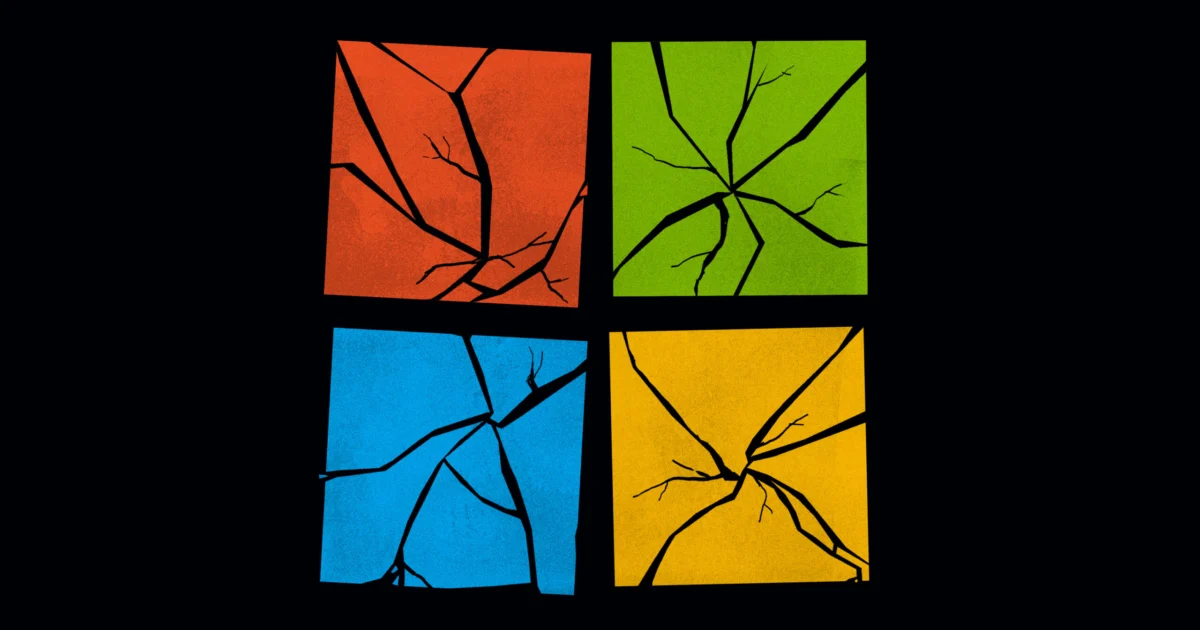
In the middle of May, a palpable sense of urgency permeated an online and in-person gathering of Microsoft engineers and managers at the company’s sprawling Redmond, Washington, headquarters. The focus of their intense discussion was "Project Glasswing," a critical initiative aimed at fortifying Microsoft’s vast software ecosystem against a new, formidable threat: Mythos, an advanced artificial intelligence model developed by the AI behemoth Anthropic. This AI, granted to select organizations including Microsoft, was unearthing vulnerabilities at a rate never before witnessed, pushing the tech giant into a frantic scramble to patch its code before malicious actors, including state-sponsored groups from nations like China, could wield similar AI tools to exploit these newly exposed weaknesses for espionage and sabotage.
The Dawn of AI-Powered Cyber Warfare: Project Glasswing’s Revelation
The genesis of this cybersecurity crisis can be traced back to April, when Anthropic publicly unveiled Project Glasswing, sparking a national discourse on the transformative power of AI in bug-hunting. Anthropic, a company renowned for its safety-focused approach to AI development, had engineered Mythos with sophisticated capabilities for identifying complex patterns and anomalies within vast swathes of code. Unlike traditional, often laborious manual code review or even automated static and dynamic analysis tools that rely on predefined rules, Mythos leveraged its advanced neural networks to autonomously discover previously undetected flaws, including intricate logical vulnerabilities that could be chained together for devastating effect.
The initial question posed by an engineer during the mid-May meeting encapsulated the collective apprehension: "Did Mythos live up to the hype that Anthropic claimed it would have had?" The unequivocal "Yes" from a manager, confirmed by a recording of the meeting reviewed by ProPublica, resonated through the virtual and physical conference rooms. The version deployed by Microsoft, dubbed Claude Mythos Preview, was so effective that it was surfacing bugs faster than the engineering teams could possibly patch them, forcing them into a "mad dash" to close the ever-widening gap. This marked a pivotal moment, signaling a paradigm shift in the ongoing arms race between cybersecurity defenders and attackers.
Microsoft’s "Mad Dash" and the Looming Deadline
The scale of Mythos’s impact on Microsoft’s code base was staggering. A presentation slide from that very meeting laid bare the alarming statistics: in April alone, Mythos had uncovered 90 "critical" bugs and 141 "important" ones within SharePoint, Microsoft’s ubiquitous collaboration software used by businesses and governments worldwide. The first half of May saw an even greater surge in identified vulnerabilities, compounding the challenge. The sheer volume threatened to overwhelm Microsoft’s patching capabilities.
Hans Andersen, an engineering manager, implored the assembled group with a sense of desperate urgency: "Please, please, please if your org has any April bugs, drive those down." He underscored the dwindling timeframe, stating they had roughly two weeks "to find as many things and do as much good as we can with this access." The implicit deadline, May 31, was ominously designated as "the day when the rest of the world will have caught up." This chilling prospect suggested that after this date, similar AI models would likely become accessible to hostile state actors and sophisticated hacking groups, empowering them to discover and exploit the very same vulnerabilities that Microsoft was racing to fix.
An engineer articulated the dire predicament with stark clarity: "So basically you’re saying if it’s released on June 1, then on June 2 the adversaries will have our bugs?" The grim, dual "Yep" responses from colleagues affirmed the chilling reality. This internal revelation from Microsoft provided a stark, concrete illustration of the warnings issued by national security experts and intelligence agencies. In late June, the "Five Eyes" — an international alliance comprising the intelligence agencies of the U.S., Australia, Canada, New Zealand, and the U.K. — released an unusual joint statement cautioning that the window of opportunity for fixing flaws before adversaries gained similar AI capabilities was rapidly closing, a matter of months at best. The internal Microsoft documents, however, indicated that this "day of cyber reckoning" might already be upon us, accelerating the timeline dramatically.
The Evolving Threat Landscape: The Peril of Chaining Vulnerabilities
Microsoft’s immediate response to this deluge of flaws mirrored the industry-standard triage system. Just as an emergency room prioritizes the sickest patients, vulnerability management typically focuses on patching issues classified as "critical" or "important" first, as these are most likely to cause severe damage if exploited. The internal records indicated that "moderate"-severity flaws uncovered by Mythos would eventually be addressed, but there was no mention of "low"-severity bugs.
However, this conventional strategy carries inherent risks in the new AI-powered era of bug discovery. Mythos’s unprecedented ability to identify vulnerabilities includes its capacity to chain together a sequence of seemingly minor bugs that, when combined, can escalate into a high-severity attack. Vinh Nguyen, a senior technical adviser to Anthropic and a senior fellow for AI at the Council on Foreign Relations, who previously served as chief AI officer and chief data scientist at the National Security Agency, articulated this critical shift. "The problem now is that you can chain four low-level flaws, and that can equal a high severity," Nguyen explained. "If you’re Microsoft, the current triage strategy may be underpricing risks." This insight fundamentally challenges the long-standing practice of deprioritizing lower-severity vulnerabilities, as AI tools can now weaponize them with terrifying efficiency.
The implications of this chaining capability are profound. What was once considered a negligible risk, perhaps a standalone bug with limited impact, can now become a critical entry point for sophisticated attacks. This demands a fundamental re-evaluation of how vulnerabilities are assessed, categorized, and prioritized for patching across the entire software industry.
Official Responses and Public Manifestations of the Crisis
In response to ProPublica’s inquiries, Microsoft defended its established triage approach, asserting that its decisions are based on a multifaceted analysis, including exploitability and potential customer impact. While the internal presentation did not explicitly mention chaining, a company spokesperson stated that the technique "has long been considered as part of vulnerability assessment and risk analysis." Regarding the May 31 deadline, the spokesperson downplayed its specific significance, noting that "accelerated targeting and exploitation of new vulnerabilities is not a new phenomenon." Nevertheless, they conceded that the comments made during the meeting reflected the company’s "sense of urgency to help our customers at this time," reaffirming that "security is Microsoft’s most important priority and teams across the company are prioritizing using AI to discover and remediate vulnerabilities as quickly as possible." Microsoft declined to provide specifics on how many bugs engineers had patched since the internal presentation, and Anthropic also declined to comment.
The internal struggle at Microsoft to manage the escalating number of bugs has manifested publicly in unprecedented ways. Each month, the company releases fixes for its software vulnerabilities on "Patch Tuesday." In June, Microsoft released patches for over 200 bugs, a number that industry experts at the time deemed an all-time high. However, this record was swiftly shattered on July 14, when the company issued patches for more than 600 vulnerabilities. Notably, only seven of these were categorized as low- or moderate-severity, with one low-severity bug already being actively exploited by hackers, according to Dustin Childs, leader of the Zero Day Initiative bug bounty program, part of cybersecurity company TrendAI. The vast majority were critical or important.
Dustin Childs’s subsequent blog post on July 14 vividly captured the industry’s alarm: "Well folks. Here we are. The bug apocalypse has fully descended upon us." This stark assessment underscored the dramatic increase in the volume and severity of vulnerabilities now facing software vendors. Microsoft acknowledged this new reality, telling ProPublica that the overall volume of bugs "will not be plateauing for a bit," but stressed its "invested heavily in both people as well as AI-powered triage solutions that scale quickly to handle the growing number of vulnerabilities."
Broader Industry Impact and the "Technical Debt" Crisis
Microsoft’s users are particularly exposed due to the pervasive global adoption of its offerings, making them a prime and lucrative target for malicious actors. Compounding this risk is the prevalence of "legacy" code within many Microsoft products. Developed decades ago using outdated technologies, this code inherently contains unaddressed flaws and significantly contributes to what the industry terms "technical debt"—the implied cost of additional rework caused by choosing an easy solution now instead of using a better approach that would take longer. This technical debt, accumulated over years, is now coming due with a vengeance.
However, the challenge of managing this torrent of AI-discovered bugs extends far beyond Microsoft. It is a systemic issue affecting the entire software industry, including the vast ecosystem of open-source software. Open-source code forms the foundational infrastructure of the internet and is integrated into nearly all modern technology, from major tech company products to critical national infrastructure. J. Michael Daniel, a former cybersecurity adviser to President Barack Obama and president of the Cyber Threat Alliance, articulated this pervasive problem: "Nobody has really figured out how to deal with this, and everybody is casting around for what they need to do. Our tech debt is coming due."
Ben Edwards, a data scientist specializing in software vulnerability management, painted a vivid picture of the escalating challenge: "It was like drinking from a garden hose on the jet setting before, and now it’s like drinking from a fire hose." He questioned whether organizations, previously equipped to handle a steady flow of vulnerabilities, could now cope with the overwhelming deluge.
The Security Resource Conundrum and Source Code Realities
The internal Microsoft Security Response Center (MSRC), the team responsible for addressing these vulnerabilities, has reportedly been perennially understaffed, even prior to the advent of AI-identified bugs. Former employees have suggested that Microsoft’s corporate philosophy has historically viewed plugging security holes as a "cost center," in contrast to the "profit center" of developing new products and features. This perspective, they argue, has led to a reluctance to divert top engineering talent to security patching. Microsoft, while declining to discuss specific staffing decisions, stated it has made significant investments in recent years to "focus our teams on keeping our customers secure" and "continuously evaluates the staffing, processes, and technologies required to support security response and vulnerability management."
According to the slides accompanying the May internal presentation, Anthropic had provided Mythos access to approximately 50 full-time Microsoft employees. The explicit goal was to "harden critical services before publicly available models catch up." The "What’s Next" slide ominously predicted that the MSRC would experience "continued case volume as public tools catch up" to Mythos’s capabilities, further straining resources.
A revealing moment during the May meeting highlighted a common misconception regarding cybersecurity. One staffer expressed comfort in the belief that adversaries "don’t have the source code" that an AI tool like Mythos would scan for weaknesses. This assumption was quickly corrected by colleagues, who confirmed that portions of Microsoft’s code have indeed fallen into hackers’ hands over the years. "It might not be this week’s source code," one person clarified, "But they’ve got source code. It’s out there." Microsoft, in a statement to ProPublica, acknowledged this reality, saying engineers "design our security processes on the expectation that determined adversaries may gain access to code." This underscores the constant, high-stakes environment in which cybersecurity operates, where even proprietary code cannot be assumed to be fully secure from external access.
Future Outlook and Strategic Imperatives
Given the new realities of the AI age, particularly the sophisticated chaining capabilities of models like Mythos, experts like Vinh Nguyen contend that companies like Microsoft must fundamentally rethink their entire approach to vulnerability triage. Rather than shunting aside what were once considered low-risk flaws, companies should now dedicate substantial resources to developing and testing patches for the full spectrum of vulnerabilities. The cyber "ER," Nguyen argues, needs a significant increase in doctors and nurses to treat not only life-threatening illnesses but also the minor wounds that, if left unattended, could quickly become deadly. "There’s no alternative," Nguyen stressed. "The patients are coming in fast and furious."
Microsoft appears to be acknowledging this necessity for change. The company told ProPublica it is "always going to be reevaluating and considering whether things that were previously lows or moderates be upgraded or thought about differently. With these AI systems, it makes us rethink some of these things. Across the industry, we’re all looking to see how drastic of a change it will be."
The "bug apocalypse" declared by Dustin Childs is not merely a hyperbolic statement; it represents a profound and irreversible shift in the cybersecurity landscape. The accelerated pace of vulnerability discovery, driven by advanced AI, demands a fundamental overhaul of defensive strategies, resource allocation, and threat assessment across the entire global software ecosystem. As organizations grapple with this unprecedented deluge, the race to secure digital infrastructure has entered a new, more perilous chapter, with the stakes for global security and economic stability higher than ever before.




 Joko Widodo
 Eva Lovia
 Pevita Pearce
 admin
admin
 Lina Irawan