
 admin
admin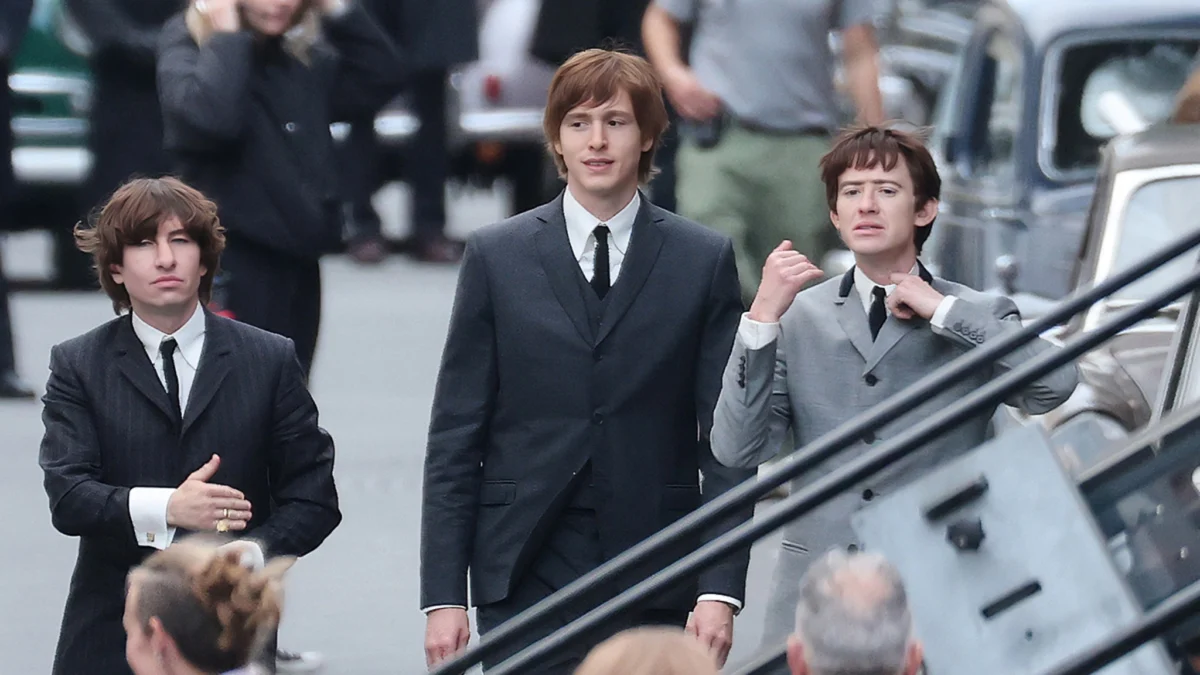
The highly anticipated multi-film biopic series chronicling the legendary careers of The Beatles has offered its first tantalizing glimpse into production, with actors Harris Dickinson, Joseph Quinn, and Barry Keoghan recently observed recreating the iconic opening chase sequence from the band’s groundbreaking 1964 film, "A Hard Day’s Night." The scenes, filmed on September 20, 2026, unfolded at London’s historic Marylebone Station, a location synonymous with the original film’s kinetic energy and the raw, unbridled hysteria of Beatlemania. This pivotal moment in filming signals the series’ ambitious commitment to capturing the essence of the Fab Four’s early years, particularly the whirlwind period that catapulted them to global superstardom.
Recreating an Iconic Moment: The Marylebone Chase
Eyewitnesses and leaked photographs from the set reveal Harris Dickinson, embodying John Lennon, Joseph Quinn as George Harrison, and Barry Keoghan portraying Ringo Starr, engaged in a spirited dash through the station. The trio, dressed in meticulously reproduced 1960s attire, were seen smiling, gesturing, and running with an infectious energy that mirrored the original sequence. Their performance aimed to replicate the spontaneous, almost anarchic escape of The Beatles from a throng of adoring, screaming fans – a scene that immediately established the tone for Richard Lester’s seminal film.
A contingent of approximately a dozen extras, also clad in period-accurate clothing ranging from mod dresses to sharp suits, enthusiastically pursued the actors, lending authenticity to the frenetic atmosphere. The careful attention to detail in costume and setting underscores the production’s dedication to historical accuracy, a critical factor for a project dealing with such culturally significant figures. Notably absent from this particular sequence was Paul Mescal, cast as Paul McCartney, suggesting that the scene meticulously followed the original film’s narrative where McCartney briefly separates from the group before rejoining them. The recreation serves not only as a visual homage but also as a symbolic opening for the series, emphasizing the band’s constant state of motion, both literally and figuratively, during their meteoric rise.
The Legacy of "A Hard Day’s Night"
Released in the summer of 1964, "A Hard Day’s Night" was far more than a simple musical vehicle; it was a cinematic phenomenon that redefined the music film genre and captured the zeitgeist of Beatlemania with unparalleled verve. Directed by Richard Lester, the film presented a fictionalized day in the life of The Beatles, blending slapstick comedy, surrealism, and groundbreaking documentary-style cinematography. The opening chase scene, specifically, became an instant classic. Shot in a documentary style with handheld cameras and rapid cuts, it plunged audiences directly into the chaos and exhilaration of being a Beatle. The scene, set to the film’s title track, instantly conveyed the band’s charisma, wit, and the sheer, overwhelming force of their fame.
Critically acclaimed for its innovative direction and naturalistic performances, "A Hard Day’s Night" earned two Academy Award nominations and is widely considered one of the most influential films of its era. Its impact extended beyond cinema, influencing music videos, television shows, and the very perception of pop stars. The film perfectly encapsulated the dichotomy of The Beatles’ lives: the constant pressure and loss of privacy contrasted with their inherent joy, camaraderie, and artistic brilliance. Recreating this specific scene, therefore, is not merely a stylistic choice for the biopic series but a profound statement about its intent to delve into the core experiences that defined the band’s early career.
The Ambitious Quadruple Biopic Project
The forthcoming Beatles biopic series represents an unprecedented undertaking in cinematic history. Instead of a single, sprawling narrative, the project comprises four distinct feature films, each told from the perspective of one of the band members: John Lennon, Paul McCartney, George Harrison, and Ringo Starr. This innovative approach, announced by Sony Pictures and Apple Corps, aims to provide a comprehensive and multifaceted portrayal of the band’s journey, allowing for a deeper exploration of individual personalities, creative contributions, and personal struggles.
The ambitious project is helmed by acclaimed director Sam Mendes, known for his work on "American Beauty" and "1917." Mendes, a long-time admirer of The Beatles, expressed his vision for the series as a "four-part epic" that would explore the "truth of what happened" from each Beatle’s unique vantage point. This format is particularly significant as it promises to avoid the pitfalls of singular narratives that often simplify complex group dynamics. Crucially, the project has secured the full cooperation of Paul McCartney and Ringo Starr, as well as the estates of John Lennon and George Harrison, granting access to their life rights and, perhaps most importantly, their extensive music catalogue. This unprecedented level of involvement from the surviving members and their families ensures an authentic portrayal and the ability to feature The Beatles’ original recordings, a critical element for any project attempting to capture their musical legacy.
Casting the Fab Four: A Deep Dive
The casting choices for such iconic roles were met with immense scrutiny and anticipation. The selection of Harris Dickinson as John Lennon, Joseph Quinn as George Harrison, Barry Keoghan as Ringo Starr, and Paul Mescal as Paul McCartney reflects a meticulous effort to find actors who not only bear a resemblance but also possess the acting prowess to embody the complex personalities of these musical legends.
- Harris Dickinson (John Lennon): Known for his roles in "Triangle of Sadness" and "Where the Crawdads Sing," Dickinson brings a youthful intensity and a proven ability to convey nuanced emotion. Portraying Lennon requires capturing his wit, intellectual curiosity, rebellious spirit, and underlying vulnerability.
- Joseph Quinn (George Harrison): Rising to prominence with his role in "Stranger Things," Quinn has demonstrated a quiet charisma and dramatic range. Harrison’s journey from "quiet Beatle" to a profound songwriter and spiritual seeker demands an actor capable of conveying depth and evolution.
- Barry Keoghan (Ringo Starr): An Academy Award nominee for "The Banshees of Inisherin" and recognized for his work in "Saltburn" and "The Killing of a Sacred Deer," Keoghan is known for his unique screen presence and ability to play characters with unexpected layers. Ringo’s amiable nature, dry humor, and often understated drumming genius present a distinct challenge.
- Paul Mescal (Paul McCartney): Mescal, an Academy Award nominee for "Aftersun" and celebrated for "Normal People," possesses a captivating blend of charm and sensitivity. Playing McCartney necessitates embodying his melodic genius, his role as a primary songwriter, and his often-optimistic, yet complex, personality.
The choice of these actors, all acclaimed in their own right, suggests a commitment to dramatic integrity over mere mimicry. Their task is not simply to impersonate but to interpret and bring fresh life to figures who are deeply ingrained in the global consciousness.
The Challenge of Authenticity and Fan Expectations
Recreating The Beatles’ story for a new generation, particularly one that has grown up with their music and mythology, presents a unique set of challenges. Authenticity is paramount. Every detail, from the instruments used to the hairstyles, accents, and mannerisms, will be scrutinized by millions of devoted fans. The Marylebone Station recreation is a clear indicator of the production’s dedication to this level of detail, aiming to transport audiences directly into the vibrant, tumultuous 1960s.
Beyond the visual and auditory accuracy, the series must also capture the intangible essence of The Beatles: their chemistry, their revolutionary impact on music and culture, and the profound emotional connection they forged with their audience. This involves not only historical accuracy but also an artistic interpretation that resonates with contemporary viewers while remaining true to the band’s spirit.
Fan expectations are stratospheric. For many, The Beatles represent the pinnacle of musical achievement and a cultural touchstone. The series must navigate the delicate balance between reverence and fresh perspective, avoiding hagiography while also steering clear of cynical revisionism. The multi-film format, with its promise of diverse viewpoints, offers a promising avenue for achieving this balance, allowing for a richer, more nuanced narrative than a single film could provide.
Broader Implications and Cultural Impact
The release of these biopics is poised to have a significant cultural impact. It will undoubtedly reintroduce The Beatles to younger audiences who may only be vaguely familiar with their legacy, fostering a new wave of appreciation for their music and story. For long-time fans, it offers an opportunity to revisit beloved narratives and potentially discover new insights into the band’s formation, struggles, and triumphs.
Economically, the series is expected to generate substantial interest in The Beatles’ catalogue, merchandise, and existing documentaries, further solidifying their enduring commercial power. Artistically, if successful, it could set a new standard for music biopics, demonstrating the potential for ambitious, multi-perspective storytelling in a genre that often adheres to more conventional structures.
The very act of recreating scenes like the "A Hard Day’s Night" chase highlights the enduring power of The Beatles’ imagery. It speaks to a collective memory that transcends generations, proving that certain moments in pop culture history are so deeply embedded that their recreation carries immense weight and excitement. The challenge for Mendes and his team will be to not just replicate these moments, but to infuse them with a dramatic vitality that makes them feel fresh and immediate, even six decades after they first unfolded.
A Glimpse into the Future of Fab Four Storytelling
The ongoing production of The Beatles biopic series represents a monumental undertaking in cinematic storytelling. The recent recreation of the "A Hard Day’s Night" opening sequence is more than just a fleeting moment captured on camera; it is a powerful statement of intent. It signifies a production committed to both historical fidelity and a dynamic, engaging narrative that will seek to unravel the multifaceted story of four young men from Liverpool who changed the world.
As filming continues across various iconic locations, audiences worldwide will eagerly await further glimpses into how this ambitious project plans to bring the magic, the mayhem, and the music of The Beatles back to the silver screen. The sight of Dickinson, Quinn, and Keoghan running down the streets of London, chased by a phantom echo of Beatlemania, serves as a poignant reminder that while the original phenomenon may have been a hard day’s night for The Beatles, their story continues to captivate and inspire, promising an unforgettable cinematic journey for millions. The race to deliver a definitive portrayal of these musical titans has officially begun, and the world is watching, ready to see how they run.




 Jia Lissa
 Yuyun Lusiyani
 Joko Widodo
 Eva Lovia

 Pevita Pearce