
 Eva Lovia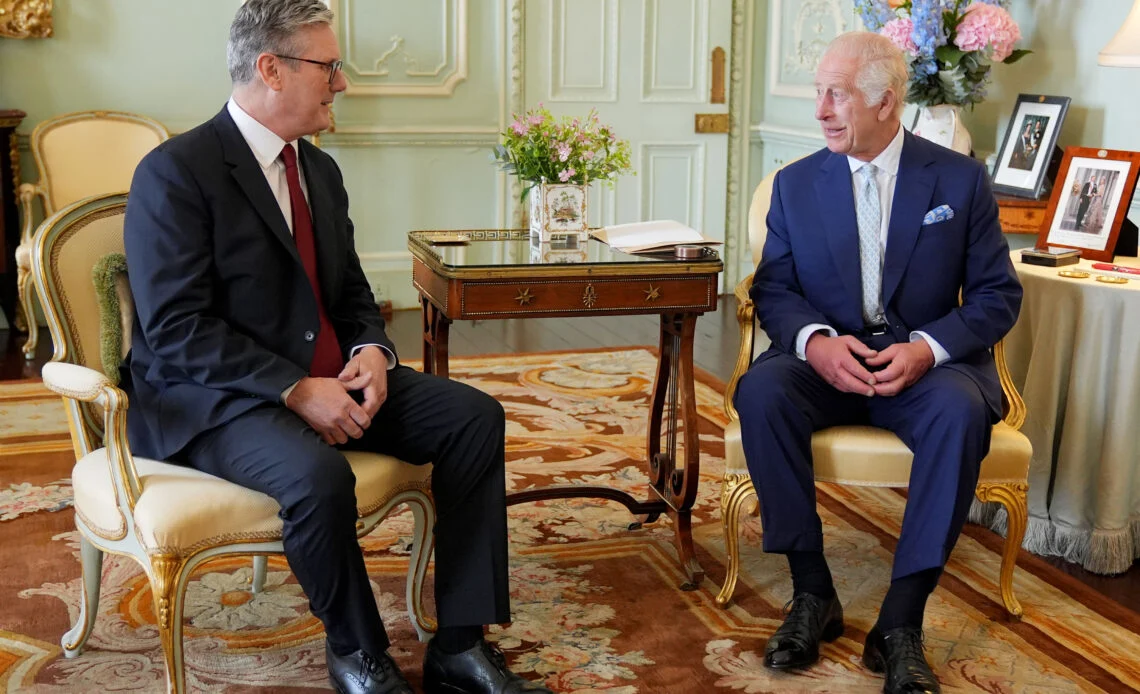
The transition of executive power in the United Kingdom, a cornerstone of its unwritten constitution, has long been marked by a deeply symbolic ceremony. While the formal designation of the new Prime Minister by the reigning monarch remains a critical constitutional moment, the specific rituals have undergone a profound evolution, a shift most recently exemplified by the impending appointment of Andy Burnham by King Charles III. This event, while outwardly appearing as a simple handshake, signifies the continuation of an ancient tradition adapted to modern sensibilities, a testament to the enduring strength of British constitutional practice.
The Enduring Significance of the Sovereign’s Audience
For centuries, the appointment of a new Prime Minister was intrinsically linked to the act of "kissing of hands," a venerable constitutional ceremony that underscored the monarch’s ultimate authority and the appointee’s solemn pledge of loyalty. This practice, deeply rooted in the historical relationship between the Crown and its chief minister, served as a tangible demonstration of fealty. Senior ministers and office holders would, quite literally, kiss the monarch’s hand as a gesture of respect and an acceptance of the weighty responsibilities bestowed upon them. This physical act was more than mere protocol; it was a visual and tactile representation of the hierarchical structure of power and the profound trust placed in the individual chosen to lead the government.
However, as the United Kingdom navigated the centuries, its political landscape and societal norms transformed. The twentieth century, in particular, witnessed a gradual decline in the literal performance of the "kissing of hands." The act, once a powerful symbol of personal allegiance, became increasingly anachronistic in an era of democratic governance and evolving public expectations. By this period, the ceremony had largely transitioned into a symbolic gesture. Instead of the literal kissing of the hand, new Prime Ministers would engage in a handshake with the Sovereign. This adaptation, while subtle, marked a significant shift in the nature of the interaction, reflecting a more egalitarian approach to the relationship between the head of state and the head of government.
Despite this practical evolution, the constitutional language surrounding the appointment has remained remarkably consistent. The ceremony is still officially referred to as the "kissing of hands" in constitutional parlance, a linguistic echo of its historical origins. This perpetuation of terminology highlights the deliberate preservation of historical continuity within the British constitutional framework, even as the outward forms of the ceremony adapt to contemporary realities.
The Mechanics of Power Transfer: A Chronology of the Audience
The process of appointing a new Prime Minister, even in its modernised form, remains one of the most pivotal constitutional moments in British public life. It is a carefully orchestrated sequence of events that ensures the smooth and legitimate transfer of executive power.
The process is initiated following the resignation of the incumbent Prime Minister. This resignation can occur for a variety of reasons, including a vote of no confidence in the House of Commons, a decision to step down after a general election, or personal reasons. Once the outgoing Prime Minister has formally tendered their resignation to the Sovereign, the monarch then undertakes the crucial task of inviting an individual to form a government.
Crucially, the monarch does not choose the Prime Minister. Instead, the Sovereign extends the invitation to the individual who is most likely to command the confidence of the House of Commons. In the context of a general election, this is invariably the leader of the political party that has secured a majority of seats in the House of Commons. If no single party achieves a majority, the monarch will consult with senior political figures and consider the viability of potential coalition governments or minority administrations before extending an invitation.
The individual who accepts this invitation is then officially recognised as the Prime Minister and First Lord of the Treasury. This acceptance is the definitive moment when the new Prime Minister assumes their constitutional role. Prior to this acceptance, the individual is merely a candidate for the office, however likely their appointment may be.
The formal audience between the Sovereign and the newly appointed Prime Minister typically takes place at Buckingham Palace. This meeting is conducted in private, underscoring the confidential nature of the constitutional discussions that may occur. The duration of this audience is usually brief, often lasting only a matter of minutes. It is a highly significant but concise encounter.
Following the private audience, Buckingham Palace customarily releases a photograph to the public. This image serves as official confirmation of the appointment and depicts the Sovereign greeting the new Prime Minister. This photographic release is a crucial element of public communication, signalling the successful conclusion of the constitutional handover. The new Prime Minister then departs Buckingham Palace, typically heading directly to 10 Downing Street, the official residence and office of the Prime Minister, to commence the vital task of assembling their government and outlining their policy agenda.
Andy Burnham’s Appointment: A Continuation of Royal Patronage
Andy Burnham’s impending appointment as Prime Minister marks a significant moment, not only for his political career but also within the context of King Charles III’s reign. This will be the fourth occasion since the King ascended to the throne in September 2022 that he has formally received a new Prime Minister. Prior to Burnham, King Charles III has overseen the appointments of Liz Truss, Rishi Sunak, and Sir Keir Starmer, each representing a distinct phase of recent British political history.
Liz Truss’s brief premiership was followed by Rishi Sunak’s appointment in October 2022. Sir Keir Starmer’s subsequent appointment reflects the most recent general election outcome, placing him in the role of Prime Minister. Burnham’s accession to the office signifies another shift in the political landscape, with a new leader tasked with navigating the nation’s challenges.
Each of these audiences, while following the same fundamental constitutional procedure, has occurred against a backdrop of evolving political circumstances and public sentiment. The continuity provided by the Sovereign’s role, acting as a steadfast figurehead during periods of political flux, remains a crucial element of stability.
Broader Impact and Implications: Symbolism in a Modern Age
The modernisation of the "kissing of hands" ceremony from a literal act to a symbolic handshake does not diminish its constitutional significance. Instead, it reflects a profound understanding of the evolving nature of governance and the relationship between the monarch and the elected government. The audience between the Sovereign and the Prime Minister continues to symbolise the peaceful and orderly transfer of executive power.
In this crucial exchange, the monarch acts as a politically neutral figure. This neutrality is paramount, adhering to long-established constitutional conventions that dictate the Sovereign’s role is to advise, encourage, and warn, rather than to intervene in partisan politics. The monarch’s assent to the appointment of the Prime Minister is a formal acknowledgment of the will of Parliament, as expressed through the electoral process or parliamentary confidence.
The implications of this ritual extend beyond the immediate transfer of power. It reinforces the concept of a unified nation under a single head of state, even as the country is governed by a democratically elected executive. The continuity of the monarchy, embodied by the Sovereign’s role in this process, provides a sense of historical depth and stability that can be particularly reassuring during times of political change or uncertainty.
Furthermore, the fact that the ceremony is still officially known as the "kissing of hands," despite the change in practice, serves as a constant reminder of the historical lineage of British governance. It allows for the preservation of tradition and historical narrative while simultaneously embracing modern democratic principles. This ability to adapt and evolve without discarding its historical roots is a hallmark of the enduring strength of the British constitutional system.
For Andy Burnham, stepping into this constitutional role will mean engaging with a tradition that has been shaped by centuries of precedent. His handshake with King Charles III will be a modern iteration of an ancient ritual, signifying his acceptance of the highest office in the land and his commitment to serving the nation under the watchful eye of a constitutional monarch. The enduring significance of this ceremony lies not just in its form, but in its consistent function: to provide a dignified, legitimate, and symbolically potent transition of power at the very apex of the United Kingdom’s governance. The continued reliance on this deeply ingrained, yet adaptable, ritual underscores the profound respect for constitutional order that underpins British public life.


 Yuyun Lusiyani
 Joko Widodo
 Pevita Pearce
 admin
admin
 Lina Irawan