
 Eva Lovia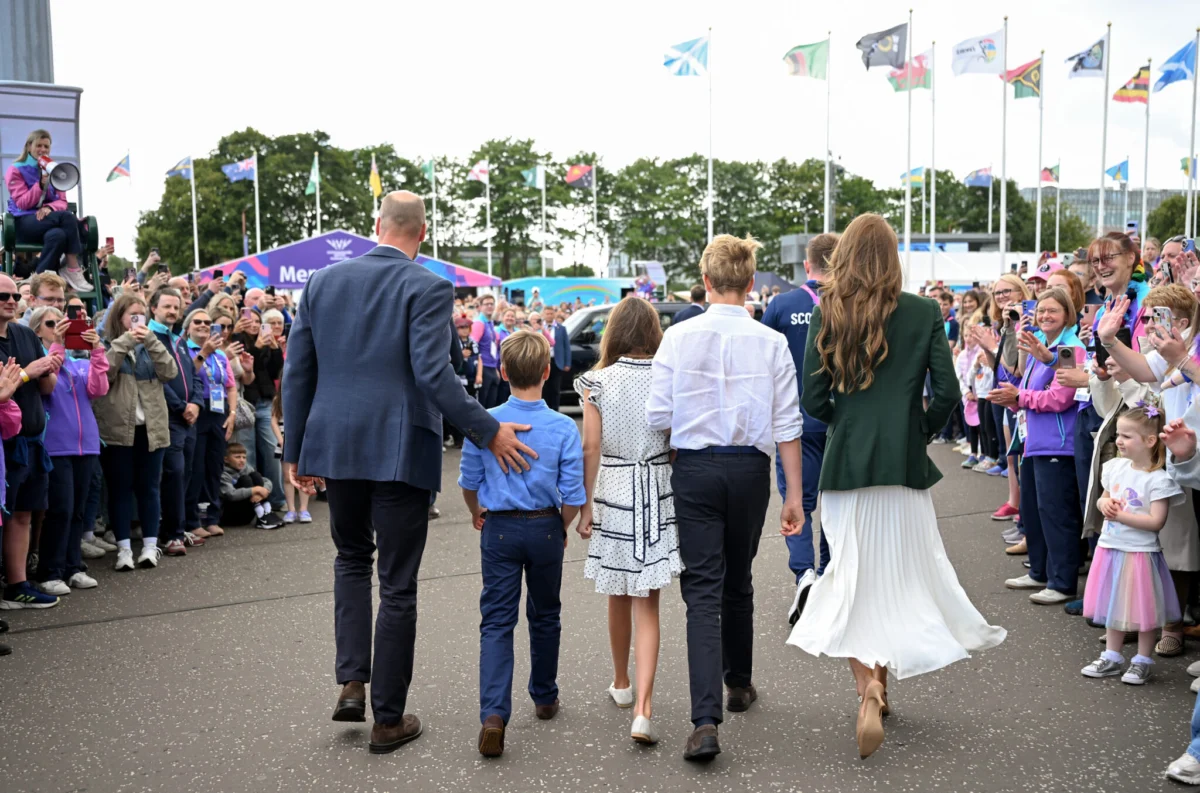
William and Kate, globally recognized as the Prince and Princess of Wales, embrace a different set of titles when in Scotland: the Duke and Duchess of Rothesay. This distinction became particularly relevant as they attended the Commonwealth Games in Glasgow, a reminder of the unique traditions and hereditary titles associated with the British monarchy in Scotland. This visit marked not only a significant public engagement for the royal couple but also highlighted the intricate layers of royal nomenclature that often go unnoticed by the wider public.
A Tapestry of Titles: Royal Nomenclature in Scotland
The British Royal Family possesses a rich history of holding distinct titles for their visits and official duties within Scotland. These titles often predate their more widely known English counterparts and carry historical weight and significance. For Prince William and Catherine, Princess of Wales, their journey to these Scottish dignities is a relatively recent but consequential one, directly linked to the profound shifts within the monarchy following the passing of Queen Elizabeth II.
Upon their marriage in 2011, William and Catherine were styled as the Earl and Countess of Strathearn in Scotland. This title, derived from a historic earldom, was a fitting regional designation for their union. However, a pivotal moment in September 2022 irrevocably altered their royal standing and, consequently, their Scottish titles.
The Ascension and the Shifting Tides of Royal Titles
The death of Queen Elizabeth II on September 8, 2022, triggered a significant transition in the line of succession. Prince William, as the eldest son of King Charles III, immediately became the heir apparent to the throne. This ascension brought with it the traditional English title of Duke of Cornwall, a dukedom that has been intrinsically linked to the heir to the throne since its creation in 1337.
For the initial period following King Charles III’s accession, the couple were known by their newly acquired English titles: the Duke and Duchess of Cornwall and of Cambridge. The latter title, Duke of Cambridge, had been bestowed upon William by his grandmother, Queen Elizabeth II, on the eve of his wedding. However, this period of dual English titles was brief. Within 24 hours of becoming King, Charles III formally conferred upon his eldest son the title of Prince of Wales, a designation that has historically been synonymous with the heir to the English throne.
Simultaneously, and of paramount importance for their Scottish engagements, Prince William also assumed the ancient and prestigious title of Duke of Rothesay. This dukedom is the traditional Scottish equivalent of the Prince of Wales title, reserved for the heir apparent to the Scottish throne. The dual assumption of these titles signifies the complex nature of the British monarchy, which maintains separate lines of succession and distinct noble titles for its constituent kingdoms.
The Historical Roots of the Dukedom of Rothesay
The Dukedom of Rothesay is one of Scotland’s oldest and most significant noble titles, tracing its origins back to the late 14th century. The title was first created in 1398 for David Stewart, the eldest son of King Robert III of Scotland. Tragically, David Stewart died without ascending to the throne, and his younger brother, James, who would later become King James I of Scotland, inherited the dukedom. This established a precedent where the heir apparent to the Scottish Crown would hold the title of Duke of Rothesay.
This pattern was further solidified in 1469 with an Act of the Parliament of Scotland. This landmark legislation formally confirmed that the eldest son of the reigning monarch, designated as the "Prince of the King of Scots for ever," would hold the Dukedom of Rothesay. The Act also stipulated a crucial succession clause: if the holder of the dukedom died before becoming king, the title would not pass to their heir. Instead, it would revert to the Crown and be bestowed upon the next eldest son of the monarch who became the heir apparent. This intricate rule ensures that the title remains exclusively for the direct heir to the throne, preventing collateral branches from assuming this paramount Scottish dignity.
Following the Union of the Crowns in 1603, when James VI of Scotland also became James I of England, the traditional use of the Duke of Rothesay title for the heir apparent began to be overshadowed by the more prominent English title of Prince of Wales. However, the title did not entirely disappear. Queen Victoria, a keen admirer of Scottish traditions, formally mandated in the 19th century that the heir apparent to the throne should be known as the Duke of Rothesay when in Scotland. This royal decree re-established the consistent use of the title, ensuring its continued relevance and ceremonial significance within the Scottish context.
A Glimpse into the Future: Prince George’s Potential Titles
The enduring traditions surrounding the Dukedom of Rothesay hold direct implications for the future of the British monarchy and the lineage of Prince William and Catherine. When Prince William eventually ascends to the throne as King, his eldest son, Prince George, will automatically become the heir apparent. At that juncture, Prince George will be known as the Duke of Cornwall, in line with English tradition, and concurrently, as the Duke of Rothesay, upholding the Scottish precedent.
The bestowal of the title of Prince of Wales upon Prince George will be a decision made by his father, King William V, during his reign. While the title of Prince of Wales is the most universally recognized designation for the heir to the British throne, the timing and manner of its conferral are matters of royal prerogative. This decision will undoubtedly be made with careful consideration of historical precedent and the evolving nature of the monarchy.
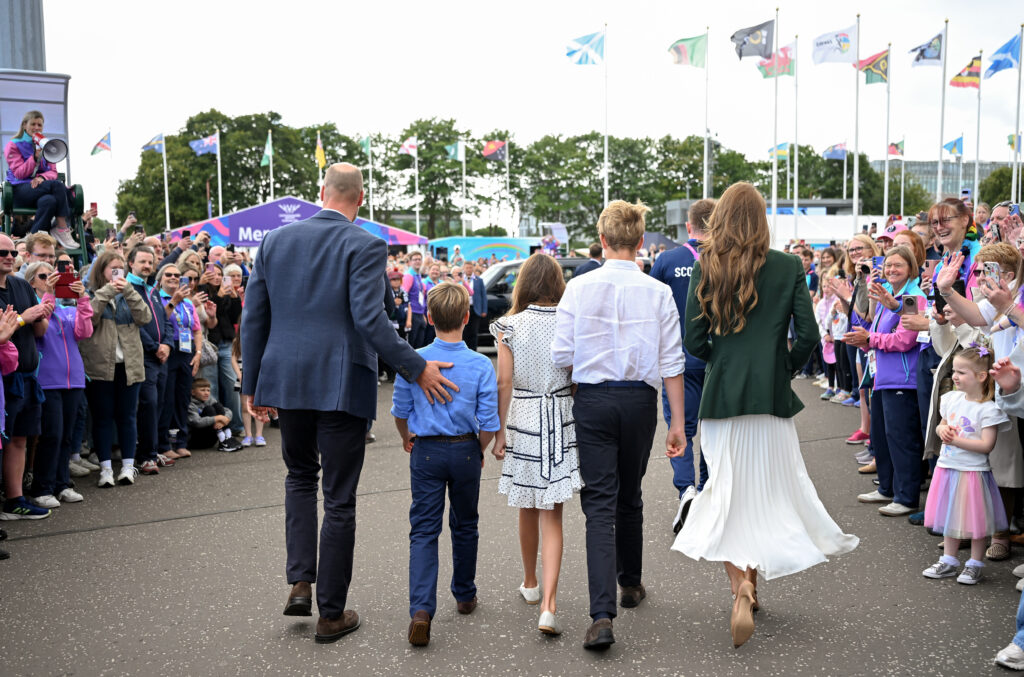
In the interim, while Prince William and Catherine are styled as the Duke and Duchess of Rothesay when in Scotland, their three children—Prince George, Princess Charlotte, and Prince Louis—continue to be known by their current English titles: Prince George of Wales, Princess Charlotte of Wales, and Prince Louis of Wales. This distinction underscores the differing protocols observed when the family is within the United Kingdom but specifically in Scotland versus other parts of the realm.
A Milestone Visit to the Commonwealth Games
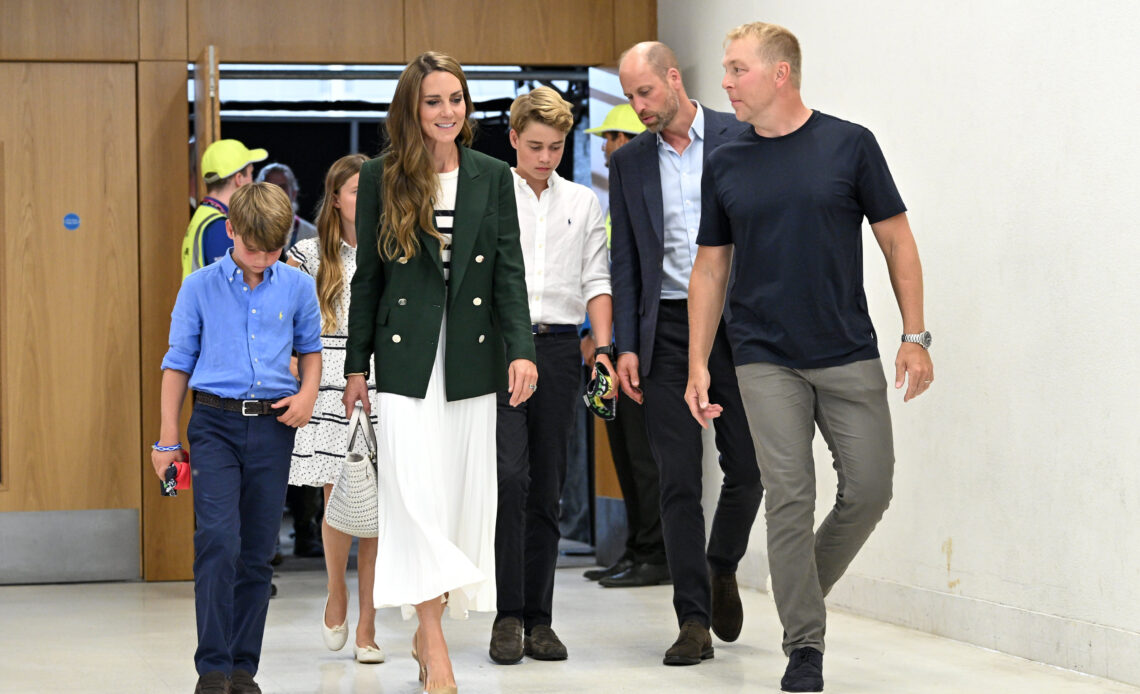
The presence of the Prince and Princess of Wales, along with their three children, at the Commonwealth Games in Glasgow represented a significant moment. This engagement marked the first official public appearance in Scotland for Prince George, Princess Charlotte, and Prince Louis as a family. Such events serve as important opportunities for the younger royals to connect with different parts of the United Kingdom and engage with the public on a broader scale, contributing to their understanding of their future roles.
During their visit, the royal family was seen interacting with other members of the extended Royal Family. Notably, they spent time with Prince Edward and Sophie, the Duke and Duchess of Edinburgh. The Duke and Duchess of Edinburgh also hold distinct Scottish titles, with Prince Edward being the Duke of Edinburgh. This intermingling of royal figures from different branches of the family underscores the close-knit nature of the monarchy and their shared commitment to public service across the United Kingdom. The presence of the entire family at such a prominent sporting event also highlights the modern approach of the monarchy, emphasizing family engagement and shared experiences during official duties.
Broader Implications and Royal Diplomacy
The adherence to distinct Scottish titles by senior members of the Royal Family serves as a powerful symbol of their connection to and respect for Scotland’s unique identity and heritage. It is a form of subtle yet significant royal diplomacy, acknowledging and reinforcing the historical ties between the Crown and Scotland. By embracing these titles, the Prince and Princess of Wales demonstrate a commitment to understanding and engaging with the distinct cultural and political landscape of Scotland.
The practice of using specific regional titles when visiting different parts of the United Kingdom is not unique to Scotland. However, the historical depth and constitutional significance of the Scottish titles, particularly the Dukedom of Rothesay, lend a particular weight to their usage. This ensures that the monarchy remains relevant and resonant across all nations of the United Kingdom, fostering a sense of unity and shared history. The continued emphasis on these traditional titles by Prince William and Catherine reflects a conscious effort to honor the past while navigating the evolving role of the monarchy in the 21st century. Their presence at events like the Commonwealth Games, while fulfilling their public duties, also serves to reinforce these enduring connections and the symbolic importance of their titles.



 Yuyun Lusiyani
 Joko Widodo
 Pevita Pearce
 admin
admin
 Lina Irawan