
 Eva Lovia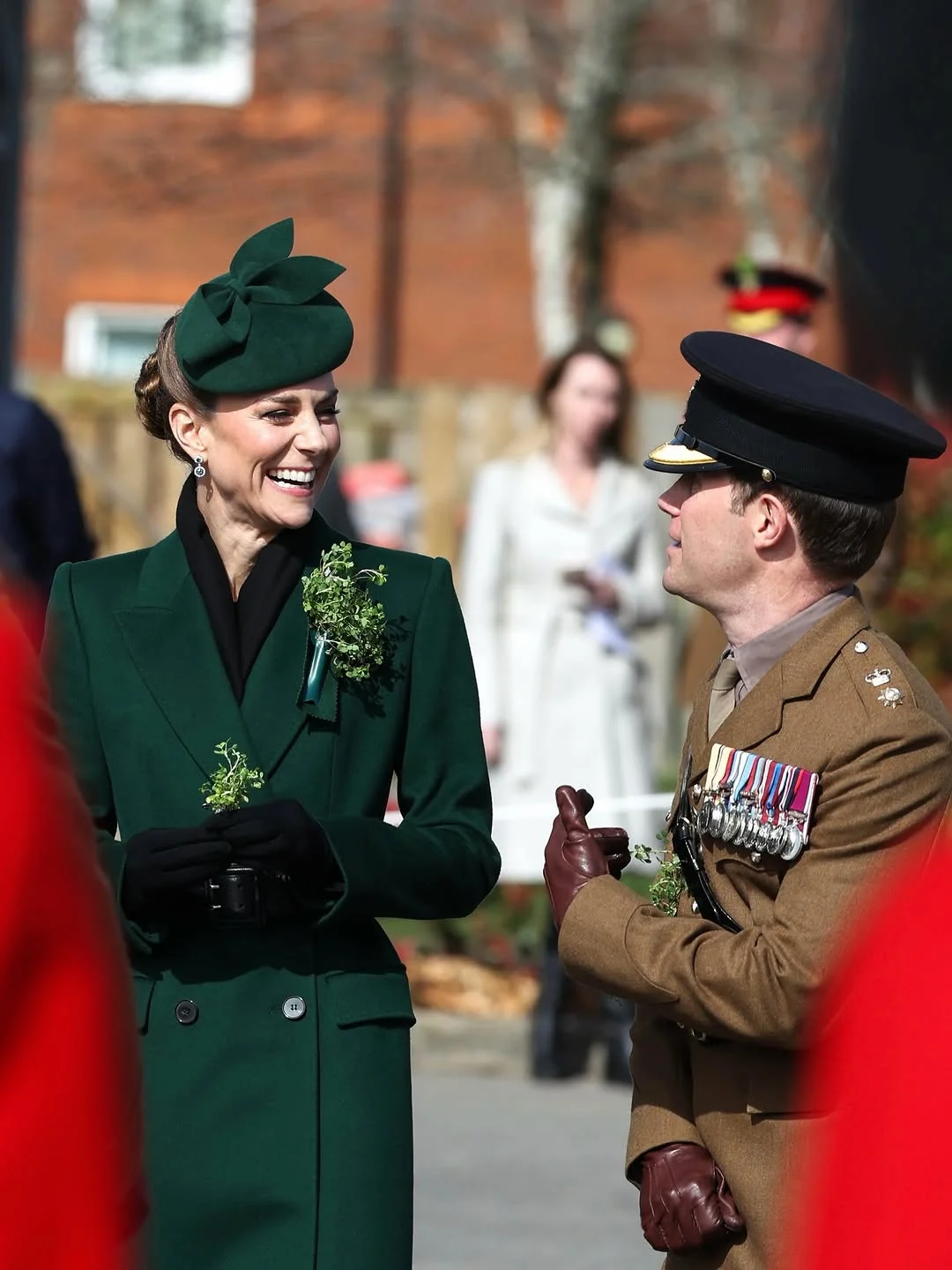
The Princess of Wales, in her capacity as Colonel of the Irish Guards, marked St. Patrick’s Day with a significant engagement at Mons Barracks in Aldershot on March 17th. Her Royal Highness participated in the regiment’s annual St. Patrick’s Day Parade, a tradition steeped in history and military camaraderie. This year’s celebration held particular poignancy as it represented one of her first major public duties following a period of reduced visibility due to health reasons, underscoring her unwavering commitment to her military affiliations.
A Day of Tradition and Honour
The Princess arrived at Mons Barracks to a warm reception, immediately immersing herself in the day’s proceedings. A central element of her visit was the traditional presentation of shamrocks, the national symbol of Ireland, to the assembled officers, guardsmen, and even the regiment’s beloved mascot, an Irish Wolfhound named Turlough Mor, affectionately known as Seamus. This act, rich in symbolism, reinforces the regimental connection to Ireland and its patron saint. The shamrock, a symbol of St. Patrick, is distributed annually to members of the Irish Guards, a tradition that dates back to the late 18th century. The distribution by the Colonel of the Regiment is a highly anticipated moment, fostering a sense of shared heritage and pride.
The morning’s schedule was robust, reflecting the multifaceted role of the Princess as Colonel. She also took the opportunity to present Long Service and Good Conduct Medals, an acknowledgment of the dedication and exemplary service of several members of the regiment. These awards are a tangible recognition of years of commitment, discipline, and unwavering loyalty to the Crown and country. Following the formal presentations, Her Royal Highness engaged with members of the Regimental Association, a vital link between serving personnel and veterans, ensuring continuity and support across generations of the regiment.
A particularly heartwarming segment of the visit involved meeting the "Mini Micks," junior cadets hailing from Northern Ireland. This initiative highlights the Army’s outreach programmes and its commitment to nurturing future generations of service personnel. The Princess’s interaction with these young cadets underscored the importance of early engagement and the inspiring role models within the armed forces. The day concluded with a formal photograph opportunity with the Officers’ and Sergeants’ Messes, a moment that captures the collective spirit and unity of the regiment.
Recognising Service and Sacrifice
Beyond the ceremonial aspects, the Princess of Wales made a point of meeting with regiment members and their families within the Mess. This personal engagement served to acknowledge the profound sacrifices and the often-unseen support provided by military families. The commitment of spouses and children is integral to the operational readiness and morale of any military unit, and Her Royal Highness’s dedication to recognising this contribution speaks volumes about her understanding of the demands of service life. These interactions provide a crucial platform for the Princess to hear firsthand accounts of the challenges and triumphs experienced by those who serve and their loved ones.
Lance Sergeant Mills, speaking to Sky News following the Princess’s visit, expressed the significance of the event. He described meeting the future Queen as "such a great opportunity," noting that his daughter, Vienna, had eagerly anticipated the occasion. The sentiment was echoed by LS Mills’ wife, Jessica, who found Her Royal Highness to be "just so easy to talk to, and really down to earth." She added, "I wasn’t actually expecting that. It’s my first time getting to come to the parade, so it was really lovely." These personal testimonies offer a glimpse into the genuine connection forged between the Princess and the service personnel, highlighting her approachable demeanour and her ability to make individuals feel valued and heard.
Regimental Symbolism and Personal Style
The Princess of Wales’s attire for the occasion was a masterful blend of regimental tradition and personal style. She wore a striking deep green coat dress, a colour that resonates with the Irish heritage of the regiment. This was complemented by classic black accessories, maintaining an air of understated elegance. A key element of her ensemble was the regimental brooch of the Irish Guards, a piece of jewellery rich in historical and symbolic meaning.
The Regimental Brooch of the Irish Guards is a distinguished insignia. It features an eight-point star, geometrically reminiscent of the star of the Order of St. Patrick, Ireland’s patron saint. At the heart of this star lies a shamrock, artfully superimposed upon a cross of St. Patrick. Encircling the shamrock and cross is the Latin motto, "Quis separabit?", which translates to "Who will separate us?". This motto, originally associated with the Order of St. Patrick, carries profound resonance for the Irish regiments of the British Army, signifying an unbreakable bond and shared purpose.
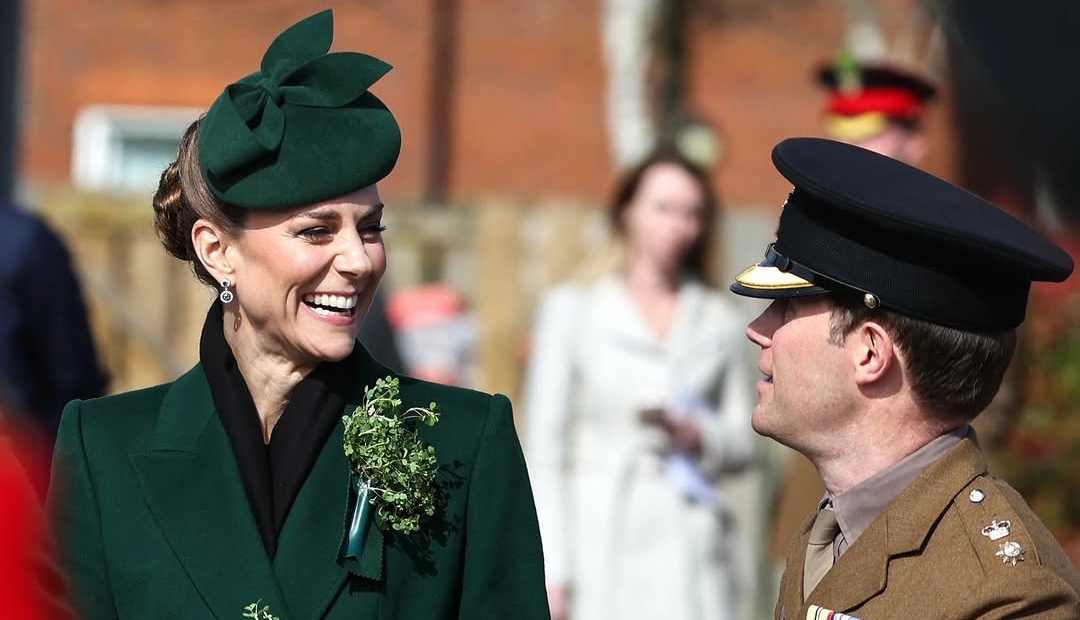
Her other jewellery choices were understated yet significant. She opted for a pair of diamond and emerald earrings, a piece she had previously worn at the Earthshot Prize ceremony in Boston in 2022. The choice of emeralds further subtly acknowledges the Irish connection.
A Legacy of Royal Patronage
The Princess’s role as Colonel of the Irish Guards is a continuation of a long-standing tradition of royal patronage within the armed forces. She assumed this prestigious appointment from her husband, Prince William, who served as Colonel of the Irish Guards from 2012 to 2022. This handover of responsibility underscores the enduring familial ties and commitment to the regiment. Prior to her appointment, the Princess accompanied the Prince of Wales to the St. Patrick’s Day parade on numerous occasions, demonstrating her early engagement and growing connection with the regiment. Her father-in-law, King Charles III, formally named her Colonel of the Regiment, a testament to her suitability and the confidence placed in her leadership.
The Kensington Palace Instagram account reflected the celebratory spirit of the day by sharing an Irish message: "Lá Fhéile Pádraig sona dhaoibh!", which translates to "Happy St. Patrick’s Day to you all!". This bilingual greeting further emphasises the Princess’s deep respect for Irish culture and her commitment to engaging with the regiment on a personal and cultural level.
The Significance of the St. Patrick’s Day Parade
The annual St. Patrick’s Day parade for the Irish Guards is more than just a ceremonial event; it is a deeply ingrained ritual that reinforces regimental identity, fosters esprit de corps, and acknowledges the historical ties to Ireland. The tradition of distributing shamrocks is believed to have originated when the Irish soldiers wore shamrocks in their caps during the Battle of the Plains of Abraham in 1759. St. Patrick, the patron saint of Ireland, is celebrated on March 17th, and for the Irish Guards, this date represents an opportunity to honour their heritage, their patron saint, and their enduring service to the United Kingdom.
The presence of the Colonel of the Regiment at this parade is a vital component of the tradition. It signifies the direct link between the highest levels of military command and the rank and file. The Colonel’s participation offers encouragement, recognition, and a tangible demonstration of royal support for the welfare and morale of the troops. For the Princess of Wales, stepping into this role is a significant responsibility, one that she appears to embrace with dedication and genuine warmth.
Broader Implications and Future Engagement
The Princess of Wales’s visible engagement at the St. Patrick’s Day parade carries broader implications, particularly in the current context of public scrutiny regarding royal duties. Her commitment to her military affiliations, even during periods of personal challenge, demonstrates resilience and a steadfast dedication to her public service. This appearance reassures the public and the armed forces alike of her continued dedication to her constitutional role.
Her role as Colonel of the Irish Guards is not merely a ceremonial title. It involves regular interaction with the regiment, including visits to training exercises, operational deployments, and, as seen, significant annual events. The Princess’s active involvement in these capacities strengthens the bond between the monarchy and the military, fostering mutual respect and understanding.
The detailed accounts from individuals like Lance Sergeant Mills highlight the personal impact of these royal engagements. They humanise the institution of the monarchy and underscore the importance of direct interaction in building strong relationships. As the Princess of Wales continues in her role as Colonel of the Irish Guards, her commitment to these duties will undoubtedly remain a cornerstone of her public service, reinforcing the vital connection between the Crown and its armed forces. Her ability to balance regimental tradition with personal grace and modern engagement sets a precedent for future royal leadership within the military sphere.


 Yuyun Lusiyani
 Joko Widodo
 Pevita Pearce
 admin
admin
 Lina Irawan