
 Eva Lovia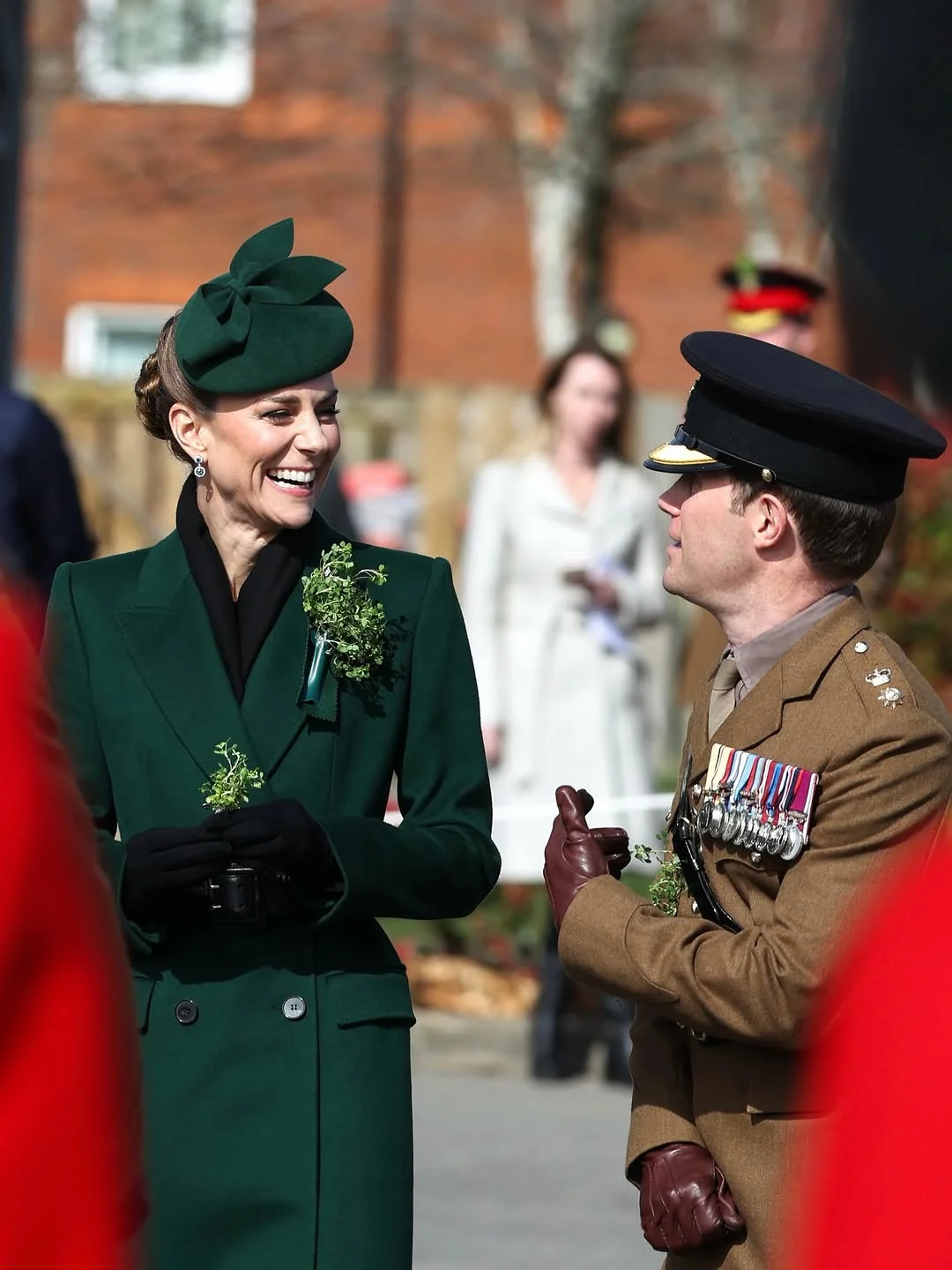
The Princess of Wales, undertaking her significant role as Colonel of the Irish Guards, marked St. Patrick’s Day with a distinguished visit to the regiment’s base in Aldershot on Tuesday. This annual engagement is a cornerstone of her ceremonial duties, underscoring her deep connection to the military and her commitment to upholding traditions. Arriving at Mons Barracks, Her Royal Highness was at the heart of the regiment’s celebratory parade, a day steeped in Irish heritage and military honour.
A Day of Tradition and Honour
The Princess’s presence was a focal point of the St. Patrick’s Day celebrations for the Irish Guards. She commenced her visit by fulfilling the cherished tradition of distributing shamrocks to the assembled officers and guardsmen. This symbolic gesture, deeply rooted in the regiment’s history, not only honours St. Patrick, the patron saint of Ireland, but also signifies good fortune and a connection to Irish identity for those serving. The tradition extends to the regiment’s beloved mascot, an Irish Wolfhound named Turlough Mor, affectionately known as Seamus, who also received a sprig of the national emblem.
The morning’s itinerary was meticulously planned, reflecting the importance of the occasion and the Princess’s engagement with all facets of the regiment. Beyond the ceremonial distribution of shamrocks, Her Royal Highness presented long service and good conduct medals, a tangible recognition of the dedication and exemplary service of individual guardsmen. These awards are a testament to years of commitment, discipline, and unwavering loyalty to the Crown and country.
Further demonstrating her comprehensive involvement, the Princess of Wales met with members of the Regimental Association. This vital group comprises veterans and their families, whose ongoing connection to the regiment is invaluable. Her engagement with these individuals highlights the enduring bonds within the military family and the importance of maintaining a link between past and present service.
A particularly heartwarming aspect of the visit involved the "Mini Micks," a contingent of junior cadets from Northern Ireland. Her interaction with these young aspiring members of the armed forces signifies a commitment to fostering the next generation of service personnel and instilling in them the values and traditions of the Irish Guards from an early age.
The day also included a formal photograph with the Officers’ and Sergeants’ Messes. This traditional gathering serves as a visual record of the occasion and reinforces the hierarchical structure and camaraderie within the regiment. The Princess’s participation in these formal moments underscores her integration into the regimental family.
A Deeper Connection: Families and the Regimental Mess
In a significant gesture of personal engagement, Her Royal Highness spent time with members of the regiment and their families within the Mess. This informal gathering provided an opportunity for the Princess to acknowledge the crucial role that families play in supporting service members. The sacrifices and resilience of military families are often the backbone of a service member’s career, and the Princess’s recognition of this underscores her understanding of the broader impact of military life.
This intimate setting allowed for more personal interactions, offering guardsmen and their loved ones a chance to connect with their Colonel on a more personal level. Such encounters are invaluable in fostering morale and reinforcing the sense of belonging that is so vital within a close-knit military unit. The Princess’s reputation for being approachable and down-to-earth was reportedly evident during these interactions, further strengthening her bond with the regiment.
Voices from the Ranks
The impact of the Princess of Wales’s visit was palpable among the soldiers. Lance Sergeant Mills, speaking to Sky News following the event, described the encounter as "such a great opportunity." He highlighted the particular excitement of his daughter, Vienna, who had eagerly anticipated meeting the Princess. This anecdote offers a glimpse into the personal significance of such royal visits, extending beyond the formal military context to touch the lives of families.
LS Mills’s wife, Jessica, shared her impressions, noting that the Princess was "just so easy to talk to, and really down to earth. I wasn’t actually expecting that. It’s my first time getting to come to the parade, so it was really lovely." This sentiment suggests that the Princess’s approachability and genuine interest in the lives of the guardsmen and their families made a profound and positive impression, transcending the usual formalities of such occasions. Her ability to connect on a personal level likely contributed significantly to the success and positive reception of her visit.
Regimental Symbolism and Style
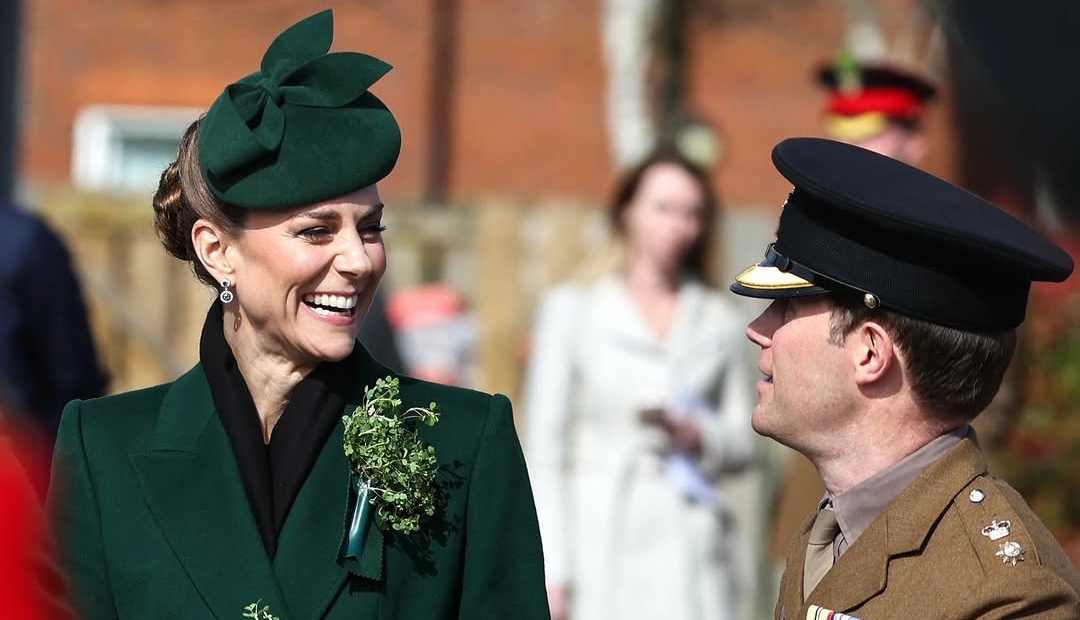
The Princess of Wales’s sartorial choices for the St. Patrick’s Day parade were meticulously chosen, reflecting both the occasion and her role. She wore a sophisticated deep green coat dress, a colour intrinsically linked to Ireland and the shamrock. This was complemented by classic black accessories, providing an elegant and understated backdrop. The focal point of her ensemble was the regimental brooch of the Irish Guards, a symbol of her deep connection and authority within the regiment.
The Regimental Brooch of the Irish Guards is a piece rich with symbolism. It features an eight-pointed star, mirroring the design of the Order of St. Patrick, Ireland’s patron saint. At its heart lies a shamrock, superimposed on a cross of St. Patrick. Encircling this central motif is the Latin motto, "Quis separabit," meaning "Who shall separate us?" This motto, adopted by the Order of St. Patrick, also holds profound significance for the Irish regiments of the British Army, signifying unity and an unbreakable bond.
Her jewellery choices were similarly refined. A pair of diamond and emerald earrings, previously seen at the Earthshot Prize ceremony in Boston in 2022, added a touch of sparkle. The choice of emeralds subtly echoes the green theme of the day and her Irish connections.
A Legacy of Royal Patronage
The Princess of Wales’s current role as Colonel of the Irish Guards is a continuation of a long-standing tradition of royal patronage within the regiment. She assumed this esteemed position in August 2023, appointed by her father-in-law, King Charles III. This appointment followed a decade-long tenure by her husband, the Prince of Wales, who served as Colonel of the Irish Guards from 2011 to 2022. The transition of this colonelcy to Her Royal Highness signifies a deepening of the Windsor family’s historical ties with this distinguished regiment.
The Prince of Wales’s own close relationship with the Irish Guards, marked by his regular attendance at St. Patrick’s Day parades and his active involvement in regimental life, established a strong precedent for his wife. The Princess’s assumption of the role demonstrates continuity and a commitment to nurturing these important connections. Her active participation in events like the St. Patrick’s Day parade reinforces her dedication to her military duties and her personal investment in the welfare and morale of the guardsmen.
A Message of Goodwill
In honour of St. Patrick’s Day, the Kensington Palace Instagram account shared a message from the Princess of Wales. The post featured an Irish Gaelic greeting: "Lá Fhéile Pádraig sona dhaoibh!" which translates to "Happy St. Patrick’s Day to you all!" This thoughtful inclusion of the Irish language further demonstrates her respect for the cultural heritage of the regiment and her effort to connect with its members on a deeper level. The use of Gaelic not only adds an authentic touch to the celebrations but also highlights the Princess’s commitment to understanding and embracing the traditions associated with the Irish Guards.
Historical Context of St. Patrick’s Day in the Military
The tradition of the British Army celebrating St. Patrick’s Day dates back to the late 18th century, particularly among Irish regiments. It is believed that the practice of wearing shamrocks originated from the Battle of Fontenoy in 1745, where Irish soldiers serving in the French army were said to have worn shamrocks on their hats in commemoration of St. Patrick and in defiance of their British adversaries. This tradition was subsequently adopted by Irish regiments within the British Army.
The distribution of shamrocks by senior officers, and in this instance by the Colonel of the Regiment, is a direct continuation of this historical practice. It serves as a powerful symbol of regimental identity, national pride, and shared heritage. For the Irish Guards, this day is not merely a cultural celebration but a significant military occasion that reinforces their unique identity within the broader British Army.
The presence of the regimental mascot, an Irish Wolfhound, also carries historical weight. These magnificent dogs have long been associated with Ireland and have served as symbols of the nation’s strength and heritage. Their inclusion in formal regimental events adds a unique cultural dimension and reinforces the Irish identity of the regiment.
The Significance of the Colonelcy
The role of a Colonel of a regiment is one of great honour and responsibility within the British Army. While it is a ceremonial appointment, it carries significant weight. The Colonel acts as a patron and figurehead for the regiment, representing it at important events and providing a link to the Royal Family. Their involvement helps to boost morale, foster esprit de corps, and ensure the regiment’s traditions and heritage are maintained.
For the Princess of Wales, this role is a crucial part of her public duties. It allows her to engage directly with members of the armed forces, understand their challenges and triumphs, and champion their contributions. Her dedication to her military affiliations, including her role with the Irish Guards, is a testament to her commitment to serving the nation and supporting those who do. The Princess’s proactive engagement and visible presence at events like the St. Patrick’s Day parade demonstrate a deep understanding of the importance of these connections and a genuine desire to uphold the values and traditions of the regiments under her command. Her tenure as Colonel of the Irish Guards is likely to be marked by continued dedication and a strong personal investment in the well-being of its soldiers and their families.


 Yuyun Lusiyani
 Joko Widodo
 Pevita Pearce
 admin
admin
 Lina Irawan