
 Eva Lovia
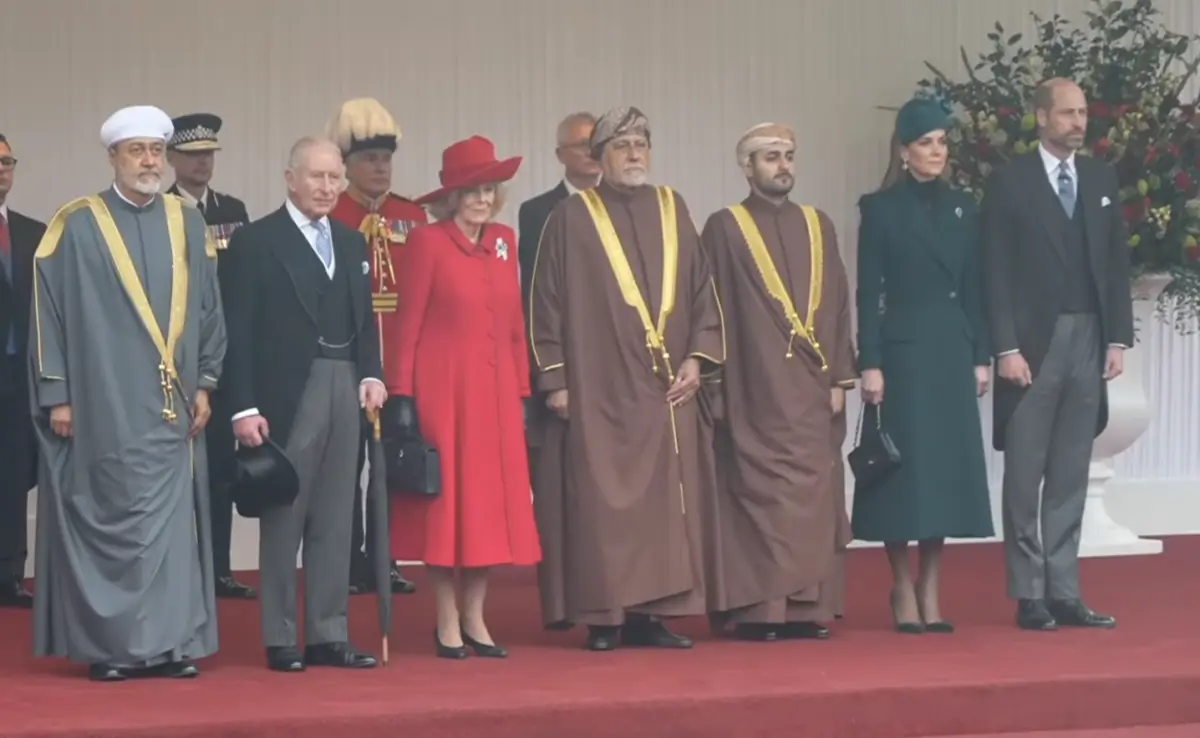
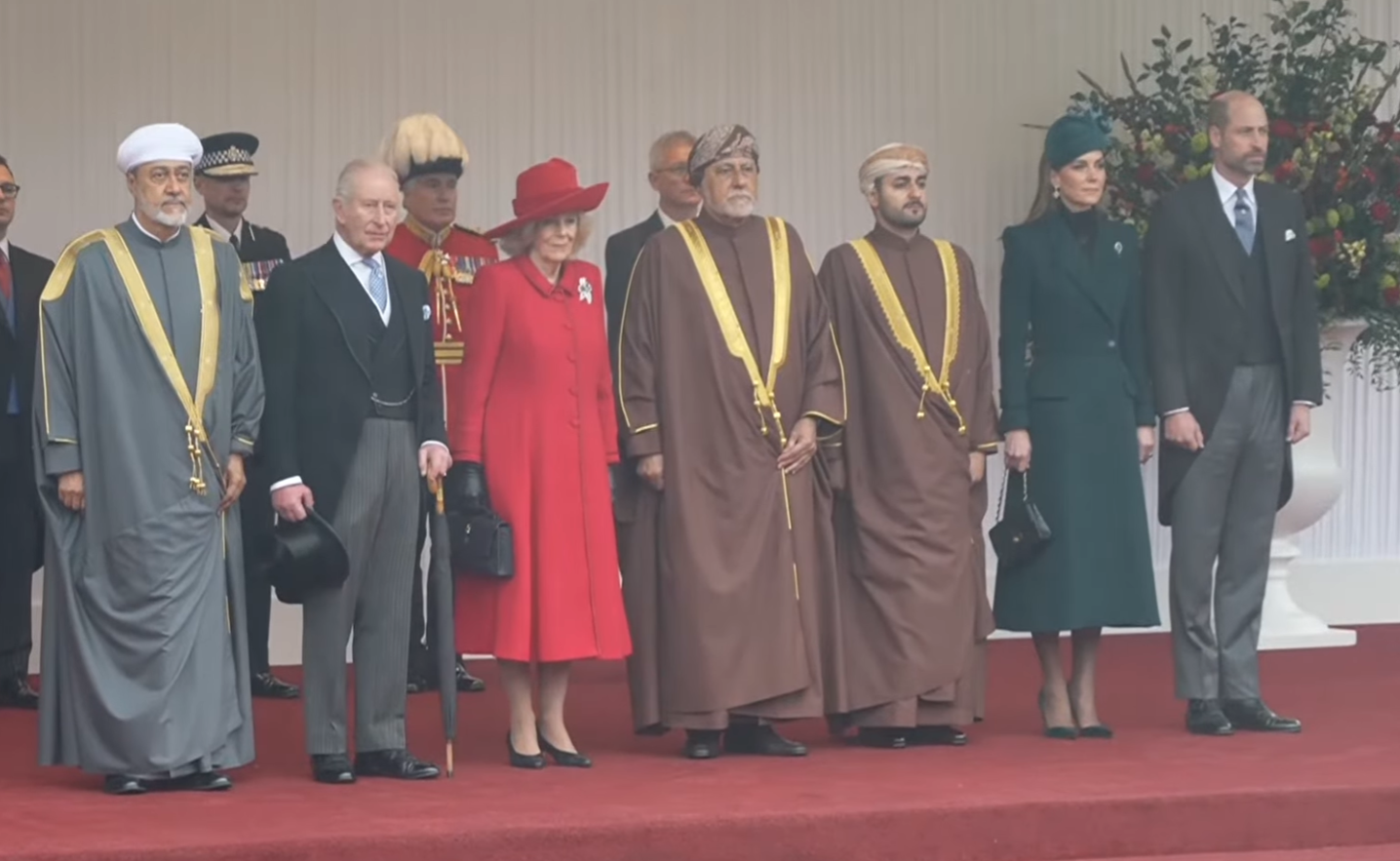
The Princess of Wales marked the commencement of a significant State Visit by the Sultan of Oman to the United Kingdom with a poignant sartorial choice, selecting a historically rich emerald brooch that carries a legacy of royal patronage spanning over a century. The intricate jewel, part of the esteemed Prince of Wales Feather Brooch set, was prominently displayed as Catherine, alongside Prince William, extended a warm welcome to His Majesty Sultan Haitham bin Tarik. This high-profile event, the first State Visit of Sultan Haitham bin Tarik to the UK since his ascension to the throne in 2020, underscores the enduring diplomatic and cultural ties between Oman and the United Kingdom.
The Princess of Wales’s selection of the Prince of Wales Feather Brooch, particularly with its distinctive emerald drop, is a testament to her thoughtful approach to royal engagements. The brooch’s deep historical roots and its connection to a lineage of prominent royal women imbue her choice with a layer of significance that transcends mere adornment. The emerald, known for its symbolism of rebirth, love, and loyalty, adds a further dimension to the jewel’s already rich narrative, aligning with the celebratory and diplomatic nature of the State Visit.
A Formal Welcome and a Royal Legacy
The initial stages of the State Visit unfolded with meticulous protocol. Prince William and Catherine, the Prince and Princess of Wales, were tasked with the crucial duty of receiving Sultan Haitham bin Tarik at his London residence. This personal reception by senior members of the Royal Family signifies the importance accorded to this diplomatic mission. Following this initial welcome, the delegation proceeded to Windsor Castle, where His Majesty King Charles III offered the official ceremonial welcome. The presence of the Prince and Princess of Wales throughout these early stages highlights their growing roles within the Royal Family’s diplomatic outreach and their commitment to representing the Crown on the international stage.
Catherine’s ensemble for this prestigious occasion was a sophisticated dark green coat dress, a colour often associated with regality and natural elegance. The chosen brooch, however, became the focal point, drawing attention to its intricate design and storied past. The Prince of Wales Feather Brooch, a distinguished piece in the Crown’s collection, features an oval central motif crafted from diamonds, culminating in emerald tips. For this particular appearance, the Princess of Wales opted to attach the emerald drop, a variation she has employed on previous occasions, demonstrating her understanding of the brooch’s adaptability and her personal connection to its various configurations.
Tracing the Brooch’s Royal Lineage
The history of the Prince of Wales Feather Brooch is deeply interwoven with the British monarchy. Its origins date back over 150 years, when it was presented as a gift to Alexandra of Denmark upon her marriage to Albert Edward, the then Prince of Wales, in 1863. The gift was a gesture from the people of North Wales, intended to commemorate the union and signify their loyalty and affection. The iconic Prince of Wales feathers, a heraldic symbol of the Prince of Wales, are rendered in sparkling diamonds, with the distinctive emerald tips adding a touch of opulent colour.
During her tenure as Princess of Wales, Alexandra frequently wore the brooch, making it a familiar sight at royal events. After her time, the brooch passed to Queen Elizabeth The Queen Mother, who also held a fondness for the piece and was known to wear it on numerous occasions. This lineage of esteemed royal custodianship underscores the brooch’s status as a significant heirloom.
A pivotal moment in the brooch’s modern history occurred in 1981 when it was presented to Lady Diana Spencer upon her marriage to the then Prince Charles. Diana, a style icon in her own right, famously adapted the brooch, wearing it as a pendant, showcasing its versatility and her personal flair. Her adoption of the jewel cemented its place in the public consciousness and linked it to a new generation of royal prominence.
Following Diana’s untimely death, the brooch remained within the Royal Collection. In 2005, it was worn by Camilla Parker Bowles (now Queen Camilla) upon her marriage to King Charles. Queen Camilla’s use of the brooch continued its tradition of being worn by the Princess of Wales, and later, by a consort.
Since 2022, the current Princess of Wales, Catherine, has embraced the brooch, incorporating it into her own distinguished collection of royal jewels. Her preference for the piece, particularly for State Visits, highlights its suitability for formal diplomatic occasions and her recognition of its historical weight. This recurring wear by Catherine signifies not only her appreciation for its aesthetic beauty but also her understanding of its symbolic importance as a connection to the past and a representation of continuity within the monarchy.
The State Visit: A Diplomatic Showcase
The State Visit of Sultan Haitham bin Tarik to the United Kingdom represents a significant diplomatic undertaking, aiming to strengthen bilateral relations between Oman and the UK across various sectors, including trade, investment, defence, and cultural exchange. Such visits are meticulously planned, involving extensive preparation and a carefully curated itinerary designed to facilitate meaningful dialogue and collaboration. The Sultan’s visit, the first of its kind since 2019 and the first for Sultan Haitham bin Tarik, signifies a renewed commitment to fostering strong ties between the two nations.
The formal welcome ceremony at Windsor Castle is a cornerstone of any State Visit, featuring traditional elements such as a guard of honour, military bands, and a carriage procession. The participation of the Prince and Princess of Wales in these key ceremonial events underscores the familial and personal dimension of the diplomatic relationship. The presence of the Royal Family at such junctures often serves to personalize international relations, fostering a sense of warmth and mutual respect.
Following the initial ceremonies, the itinerary typically includes a series of engagements designed to showcase the breadth of the UK-Oman partnership. Lunches hosted by the King and Queen provide an opportunity for more intimate discussions and relationship-building. These gatherings bring together key figures from government, business, and cultural spheres, facilitating networking and the exploration of new avenues for cooperation.
The culmination of the first day of a State Visit is invariably a State Banquet. This grand occasion, usually held at Buckingham Palace or Windsor Castle, is a highly formal affair attended by members of the Royal Family, senior government officials, distinguished guests from Oman, and prominent figures from British society. The State Banquet serves as a high-profile platform for speeches that reaffirm the enduring friendship and shared aspirations of the two nations, often highlighting specific areas of mutual interest and future collaboration.
Analytical Implications and Broader Context
Catherine’s choice of the Prince of Wales Feather Brooch during this State Visit offers several layers of interpretation within the context of royal diplomacy and public relations. Firstly, her consistent use of significant historical pieces demonstrates a commitment to upholding royal tradition and acknowledging the continuity of the monarchy. By wearing jewels that have been worn by previous Princesses of Wales and Queens, she subtly reinforces the enduring legacy and institutional strength of the Crown.
Secondly, the brooch’s origin as a gift from the people of North Wales imbues it with a sense of national connection. This resonates particularly strongly when hosting foreign dignitaries, as it subtly highlights the deep-seated historical and cultural connections that underpin the United Kingdom. It serves as a reminder of the diverse origins of royal treasures and the collective sentiment they represent.
Furthermore, Catherine’s strategic deployment of such historically significant pieces can be seen as a form of soft diplomacy. The narrative surrounding the brooch – its journey through generations of royal women, its symbolic design, and its connection to the people – adds depth and resonance to her public appearances. This narrative can be subtly communicated through media coverage, enriching the public’s understanding of the Royal Family’s role and heritage.
The State Visit itself, occurring in a dynamic global landscape, holds particular significance. Oman, under Sultan Haitham bin Tarik, continues to play a vital role in regional stability and international diplomacy, particularly in its capacity as a mediator. The UK, seeking to solidify its global partnerships post-Brexit, views Oman as a crucial ally in the Middle East. Therefore, the success of this State Visit is likely to have tangible implications for future trade agreements, security cooperation, and diplomatic initiatives in the region.
The Princess of Wales’s engagement in such prominent diplomatic events, coupled with her thoughtful selection of meaningful royal heirlooms, underscores her evolving role as a key representative of the British monarchy. Her ability to blend contemporary style with historical significance ensures that royal traditions remain relevant and engaging for a modern audience, while simultaneously reinforcing the enduring strength and historical depth of the British Crown on the international stage. The historic emerald, catching the light and symbolising enduring values, served as a silent yet powerful ambassador of royal heritage during this significant diplomatic occasion.



 Nila Kartika Wati

 Lina Irawan

 Yuyun Lusiyani

 Ana Megawati

 Joko Widodo
