
 Eva Lovia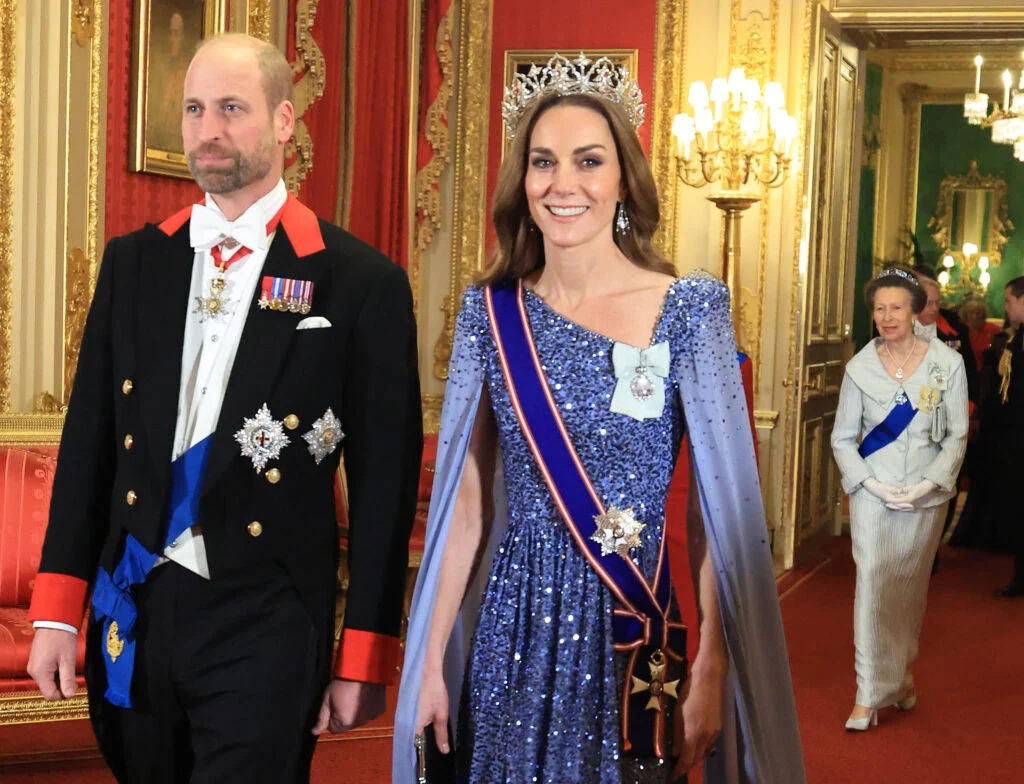
The Princess of Wales recently made a striking appearance, gracing a state banquet with a tiara that is both magnificent and historically significant, yet remarkably unfamiliar to many. The jewel in question, the Queen Victoria Fringe Tiara, has been absent from public view for over two decades, its reappearance marking a notable moment in royal jewelry history. Its prolonged absence is attributed to its deep association with Queen Elizabeth The Queen Mother, a connection so profound that it cast a long shadow over its subsequent wearers. This tiara, a "queens-only" piece by tradition, has now been donned by Catherine, Princess of Wales, a significant departure that underscores her evolving role within the monarchy.
A Tiara of Royal Lineage and Architectural Influence
The Queen Victoria Fringe Tiara, often referred to as the "Queen Victoria’s Wedding Tiara" or simply the "Fringe Tiara," boasts a rich provenance dating back to the mid-19th century. Its creation was a collaborative endeavor, deeply influenced by Queen Victoria and her devoted consort, Prince Albert. Commissioned in the 1850s, its design is a testament to Prince Albert’s keen interest in multiculturalism and the arts, drawing inspiration from Indian architectural motifs. This stylistic influence is particularly relevant given the context of the state banquet, which honored the President of Germany, a nod to Prince Albert’s German heritage and his pivotal role in organizing the Great Exhibition of 1851 in London, a landmark event showcasing global innovation and artistry.
The tiara’s construction involved intricate diamond arches, reflecting an aesthetic that merged European regal tradition with exotic influences. Furthermore, the presence of certain diamonds within the tiara adds another layer of historical depth, as they are believed to have originally belonged to Queen Charlotte, the German-born consort of King George III and grandmother to Queen Victoria. This lineage connects the tiara to an earlier era of royal German connections within the British monarchy.
From Opals to Rubies: A Transformation in Design
Initially, Prince Albert envisioned the tiara to feature opals as a prominent gemstone, alongside the diamonds. However, following his untimely death in 1861, Queen Victoria, who famously wore mourning for the remainder of her life, largely withdrew her most significant jewels from public display. Upon her death in 1901, the tiara was bequeathed to the Crown, ensuring its permanent place within the Royal Family’s collection.
The tiara underwent a significant transformation during the ownership of Queen Alexandra, wife of King Edward VII. Queen Alexandra reportedly harbored a superstition about opals, considering them unlucky. Consequently, she had the original opals removed and replaced with rubies. This alteration is the design that endures today, a striking arrangement of diamonds and rubies set in a delicate fringe formation.
A Tiara Reserved for Queens
Historically, the Queen Victoria Fringe Tiara has been exclusively worn by women holding the title of Queen. Its distinguished wearers include Queen Alexandra, Queen Mary, Queen Elizabeth The Queen Mother, and Queen Elizabeth II. The tiara’s association with these reigning or consort queens has cemented its status as a jewel of immense royal significance, reserved for the highest echelons of the royal female line.
The Prolonged Absence and the Queen Mother’s Affection
The tiara’s absence from public view for over two decades can be largely attributed to its deep and enduring connection with Queen Elizabeth The Queen Mother. She held the tiara in particularly high esteem and wore it frequently throughout the reign of her husband, King George VI. Its prominence during this period meant that it became intrinsically linked to her image and her role as Queen.
Following King George VI’s death in 1952, the tiara would, by all conventional royal succession protocols, have passed to his daughter, Princess Elizabeth, who then ascended the throne as Queen Elizabeth II. However, Queen Elizabeth The Queen Mother’s profound affection for the tiara, and perhaps with the tacit approval of her daughter, continued to wear it well into her later years. This prolonged personal custodianship meant that the tiara remained largely associated with her, rather than becoming a staple in Queen Elizabeth II’s own collection of significant jewels.
When Queen Elizabeth The Queen Mother passed away in 2002, the tiara finally passed to Queen Elizabeth II. Yet, by this time, its strong association with her mother meant that Queen Elizabeth II, while owning it, did not frequently choose to wear it. Her Majesty wore the tiara in public on only one documented occasion during her reign: a visit to Malta. After this singular appearance, the tiara retreated from public sight, residing within the royal vaults.
A Significant Royal Moment for the Princess of Wales
The Princess of Wales’s decision to wear the Queen Victoria Fringe Tiara for a state banquet is therefore a momentous occasion. It signifies not only a rare outing for this historically rich piece of jewelry but also a symbolic passing of the torch. By wearing a tiara traditionally reserved for queens, and one that has been absent for so long due to its strong association with a beloved former Queen Mother, Catherine is making a clear statement about her present and future role within the monarchy.
This choice is particularly poignant as it occurs during a period of significant transition for the Royal Family. With Queen Elizabeth II’s passing and King Charles III’s accession, the younger generation of royals are stepping into more prominent positions. The Princess of Wales, as the future Queen Consort, is increasingly taking on the responsibilities and symbolic duties associated with that role. Donning this tiara, with its deep historical roots and its "queens-only" designation, serves to underscore her readiness and her growing stature.
The Context of the State Banquet
The state banquet, a formal occasion of diplomatic significance, provided the perfect backdrop for the tiara’s reintroduction. State banquets are traditional events that allow for the display of significant royal regalia and jewelry, serving as both a demonstration of royal heritage and a symbol of diplomatic ties. The presence of the German President highlighted the historical connections Prince Albert, a German prince, had with the creation of this particular tiara. This detail adds a layer of appropriateness to its selection for this specific state occasion.
The choice of the tiara, therefore, is not merely about its monetary value or its aesthetic appeal, but about its historical resonance and its symbolic weight. It connects the present day to a rich past, bridging generations of royal women and their roles within the British Crown.
Expert Analysis and Royal Watcher Reactions
Royal commentators and jewelry historians have noted the significance of this event. "The reappearance of the Queen Victoria Fringe Tiara is a significant event in itself, given its long absence from public view," commented a leading royal historian. "However, for it to be worn by the Princess of Wales, who is not yet a Queen Consort but is clearly positioned as one for the future, is a powerful statement. It signifies an endorsement of her evolving role and her readiness to embrace the full weight of royal tradition and symbolism."
The tiara’s intricate design and the stories behind its creation and alterations offer a fascinating glimpse into the personal tastes and historical circumstances of its past owners. The transition from opals to rubies, driven by superstition, is a humanizing detail that adds depth to the narrative of this royal heirloom. The fact that it remained out of public sight for so long due to its strong association with Queen Elizabeth The Queen Mother speaks volumes about the enduring power of personal connection and legacy within the Royal Family.
Broader Implications for the Monarchy
The Princess of Wales’s embrace of such a historically charged piece of jewelry can be interpreted as a strategic move to reinforce the continuity and stability of the monarchy. In an era of rapid social change and evolving public perceptions, the Royal Family often relies on tradition and heritage to maintain its relevance and authority. By wearing the Queen Victoria Fringe Tiara, Catherine is not only showcasing a magnificent piece of history but also aligning herself with the legacy of her predecessors, particularly Queen Elizabeth The Queen Mother and Queen Elizabeth II.
This act can be seen as a subtle yet effective way of reassuring the public of the monarchy’s enduring strength and its ability to adapt while remaining rooted in tradition. It signals a smooth transition of power and a commitment to upholding the values and symbols that have long been associated with the Crown. Furthermore, it provides a moment of sparkle and glamour, a welcome distraction that can uplift public mood, especially during challenging times, as the original article hinted. The sheer magnificence of such a jewel, when worn with grace and poise, can indeed contribute to a sense of national pride and continuity.
The Princess of Wales’s choice of the Queen Victoria Fringe Tiara is more than just a fashion statement; it is a carefully considered act that resonates with historical significance, personal legacy, and the future trajectory of the British monarchy. Its reappearance after a prolonged absence marks a new chapter, not only for the tiara itself but also for the woman who now wears it, a future Queen in the making.



 Yuyun Lusiyani
 Joko Widodo
 Jia Lissa
 Pevita Pearce
 admin
admin
