
 Eva Lovia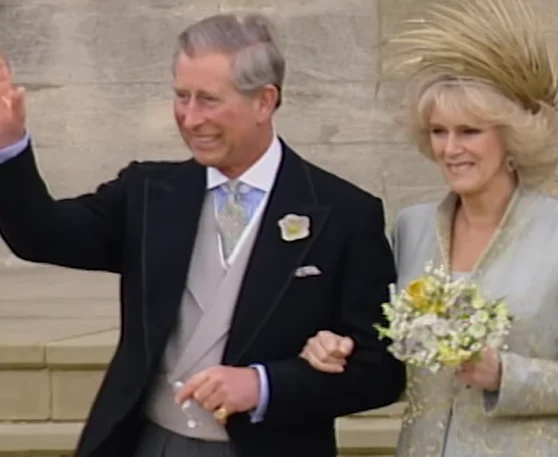
It was a marriage destined for the history books, a union that captured the nation’s attention and marked a significant moment in the evolution of the British monarchy. When King Charles and Queen Camilla, then Prince Charles and Camilla Parker Bowles, announced their engagement in February 2005, the world anticipated a celebration befitting their royal status. Their initial plan was a civil ceremony at the iconic Windsor Castle, followed by a religious blessing at the historic St. George’s Chapel on the same day in April 2005. However, this seemingly straightforward royal wedding soon encountered an unexpected bureaucratic hurdle, forcing a swift change of venue and highlighting the intricate, and sometimes surprisingly rigid, legal framework governing even the most prominent of ceremonies.
The core of the issue lay not in royal prerogative, but in the precise stipulations of a civil marriage licence. Until the mid-1990s, civil marriages in England and Wales were strictly confined to designated register offices. The landmark Marriages Act 1994 introduced a significant liberalization, permitting civil ceremonies to take place in a broader array of licensed venues, including historic buildings such as castles. Windsor Castle, a symbol of royal continuity for nearly a millennium, was not among these licensed venues. As soon as the intention to hold the civil ceremony within its venerable walls was mooted, a critical condition of the licence became apparent: any venue granted a licence for civil marriages must be "regularly available to the public for the solemnization of marriages." This meant that if Windsor Castle were to host the royal couple’s civil wedding, it would, for a period of three years, have to be accessible to all couples seeking to marry there, irrespective of their standing.
A Timeline of Royal Wedding Revisions
The announcement of the engagement and initial wedding plans:
- February 2005: Prince Charles and Camilla Parker Bowles announce their engagement. They reveal their intention to marry in a civil ceremony at Windsor Castle in April 2005, followed by a blessing at St. George’s Chapel.
The critical discovery and subsequent alteration:
- Approximately February 10th-16th, 2005: The requirement for a venue to be regularly available to the public for marriages becomes apparent concerning Windsor Castle.
- February 17th, 2005: The couple formally announces a change of venue for their civil ceremony. They will now marry at the nearby Windsor Guildhall in the town’s High Street. The religious blessing at St. George’s Chapel remains as planned.
The wedding day itself:
- April 9th, 2005: Prince Charles and Camilla Parker Bowles marry in a civil ceremony at Windsor Guildhall. They later attend a televised religious blessing service at St. George’s Chapel.
The Legal Landscape: Marriages Act 1994 and Venue Licensing
The Marriages Act 1994 was a progressive piece of legislation designed to modernize marriage laws and offer greater flexibility to couples. It effectively dismantled the long-standing restriction of civil ceremonies to register offices. This opened up a world of possibilities, allowing individuals to exchange vows in settings ranging from stately homes and hotels to gardens and, indeed, historic castles. The intent behind the "regularly available to the public" clause was to ensure that the licensing of such venues did not create exclusive or preferential access for any particular individual or group, maintaining a principle of public service.
For a venue as significant and historically important as Windsor Castle, the implications of this clause were substantial. To have granted a licence would have necessitated a fundamental shift in how the castle, a working royal residence and a major tourist attraction, operated its marriage licensing for a significant period. The logistical and administrative challenges, alongside the potential for perceived royal privilege, likely contributed to the decision to seek an alternative.
The Windsor Guildhall: A Historically Significant Alternative
The selection of the Windsor Guildhall as the new venue for the civil ceremony proved to be a pragmatic and historically resonant choice. Located on the High Street, a stone’s throw from the imposing walls of Windsor Castle, the Guildhall offered a distinguished setting steeped in local and national history. The 17th-century building, a Grade I listed structure, was designed by the renowned architect Sir Christopher Wren and underwent significant restoration in the 19th century. Its architecture and historical gravitas provided a fitting backdrop for a royal wedding, even if it was a civil rather than a religious ceremony.
The couple chose the Ascot Room within the Guildhall for their civil ceremony. This smaller, more intimate space within the larger venue accommodated their needs for the legal union. The marriage of Prince Charles and Camilla Parker Bowles is now a notable entry in the Windsor Guildhall’s long and storied history, a testament to its enduring significance as a venue for important public and private occasions.
Evolving Marriage Laws and Royal Venues
The situation surrounding the royal wedding of 2005 highlighted a nuanced point in marriage law that has since evolved considerably. The landscape of civil ceremonies has transformed dramatically in the intervening years. Civil marriages now constitute the majority of weddings conducted in England and Wales, a stark contrast to the past. This surge in popularity has led to a proliferation of licensed venues, numbering in the thousands.
Notably, several present and former royal residences have since obtained licenses for civil ceremonies. These include:
- Kensington Palace: A royal residence with a rich history, now hosting civil ceremonies.
- Hampton Court Palace: One of the most famous royal palaces, offering licensed spaces for weddings.
- Kew Palace: A more intimate royal palace that also provides licensed wedding facilities.
- Banqueting House, Whitehall: A historic architectural masterpiece with a licence for civil ceremonies.
However, Windsor Castle itself has not acquired a licence for civil ceremonies. Its function in hosting weddings remains exclusively for religious ceremonies. This distinction means that while other royal homes have embraced the broader possibilities offered by the Marriages Act 1994, Windsor Castle continues to operate within its established parameters for marital unions. Notable royal couples who have had religious ceremonies at Windsor Castle in recent years include Prince Harry and Meghan Markle, and Princess Eugenie and Jack Brooksbank.
The Impact and Broader Implications
The subtle yet significant shift in the venue for Prince Charles and Camilla’s civil wedding had several broader implications:
- Public Perception of Royal Prerogative: The incident underscored that even the most prominent figures in the monarchy are subject to the laws of the land. It demystined the idea that royal status could override legal requirements, fostering a sense of fairness and equality under the law.
- Promoting Civil Ceremonies: The royal couple’s willingness to adapt their plans and proceed with a civil ceremony, albeit at a different location, may have subtly encouraged others to consider civil unions. Their high-profile wedding, even with the venue change, brought attention to the legitimacy and dignity of civil marriages.
- The Evolving Nature of Marriage Law: The event served as a public illustration of how marriage laws can adapt and change, driven by societal shifts and legislative reforms. The Marriages Act 1994, and the subsequent increase in licensed venues, reflect a more inclusive and flexible approach to marriage.
- The Practicalities of Venue Licensing: The case highlights the importance of understanding and adhering to the specific conditions attached to venue licenses. For any venue, whether a historic castle or a modern hotel, compliance with regulations is paramount.
Future of Wedding Laws and Windsor Castle
The UK government has, in recent times, initiated consultations into wedding laws, signalling an ongoing interest in modernizing and potentially further liberalizing marriage regulations. These consultations often explore areas such as the types of venues that can be licensed and the administrative processes involved.
However, given the historical context and the specific operational nature of Windsor Castle, it remains unlikely that its status as a venue for civil ceremonies will change in the near future. The castle’s primary role as a working royal palace and a significant historical monument, coupled with the existing framework for religious ceremonies, suggests that the current arrangement is likely to persist. The story of the royal wedding of 2005 thus remains a fascinating footnote in the annals of British royal history, a reminder that even for kings and queens, the path to matrimony is sometimes paved with unexpected legal considerations.



 Yuyun Lusiyani
 Joko Widodo
 Pevita Pearce
 admin
admin
 Lina Irawan