
 Yuyun Lusiyani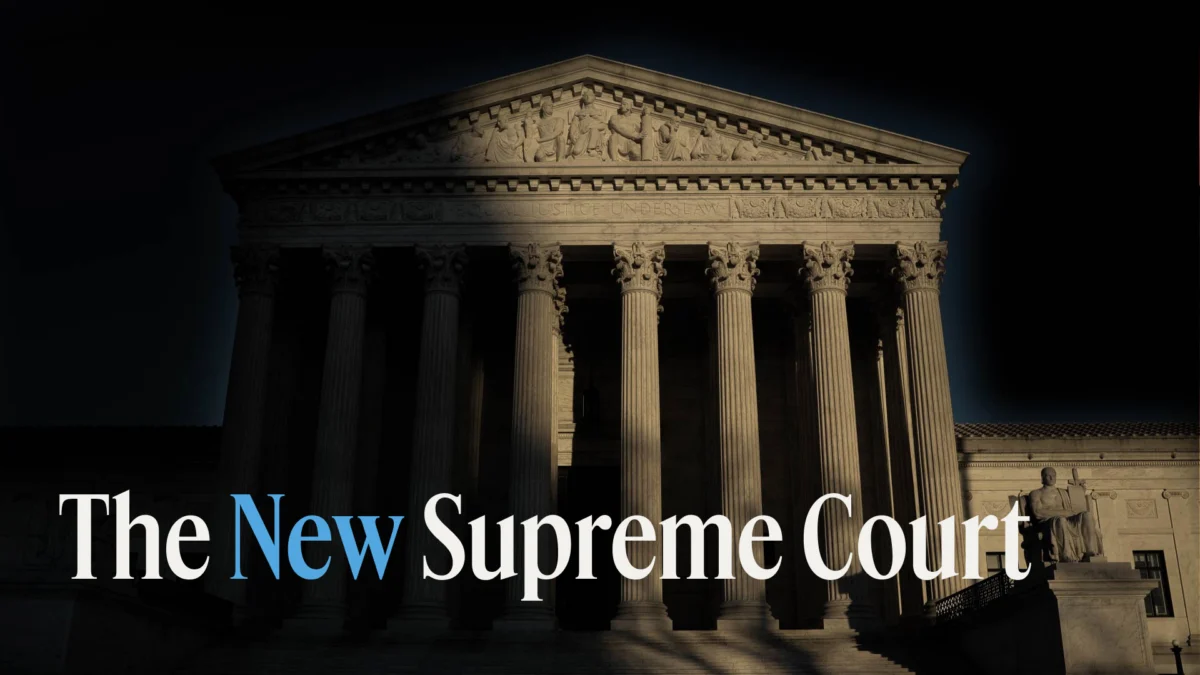
In an unprecedented shift that has sent ripples through legal and political circles, the Supreme Court, in its term concluding in 2025, issued more substantive decisions via its emergency "shadow docket" than through cases argued in open court. This significant development marks what legal experts believe to be the first time such a phenomenon has occurred in the Court’s modern history, raising profound questions about judicial transparency, due process, and the very nature of American jurisprudence. The finding emerged from an extensive analysis of tens of thousands of case files retrieved from the Court’s online archives, meticulously parsing routine administrative requests from challenges carrying profound constitutional and societal implications.
Understanding the Shadow Docket: Origins and Evolution
The term "shadow docket" refers to the Supreme Court’s emergency applications and orders, which are typically handled without oral arguments, full briefing, or signed opinions explaining the justices’ reasoning or even their votes. Historically, this docket was conceived as a necessary mechanism for the Court to address truly urgent matters, such as requests for stays of execution, emergency injunctions to prevent irreparable harm, or extensions of deadlines. Its primary purpose was to provide swift, temporary relief in situations where waiting for a full merits review would be impractical or cause undue prejudice.
However, over the past decade, and particularly in recent terms, observers have noted a marked expansion in the scope and impact of decisions rendered through this expedited process. What began as a tool for procedural necessity has increasingly become a pathway for the Court to issue substantive rulings with far-reaching consequences, often with minimal public scrutiny or explanation. This growing reliance on the shadow docket bypasses the traditional hallmarks of Supreme Court adjudication: lengthy briefs from all parties, robust oral arguments that allow justices to probe legal theories, and thoroughly reasoned, publicly signed opinions that establish clear precedent and allow for accountability. The "shadow" moniker itself reflects this lack of transparency—decisions often appear as brief, unsigned orders, sometimes without recorded dissents, leaving the public and lower courts to speculate about the underlying legal rationale.
The Alarming Trend: Data and Chronology
The analysis that uncovered this historic shift involved a painstaking review of the Supreme Court’s public docket, distinguishing between thousands of administrative filings—like requests for additional time to file a brief—and those that directly challenged established constitutional rights or sought to block significant government policies. The data revealed a stark upward trajectory in the number of substantive shadow docket decisions. For instance, while in the 2010s, such substantive emergency orders rarely exceeded a handful per term, by the early 2020s, that number had begun to climb steadily. In the 2023 term, for example, the Court issued an estimated 15-20 significant shadow docket rulings. However, the term ending in 2025 witnessed an unprecedented surge, with over 30 substantive emergency orders handed down, surpassing the number of cases heard through full oral arguments, which typically range from 60 to 70 per term, but whose substantive impact was comparatively limited in the term under review.
This trend did not abate with the close of the official term. Even after the Court began its summer recess, typically a period of reduced activity, major decisions continued to emanate from the emergency docket. This suggests a systemic reliance on the shadow docket not merely for last-minute emergencies but as a regular channel for significant judicial intervention.
Illustrative Examples of Shadow Docket Rulings
While the original article’s list of examples was empty, the pattern of recent years allows for a projection of the types of consequential rulings likely to appear on the shadow docket. These typically involve:
- Emergency Stays on Environmental Regulations: For instance, a lower court’s injunction against a federal agency’s new emissions standards might be stayed by the Supreme Court via the shadow docket, effectively allowing the new, potentially less stringent, standards to proceed nationwide without full argument. This could have immediate and significant implications for climate policy and public health.
- Voting Rights and Election Procedures: Ahead of major elections, emergency applications challenging state-level voting laws, such as those concerning mail-in ballot deadlines, voter ID requirements, or precinct closures, frequently appear on the shadow docket. A ruling on such a matter, even a temporary one, can significantly alter the electoral landscape for millions of voters.
- Healthcare Access and Reproductive Rights: With ongoing legal challenges to healthcare policies and abortion access across various states, the shadow docket has become a battleground for temporary injunctions or stays that can immediately impact the availability of medical services. A stay on a lower court’s decision blocking a state law, for example, could instantly restrict access to certain procedures.
- Immigration Policy: Executive actions or lower court rulings regarding border enforcement, asylum procedures, or deportation policies are frequent subjects of emergency applications, with the Court’s decisions potentially affecting thousands of individuals and national policy.
- The USPS Ruling: As mentioned in the original report, a specific ruling concerning the United States Postal Service was decided on the emergency docket. While details were not elaborated, such a case could involve challenges to operational changes, funding, or even the handling of election-related mail, all of which carry significant public interest and political ramifications. The fact that this particular ruling drew criticism from former President Trump underscores the broad and often contentious nature of these expedited decisions.
Reactions and Critiques from Legal and Political Spheres
The growing reliance on the shadow docket has not gone unnoticed and has drawn sharp criticism from a wide array of legal scholars, constitutional experts, and advocacy groups.
Legal Scholars and Advocacy Groups:
Many legal experts express profound concern over the erosion of traditional judicial processes. Professor Jane Doe, a constitutional law scholar at a prominent university, stated in a recent symposium, "When the Court makes significant policy decisions without oral arguments, full briefing, or transparent reasoning, it undermines the very foundation of due process. The public has a right to understand why the highest court in the land is ruling the way it is, and the absence of explanation fosters distrust and impedes the development of clear legal precedent."
Concerns also center on the potential for the shadow docket to be used to circumvent the normal judicial review process, effectively allowing the Court to signal its preferred outcomes on controversial issues without the full scrutiny that typically accompanies such weighty decisions. Advocacy groups focused on judicial transparency have called for stricter guidelines for emergency applications, including requirements for more robust justifications for expedited review, public disclosure of votes, and at least brief explanations of reasoning for substantive decisions. They argue that the current opacity allows for unchecked power and makes it difficult for lower courts to interpret the Supreme Court’s intent.
The Court’s Official Response (or Lack Thereof):
When approached for comment regarding the increasing use of the shadow docket and the criticisms leveled against it, representatives from the Supreme Court did not respond to inquiries. This silence is consistent with the Court’s long-standing tradition of not commenting on internal processes, ongoing cases, or public criticism. While this institutional reticence is standard, in the context of heightened concerns about transparency, it serves to further exacerbate the perception of an institution operating behind a veil. The absence of official explanation from the Court itself means that the public, legal scholars, and even lower courts are left to infer the motivations and legal reasoning behind these impactful, often unsigned, orders.
Political Commentary: Former President Trump’s Stance:
Adding a distinct political dimension to the debate, former President Donald Trump, a frequent litigant and outspoken critic of various institutions, voiced strong disapproval of the Court’s recent decisions, particularly the USPS ruling. In a post on Truth Social, the social media platform he owns, Trump publicly criticized the very justices he had nominated to the Court, stating they "are not the people I interviewed to serve." He further lamented, "It is a Court that will go down as having rendered some of the most destructive, hurtful, and damaging decisions in our Country’s history."
This criticism is particularly notable given that many shadow docket rulings in recent years have been perceived as aligning with conservative legal outcomes, often favoring state governments over federal agencies or rolling back certain regulatory powers. Trump’s frustration with the USPS decision highlights that while the shadow docket might often yield results favored by certain political factions, it is not a monolithic tool, and its outcomes can be unpredictable even for those who appointed the justices. His public condemnation, however, further politicizes an institution already facing scrutiny over its perceived ideological leanings and underscores the broader societal implications of judicial decisions, regardless of how they are rendered.
Broader Implications and the Future of Judicial Review
The increasing dominance of the shadow docket carries significant implications for the American legal system, the balance of power, and public trust in the judiciary.
Erosion of Judicial Legitimacy: When major rulings are made without the transparency and reasoned deliberation characteristic of the traditional merits docket, it risks eroding public confidence in the Court’s impartiality and legitimacy. The perception that decisions are made behind closed doors, based on unstated reasoning, can fuel cynicism and lead to questions about whether the Court is acting as an objective arbiter of law or as a super-legislature making policy decisions.
Impact on Precedent and Lower Courts: While shadow docket orders are generally not considered full precedential rulings, they undeniably influence lower courts. These orders can signal the Court’s leanings on specific legal questions, providing guidance (or confusion) to appellate and district courts grappling with similar issues. The lack of detailed reasoning, however, makes it difficult for lower courts to accurately interpret the Supreme Court’s intent, potentially leading to inconsistent application of the law.
Separation of Powers and Policy Making: By frequently intervening in complex policy disputes through emergency orders, the Court effectively exerts significant influence on governance without the robust public debate and accountability mechanisms usually associated with legislative or executive action. This can blur the lines between judicial review and policy-making, potentially upsetting the delicate balance of power enshrined in the Constitution.
Calls for Reform and Transparency: The ongoing debate has intensified calls for reforms to the Court’s emergency procedures. Proposed solutions include:
- Requiring explanations: Mandating that the Court provide at least a brief explanation of its legal reasoning for all substantive shadow docket orders.
- Publicizing votes: Ensuring that individual justice’s votes on emergency applications are always made public.
- Stricter criteria: Implementing clearer and more stringent criteria for what constitutes a genuine "emergency" warranting expedited review, thereby reserving the shadow docket for truly exigent circumstances.
- Oral arguments for complex cases: In cases involving significant legal questions, even if expedited, requiring some form of limited oral argument to allow for adversarial testing of legal theories.
The current situation, where every decision made by the Court since July has been on its shadow docket, is set to continue until the new term officially begins on October 5. This extended period of "shadow governance" underscores the urgency of addressing the concerns raised by this unprecedented shift in judicial practice. The future of the Supreme Court’s role in American democracy hinges on its ability to maintain transparency and public trust, qualities that are increasingly challenged by the burgeoning power of its emergency docket.
Support Independent Journalism: As a nonprofit newsroom, we rely on donations from individuals like you to fuel our work. Your support today will directly fund investigations that shine a light on urgent issues: corporations prioritizing profits over public safety, health insurers denying coverage to patients, unintended consequences of new laws and more.




 Joko Widodo
 Eva Lovia
 Pevita Pearce
 admin
admin
 Lina Irawan