
 Amara Maple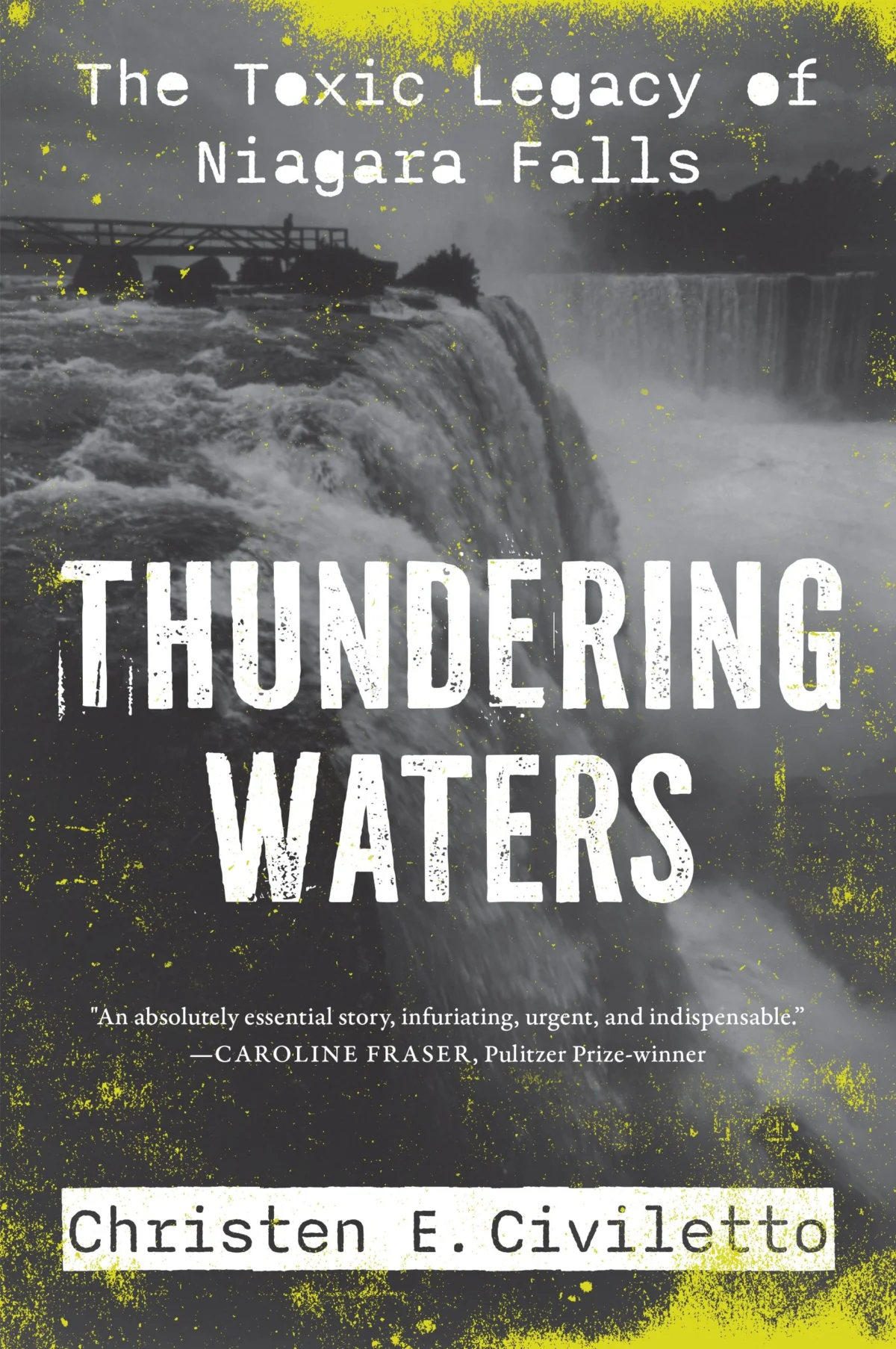
Every year, millions flock from around the world to Niagara Falls, New York, to hear the roar of the falls and feel and smell the spray, drawn by the raw power and natural beauty of one of the planet’s most iconic natural wonders. However, beneath this majestic facade lies a grim and pervasive truth: the city of Niagara Falls has been the unwilling setting for one of the most horrific tales of environmental desecration in modern history, a century-long saga of industrial pollution that continues to plague its residents.
The Birth of an Industrial Powerhouse and Its Dark Shadow
Niagara Falls’ immense hydroelectric potential made it the birthplace of the commercial electro-chemical industry in the late 19th and early 20th centuries. This strategic advantage attracted massive corporations eager to harness the falls’ might for energy-intensive chemical production. For decades, these industrial giants, including household names like Hooker Chemical and Carborundum, engaged in widespread and indiscriminate disposal practices. Millions of tons of toxic and radioactive waste were dumped, buried, vented, incinerated, and piled into surrounding farmlands, rivers, meadows, and empty lots, transforming the landscape into a vast, hidden toxic repository.
Today, just a few minutes’ walk from the celebrated waterfalls, one finds the remnants of a city struggling under the weight of this legacy. Its residents are disproportionately affected by major health problems, with rates often far exceeding state and national averages. The harm is not merely historical; it is ongoing and generational, manifesting in chronic illnesses, cancers, and alarming mental health statistics.
Unearthing the Truth: Christen Civiletto’s "Thundering Waters"
This profound and disturbing narrative is meticulously documented in the new book, Thundering Waters: The Toxic Legacy of Niagara Falls (Princeton University Press), by Niagara Falls native Christen Civiletto. Her work exposes the astonishing story of exploitation and ongoing abuse lurking in the shadows of one of the world’s most treasured natural wonders. The book, described by some as perhaps the most harrowing corporate crime exposé of the year, details how the major chemical kingpins of the twentieth century relentlessly laid waste to the region, often with impunity.
In an interview in August 2026, Civiletto shared her personal journey that led her to write this crucial book. "I was born and raised in Niagara Falls, New York," Civiletto recounted. "I grew up with it being normal seeing pollution, toxic chemicals and hearing people talk about cancer and illnesses. Those were all pretty normal things for us to hear." Her early life was spent under the plume of a Goodyear plant, a "deadly plume of toxic waste" whose full impact is only now coming to public light. Later, her family moved to Cayuga Drive, near Cayuga Creek, which ringed the infamous Love Canal area. "I spent most of my growing up years playing in that creek and playing in the Love Canal area," she explained, highlighting the casual proximity to danger that defined her childhood.
A Personal Odyssey to Advocacy
Civiletto, like many young people from the area, initially sought to escape, attending law school at Vanderbilt in Nashville and starting her career in intellectual property litigation at a major corporate defense firm, Powell Goldstein (now Bryan Cave). However, the gravitational pull of her hometown’s unfolding crisis eventually drew her back. While she was away, she noticed a significant decline in the city and an alarming increase in cancer and chronic illness diagnoses among her family members.
The crisis became personal when Civiletto received an unusual cancer diagnosis at 31, with no apparent risk factors. A friend in Atlanta remarked on the stark difference in public awareness of cancer between Niagara Falls and other cities, a comment that deeply resonated with Civiletto. The circumstances of her life eventually necessitated her return to Niagara County, where the pervasive decay and the sheer number of people suffering from illnesses became undeniable. Her ten-year high school reunion underscored the severity of the problem, revealing how many classmates had already been lost to cancer at an unnervingly young age.
The Manhattan Project’s Hidden Scars
Upon her return, Civiletto’s father was diagnosed with an exceedingly rare soft tissue spindle sarcoma, a cancer a doctor connected to ionizing radiation exposure. This spurred her deep dive into research. Her father had worked at Carborundum, a chemical manufacturer, to put himself through school, following in the footsteps of his own father and grandfather, who had worked there for 46 and 44 years, respectively. What they didn’t know was that Carborundum had secretly converted some operations to support the Manhattan Project, undertaking a step in the uranium refining process. Much of this top-secret work occurred in the R&D building, where both her father and grandfather spent considerable time. While her grandmother successfully submitted a claim through the Atomic Workers Act, her father’s claim was denied, leading to a seventeen-year battle with the Department of Labor.
This personal quest unveiled a far broader reality: Niagara Falls was the scene of prolonged and widespread environmental devastation. Beyond the widely known Love Canal — which had caused friends to be relocated during her school years — Civiletto discovered a staggering 89 other hazardous waste sites in the Niagara Falls area. This revelation, uncovered in 2006, spurred years of obsessive investigation.

The Pervasive Nature of Waste Disposal
Civiletto’s research led her to a disturbing conclusion about the industrial boom: "Not only were these chemical companies inventing new chemicals that didn’t exist before, but they were also generating tremendous amounts of toxic wastes." The critical question, "that waste had to go somewhere," found its answer in the region’s unprotected environment. Any empty field, sewer, creek, farmer’s lot, or canal became a dumping ground. An interview with a Carborundum employee confirmed this horrifying practice: "our waste went anywhere and everywhere it could go."
This systematic environmental abuse became the focus of Civiletto’s work. In 2011, while immersed in her research, she received a call from a family living near Love Canal who were unaware of its history. Their child suffered from ultra-rare chromosomal difficulties, clubbed feet, and a heart defect, and chemicals were surfacing in their basement. This interaction led to 14 years of litigation on behalf of over 1,500 residents in the Love Canal area. Despite the extensive evidence and personal testimonies, the case was dismissed three years ago on a legal technicality. This dismissal served as the catalyst for Civiletto to complete her book, driven by a desire to ensure the facts she had uncovered were made public, preventing such devastation from being repeated elsewhere.
Elusive Justice and Minimal Accountability
The history of corporate accountability in Niagara Falls is bleak. "Criminally, never," Civiletto stated when asked if corporations had been held to account for their activities. There has been no criminal prosecution to her knowledge, a fact she deems "unacceptable." On the civil side, accountability has been minimal. Very few cases have been successful due to significant legal hurdles, such as the stringent Daubert standard for expert testimony. The Love Canal litigation, for instance, bounced between federal and state courts, was subject to numerous appeals, and was dismissed at an early stage, precluding depositions. While there was a civil settlement in the initial Love Canal litigation in 1978, Civiletto’s recent efforts for current residents were ultimately unsuccessful.
The human toll is stark. Civiletto cites the late ex-wife of Occidental Chemical chair Armand Hammer, who reportedly said of him, "It causes him no pain to see the suffering of others," a chilling reflection of corporate indifference. The life expectancy in Niagara Falls city is notably lower than in Niagara County overall, and a shocking 71% of Black residents in Niagara Falls die prematurely. At a recent community meeting, when attendees were asked to raise their hands if someone in their immediate family had cancer, "every single hand was raised, even the security guards." The metropolitan Buffalo area, which includes Niagara Falls, holds the grim distinction of having the highest cancer rate in the country.
The Environmental Awakening of 2026
For decades, a sense of resignation pervaded the community. "It seemed normal to us," Civiletto’s mother explained, referring to the omnipresent pollution. "There was this sense that it was everywhere and what can you do?" This sentiment of futility, coupled with the understanding that "those factories put food on our table," prevented widespread uprising. Older residents often expressed gratitude for the jobs, unknowingly sacrificing their health and the health of future generations. Farmers even accepted money for allowing toxic waste dumping on their properties, a practice driven by the high cost of legitimate waste disposal. These "toxic traffickers" exacerbated the problem, creating countless unrecorded dump sites that may never be fully identified or remediated.
However, 2026 has witnessed a dramatic shift, an "environmental awakening" in Niagara Falls. Several critical events converged in June, igniting public outrage and mobilization:
- Civiletto’s Book and Public Interviews: The release of Thundering Waters and Civiletto’s subsequent public discussions brought her years of research and litigation findings to a wider audience.
- "America’s Most Embarrassing Border City" Documentary: A YouTube documentary highlighted the city’s dire state, focusing on illness and crime, further exposing the hidden crisis.
- Mental Health Crisis Report: An article emerged, drawing a link between the poor mental health of Niagara Falls teens and environmental exposure. Niagara County’s suicide rate is nearly double the state average, a statistic Civiletto herself was quoted on, and which was subsequently discussed at a Pulitzer Center conference.
- 102nd Street Dump Chemical Surfacing: Chemicals began surfacing near the Niagara River at the infamous 102nd Street dump, a site larger and equally problematic as Love Canal. This visible contamination triggered immediate alarm and spurred online citizen journalism, with residents posting pictures and videos.
- Radiological Scans and Home Relocations: The EPA and DEC, which had been conducting radiological scans of Niagara Falls in 2023 and 2024, identified 800,000 "points of interest." By 2025, these were narrowed down to residences, and in 2026, letters were sent to families indicating detected radioactivity and the need for further investigation. An initial controversy arose when access forms included a waiver of liability, which was publicly challenged by Civiletto and others, forcing the agencies to remove it. As of August 2026, four families had been relocated, with more letters being sent as radioactivity is identified, signaling a full-blown crisis.
- Love Canal Pool Excavation: In July, a family in Love Canal, unaware of the site’s history, began installing a pool. During excavation, they uncovered industrial wastes—cylinders, cores, ash, and stained soil. Their TikTok videos went viral, prompting immediate calls to the DEC and EPA. Testing revealed exceedances inside and outside the home, drawing national news coverage and solidifying the public’s focus on radiation, Love Canal, and other surfacing wastes.
Community Mobilization and the Path Forward
These combined events have galvanized the community. Citizens have mobilized, and an activist group has formed. "We have young people who are absolutely angry about what they have inherited in Niagara Falls," Civiletto observed. "I have never seen anything like this in my lifetime. But now I would have to say that there is a re-awakening."
The critical question now is whether Niagara Falls can ever be truly cleaned up to be safe for human habitation. Civiletto grapples with this deeply. While her initial instinct leans towards skepticism—given the toxic wastes are embedded in bedrock and hard-to-reach places—she believes that "with the right amount of money, there is the potential to clean up Niagara Falls so that it will be a safe place for people to live." This would necessitate a "massive overhaul," involving the removal of buried and barricaded wastes or rendering them inert through bioremediation, technologies that may not fully exist yet. The idea of designating Niagara Falls a national park, acknowledging its beauty while recognizing its unsuitability for residential life, has also been floated as a potential solution.
The ongoing crisis in Niagara Falls serves as a stark reminder of the long-term consequences of unchecked industrial practices and the profound challenges of environmental remediation. As the community continues to mobilize and demand accountability, the hope is that this new era of awareness will not only bring justice to Niagara Falls but also prevent similar environmental tragedies from unfolding in other communities across the globe.




 Jia Lissa
 Yuyun Lusiyani
 Joko Widodo
 Eva Lovia

 Pevita Pearce