
 Yuyun Lusiyani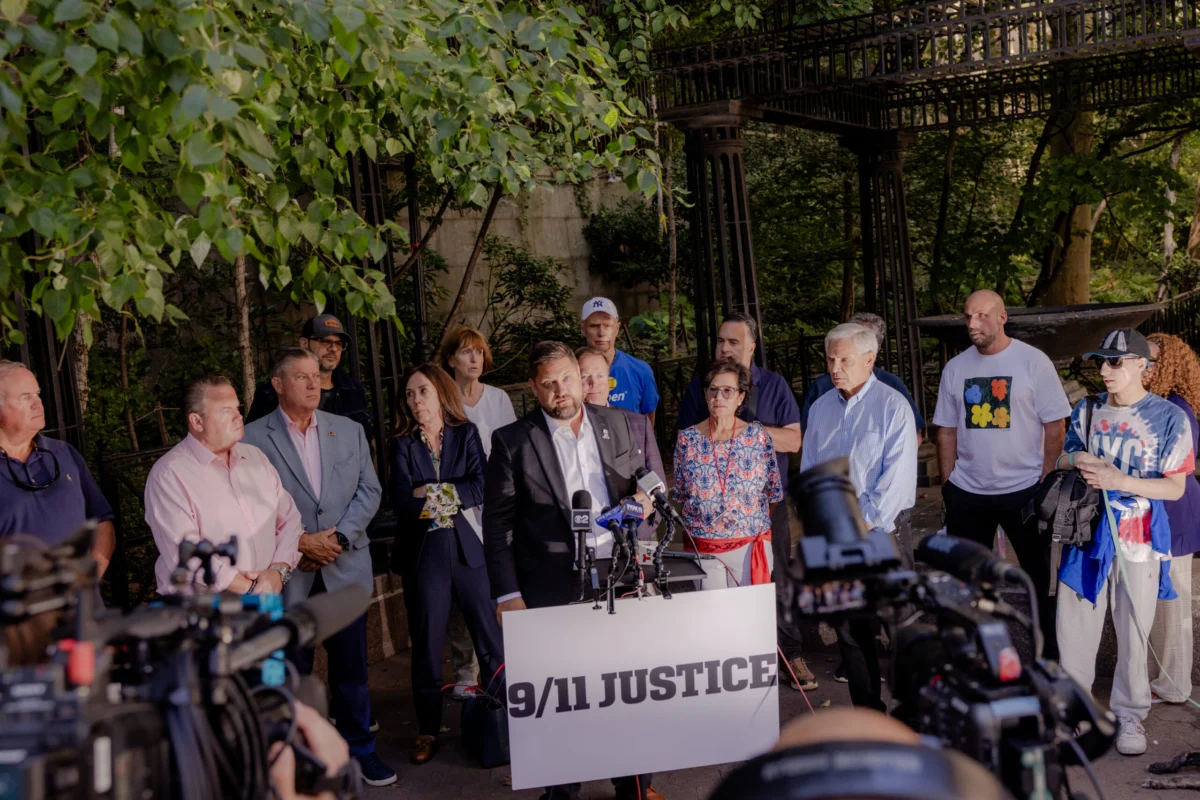
Twenty-five years after the devastating terror attacks of September 11, 2001, which claimed nearly 3,000 lives on American soil, persistent and troubling questions continue to plague the investigation into possible Saudi government complicity, particularly concerning the enigmatic figure of Omar al-Bayoumi. Initially identified by FBI agents within days of the attacks as a significant suspect, Bayoumi, a Saudi graduate student residing in San Diego, had provided crucial assistance to two of the al-Qaeda hijackers, Nawaf al-Hazmi and Khalid al-Mihdhar, as they established themselves in the United States in early 2000. Despite his early arrest in England and the seizure of a wealth of potentially incriminating evidence, the trajectory of Bayoumi’s case, and the FBI’s official narrative surrounding it, has been marked by controversy, opacity, and mounting calls for transparency from victims’ families and former investigators alike.
The Initial Encounter and Mounting Suspicions
The journey of Hazmi and Mihdhar into the United States began on January 15, 2000, when they landed in Los Angeles on a flight from Bangkok. The CIA had previously tracked the pair meeting with al-Qaeda operatives in Malaysia but reportedly lost their trail thereafter, failing to notify the FBI of their presence in the U.S. until August 24, 2001, just weeks before the attacks. Unlike other leading al-Qaeda operatives, Hazmi and Mihdhar possessed limited English skills and minimal familiarity with Western society. Khalid Sheikh Mohammed, the architect of the 9/11 plot, later claimed to CIA interrogators that he advised them to seek help within California’s Muslim communities, a directive many U.S. terrorism experts found implausible given their lack of pre-arranged contacts.
Omar al-Bayoumi’s account of his initial meeting with the hijackers has long been a focal point of skepticism. He claimed a chance encounter on February 1, 2000, at a halal cafe in Los Angeles, following a meeting at the Saudi Consulate. He stated he overheard Hazmi and Mihdhar speaking Gulf-accented Arabic, introduced himself, and hospitably suggested they try San Diego. Just three days later, by what Bayoumi again described as coincidence, he encountered them at a local mosque in San Diego. The next day, he facilitated their apartment rental in his own building, co-signed their lease, established a bank account for them, and even loaned them approximately $1,500 for a deposit. He subsequently introduced them to over two dozen local individuals who provided various forms of assistance.
These seemingly innocuous acts of hospitality, however, were viewed through a much darker lens post-9/11. It was revealed that Bayoumi, while publicly a student, had previously been the subject of a preliminary FBI investigation in 1998 due to suspicious gatherings at his apartment. That inquiry had also uncovered that Bayoumi, an employee of the Saudi civil aviation ministry, was receiving a substantial government stipend through an aviation company for which he performed no apparent work. Though the 1998 investigation found no criminal activity and was closed, these details retroactively amplified suspicions about his true role.
Arrest in England and the Vanishing Evidence

Barely a week after the 9/11 attacks, the FBI requested Bayoumi’s arrest in Birmingham, England, where he had relocated to pursue graduate business studies at Aston University. David Campbell, a young terrorism investigator with the Metropolitan Police Service, vividly recalled the high-stakes arrest, believing he was apprehending "one of the 9/11 terrorists." Three FBI agents from the U.S. were dispatched to assist with Bayoumi’s interrogation at Paddington Green police station in London, joined by senior FBI attache Joseph Hummell.
Despite the critical nature of the situation and the FBI’s prior knowledge of Bayoumi, Campbell expressed profound frustration over the lack of shared intelligence. "We were really in the dark," he stated, noting that British interrogators were not even informed of the FBI’s 1998 investigation into Bayoumi in San Diego. Compounding this, the interrogators were also not briefed on the extensive materials just seized from Bayoumi’s home and office – a trove including boxes of papers, correspondence, photographs, computer disks, videotapes, and an address book. Among these were immediately flagged items: a diagram in Bayoumi’s handwriting appearing to calculate an airplane’s trajectory, and a video of Bayoumi touring and describing the U.S. Capitol, a building later identified as a prospective al-Qaeda target.
After nearly a week of questioning, Campbell and his Birmingham counterpart conveyed their deep suspicions about Bayoumi’s inconsistent and seemingly fabricated narrative to U.S. Justice Department attorneys via conference call. Their concerns, however, were swiftly dismissed. U.S. officials, including federal prosecutors in New York, concluded there was insufficient evidence for extradition, leading to Bayoumi’s release by British police and his subsequent return to Saudi Arabia. Campbell recalled looking at his colleague "in complete disbelief" at the decision.
The FBI’s Narrative and Internal Discrepancies
The official handling of Bayoumi’s evidence and the FBI’s public stance diverged significantly from the apprehensions of field investigators. An October 11, 2001, memorandum indicated that New Scotland Yard had provided the FBI attache’s office with "copies of all recovered exhibits, including mirror images of all computers," with a complete copy also sent to the FBI’s New York Field Office. However, under newly appointed Director Robert Mueller, the 9/11 investigation, dubbed the "Penttbom team," was centralized at FBI headquarters in Washington.
The headquarters team’s processing and dissemination of Bayoumi’s materials remain shrouded in mystery. A May 15, 2002, memo from the San Diego FBI office revealed a stark reality: they were asked to review only five of over 80 VHS tapes seized from Bayoumi, two of which were duplicates showing innocuous family footage. "Nothing of significant investigative/evidential value has been discovered," the memo concluded. This limited sharing and analysis fueled a narrative that Bayoumi and others who aided the hijackers acted unwittingly.
FBI Director Mueller himself publicly reinforced this view in September 2002, telling a joint panel of Senate and House intelligence committees, "As far as we know, they contacted no known terrorist sympathizers in the United States… To this day, we have found no one in the United States except the actual hijackers who knew of the plot." This assessment was echoed by FBI Special Agent Jacqueline Maguire, who led the Flight 77 investigation team, during her 2004 testimony to the bipartisan 9/11 Commission. Maguire described Bayoumi’s meeting with the hijackers as "a random encounter" and asserted he helped them without knowing their true intentions. She also downplayed suspicions surrounding Fahad al-Thumairy, the imam of the Saudi-built King Fahd Mosque in Culver City, California, claiming no indication the hijackers sought him out.

However, Michael Jacobson, a key investigator for the 9/11 Commission and former State Department counterterrorism official, noted a persistent internal conflict. He recalled that some FBI agents in California were convinced Bayoumi and Thumairy had deliberately assisted the hijackers, but Maguire and her supervisor, Mary Galligan, "were both consistently pushing back hard on any narrative of a support network." The 9/11 Commission, in its final report, ultimately echoed the FBI’s conclusions, characterizing Bayoumi as "a devout Muslim, obliging and gregarious," and finding no evidence he "believed in violent extremism or knowingly aided extremist groups." These conclusions would face significant challenges in the years to come.
The Persistent Pursuit: Operation Encore and Later Revelations
Undeterred by official pronouncements, Daniel Gonzalez, a San Diego FBI agent, became the lead case agent for "Operation Encore," a follow-on inquiry to the original 9/11 case. He and his team faced constant skepticism and outright obstruction from FBI headquarters in their efforts to revisit the Saudi connection.
A breakthrough came in 2007 when Gonzalez, through a source in Jordan, identified two additional Muslim immigrants in Los Angeles who had also aided the hijackers. These witnesses later confirmed that Hazmi and Mihdhar had indeed visited the King Fahd Mosque after arriving in Los Angeles and met repeatedly with Thumairy. Crucially, one witness contradicted Bayoumi’s "chance" encounter story, stating that Thumairy had arranged for the hijackers to be driven to their first meeting with Bayoumi at the halal cafe.
The Encore agents continued their relentless pursuit of the materials seized from Bayoumi in Britain. In a startling incident, Gonzalez received a call from Washington inquiring if he wanted "some old Penttbom evidence" that was slated for destruction. This delivery included copies of Bayoumi’s long-sought papers, including the suspicious flight diagram, which stunned the Encore team.
In June 2012, a small group of Encore investigators traveled to London to review the Bayoumi evidence more thoroughly. They viewed dozens of hours of videotapes and obtained new copies of much of the Metropolitan Police material. However, for reasons that remain unclear, they either did not see or did not focus on certain critical videotapes that would later become evidence in the 9/11 families’ lawsuit, such as the footage of Bayoumi at the U.S. Capitol. While some terrorism experts interpreted this as "casing" the site, Saudi government lawyers dismissed it as a mere tourist video.
The Bayoumi videos also contained extensive footage of two Saudi religious officials, Adel al-Sadhan and Mutaeb al-Sudairy, emissaries of the Saudi Ministry of Islamic Affairs, whose movements in the U.S. had previously attracted FBI and CIA attention. These clerics had traveled with Bayoumi to Washington, D.C., and visited Los Angeles and San Diego a year before the hijackers, even staying at a residence later occupied by Hazmi and Mihdhar. Sudairy had also lived for several months in Columbia, Missouri, with Ziyad Khaleel, an American al-Qaeda member known for providing Osama bin Laden with the satellite phone used to orchestrate the 1998 U.S. embassy bombings.

Further deepening the web of connections, telephone records revealed that Bayoumi made a series of calls to Sudairy in Washington, Thumairy in Los Angeles, and Anwar al-Aulaqi, a Yemeni American cleric, just before and after the hijackers’ arrival in San Diego. Aulaqi, who ran a San Diego mosque funded by Bayoumi through Saudi donations, was described by FBI witnesses as a spiritual adviser to Hazmi and Mihdhar. Aulaqi later became a prominent al-Qaeda leader before being killed in a U.S. drone strike in 2011.
Official Resistance and the 9/11 Families’ Enduring Fight
The persistent efforts of agents like Gonzalez ran contrary to the FBI’s prevailing stance. When the 9/11 Review Commission, assembled in 2014-2015 to assess reforms and revisit unanswered questions, examined the Saudi issue, FBI liaison Jacqueline Maguire again disputed suspicions about Bayoumi, stating in a 2014 briefing that "He came here for school and everything seems accidental with Bayoumi."
Despite this pushback, Tim Roemer, a former Democratic congressman who served on both the 2002 joint intelligence inquiry and the 9/11 Commission, insisted on formal recommendations for further investigation into the Saudi question. He noted "consistent feedback from some levels of the FBI that simply wanted to close the case and claim that what Bayoumi did was purely coincidence and somehow accidental." Yet, shortly after the Review Commission’s recommendation, FBI headquarters renewed pressure to shut down Operation Encore. In 2016, the agency’s Joint Terrorism Task Forces finally relented, reassigning the case and disbanding the investigative team.
The most damning revelation came in 2017, when a pair of memorandums from the FBI’s Washington field office confirmed what Encore agents had long suspected: between the late 1990s and September 11, 2001, Omar al-Bayoumi was paid a monthly stipend as a "co-optee," or part-time agent, of the Saudi intelligence services. These memos, initially classified as state secrets by the Justice Department during the Trump administration, were withheld from the 9/11 families. They were finally made public in 2022 under an executive order by President Joe Biden, revealing to the retired Daniel Gonzalez and other former Encore agents information they had fought for years to uncover. "Somebody needs to explain to the American people why we didn’t see this information before," Gonzalez demanded.
Broader Implications and the Quest for Accountability
As the 25th anniversary of 9/11 is marked, the handling of Omar al-Bayoumi’s case and the broader question of Saudi involvement continue to fuel outrage and legal battles. The evidence, now filed in a federal lawsuit against the Saudi government by victims of the attacks, has decisively undermined both Bayoumi’s claims of innocence and the FBI’s long-held profile of him as a "genial, pro-American civil servant." Instead, it portrays him as a figure deeply embedded with Saudi religious officials, operating as an intelligence asset, and collaborating with clerics later tied to al-Qaeda.

Representatives of the 9/11 families, organized under "9/11 Justice," are demanding an end to what they term the Justice Department’s "silence" regarding the Bayoumi evidence and the perceived lack of aggressive pursuit of him and other Saudis. Kathleen Zapata, whose father Joseph Coppo was killed in the World Trade Center, articulated the families’ frustration: "Why are we having to fight against our own government simply to get answers about the most horrible attack ever on American soil?"
The White House, under the Trump administration, previously stated President Trump was "leading the most transparent administration in history," and his team was "working diligently on identifying records that are responsive to these families’ request." A Justice Department spokesperson, declining specific comment, noted that many officials involved in the early 9/11 investigation no longer serve the government.
The Saudi government has consistently denied any role in the attacks, often citing earlier FBI and CIA statements that the royal family was an adversary of al-Qaeda and Osama bin Laden. The Saudi Embassy in Washington did not respond to recent requests for comment regarding Bayoumi or Thumairy.
The ongoing federal lawsuit and the incremental declassification of documents underscore a persistent struggle for truth and accountability. The narrative of Bayoumi’s "accidental" involvement has been systematically dismantled by revelations of his role as a Saudi intelligence asset, his suspicious connections, and the deliberate obfuscation of critical evidence. The case of Omar al-Bayoumi stands as a stark reminder of the complex, often politically charged, dimensions of the 9/11 investigation, and the enduring quest for a complete understanding of how the attacks were facilitated on American soil.




 Joko Widodo
 Jia Lissa
 Pevita Pearce
 admin
admin