
 Yuyun Lusiyani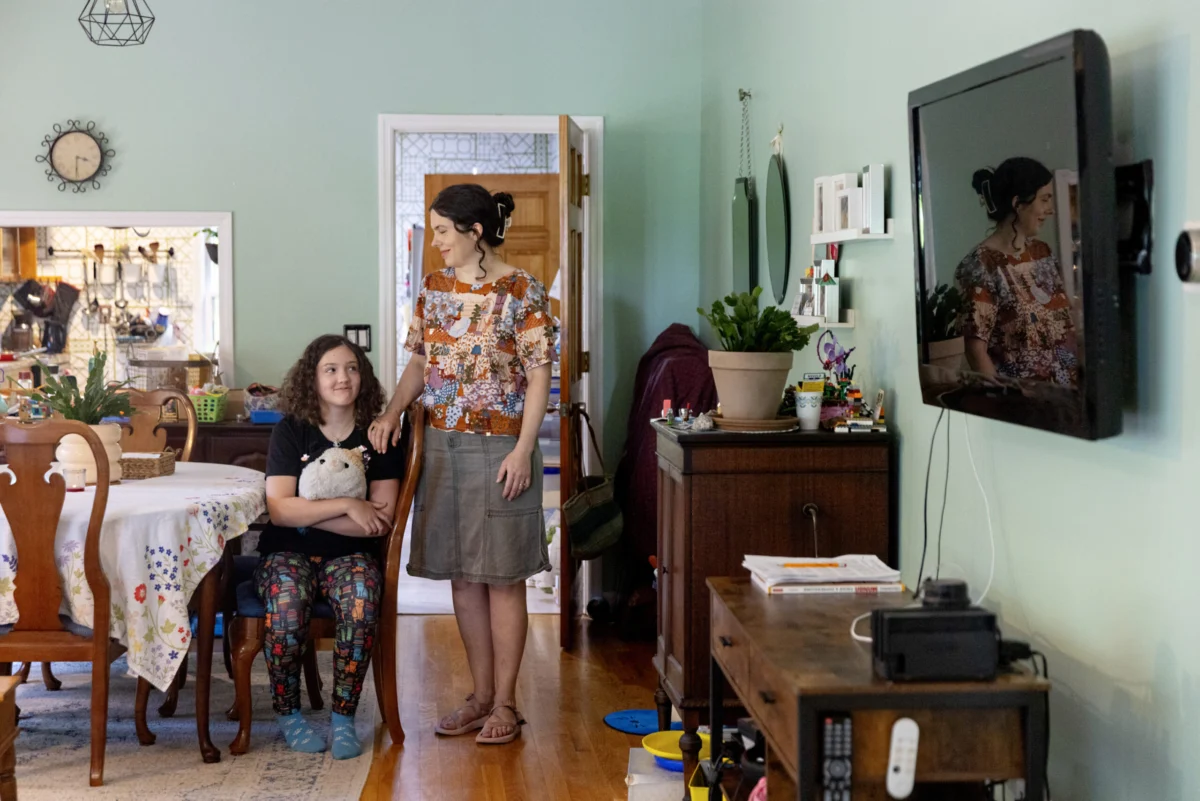
The setting sun casts long shadows as Angela Johnson rushes home after 6 p.m., a routine dictated by the complex care needs of her 12-year-old daughter, Amelia. Amelia, born with a rare genetic anomaly, relies on a brain shunt and a feeding tube, requiring specialized nursing care that begins the moment her public school bus drops her off at their Pensacola, Florida, home. While Johnson appreciates aspects of the public school, her professional insight as a physical therapist reveals its inherent limitations: district therapists are stretched thin across multiple schools, and classroom teachers often bear an overwhelming burden. For Amelia’s entire life, Johnson has tirelessly advocated for the federal law-mandated educational resources her daughter is entitled to, a fight that has left her profoundly exhausted.
Two years ago, a beacon of hope appeared in Florida’s state-funded voucher program for children with disabilities, the nation’s largest of its kind. Johnson embraced the concept of "school choice," envisioning a private school sanctuary with smaller classes, enhanced one-on-one attention from trained staff, and an end to the constant battle for every minute of therapy Amelia required. She dreamt of Amelia achieving developmental milestones, like learning to cut a straight line or write her name, free from the systemic struggles of the public system. In 2024, Amelia was awarded approximately $10,500 from the program, a sum that propelled Johnson into a weeks-long, arduous search for an appropriate private school.

The Reality of "Choice": A Desperate Search
Johnson’s initial optimism quickly faded. Her rigorous search began with scrutinizing school websites, most of which offered no information regarding services for children with disabilities. Direct calls followed, starting with a reputable, upscale Christian school nearby. It lacked a nurse capable of caring for medically fragile children. Subsequent calls to other institutions yielded similar initial willingness, only to be met with immediate rejections once Johnson detailed Amelia’s needs: a feeding tube, inability to hold a pencil correctly, and assistance with toileting. The reality was stark: not a single private school could provide nurses equipped for Amelia’s medical requirements, teachers trained for nonverbal children, or even basic transportation home.
This challenging experience underscores a critical flaw in the "school choice" narrative for children like Amelia. Unlike public schools, which are legally mandated by federal statutes such as the Individuals with Disabilities Education Act (IDEA) to provide a Free Appropriate Public Education (FAPE) in the Least Restrictive Environment (LRE), private schools generally operate without such obligations. Consequently, they frequently decline to enroll students with complex disabilities, citing needs that are too costly, intricate, or potentially disruptive to their existing educational models. Johnson’s poignant realization crystallized: the choice was not hers, but the schools’. As she put it, the vouchers "are basically designed to make you go to private school, but my kid can’t access private school." Ultimately, Johnson returned the funds to the state, accompanied by a sharply worded email expressing her profound dissatisfaction.

National Trends and Data Disparities
The proliferation of voucher programs and the private schools they increasingly fund has swept across the United States. However, these schools often reject children with disabilities—ironically, the very demographic whose compelling stories were initially leveraged to garner legislative and public support for early voucher initiatives. This leaves these children with few viable alternatives beyond the public school system. Compounding the issue, as public schools experience declining enrollment due to increased voucher utilization, they simultaneously lose critical resources that would otherwise benefit the students who remain, including those with disabilities.
Approximately 3 million school-age children with disabilities reside in states with universal voucher eligibility. Florida, a pioneer in this movement, serves as a stark illustration of how the promise of school choice can remain an empty one for these vulnerable students. Education Savings Accounts (ESAs), a voucher-style program like Florida’s, channel taxpayer dollars into parent-controlled accounts for educational expenses, including private school tuition. If families are unable to secure a suitable private school placement and do not utilize the funds, the money may roll over to the next year or, depending on state regulations, be returned to the state.

Data obtained from Florida, Louisiana, and Texas by ProPublica reveals significant disparities in voucher utilization. In Florida, approximately 8% of the $1.7 billion distributed last year through its disability-specific voucher program was returned because recipients, like Amelia, ultimately remained in public schools. This stands in stark contrast to just 1% of funds returned from the state’s general voucher program, which is open to all students. Louisiana, which launched its ESA program in the 2025-26 school year, reported an overall return rate of 6% for its $43.1 million in parent-controlled accounts. However, for students with disabilities, this rate surged to a staggering 30%. In Texas, while data for the first year of its $1 billion voucher program is still being compiled, initial indications suggest that students with disabilities are opting out of using the funds at slightly higher rates than their non-disabled peers.
While families return funds for various reasons, a prevailing sentiment among them is the inability to find appropriate private schools willing to enroll their children. Chris Roe, director of state policy at the Council of Parent Attorneys and Advocates, a national association dedicated to children with disabilities, notes, "Families are at the mercy of the schools – and schools choosing their kid – versus the other way around."
Today, at least 18 states either have universal voucher eligibility or are phasing it in. Florida leads the nation, with over half a million schoolchildren—roughly one in six—currently utilizing a voucher. When Florida’s voucher program expanded to include all children in 2023, a significant two-thirds of the newly enrolled students were already attending private schools, highlighting a shift in the program’s primary beneficiaries. Yet, for children with profound needs like Amelia, private schooling often remains an unattainable dream, despite their initial role as the face of voucher expansion efforts. Lawmakers frequently highlighted the compelling stories of disabled children, even naming legislation in their honor, to establish some of the nation’s first statewide voucher programs specifically for these students, beginning in Florida.

The "Illusion of Choice" and its Origins
The legislative journey for disability-specific vouchers began in Florida in 1999. Republican Senator John McKay, drawing from his own family’s struggles to find adequate public school support for his daughter with significant learning disabilities, championed a bill to provide taxpayer funds for private school tuition. McKay articulated a common parental frustration, stating, "We’re alienating parents. I’ve been alienated by the public system when I was told I didn’t have any choices with regard to my children."
The resulting McKay Scholarships began as a pilot program, swiftly expanding to become the nation’s first statewide voucher program exclusively for students with disabilities. Ohio, Utah, Arizona, Georgia, Louisiana, and Oklahoma soon followed Florida’s lead. Across statehouses, politicians consistently emphasized the theme of "choice," promising parents freedom from local public schools. Georgia’s sponsor aimed "to give any disabled student whose parents are dissatisfied with their assigned public school the ability to attend the public or private school that best fits their needs," while an Oklahoma lawmaker pledged, "They can just take the scholarship and go to private school."

These programs have undoubtedly enabled thousands of children with disabilities to access private schools, including some specifically designed to cater to unique needs. However, for many children, particularly those with more severe disabilities or those living in areas with limited private school options, the promises of choice have proven unrealistic. Early proponents of these programs acknowledged this limitation but argued that any child who benefited justified the effort. They also expressed hope that the market competition spurred by public funds flowing into private schools would eventually foster a more robust educational landscape capable of accommodating special needs students.
The geographic disparity in accessible private schools is striking. More than half of Utah’s counties lack private schools accepting disability vouchers. In Georgia, 71% of counties have no such schools. Last year in Louisiana, out of approximately 350 private schools, only 14 reported enrolling even a single child with a disability, with eight of those admitting five or fewer. Even in Florida, with its extensive urban centers and roughly $5 billion in voucher programs, ProPublica’s analysis reveals that over a dozen counties have no private schools serving children with disabilities, or only one with severely limited offerings. Furthermore, more than half of Florida’s private schools explicitly state they do not serve students with any type of disability. Jinny Kim, managing attorney at the Disability Rights Education and Defense Fund, a national civil rights and policy nonprofit, observes, "It’s touted that this program is an equalizer, and then people have choice. But then if you really look at the details, it’s not actually how it happens."
The personal impact of this "illusion of choice" is profound. Marguerite Lane, an Atlanta-area mother, sought a private school for her autistic daughter as she approached middle school. Her daughter excelled academically but struggled with sensory sensitivities and large classrooms lacking sufficient behavioral support. Lane visited several private schools, finding a small, arts-focused institution that claimed to accept children with learning challenges. Her hope was dashed by an email: "We don’t believe we can support her needs and help her thrive in this class, and we also don’t want to compromise the educational experience of the other students." The latter part particularly stung Lane, who reflected, "God forbid the other children learn empathy."

The "Toehold Strategy" and its Evolution
During the initial legislative debates, a common refrain among politicians was that these were merely small, targeted programs. In 2004, a Utah representative reassured colleagues, "It’s a very limited scholarship. This really is about special needs." A Georgia House member echoed this in 2007: "It’s not, as I heard some of you say to me, the beginning of vouchers. No, ladies and gentlemen, it’s a program to help a group of students that need our help."
However, behind the scenes, a different strategy was openly discussed. In 2006, as Arizona adopted its first program for children with disabilities, Clint Bolick, then president of the advocacy group Alliance for School Choice and now an Arizona Supreme Court justice, published an essay titled "Toe-Hold Strategies." Bolick articulated that voucher advocates were "acting smarter" by sidestepping direct confrontations with powerful teachers’ unions. Instead, they promoted smaller programs targeting specific student populations whose needs were politically difficult to oppose. He wrote, "The strategy makes sense from a moral perspective, for it focuses assistance on the neediest schoolchildren. It also works politically, because choice begets choice: Once the Rubicon is crossed and legislators vote to adopt a school choice program — no matter how small or targeted — it becomes easier to support a new one, or expand the old one, the next time around."

By 2011, a half-dozen states had launched disability-specific voucher programs. At a "school choice" conference that year, Howie Beigelman, then deputy director of public policy for the Orthodox Union’s advocacy arm, advised, "Special needs is a very easy way to get into this business. Anyone, no matter how partisan they are, it’s very hard to say special needs is not where people need ‘special’ education." (Beigelman has since stated that this was his opinion and he has "never seen anything ‘intentional’ about using special needs scholarships for anything more than what they are plainly for: helping educate children with special needs.")
In 2016, following the spread of disability vouchers to Arkansas, Sarah McKenzie, executive director of the University of Arkansas’s Office for Education Policy, noted on its website, "Special education private school choice programs are often seen as a ‘foot in the door’ for school choice laws. Once some success has been shown to the public, more laws can be passed to expand these programs." Indeed, these legislative victories paved the way for a broader expansion, with lawmakers nationwide opening the floodgates to universal or near-universal eligibility, transforming voucher-style programs into a $10.6 billion tide of public money.
Today, two-thirds of states have some form of voucher-style program. However, these programs now primarily serve a different student demographic than originally intended. Most current voucher recipients do not have disabilities and were already enrolled in private schools before tapping into this new public funding stream. North Carolina State Senator Lisa Grafstein, a Democrat and civil rights lawyer advocating for people with disabilities, vehemently opposes her state’s now-universal voucher system. She states, "The thing that genuinely infuriates me, is when people with disabilities are used as pawns."

Failure to Address Access: Policy Shortcomings
Two decades after the initial adoption of disability-specific vouchers, legislative efforts to genuinely improve access to private schools for these children remain minimal, even as programs expand to universal eligibility. Most state legislatures have refrained from requiring private schools accepting public funds to enroll even a limited number of students with disabilities. Furthermore, they have largely failed to create effective incentives for the establishment of more specialized private schools, which are inherently costly to operate due to the need for highly trained staff, specialized equipment, and accessible facilities. This inaction largely stems from a core tenet of the voucher movement: keeping regulations to a minimum to encourage private school participation.
Former West Virginia Delegate Amy Summers, a Republican instrumental in creating her state’s universal voucher-like program, believes that "Getting the government involved in private schools isn’t the answer." She advocates for market competition to drive improvements in services for children with disabilities in both private and public sectors. West Virginia State Senator Patricia Puertas Rucker, who homeschooled her two children with disabilities after a negative public school experience for her daughter, shares this sentiment. Rucker hopes the state’s voucher program will empower more families to afford private tuition or collaboratively establish "microschools." However, she expresses regret that her colleagues did not approve additional funding for students with disabilities, which could help cover the higher tuition costs of specialized schools and incentivize their creation. Despite this, Rucker firmly believes the state should not "cajole or require private schools to enroll children with disabilities. The minute you start doing that, you are basically disincentivizing private schools from participating, and then you’re denying parents. I do not want to do that."

While private schools have indeed proliferated to capitalize on the voucher windfall, and some new institutions do specifically welcome children with disabilities, the vast majority do not. This reflects a fundamental policy gap: the expansion of funding without commensurate efforts to ensure equitable access.
The Enduring Pain of Rejection
The personal narratives of rejection underscore the deep emotional toll on families. Parents describe private school denials as "insulting" and "heartbreaking," particularly after school personnel have met their children. However, explicit rejections are not always necessary; some private school websites or handbooks clearly state their limitations. For instance, a small Baptist academy in rural Georgia, while inviting applicants to "join our family," explicitly declares in its handbook that it is "not equipped to educate children with learning disabilities or attention-deficit/hyperactivity disorder." It further stipulates that if such students are accepted, "it is up to the parents to provide extra services other than what the classroom teachers would do in the confines of the classroom."

Taylor Cordes, a former special education teacher, undertook a "personal passion project" in 2023 to survey private school policies in North Carolina. After examining 660 school handbooks, she found that only about a third indicated they would accept students with even limited disabilities, while more than one in ten explicitly stated they would not serve such students.
Diavonni Jordan, an Atlanta-area mother, experienced this painful reality firsthand. Her 8-year-old son, Jamir Souders, has ADHD. After Jamir faced multiple suspensions and conflicts in his public school, Jordan, a single mother of two, sought a private school with smaller class sizes where she believed he could thrive. She applied to a local Christian school, taking time off work for a hopeful campus tour. A week later, an email arrived: "The support that we could give in our 1st grade would not be enough for him this year." The school cited its small program and insufficient resources for his needs. Jordan expanded her search, enduring longer commutes and applying to five additional schools, touring two. The outcome remained unchanged. Another Christian school’s rejection read, "Unfortunately — it doesn’t look like we would be a good fit for your family." Jordan pondered what constituted a "good fit" and grappled with the heartbreak of knowing it wasn’t her son. For now, with the new school year approaching, Jamir remains in public school, while Jordan contemplates homeschooling as a future option.
The experiences of families like Angela Johnson, Marguerite Lane, and Diavonni Jordan reveal a profound disconnect between the aspirational rhetoric of "school choice" and the lived reality for children with significant disabilities. While voucher programs have expanded dramatically, often under the guise of helping the most vulnerable, they frequently fall short of providing genuine educational alternatives for those with the most complex needs. This not only leaves these families navigating a system of unfulfilled promises but also raises critical questions about the equitable distribution of educational resources and the long-term health of public education.




 Joko Widodo
 Eva Lovia
 Pevita Pearce
 admin
admin
 Lina Irawan