
 Yuyun Lusiyani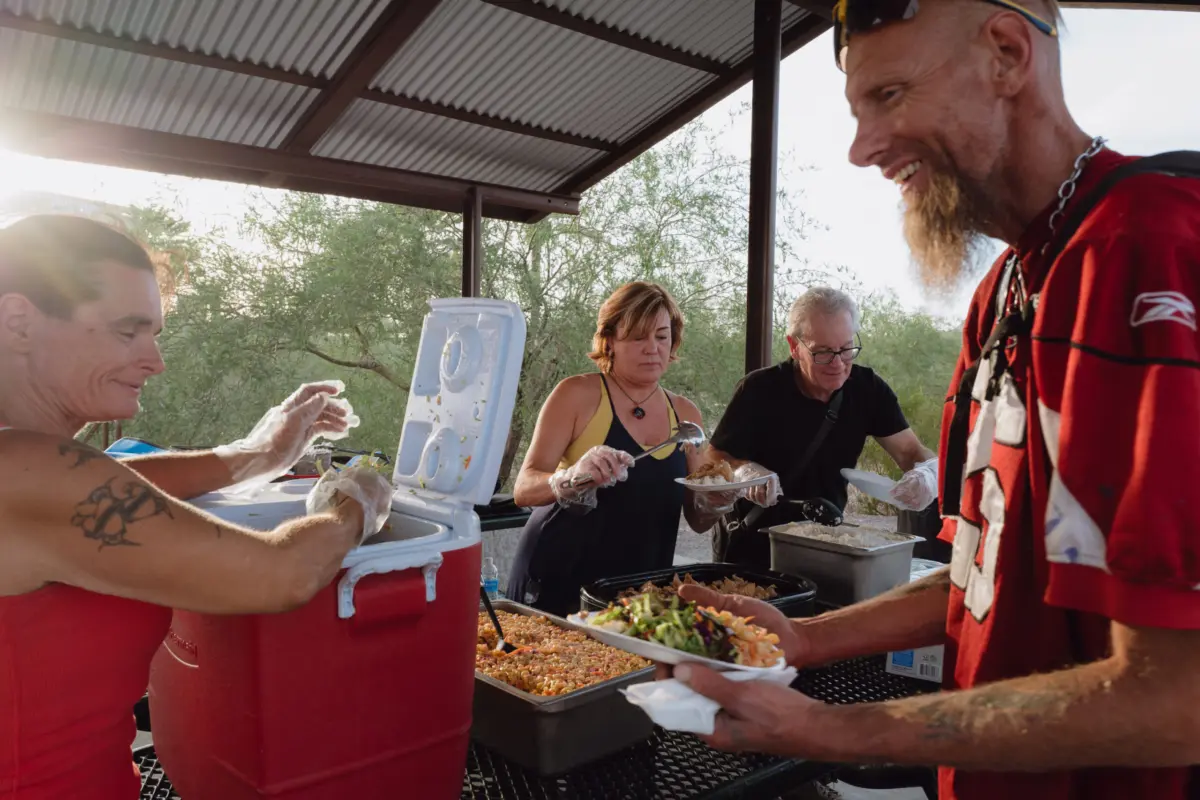
For over a year, Austin Davis’s phone has served as an urgent, unofficial lifeline for hundreds of families across the Phoenix metropolitan area, a stark testament to a deepening crisis in Maricopa County. These aren’t just isolated pleas; they are a flood of desperate calls and texts from individuals and even official caseworkers, all seeking immediate shelter that the established system seemingly cannot provide. The 26-year-old poet and tireless advocate has inadvertently become the last resort for families teetering on the brink of destitution, exposing profound systemic failures within the county’s homelessness response infrastructure.
The narratives are heartbreakingly similar: a school employee unable to find shelter space for a homeless family, a mother of five residing in a storage unit directed to Davis by a homeless services organization, and a mother panhandling with her six children, given Davis’s number by sympathetic passersby. "I feel like the worst mother in the world," one text read, echoing the profound despair experienced by countless parents. Nearly every individual reaching out to Davis reports having first contacted 211, the official statewide channel for social services, only to be met with disheartening news: shelter or housing placement could be months away. This bureaucratic impasse pushes families into the arms of an individual who operates outside the conventional framework, a situation ProPublica’s investigation has highlighted as a critical failing, leaving families feeling abandoned and without hope.
The Overwhelmed System: A Deep Dive into Maricopa County’s Plight

Maricopa County, home to nearly 5 million residents, presents a complex tableau of economic growth alongside burgeoning social challenges. While official channels like 211 and the Family Housing Hub, run by the nonprofit UMOM, are designed to streamline access to support, their current capacity falls drastically short of the escalating demand. The county’s population has grown significantly in recent years, drawing new residents but also straining existing infrastructure and driving up housing costs. According to data from the Arizona Department of Housing, the median rent in Phoenix has seen a substantial increase over the past five years, far outpacing wage growth for many low-income families. This creates a precarious environment where a single unforeseen event—a job loss, a medical emergency, or domestic violence—can quickly propel a family into homelessness.
The latest figures reveal a disturbing trend: the number of people in homeless families in Maricopa County reached 2,103 this year, marking its highest level since 2015. This statistic, compiled locally and reported to the federal government as part of the Point-in-Time (PIT) count, is itself considered an undercount. The PIT count relies on volunteers tallying individuals on a single night, inevitably missing those who strive to remain hidden due to shame, fear, or a desire to keep their children out of the public eye. Furthermore, the waitlist for shelter in Maricopa County had nearly 200 families in late September, a number that excludes those deemed ineligible, removed for technicalities, or who simply gave up after unhelpful interactions with 211. Solari, the nonprofit managing the statewide 211 line, has stated that eligibility criteria for shelter placement are determined by the Family Housing Hub, operated by UMOM, suggesting a complex web of organizational responsibilities and often rigid guidelines.
Austin Davis: A Controversial but Indispensable Advocate
Davis’s role as the de facto advocate of last resort is both heartening and deeply troubling. His nonprofit, AZ Hugs, operates largely outside established institutional frameworks. Every night, with the help of dedicated volunteers, he organizes food distributions for homeless individuals at "The Hill" in Tempe’s Moeur Park. This grassroots effort, while vital, has placed him in direct conflict with municipal authorities. Over time, he has accumulated 35 citations for trespassing and operating "picnics without permits," culminating in three nights spent in jail in 2024. Despite a plea deal that saw most citations dismissed in exchange for a guilty plea on one permit violation, Davis’s commitment remained unwavering. In 2025, he, alongside other advocates, filed a lawsuit against the City of Tempe, alleging violations of free speech protections for their efforts to feed the homeless. The lawsuit prompted Tempe to revise its permit ordinance, leading Davis to withdraw his legal challenge.

The scene at Moeur Park is a microcosm of the larger crisis. Desperate parents—some recently evicted, others jobless, many fleeing domestic violence—congregate around Davis, sharing their stories while he, ever-present with an energy drink, engages with their children. This direct, empathetic approach stands in stark contrast to the often impersonal and bureaucratic processes of official agencies. The question looms large: in a metropolitan area with significant resources and established social service networks, why is an individual operating on the fringes of the system the primary hope for so many vulnerable families? The answer, many observers suggest, lies in the inflexibility and capacity constraints of the very system designed to help.
The Human Toll: A Child’s Perspective on Homelessness
The personal narratives underpinning the statistics are profoundly distressing. ProPublica spoke with over 30 families desperately seeking shelter, each parent voicing acute concerns about the profound impact of their living situation on their children. Extensive research consistently demonstrates that homelessness inflicts severe and lasting harm on children, disrupting crucial brain development and physical growth. The chronic stress, instability, and exposure to adverse conditions can lead to permanent changes in the brain and body, affecting cognitive abilities, emotional regulation, and long-term health outcomes. These children often face interrupted schooling, nutritional deficiencies, and heightened vulnerability to illness, exacerbating developmental delays and psychological trauma.
Candice Ortiz’s harrowing journey exemplifies these dangers. Since spring, she had relentlessly pursued stable shelter and housing, only to be met with dead ends. The toll on her 8-year-old son became undeniable: hospitalized for heat exhaustion after spending a day exposed to Phoenix’s scorching summer temperatures, and missing critical school days. Ortiz’s repeated calls to 211 yielded little beyond generic information accessible via a quick internet search. A representative from the Family Housing Hub, managed by UMOM, shockingly informed her that sleeping in her car with her children did not technically qualify her as "homeless," effectively denying her a place on the already oversubscribed waitlist. Another stated the waitlist was simply full.

In June, seeking refuge from the 117-degree heat, Ortiz visited a Phoenix cooling center. Advised to go to UMOM’s emergency family shelter, she spent her last $20 on a rideshare, only to be told upon arrival that she wasn’t "in the system" and no space was available. UMOM, citing client privacy, declined to comment on individual cases. Later, in late August, a glimmer of hope emerged when the Phoenix Rescue Mission, a nonprofit, connected Ortiz with an apartment viewing. However, this hope was swiftly dashed when the mission informed her, via text messages reviewed by ProPublica, that funding for the apartment had unexpectedly run out. The Phoenix Rescue Mission did not respond to requests for comment, leaving Ortiz and her children once again adrift.
Official Responses and the Funding Paradox
The disconnect between significant governmental funding and on-the-ground reality is a critical aspect of this crisis. UMOM, for instance, received over $7 million in government grants in the last fiscal year. Yet, during the peak of summer, when temperatures routinely soared, they could only allocate 23 shelter units and approximately a dozen tents for families as part of the city of Phoenix’s heat relief efforts. While this program has assisted nearly 300 households, it is a temporary measure, winding down as the summer recedes, leaving a gaping void for families once again facing the elements.
Recognizing the severity of the situation, Davis took his advocacy to a higher level. In early April, he launched an online petition calling on Arizona Governor Katie Hobbs to declare a state of emergency on family homelessness. The petition garnered over 5,000 signatures, reflecting widespread public concern. In June, a volunteer from AZ Hugs attended a fundraiser for Governor Hobbs, who is seeking re-election, to personally deliver a letter outlining the petition’s demands. The letter emphasized that such a declaration could unlock crucial emergency funding and urged the governor to simplify access to the Family Housing Hub. "I implore you to consider the children who endure extreme heat without safe shelter," the letter passionately stated. "No parent should be told to wait months for assistance while temperatures reach life-threatening levels."

However, the response from the Governor’s office was cautious. Liliana Soto, Governor Hobbs’s press secretary, explained that emergency declarations are typically reserved for natural disasters, and using one for homelessness might not be procedurally appropriate. Soto affirmed that the Governor is "deeply aware" of the challenges, pointing to the administration’s allocation of at least $245 million statewide since taking office in 2023. This funding has been directed towards a range of initiatives including eviction prevention, affordable housing development, emergency shelter, and rapid rehousing programs for those experiencing housing insecurity. "The governor believes no family, especially families with infants or young children, should be left without a safe place to go during the summer heat," Soto stated.
Despite these assurances and significant financial allocations, Davis expressed profound frustration. He reported receiving no direct communication from the Governor’s office or from leaders of other major nonprofits regarding a collaborative effort. Instead, his phone continued to ring with calls from caseworkers themselves, seeking his help for families they couldn’t assist. Davis views the silence from these organizations as "frustrating" and a "disservice" to families in crisis, underscoring a perceived lack of urgency or coordinated action from established entities.
Towards a Sustainable Solution: Beyond Band-Aids
In response to the relentless demand and the systemic shortcomings, Davis continues to innovate. He spends most nights on social media, actively appealing for donations to fund hotel rooms for families, often posting updates well into the early hours of the morning, sometimes raising thousands of dollars. In September, his organization, AZ Hugs, initiated an overnight shelter program at the First United Methodist Church of Mesa. This vital space provides temporary refuge for at least six families, offering a large, air-conditioned room equipped with canopy tents, cots, pillows, and blankets. Volunteers serve warm meals, providing a semblance of normalcy and dignity.

On a recent evening at the church, families arrived with their belongings packed into vehicles. A mother and her two children took advantage of the showers before settling into their tent. Gradually, the room filled with other families, some with toddlers, finding a quiet, safe haven for the night. Yet, this crucial relief is temporary; by 6 a.m., they must pack up and face another day of uncertainty.
Davis himself acknowledges that these efforts, while immediately impactful, are merely "Band-Aids" on a much larger, festering wound. The systemic implications are clear: the reliance on individual, often ad-hoc, philanthropy to address a large-scale societal problem points to a fundamental flaw in public policy and resource allocation. Experts in social welfare and urban planning often emphasize that truly addressing family homelessness requires a multi-pronged approach: robust affordable housing initiatives, streamlined and compassionate intake processes for emergency services, enhanced mental health and substance abuse support, and robust job training programs. Furthermore, there is a critical need for better coordination between government agencies, large nonprofits, and grassroots organizations to ensure that resources reach those who need them most without bureaucratic hurdles.
The story of Austin Davis and the families he serves in Maricopa County is a powerful indictment of a system struggling to keep pace with human need. It highlights not only the resilience of individuals like Davis but also the urgent necessity for a comprehensive, compassionate, and effective response from all levels of government and civil society. Without it, the "unofficial hotline" will remain the primary beacon of hope for too many.

 Ana Megawati
 Joko Widodo
 Eva Lovia
 Jia Lissa
 Pevita Pearce