
 Yuyun Lusiyani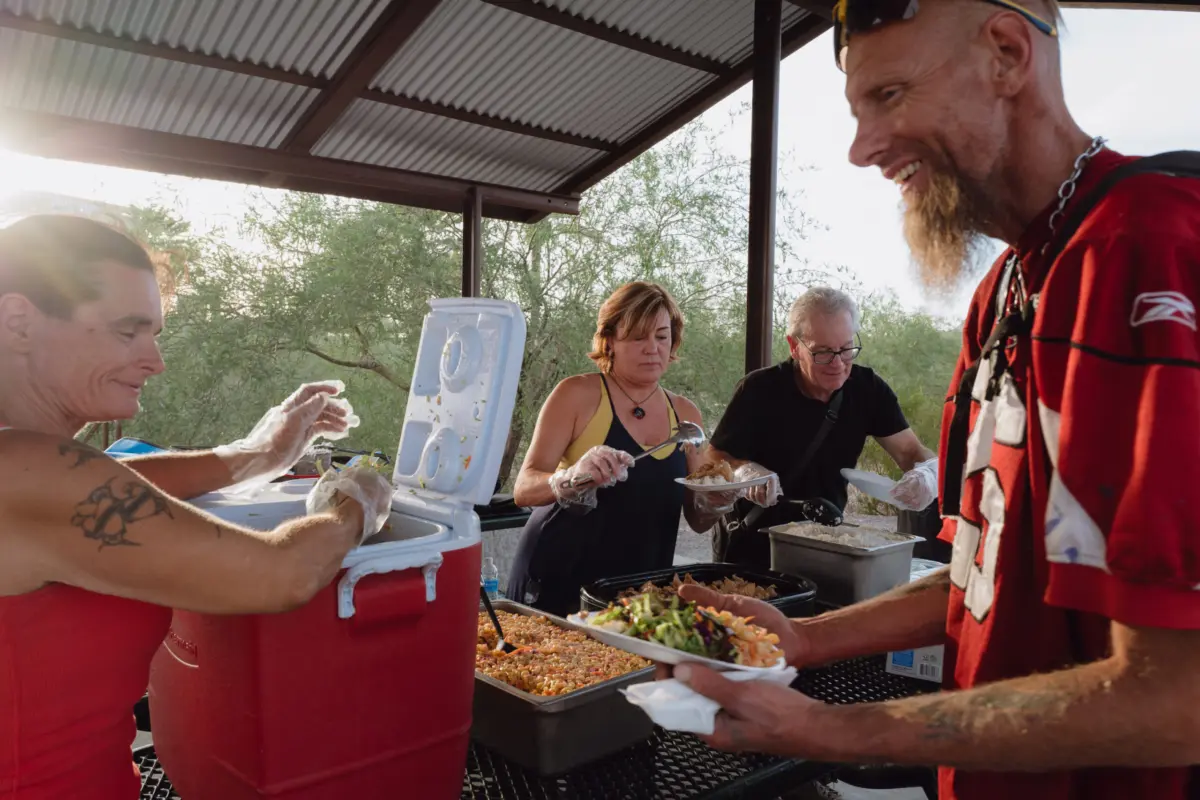
For approximately a year, Austin Davis’s phone has served as an unexpected, yet critical, lifeline, deluged with hundreds of desperate pleas for assistance from families experiencing homelessness across the sprawling Phoenix metropolitan area. The 26-year-old poet and advocate has inadvertently become the de facto emergency hotline for those failed by official support systems, exposing a profound chasm between existing aid structures and the escalating needs of vulnerable families in Maricopa County. This informal role, born out of a stark necessity, underscores a troubling systemic breakdown in how one of the nation’s largest counties addresses family homelessness.
Davis’s inbox and call logs paint a harrowing picture: a school employee seeking shelter for a homeless family with no available space, asking if Davis could fund a hotel; a mother of five living in a storage unit, directed to Davis after official channels proved fruitless; and a mother panhandling with her six children, given Davis’s number by passersby, her text message echoing profound despair: "I feel like the worst mother in the world." These individual stories coalesce into a powerful indictment of a system that, according to a ProPublica investigation, routinely leaves families feeling hopeless. Crucially, nearly every individual who reaches out to Davis reports having first contacted 211, the official statewide human services hotline, only to be informed that shelter or housing placements could be months away. This consistent pattern of referral, even from caseworkers, teachers, social workers, police, hospital staff, and even employees of 211 and the Family Housing Hub itself, highlights the alarming extent to which formal mechanisms are buckling under pressure, effectively deputizing an individual grassroots advocate.
The Genesis of an Unofficial Network

Austin Davis’s journey to becoming the advocate of last resort is not a product of formal training or institutional backing, but rather a response to observing acute, unmet needs. His organization, AZ Hugs, operates largely outside conventional frameworks, driven by volunteer effort and direct community engagement. He is frequently found at Tempe’s Moeur Park, colloquially known as “The Hill,” a gathering point for homeless individuals. Here, the stark reality of the crisis unfolds daily as desperate parents, often recently evicted, jobless, or fleeing domestic violence, converge around him. Davis, typically an energy drink in hand, listens intently, offers what immediate aid he can, and engages with their children, providing a fleeting moment of normalcy amid profound instability. This scene, while heartening in its display of human compassion, simultaneously raises disconcerting questions about the efficacy and reach of official services. Why, in a county with nearly 5 million residents, does a single individual in a park represent the most viable pathway to help? And why are government agencies and multi-million-dollar nonprofits, explicitly tasked with assisting these very families, directing them to him?
Davis’s approach has not been without its challenges. His commitment to providing nightly meals at suburban Phoenix parks, a core activity of AZ Hugs, has drawn the ire of Tempe officials. This has resulted in a series of legal confrontations, including 35 citations for trespassing and holding picnics without permits. In 2024, Davis entered a plea agreement, admitting guilt to one permit violation while the city dismissed the remaining citations, a process that saw him spend three nights in jail. Undeterred, in 2025, Davis and two fellow advocates initiated a lawsuit against the City of Tempe, asserting that the citations infringed upon their free speech rights to feed people in public parks. This legal pressure ultimately prompted the city to revise its permit ordinance, leading Davis to withdraw the lawsuit. These experiences underscore the bureaucratic obstacles and sometimes adversarial environment in which grassroots advocates must operate, even as they provide essential services.
A System Under Strain: The Official Channels’ Shortcomings
The ProPublica investigation revealed a disturbing reality: contacting or visiting the official channels designed to address family homelessness in Maricopa County rarely culminates in actual assistance. The 211 helpline, operated by the nonprofit Solari, and the Family Housing Hub, managed by UMOM, a larger nonprofit, are intended to be the primary entry points for families seeking shelter. However, the experiences of families consistently contradict this intended function. Parents report enduring repetitive questioning about their living situations, only to receive generic information readily available online or to be told of extensive waitlists that stretch for months.

Candice Ortiz’s ordeal exemplifies these systemic failures. Since spring, she had relentlessly sought stable shelter and housing, witnessing the devastating impact on her 8-year-old son, who was hospitalized for heat exhaustion and missed critical school days. Ortiz recounted calling 211 repeatedly, providing the same details each time, yet receiving no tangible help. She was informed by a Family Housing Hub worker that because she and her children were sleeping in her car, they were not technically "homeless" by their criteria – a bureaucratic distinction that effectively denies assistance to some of the most vulnerable. Another worker informed her the waitlist was full. In June, after seeking refuge in a Phoenix cooling center during a scorching 117-degree day, she was advised to go to UMOM, which operates an emergency family shelter. Spending her last $20 on a rideshare to the facility, she was again subjected to information gathering, only to be told she wasn’t "in the system" and that nothing was available. UMOM, citing client privacy, declined to comment on individual cases. Later, the Phoenix Rescue Mission, another nonprofit, initially offered Ortiz an apartment but subsequently informed her they had run out of funding. This sequence of events illustrates a fragmented and under-resourced system where families are shunted from one overwhelmed service to another, often facing arbitrary eligibility criteria and insufficient capacity.
The Escalating Crisis and its Human Cost
The statistics paint a grim picture of a deepening crisis. In Maricopa County, the number of individuals in homeless families reached 2,103 this year, marking its highest level since 2015. These figures, compiled locally and reported to the federal government, are widely considered an undercount. The annual "Point-in-Time" (PIT) survey, conducted by volunteers on a single night, often misses families who are actively trying to remain out of sight – those doubling up with friends, living in cars, or in precarious arrangements like storage units. In late September, nearly 200 families were officially on the waitlist for shelter in the county. This number, however, does not account for those deemed ineligible, removed from the list, or those who, like many reaching out to Austin Davis, became so disillusioned with the unresponsiveness of 211 that they simply stopped calling.
The underlying causes of this surge are multifaceted, reflecting broader socio-economic pressures in the Phoenix area and across the nation. Rapid population growth in Maricopa County has outpaced affordable housing development, leading to soaring rents and home prices. The median rent in Phoenix has seen significant increases in recent years, making it increasingly difficult for low-income families to secure stable housing. Stagnant wages for many working families, coupled with inflationary pressures on everyday necessities, mean that a single job loss, medical emergency, or unexpected expense can quickly spiral into homelessness. Families fleeing domestic violence, as noted in the article, face additional layers of complexity, requiring not just shelter but secure and confidential placement, which is often in short supply.

The implications for children caught in this crisis are particularly devastating. Research unequivocally demonstrates that homelessness inflicts severe, long-lasting harm on children, disrupting crucial brain development and growth. Chronic stress, malnutrition, lack of consistent sleep, and exposure to environmental hazards can lead to permanent changes in brain architecture and physiological function. Academically, homeless children experience frequent school changes, missed days, and difficulty concentrating, severely impacting their educational attainment and future prospects. Socially and emotionally, they are at higher risk for anxiety, depression, and behavioral problems. Candice Ortiz’s son’s hospitalization for heat exhaustion and his missed school days are not isolated incidents but symptomatic of the pervasive trauma inflicted upon children by housing instability, particularly in the extreme Arizona climate.
Advocacy and the Political Response
Recognizing the escalating severity, Austin Davis has sought to elevate the issue beyond direct aid. In early April, he launched an online petition urging Arizona Governor Katie Hobbs to declare a state of emergency for family homelessness. The petition, which has garnered over 5,000 signatures, argues that such a declaration could unlock vital funding for emergency shelter and streamline access to the overburdened Family Housing Hub. In June, a volunteer from AZ Hugs personally delivered a letter to Governor Hobbs at a reelection fundraiser, emphasizing the dire situation: “I implore you to consider the children who endure extreme heat without safe shelter. No parent should be told to wait months for assistance while temperatures reach life-threatening levels.”
The Governor’s office, through press secretary Liliana Soto, acknowledged the challenges, stating that Governor Hobbs is "deeply aware" of the issue. However, Soto clarified that emergency declarations are typically reserved for natural disasters, and using one for homelessness might not be deemed appropriate under existing legal frameworks. The Governor’s administration highlighted its efforts since taking office in 2023, allocating at least $245 million statewide towards initiatives such as eviction prevention, affordable housing development, emergency shelters, and rapid rehousing programs. Soto reiterated the Governor’s stance: "The governor believes no family, especially families with infants or young children, should be left without a safe place to go during the summer heat."

Despite these official statements and allocations, Davis expresses profound frustration, noting a lack of engagement from the Governor’s office or other major nonprofit leaders regarding his broader advocacy efforts. He sees a disconnect between the reported funding and the lived reality of families on the ground, calling the silence from other organizations "frustrating" and a "disservice" to those in crisis. The irony remains that even with significant government investment and the existence of large, well-funded nonprofits like UMOM (which received over $7 million in government grants last fiscal year), the system’s capacity remains severely limited. UMOM, for instance, could only designate 23 shelter units and about a dozen tents for families during the summer’s peak heat, a program that, while assisting nearly 300 households, was already winding down in September. This stark contrast between available resources and the scale of the need underscores the challenges in translating large-scale funding into immediate, accessible shelter for families.
Band-Aids on a Gaping Wound: Immediate Relief and Future Challenges
In the absence of a comprehensive, readily accessible official safety net, Austin Davis continues his relentless, round-the-clock efforts. Most nights find him on social media, pleading for donations to fund hotel rooms for families, often with young children, who would otherwise be forced to sleep in their cars or on the streets. He frequently posts updates at 2 a.m., having raised thousands of dollars through sheer determination and public generosity.
In September, AZ Hugs managed to establish a more stable, albeit temporary, solution: an overnight shelter at the First United Methodist Church of Mesa. This facility offers space for at least six families, providing a secure, air-conditioned environment with cots, pillows, blankets, and a warm meal. On a recent evening, families arrived, their vehicles laden with their remaining possessions, seeking refuge. A volunteer offered chicken penne pasta for dinner. Gradually, the large room fell quiet as mothers and their toddlers settled into their canopy tents. Yet, even this vital haven is a temporary measure; families must depart by 6 a.m. each day, returning to the uncertainty of their circumstances.

Davis readily acknowledges that these efforts, while critical, are mere "Band-Aids on a much bigger problem." The burgeoning crisis in Maricopa County demands a far more robust and coordinated response involving local and state officials, as well as a more agile and less bureaucratic network of nonprofits. The current situation highlights a systemic fragility where the most vulnerable families, including those with small children, are falling through the cracks of official systems that are either under-resourced, burdened by rigid eligibility criteria, or simply overwhelmed. The long-term implications are profound, threatening to perpetuate cycles of poverty, undermine child development, and erode community well-being. The story of Austin Davis and the families he serves is not just a testament to individual compassion; it is a urgent call for comprehensive reform and a renewed commitment to ensuring that no child in Maricopa County is left without a safe place to call home.


 Ana Megawati
 Joko Widodo
 Eva Lovia
 Jia Lissa
 Pevita Pearce