
 Amara Maple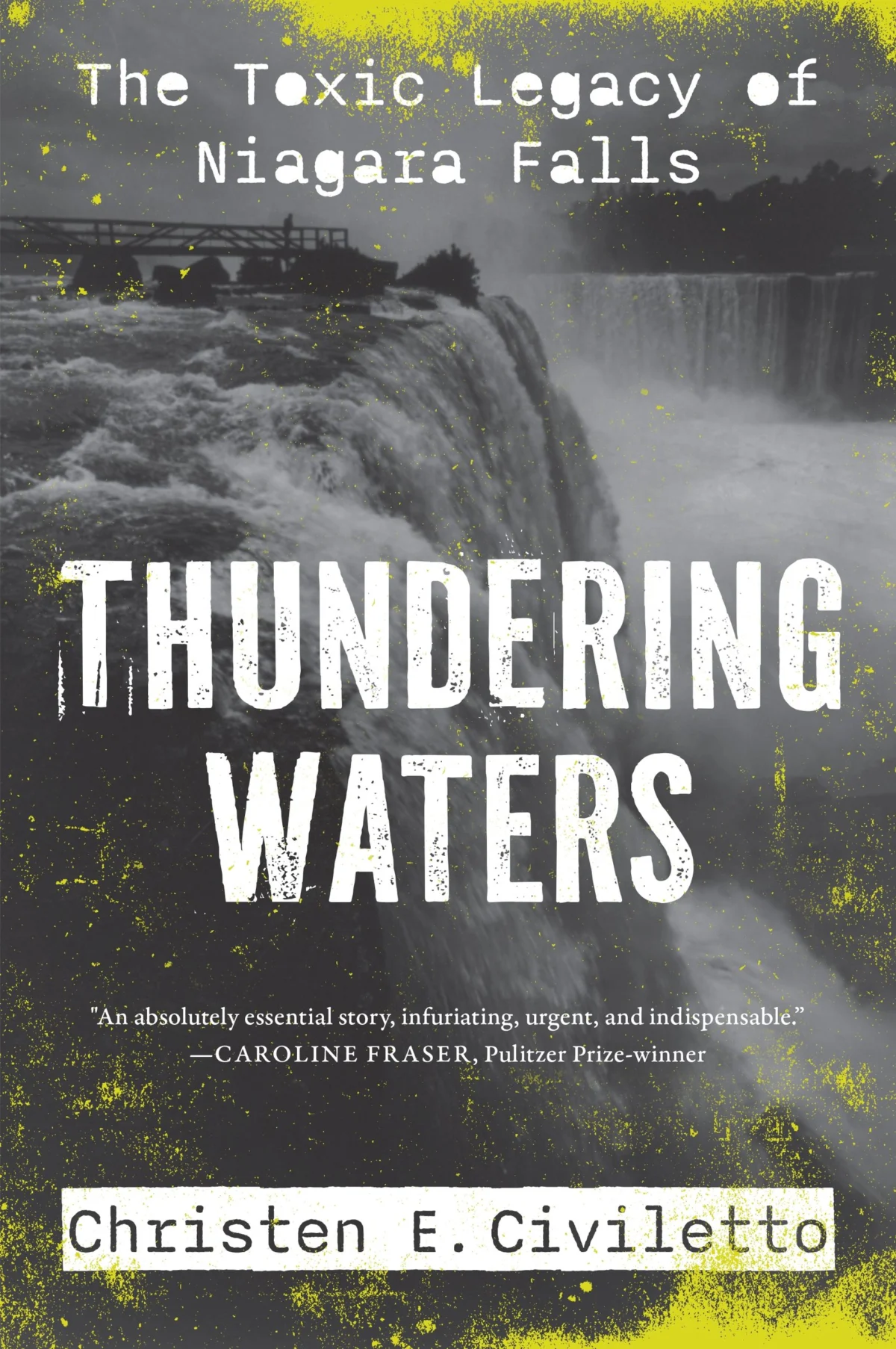
Niagara Falls, New York, a global magnet drawing millions annually to witness its majestic natural power, harbors a starkly contrasting reality beneath its picturesque facade. Far from the roaring falls and refreshing spray lies a city grappling with one of the most severe and prolonged instances of environmental desecration in modern history. This grim narrative is meticulously chronicled in Thundering Waters: The Toxic Legacy of Niagara Falls (Princeton University Press), a new book by Niagara Falls native Christen Civiletto, which exposes decades of corporate exploitation and the profound, generational health crisis it has engendered.
The city, once heralded as the "birthplace of the commercial electro-chemical industry" due to the immense hydroelectric potential of the Falls, became an unwitting dumping ground for the very corporations that prospered there. For decades, major chemical entities indiscriminately disposed of millions of tons of toxic and radioactive waste. This waste was dumped, buried, vented, incinerated, and piled across surrounding farmlands, rivers, meadows, and vacant lots, creating a pervasive contamination that continues to plague residents just minutes from the world-renowned waterfall. The visible decay of the city is paralleled by an invisible blight: its inhabitants suffer from major health problems, including alarmingly high rates of cancer and chronic illnesses, often far exceeding state and national averages. The harm is not merely historical; it is ongoing and deeply generational.
A Personal Journey to Uncover a Collective Trauma
Christen Civiletto’s journey to expose this devastating legacy is deeply personal. Born and raised in Niagara Falls, she recounts a childhood where pollution, toxic chemicals, and discussions of cancer and illness were disturbingly normal. Her early homes were situated near significant sources of contamination. "I grew up with it being normal seeing pollution, toxic chemicals and hearing people talk about cancer and illnesses," Civiletto told Corporate Crime Reporter in an interview on August 27, 2026. "Our first home was underneath the plume of Goodyear… a deadly plume of toxic waste." Later, her family moved to Cayuga Drive, property ringing the infamous Love Canal area, where she spent her formative years playing in the creek and surrounding lands.
Initially, Civiletto sought to escape the city’s confines, pursuing law at Vanderbilt and working in intellectual property litigation at Powell Goldstein (now Bryan Cave). However, the deepening decline of Niagara Falls and a growing pattern of illness among her family and friends began to draw her back. At 31, she received an unusual cancer diagnosis, devoid of typical risk factors, which prompted a friend to remark on the prevalence of cancer discussions in her hometown—a stark contrast to her Atlanta circle. This observation, coupled with the need to return to Niagara County due to life circumstances, solidified her realization of the widespread health crisis.
The turning point came with her father’s diagnosis of an exceedingly rare soft tissue spindle sarcoma. Doctors linked this cancer to ionizing radiation exposure, prompting Civiletto’s extensive research. She discovered her father’s and grandfather’s employment at Carborundum, a chemical manufacturer where her great-grandfather also worked for 44 years. Unbeknownst to them, Carborundum had secretly converted some operations to support the Manhattan Project, involving uranium refining. This covert work, particularly in the R&D building where her father and grandfather spent considerable time, exposed them to radioactive materials. While her grandmother successfully submitted a claim through the Atomic Workers Act, her father’s claim was denied, leading Civiletto to a seventeen-year battle with the Department of Labor.
Unveiling the Scale of Devastation: Beyond Love Canal
Civiletto’s research quickly revealed that the environmental devastation in Niagara Falls was far more extensive than she or most residents understood. While the Love Canal disaster of the late 1970s received international attention, leading to evacuations and a federal emergency declaration, it represented only a fraction of the problem. "What I didn’t know is that there were 89 other hazardous waste sites in the Niagara Falls area," Civiletto stated, expressing her astonishment. Her investigation, which began in 2006, systematically explored each site, leading her to a chilling conclusion: the chemical companies not only innovated new chemicals but also generated staggering amounts of waste, which "had to go somewhere."
That "somewhere," she discovered, was "any empty field, any sewer, any creek, any farmer’s lot, any canal." An interview with a Carborundum employee confirmed her suspicions, revealing that waste went "anywhere and everywhere it could go." This widespread, unregulated dumping was a cost-saving measure, as proper disposal of toxic waste was an expensive proposition. The presence of "toxic traffickers" who moved waste around Niagara County, often sloppily managing their dump sites, exacerbated the problem, creating numerous unofficial and later Superfund sites. Farmers were even paid to allow dumping on their properties, a heartbreaking detail that suggests many contaminated areas remain undocumented.
The Road to Litigation and the Quest for Accountability
Midway through her research in 2011, Civiletto received a call that shifted her focus from research to direct action. A family living unknowingly near Love Canal had a child with ultra-rare chromosomal difficulties, clubbed feet, and a heart defect, with chemicals surfacing in their basement. This led Civiletto, now a lawyer, to represent not only this family but eventually over 1,500 residents in the Love Canal area in 18 separate cases. These cases, however, were dismissed three years ago on a legal technicality, with the attorney team choosing not to appeal due to a variety of reasons. This setback prompted Civiletto to commit fully to writing Thundering Waters, aiming to provide the facts she believed residents deserved. "What happened to us in Niagara Falls was terrible. And it should never be repeated anywhere else. I wanted people to be able to have the facts that I never had."

The question of corporate accountability remains a sore point. Criminally, there has been "never" a prosecution for these widespread environmental crimes, a fact Civiletto deems "unacceptable." On the civil side, accountability has been minimal. Early Love Canal litigation in 1978 did result in a civil settlement, as noted by Civiletto, whose cousin worked on that case. However, subsequent attempts, including her own, faced immense legal hurdles, such as the stringent Daubert standard for expert testimony. Her 14-year Love Canal case never progressed beyond the motion to dismiss stage, highlighting the systemic obstacles to justice for affected communities.
The Human Toll: Health Statistics and Societal Decay
The human cost of this toxic legacy is staggering. Civiletto highlights that the life expectancy in Niagara Falls city is notably lower than in Niagara County overall, and a shocking 71% of Black residents in Niagara Falls die prematurely. The broader metropolitan Buffalo area, which includes Niagara Falls, holds the unfortunate distinction of having the highest cancer rate in the country. At a recent community meeting, when the speaker asked those with cancer in their immediate family to raise their hands, "every single hand was raised, even the security guards," Civiletto recounted.
Beyond physical illness, the psychological and social impacts are profound. An article highlighted the very poor mental health among Niagara Falls teens, linking it to environmental exposure. Niagara County’s suicide rate is nearly twice the state average. This sustained environmental assault has contributed to the visible "decay" of the city itself, mirroring the internal decline of its populace. The late ex-wife of Occidental Chemical chair Armand Hammer, a key figure in the Love Canal saga, famously remarked about him, "It causes him no pain to see the suffering of others," a chilling insight into the corporate mindset that prioritized profit over human well-being.
An Environmental Awakening: A City Rises
For decades, a pervasive "sense of futility" gripped many residents. "It seemed normal to us," Civiletto’s mother explained, referring to the omnipresent pollution. Many older residents felt a sense of gratitude towards the factories that "put food on our table," often unaware of the devastating generational impacts. This sentiment of resignation began to shift dramatically in June 2026, marking what Civiletto calls a "complete and total environmental awakening."
Several factors converged to ignite this re-awakening:
- Book Release and Public Discourse: Civiletto’s book and subsequent public interviews brought the depth of the crisis to the forefront.
- Viral Documentary: A YouTube documentary titled "America’s Most Embarrassing Border City" garnered widespread attention, highlighting the city’s dire state of illness and crime.
- Mental Health Article: An article focusing on the severe mental health issues among Niagara Falls teens, particularly the high suicide rate, further underscored the environmental connection.
- Pulitzer Center Conference: A discussion conference based on the mental health article maintained a "steady drumbeat" of public awareness.
- 102nd Street Dump Crisis: Chemicals began surfacing near the infamous 102nd Street dump, larger than Love Canal and connected to it, alarming residents and prompting online videos and documentaries.
- Radiological Scans and Relocations: EPA and DEC radiological scans conducted between 2023 and 2024 identified 800,000 "points of interest" across Niagara Falls. In 2025, these investigations narrowed to residences, and by June 2026, letters were sent to families indicating detected radioactivity and requiring further investigation. Civiletto, alongside engineers, was among the first to enter homes, finding radioactivity both inside and outside. A critical moment arose when EPA/DEC required property owners to sign a liability waiver to allow testing; public outcry, fueled by Civiletto’s advice, forced its removal. As of the interview, four families were in the process of relocation, with more letters identifying radioactivity being sent out.
- Love Canal Pool Excavation: In July 2026, a family in Love Canal, unaware of the site’s history, began excavating for a pool and uncovered industrial wastes—cylinders, cores, ash, and stained soil. Their TikTok videos went viral, prompting immediate DEC and EPA involvement. Subsequent testing revealed exceedances of chemicals both inside and outside the home, drawing extensive media coverage and focusing news outlets "completely on radiation, Love Canal, Goodyear, the Griffin Park wastes that are surfacing."
This confluence of events has galvanized the community. Citizens have mobilized, activist groups have formed, and "young people who are absolutely angry about what they have inherited in Niagara Falls" are now actively engaged. Civiletto notes, "I have never seen anything like this in my lifetime. But now I would have to say that there is a re-awakening."
The Path Forward: Cleanup and National Park Debate
The question of whether Niagara Falls can ever be truly cleaned up to be safe for human habitation remains contentious. Civiletto admits to wrestling with this complex issue. While her initial instinct aligns with the notion that the deeply buried and bedrock-level toxic wastes may be impossible to fully address, she holds out hope. "However, with the right amount of money, there is the potential to clean up Niagara Falls so that it will be a safe place for people to live," she posits. This would necessitate a "massive overhaul," involving the removal or bioremediation of buried and barricaded wastes. The challenge, however, lies in the current limitations of technology to achieve this on such a vast and complex scale.
Given the inherent dangers, some, like the interviewer from the University of Buffalo Law School podcast where Civiletto first discussed her book, have suggested a radical alternative: designating Niagara Falls as a national park. This would acknowledge its unparalleled natural beauty while recognizing its unsuitability for residential living. The ongoing crisis, amplified by the recent discoveries and community mobilization, underscores the urgent need for comprehensive solutions—whether through unprecedented cleanup efforts or a fundamental re-evaluation of human presence in areas irrevocably scarred by industrial malfeasance. The unfolding story of Niagara Falls serves as a stark warning and a critical case study for industrial communities worldwide.


 Yuyun Lusiyani
 Ana Megawati
 Joko Widodo
 Eva Lovia
 Jia Lissa
 Pevita Pearce