
 admin
admin
Details of the Grave Allegations and Legal Stance
The charges leveled against Mason Hull are fifteen individual counts of possession of child sexual abuse material (CSAM), formerly often referred to as child pornography. These are felony charges that carry substantial penalties, reflecting the grave nature of the alleged offenses. In legal terms, "possession" does not necessarily imply creation or distribution, but rather having such material on one’s person, device, or in their control. Hull’s legal team has unequivocally stated his not guilty plea, setting the stage for a potentially protracted and high-profile trial. The sheer number of counts underscores the volume of material allegedly discovered during the investigation, painting a disturbing picture of the allegations at hand. The legal system views offenses involving child sexual abuse material with extreme gravity, prioritizing the protection of vulnerable children above all else, and prosecutors are typically rigorous in pursuing convictions in such cases.
Chronology of Discovery and Arrest
The unfolding of this case began several months prior to its public disclosure, with critical events leading to Hull’s arrest. The initial discovery, according to the arrest warrant, was made by Hull’s girlfriend. Her suspicion that Hull was engaged in infidelity prompted her to examine his phone, a decision that inadvertently unearthed the deeply disturbing content. She reportedly discovered videos depicting children being sexually abused, a revelation that immediately escalated the situation beyond a personal dispute.
Following her discovery, law enforcement was alerted. Detectives initiated an investigation, which quickly led to the issuance of an arrest warrant. On May 5, 2026, Mason Hull was taken into custody. This arrest marked a dramatic turn for the young influencer, whose public image until then had been carefully curated around themes of self-improvement and aspirational aesthetics. The subsequent formal charging with fifteen counts of possessing child sexual abuse material cemented the severity of the situation, transitioning a private discovery into a full-blown criminal prosecution. The timeline from the initial discovery by his girlfriend to his arrest suggests a rapid and decisive response from law enforcement, indicative of the urgent nature of CSAM investigations.

Alleged Admissions and Evidence
The details outlined in the arrest warrant and subsequent court documents paint a troubling narrative. During questioning by officers, Mason Hull reportedly made statements regarding his alleged activities. He is said to have admitted to wanting to "try something new" and actively seeking out "taboo pornography." More disturbingly, he allegedly confessed to spending money on two separate occasions to purchase videos involving children. The age range of the children depicted in these videos was reportedly between 8 and 15 years old. Law enforcement officials further stated that some of the videos discovered on his phone showed children crying while being abused, a detail that highlights the horrific nature of the alleged material.
Furthermore, the arrest warrant indicated that Hull’s girlfriend claimed to have found messages within the Telegram application, where Hull was allegedly engaged in transactions, paying individuals for these illicit videos. Telegram, an encrypted messaging service, has unfortunately gained a reputation in some circles for its perceived anonymity, which can be exploited by individuals involved in illegal activities, including the exchange of CSAM. These alleged admissions and transactional details, if proven in court, would constitute a significant body of evidence for the prosecution, linking Hull directly to the acquisition and possession of the material.
Legal Proceedings and Internet Restrictions
Following his arrest, Mason Hull was granted release on bond. However, a stringent condition was imposed as part of his bail: he was explicitly ordered not to use the internet. This condition, common in cases involving online offenses, aims to prevent further illicit activity and potential tampering with evidence or victims. For a digital influencer like Hull, whose entire career and livelihood are inextricably linked to online platforms, this restriction posed an immediate and significant challenge.
His legal representatives quickly moved to address this, arguing in court that the complete prohibition on internet use severely hindered his ability to earn a living. They contended that as an influencer, his income and professional engagements were entirely reliant on his online presence and interaction. This argument highlights the unique complexities that arise when traditional legal restrictions intersect with modern digital professions. Despite these arguments, prosecutors later alleged that Hull had violated the internet ban, which could lead to a revocation of his bond and his return to custody, further complicating his legal position. The alleged violation underscores the difficulty of enforcing such a broad restriction on individuals whose lives are deeply embedded in the digital realm, even as the courts deem it necessary for public safety and legal integrity.

The Persona of a ‘Looksmaxxing’ TikTok Star
Mason Hull rose to prominence on TikTok as a proponent of "Looksmaxxing," a term within online subcultures that refers to the practice of enhancing one’s physical appearance to the greatest extent possible, often through a combination of lifestyle changes, cosmetic procedures, and meticulous grooming. This subculture frequently involves sharing tips on diet, exercise, skincare, hair styling, fashion, and even non-surgical facial enhancements or surgical considerations, all with the goal of achieving what is perceived as an ideal aesthetic. Influencers like Hull often gain significant followings by documenting their personal transformation journeys, offering advice, and showcasing their results, thereby building communities around shared aspirations for physical improvement.
Hull’s content would have typically featured videos demonstrating workout routines, skincare regimens, fashion hauls, and perhaps discussions on confidence and self-esteem tied to physical appearance. His audience would likely comprise young individuals, particularly teenagers and young adults, who are highly susceptible to societal pressures regarding beauty standards and seek guidance or inspiration from online figures. The success of "Looksmaxxing" influencers often relies on projecting an image of discipline, aspiration, and often, an enviable lifestyle. The stark contrast between this carefully curated public persona and the abhorrent nature of the alleged private activities has created a profound sense of cognitive dissonance for many, raising questions about the true identities and hidden lives of online personalities. His digital footprint, once a testament to his influence, now stands in stark relief against the shadow of these grave accusations, posing a significant challenge to his reputation and career, regardless of the trial’s outcome.
Broader Implications and Societal Context
The case of Mason Hull extends beyond the individual, touching upon several critical societal issues. Firstly, it underscores the pervasive and insidious threat of child sexual abuse material online. Organizations like the National Center for Missing and Exploited Children (NCMEC) consistently report a staggering volume of CSAM incidents, highlighting the global nature of this exploitation. Law enforcement agencies worldwide dedicate significant resources to combating the production, distribution, and possession of CSAM, often working across international borders to dismantle networks and bring perpetrators to justice. The alleged use of encrypted messaging apps like Telegram in this case mirrors a broader trend where criminals exploit such platforms, believing they offer anonymity, making detection and prosecution more challenging for authorities.
Secondly, the incident forces a re-evaluation of the responsibilities of online influencers and the platforms they inhabit. The immense reach and influence wielded by TikTok stars like Hull come with an implicit moral and ethical obligation. While not all influencers are involved in illicit activities, this case serves as a stark reminder of the potential for individuals with public platforms to harbor deeply disturbing private lives. It prompts questions about content moderation, background checks for creators, and the mechanisms platforms have in place to respond when their stars are implicated in serious crimes. The swift and often unforgiving nature of public opinion in the digital age means that allegations alone can irrevocably damage a public figure’s career and reputation, irrespective of legal outcomes.
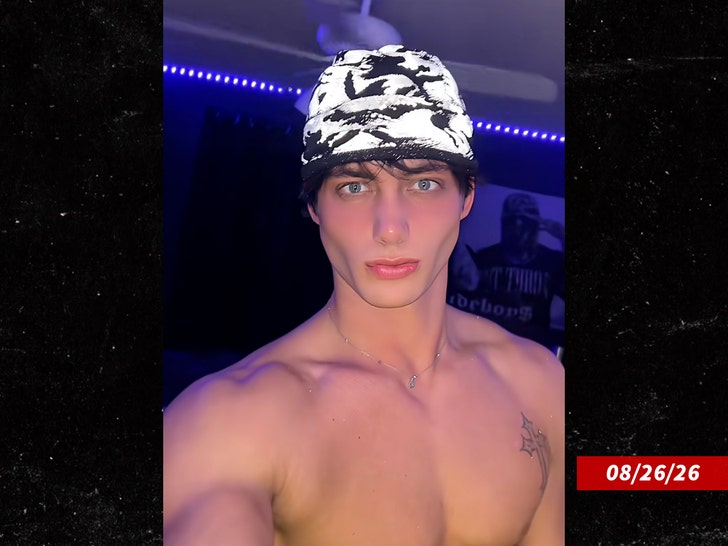
Furthermore, this case ignites conversations about online safety for children and the vigilance required from parents, guardians, and the wider community. The internet, while a tool for connection and learning, also harbors dark corners where vulnerable individuals, particularly children, are targeted for exploitation. Education on digital literacy, privacy settings, and reporting mechanisms is more crucial than ever. The alleged details of Hull’s case—that he "spent money twice on buying videos with kids between the ages of 8 and 15" and some showed children "crying while being abused"—serve as a chilling reminder of the direct harm inflicted upon child victims whose images are exploited and traded.
The legal framework surrounding CSAM is robust in many jurisdictions, reflecting a societal consensus on the need to protect children. Penalties for possession can include lengthy prison sentences, substantial fines, and mandatory registration as a sex offender, depending on the jurisdiction and the specific nature of the offense. The gravity of these consequences reflects the profound and lasting trauma inflicted upon child victims.
The Path Forward
Mason Hull’s legal battle is far from over. With a not guilty plea entered, the case will proceed through the judicial system, likely involving pre-trial motions, discovery, and potentially a full trial. During these proceedings, both the prosecution and the defense will present their arguments and evidence. The prosecution will aim to prove beyond a reasonable doubt that Hull possessed the alleged material, relying on the evidence gathered from his phone, his alleged admissions to officers, and the girlfriend’s testimony. The defense, conversely, will seek to challenge the evidence, question the credibility of witnesses, and argue for Hull’s innocence.
The alleged violation of his bond conditions, specifically the internet ban, could have immediate repercussions, potentially leading to his re-arrest and a more restrictive pre-trial detention. Such a development would further complicate his defense and intensify public scrutiny. The outcome of this case will not only determine Mason Hull’s personal freedom and future but will also reverberate through the influencer community, serving as a cautionary tale about accountability, the dark underbelly of online interactions, and the enduring fight against child exploitation in the digital realm. The legal process, while sometimes slow, is designed to uncover the truth and ensure justice, particularly in cases involving such profound moral and ethical implications.




 Yuyun Lusiyani
 Joko Widodo
 Eva Lovia
 Pevita Pearce

 Lina Irawan