
 admin
admin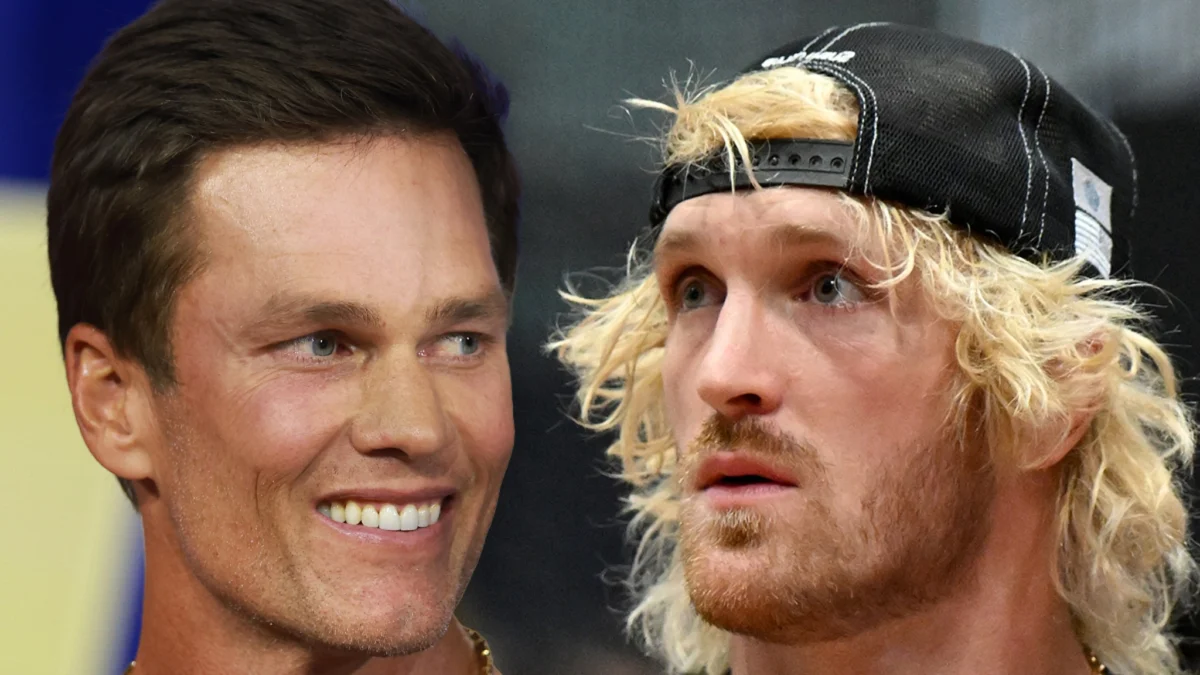
A startling confrontation erupted at Friday’s high-profile Fanatics Fest 2026, as retired NFL legend Tom Brady engaged in a heated exchange with WWE superstar and YouTube personality Logan Paul, culminating in Brady delivering an open-handed smack to Paul’s head. The incident, captured by numerous attendees on cell phone cameras and quickly disseminated across social media platforms, immediately sparked intense debate: was this a genuine display of animosity between two prominent figures, or a meticulously choreographed spectacle designed for viral impact and mutual publicity? The dramatic encounter, which saw New York Knicks center Karl-Anthony Towns intervene to de-escalate the situation, marks a significant escalation in a simmering feud that has captivated sports and entertainment audiences for months.
The Incident Unfolds at Fanatics Fest 2026
The setting for this unexpected clash was the bustling Fanatics Fest 2026, an annual gathering renowned for bringing together top athletes, celebrities, and sports enthusiasts. The event, held in a prominent convention center, was alive with the energy of fans eager to interact with their idols. Eyewitness accounts and widely circulated video footage paint a vivid picture of the confrontation. Brady, celebrated for his unparalleled seven Super Bowl championships and revered as arguably the greatest quarterback of all time, was seen coming face-to-face with Paul, a figure known for his audacious stunts and successful transition from digital content creator to professional wrestler and boxer.
The initial moments of the encounter depicted a tense verbal sparring match, with both men leaning into each other, their voices seemingly raised amidst the din of the crowd. The atmosphere was charged, a palpable shift from the celebratory mood of the festival. Karl-Anthony Towns, the towering NBA star, was observed standing in close proximity, initially a spectator to the escalating rhetoric. As the argument intensified, Brady, without warning, extended his right arm and delivered a firm, open-handed smack to the side of Paul’s head. The impact, while seemingly not forceful enough to cause serious injury, was undeniable and visibly jolted Paul.
Following the smack, Paul’s reaction was immediate and theatrical. He recoiled momentarily before lunging forward, appearing visibly enraged and ready to retaliate. It was at this critical juncture that Towns, demonstrating remarkable composure and quick reflexes, stepped between the two men. The 7-foot NBA player used his imposing physical presence to physically restrain Paul, preventing him from advancing further towards Brady. Despite Towns’ intervention, Paul continued to direct a volley of "choice words" at Brady, his frustration clearly evident. The entire sequence, from the initial verbal jousting to the physical contact and subsequent intervention, unfolded rapidly, leaving many attendees stunned and immediately reaching for their phones to record the unfolding drama. The swift circulation of these videos ensured that the incident became an instant global talking point, dominating online discussions within minutes of its occurrence.
A Feud Forged in February: The Preceding Months
The highly publicized altercation at Fanatics Fest 2026 did not materialize out of thin air but rather represents the apex of a prolonged and increasingly acrimonious rivalry between Tom Brady and Logan Paul. The genesis of this "beef" can be traced back to February 2026, when Paul, during a podcast appearance, made a controversial assertion that ignited the initial spark. He claimed that his burgeoning career in the WWE, characterized by its demanding physical regimen and high-stakes performances, qualified him as an athlete on par with, or even surpassing, the legendary status of Tom Brady.
This comparison, coming from a figure whose athletic bona fides, while significant in his chosen fields, stood in stark contrast to Brady’s two-decade-long career at the pinnacle of professional football, did not sit well with the famously competitive quarterback. Brady, whose career is defined by an unparalleled commitment to excellence and a relentless pursuit of victory across multiple Super Bowl campaigns, viewed Paul’s comments as an affront to his legacy and the rigorous demands of NFL football.
In the weeks and months that followed, the feud simmered, occasionally boiling over into public exchanges. Brady, never one to shy away from a challenge or a verbal jab, responded to Paul’s initial comments with dismissive remarks, subtly questioning the validity of Paul’s athletic claims in comparison to his own illustrious career. The trash-talking escalated significantly in March 2026, when Brady reportedly referred to Paul as a "bitch" in an online interaction, signaling a clear disdain and personal investment in the rivalry. These exchanges were not isolated incidents but rather a series of calculated barbs exchanged across social media platforms and in various media appearances, each contributing to the narrative of an escalating personal and professional rivalry. The digital nature of their interactions ensured that every slight and every retort was amplified, reaching millions of followers and further cementing the public’s perception of a genuine and intensifying animosity between the two titans of their respective fields. By the time Fanatics Fest 2026 arrived, the stage was already set for a dramatic confrontation, with the anticipation of a face-to-face encounter palpable among fans aware of their ongoing dispute.
Social Media Erupts: The Aftermath and Accusations
In the immediate aftermath of the physical altercation at Fanatics Fest, both Tom Brady and Logan Paul wasted no time in taking their grievances to social media, further fueling the public spectacle and inviting a flood of reactions from their massive online followings. Tom Brady was quick to post his own video of the incident on X (formerly Twitter), accompanying it with a dismissive caption that labeled Logan Paul a "dork." This initial post served to frame the incident from Brady’s perspective, portraying Paul as an irritant unworthy of serious consideration. Brady followed up with another post, escalating his verbal assault by referring to Paul as a "nerd."
Logan Paul, never one to shy away from online engagement, swiftly retaliated. He leveraged his own X platform to offer a counter-narrative, suggesting that Brady’s physical aggression stemmed from a deeper, more personal frustration. Paul claimed that Brady’s smack was a direct consequence of Paul having defeated the NFL legend in a flag football game—an unverified detail that immediately added another layer of intrigue to the unfolding drama. Furthermore, Paul sharply criticized Brady, accusing him of setting a "bad example" for his children through his actions. This particular accusation aimed to strike at Brady’s carefully cultivated image as a family man and a role model, injecting a moral dimension into what had previously been a sports-entertainment rivalry.
The public response to these posts and the circulating videos was nothing short of volcanic. Within hours, "Tom Brady," "Logan Paul," "Fanatics Fest," and "Karl-Anthony Towns" were trending globally. Social media feeds were inundated with analyses, memes, and fan theories. Many users debated the authenticity of the altercation, with some convinced it was a legitimate outburst of temper, while others argued it was a calculated publicity stunt benefiting both parties. Sports journalists and entertainment reporters weighed in, dissecting every frame of the video and every word of the online exchanges. The sheer volume of engagement underscored the immense cultural footprint of both individuals and the public’s insatiable appetite for celebrity drama, especially when it involves such unexpected pairings. The online discourse, characterized by its rapid-fire nature and diverse opinions, ensured that the incident remained at the forefront of public consciousness, transforming a brief physical exchange into a prolonged digital event.
Staged Spectacle or Genuine Spat? Analyzing the Authenticity
The central question dominating discussions in the wake of the Tom Brady-Logan Paul confrontation is whether the incident was a genuine, spontaneous outburst of animosity or a meticulously planned theatrical event. Both interpretations carry significant weight, given the public personas and career trajectories of the individuals involved.
Arguments for the altercation being a staged spectacle are compelling. Logan Paul, with his background as a YouTube personality, rose to fame through viral content, often involving pranks, stunts, and orchestrated public engagements designed to maximize views and social media traction. His transition into professional boxing and WWE further solidifies his expertise in crafting compelling, often controversial, narratives for entertainment purposes. In the WWE, storylines involving manufactured feuds and physical altercations are the bedrock of the product. For Paul, a public "smack" from a legend like Brady could be seen as invaluable content, boosting his profile and potentially setting the stage for future collaborations or even a legitimate pay-per-view event.
Tom Brady, post-NFL retirement, has embarked on various media ventures, including broadcasting and content creation. While his brand is built on unparalleled athletic achievement, he is also keenly aware of the mechanisms of public attention. Engaging in a high-profile, ambiguous "feud" with a polarizing figure like Paul could be a strategic move to maintain relevance in the broader entertainment landscape, appealing to a younger demographic that might not be as familiar with his NFL exploits. The fact that the incident occurred at Fanatics Fest, a major event ripe for media coverage, and was immediately followed by both parties posting about it on X, lends credence to the idea of a pre-planned publicity stunt. The ambiguity itself — the "you be the judge" narrative — is a powerful tool for generating sustained public interest and debate.
Conversely, arguments for a genuine spat also hold water. While both men are public figures, human emotions like ego, pride, and genuine irritation can certainly drive authentic confrontations. The initial source of the feud—Paul’s comparison of his athleticism to Brady’s—tapped into a core aspect of Brady’s identity as an elite athlete. Such a perceived slight, especially from a figure often associated with online controversies, could genuinely offend someone of Brady’s competitive nature. The history of their trash-talking, including Brady’s reported "bitch" comment, suggests a building animosity that might have reached a breaking point in a face-to-face encounter. Even if the smack itself wasn’t a full-force blow, the intent behind it could have been real, born from genuine frustration. Karl-Anthony Towns’ intervention also provides an interesting data point; his immediate action to restrain Paul suggested a perceived need to prevent further escalation, which might imply a belief that the situation was, at least in that moment, genuinely tense.
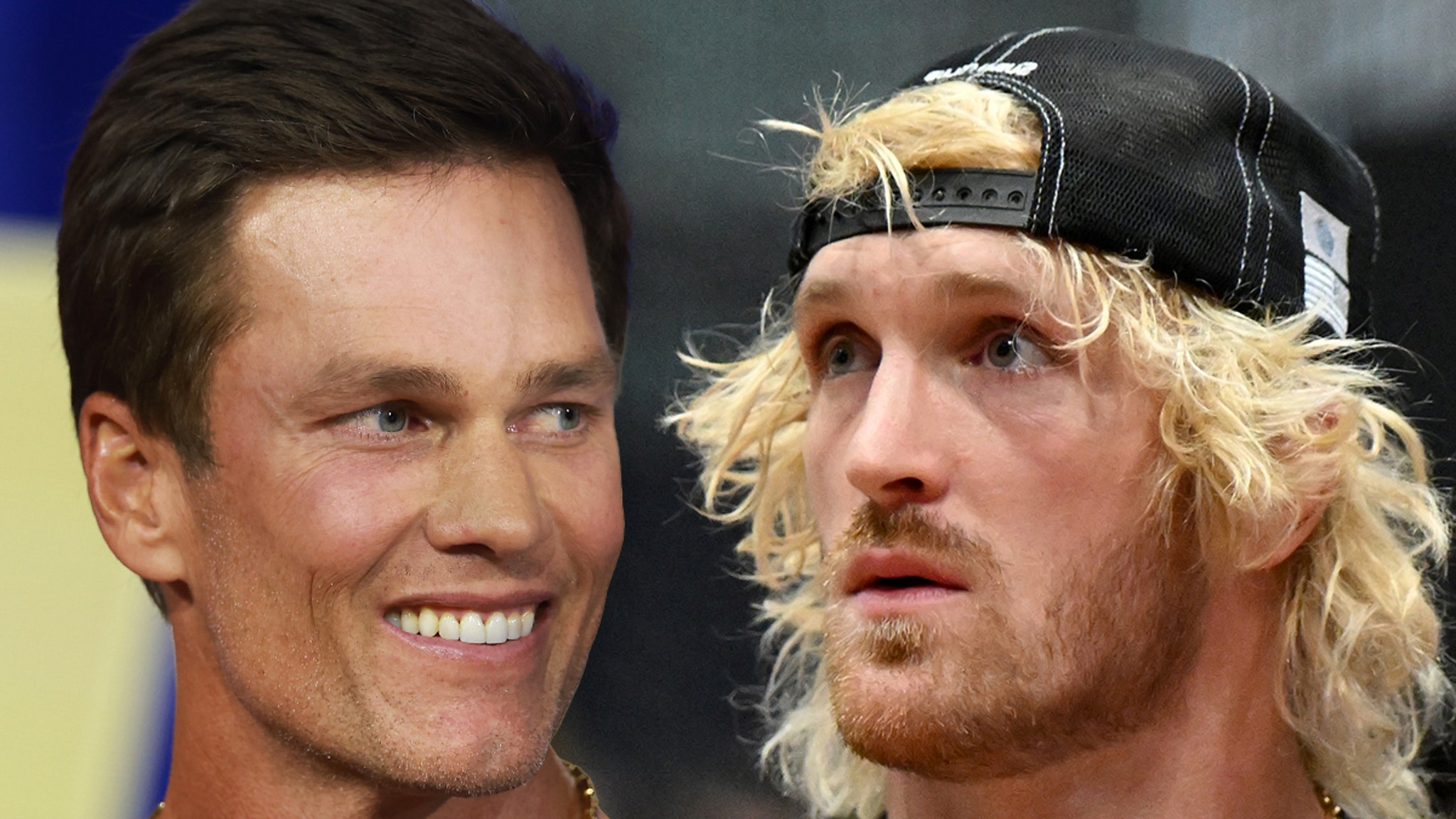
Ultimately, the ambiguity serves both parties. If it was staged, it achieved its goal of viral attention. If it was real, it showcased raw emotion from two powerful personalities. The ongoing speculation only amplifies its impact, ensuring that the "Tom Brady vs. Logan Paul" narrative will continue to be a topic of discussion for the foreseeable future.
The Participants: Background and Public Persona
The clash between Tom Brady and Logan Paul is made all the more intriguing by the stark contrast and surprising overlaps in their respective public personas and career trajectories. Understanding their backgrounds provides crucial context for the incident.
Tom Brady: Beyond the Gridiron
Tom Brady, 48 at the time of the incident, stands as an undisputed titan in the world of professional sports. His legendary 23-season NFL career, primarily with the New England Patriots and a final stint with the Tampa Bay Buccaneers, yielded an unprecedented seven Super Bowl championships, five Super Bowl MVP awards, and three NFL MVP awards. He is widely considered the greatest quarterback of all time, a symbol of relentless dedication, strategic brilliance, and unparalleled clutch performance. His post-retirement transition has seen him venture into broadcasting, notably securing a lucrative deal with Fox Sports, and various entrepreneurial endeavors, including his health and wellness brand, TB12.
Brady’s public persona is one of a disciplined, competitive, and successful individual. While intensely private about his personal life, his professional image has always been meticulously maintained, focusing on excellence and leadership. The smack on Logan Paul, regardless of its authenticity, represents a departure from his usual composed public demeanor. For a figure of Brady’s stature, engaging in any form of physical altercation, even a light one, is notable, hinting at either a calculated move to inject a different kind of energy into his post-NFL life or a rare moment where his competitive fire momentarily overshadowed his usual restraint. His brand is built on a foundation of respect and achievement, and how this incident aligns with or challenges that image is a point of ongoing analysis.
Logan Paul: From YouTube Controversy to Sports Entertainer
Logan Paul, 31 at the time of the incident, represents a different, more contemporary breed of celebrity. He first rose to global prominence as a highly successful, albeit often controversial, YouTube vlogger, amassing tens of millions of subscribers with his audacious stunts, pranks, and lifestyle content. His early career was marked by several high-profile controversies that tested the boundaries of internet content creation, but he has since diversified his portfolio significantly.
Paul successfully transitioned into the world of combat sports, engaging in high-profile boxing matches, including exhibition bouts against Floyd Mayweather Jr., which garnered immense pay-per-view numbers. His most significant recent career move has been his integration into World Wrestling Entertainment (WWE), where he has quickly become a legitimate and acclaimed performer. Known for his athleticism, charisma, and willingness to take impressive risks in the ring, Paul has earned considerable respect within the professional wrestling community, even securing a championship title.
Paul’s public persona is characterized by his entrepreneurial spirit, his penchant for self-promotion, and his ability to generate viral content, often through engaging in public spectacles. He thrives on controversy and has a proven track record of converting online beefs into tangible events (e.g., boxing matches). For Paul, an interaction with a figure of Brady’s legendary status, regardless of its nature, is a massive win for his brand, solidifying his position at the intersection of sports, entertainment, and digital culture. His willingness to provoke and his background in staged entertainment make him a natural fit for a narrative involving a public confrontation.
The collision of these two distinct worlds—Brady’s traditional sports excellence and Paul’s new-age digital and sports entertainment celebrity—is precisely what makes their feud and the Fanatics Fest incident so compelling. It highlights the evolving landscape of fame and the increasing blur between traditional athletic achievement and performance-based entertainment.
Broader Implications and Future Outlook
The Tom Brady-Logan Paul incident at Fanatics Fest 2026 carries broader implications that extend beyond the immediate drama, touching upon celebrity culture, the future of sports entertainment, and the evolving nature of public figures in the digital age.
Firstly, the event underscores the growing convergence of traditional sports and entertainment. Fanatics Fest, initially conceived as a celebration of sports fandom, inadvertently became a stage for a celebrity drama more akin to a WWE storyline. This blurring of lines reflects a contemporary trend where athletes are increasingly expected to be entertainers, and entertainers seek validation in athletic endeavors. The incident, whether genuine or staged, perfectly encapsulates this hybrid landscape, demonstrating how personal feuds can become major public spectacles capable of dominating news cycles.
Secondly, the incident raises questions about the authenticity of public interactions involving high-profile personalities. In an era saturated with curated content and performance, the line between genuine emotion and strategic branding is increasingly indistinct. The "staged or real" debate surrounding Brady and Paul is not just about their personal conduct but about a broader societal skepticism towards celebrity actions. This ambiguity, while frustrating for those seeking clear answers, is also a powerful driver of engagement, keeping the conversation alive and ensuring maximum exposure for the individuals involved.
Thirdly, the role of social media in amplifying and shaping these narratives cannot be overstated. The instantaneous dissemination of videos and reactions, coupled with the direct engagement of Brady and Paul on X, transformed a brief physical interaction into a global event within minutes. Social media platforms act as both the stage and the echo chamber, allowing narratives to be constructed, debated, and perpetuated at an unprecedented speed. The ability for celebrities to directly address or instigate public feuds online bypasses traditional media gatekeepers, giving them direct control over their messaging, even if that messaging is designed to be provocative.
Looking ahead, the future outlook for this particular feud remains uncertain but rife with possibilities. Given Logan Paul’s history of translating online beefs into tangible events, the possibility of a boxing match or a further WWE storyline involving Tom Brady cannot be entirely dismissed. Brady, despite his retirement from the NFL, is a competitive individual with a burgeoning media career. A controlled, high-profile physical engagement, perhaps for charity or as part of a media project, could be a way for both men to capitalize further on the immense public interest generated by their clash. Such an event would undoubtedly draw massive viewership, blending the worlds of combat sports, professional wrestling, and celebrity spectacle.
The incident at Fanatics Fest 2026, therefore, is more than just a fleeting moment of celebrity drama. It is a microcosm of contemporary culture, reflecting the intricate interplay between sports, entertainment, social media, and the enduring fascination with public figures. As the dust settles, the only certainty is that the Tom Brady-Logan Paul saga has further cemented its place in the annals of celebrity feuds, leaving audiences to wonder what dramatic turn this rivalry will take next.


 Yuyun Lusiyani
 Joko Widodo
 Eva Lovia
 Pevita Pearce
 Lina Irawan