
 Pevita Pearce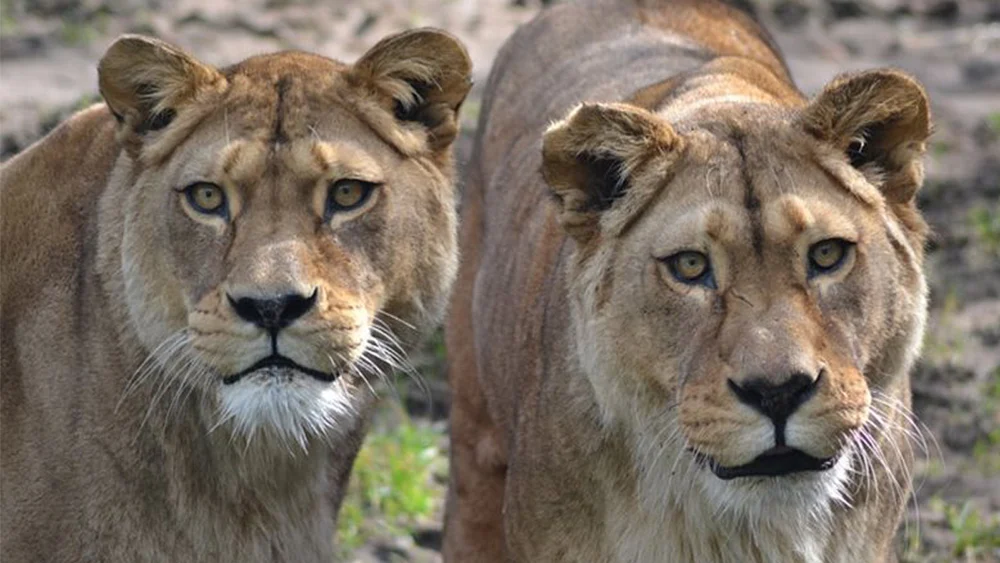
The global conservation community and the staff at Belfast Zoo are mourning the loss of Thheiba and Fidda, two Barbary lion sisters who were euthanized together on March 6, 2026, following a period of declining health for one of the siblings. At the remarkable age of 22, the sisters had far exceeded the typical life expectancy for their species, serving as vital ambassadors for a subspecies that has been extinct in the wild for over half a century. The decision to euthanize both animals simultaneously, despite only one suffering from acute physical decline, underscores the complex ethical considerations regarding the social welfare of highly gregarious apex predators in captive environments.
The announcement, released by Belfast Zoo officials, detailed the final days of the two lionesses, who were central figures in the European Association of Zoos and Aquaria (EAZA) Ex-Situ Program (EEP). The program is a collaborative international effort designed to maintain a genetically diverse and healthy population of species that are either threatened or, in the case of the Barbary lion, entirely absent from their natural habitats. Thheiba and Fidda were among the roughly 200 Barbary lions currently living in managed care globally, making their contribution to the subspecies’ survival both rare and significant.
The Life and Legacy of Thheiba and Fidda
Born into the EEP, Thheiba and Fidda spent their entire lives as a bonded pair. Throughout their two decades at Belfast Zoo, they were instrumental in the continued existence of their lineage. According to zoo records, both sisters produced multiple offspring, many of whom were transferred to other accredited institutions across Europe to continue the work of the breeding program. This cycle of birth and relocation is the backbone of modern conservation, ensuring that the genetic blueprint of the Barbary lion is not lost to history.
The longevity of the sisters is a point of professional pride for the Belfast Zoo veterinary and husbandry teams. In the wild, African lions typically live between 10 and 14 years, facing threats from inter-pride conflict, starvation, and disease. In a managed environment, the absence of these pressures, combined with rigorous nutritional standards and medical intervention, can extend their lives significantly. Reaching the age of 22 placed Thheiba and Fidda in the upper echelon of geriatric felids, a testament to the quality of care they received throughout their lives.
However, advanced age brings inevitable physiological challenges. In recent months, Thheiba began to exhibit significant mobility issues, likely stemming from degenerative joint disease, and a noticeable loss of body condition. Despite adjustments to her medication and environment, her quality of life began to diminish rapidly.
Veterinary Ethics and the "Social Bond" Decision
The decision to euthanize Fidda alongside her ailing sister has sparked discussions regarding the emotional and social lives of captive animals. While Fidda did not present the same level of physical decline as Thheiba, veterinarians and animal behaviorists at Belfast Zoo determined that separating the pair would result in profound psychological distress for the surviving sister.

Lions are the only truly social cat species, living in complex pride structures where social bonds are essential to their well-being. Thheiba and Fidda had been inseparable since birth. "Veterinary advice emphasized that it would have been an act of cruelty to leave Fidda to live out her remaining time in isolation," the zoo stated in a press release. "The depth of their bond meant that the loss of her sister would have caused Fidda immense suffering that no amount of human intervention could mitigate."
This approach to euthanasia—prioritizing the social and emotional health of a surviving companion—is becoming more common in the zoological field. It reflects a shift from purely clinical assessments of health to a more holistic view of animal welfare. This event marks the second high-profile instance of "companion euthanasia" in 2026; earlier in February, a UK-based zoo made a similar decision regarding a tapir and a capybara who shared an unusual and inseparable friendship.
A Century of Decline: The History of the Barbary Lion
The passing of Thheiba and Fidda is a somber reminder of the Barbary lion’s precarious status. Scientifically known as Panthera leo leo, the Barbary lion—also called the Atlas lion—was once the apex predator of North Africa. Their historical range extended from the Atlas Mountains of Morocco and Algeria across the Mediterranean coast to the deserts of Egypt.
The subspecies was physically distinct from the lions found in sub-Saharan Africa. They were characterized by their massive stature and thick, dark manes that extended past their shoulders and down to their bellies—an evolutionary adaptation to the colder temperatures of the North African mountains. Historically, they held a place of reverence and fear; they were the lions used in the gladiatorial arenas of Ancient Rome and were frequently kept in the royal menageries of Moroccan sultans.
The decline of the Barbary lion began in earnest during the 19th century as human settlements expanded into their territories. To protect livestock and human populations, Turkish and later French colonial authorities placed bounties on the lions. This systematic eradication, coupled with the loss of natural prey species like the Barbary stag and gazelle, pushed the population to the brink.
By the mid-20th century, the Barbary lion had vanished from the wild. The last recorded sighting of a wild Barbary lion occurred in the Atlas Mountains in the 1940s, though some reports suggest a few individuals may have survived until the early 1960s. Today, the subspecies exists only in captivity, with a significant portion of the remaining population descended from the "Royal Lions" of the King of Morocco, which were donated to zoos to prevent the total extinction of the line.
The Role of the EAZA Ex-Situ Program
With the wild population gone, the survival of the Barbary lion rests entirely on programs like the EAZA EEP. These programs are not merely about keeping animals in enclosures; they are sophisticated scientific endeavors that manage the demographics and genetics of a species.

The EEP for Barbary lions utilizes a "studbook," a detailed record of every individual’s ancestry, to make breeding recommendations. The goal is to minimize inbreeding and maximize genetic diversity, which is particularly challenging for a species with such a small founder population. Thheiba and Fidda’s contributions to this studbook mean that their genetic legacy continues to circulate within the European population, providing a "safety net" for the subspecies.
While the prospect of reintroducing Barbary lions to North Africa remains a distant and complex goal—requiring massive habitat restoration and the mitigation of human-wildlife conflict—the work done by institutions like Belfast Zoo ensures that the option remains on the table for future generations.
Broader Implications for Modern Zoos
The story of Thheiba and Fidda highlights the evolving role of modern zoos as centers for both conservation and high-level geriatric care. As veterinary medicine advances, zoos are increasingly managing "aging populations," requiring specialized facilities for animals that would never survive to such an age in the wild.
The public reaction to the sisters’ passing has been one of collective mourning and support for the zoo’s difficult decision. For many visitors to Belfast Zoo, Thheiba and Fidda were a primary educational link to the history of North African biodiversity. Their presence allowed educators to tell the story of how human activity can lead to the extinction of even the most powerful and iconic species.
In their press statement, Belfast Zoo officials reflected on the emotional impact of the loss: “Thheiba and Fidda’s longevity, their strong bond, and their vital role in conservation is a testament to our long-standing commitment to the care and conservation of this iconic species. Both lionesses will be fondly remembered by the staff who cared for them and the thousands of visitors who loved them.”
Conclusion: The Path Forward
The loss of two of the world’s remaining 200 Barbary lions is a significant moment for the EEP. However, the success of Thheiba and Fidda in reaching the age of 22 and producing a new generation of lions offers a roadmap for the continued management of the subspecies. The focus now shifts to their descendants and the other lions within the program, as conservationists work to ensure that the "King of the Atlas" never truly disappears.
As Belfast Zoo moves forward, the legacy of the two sisters will likely influence future welfare protocols regarding bonded pairs. Their lives served as a bridge between a lost wilderness and a managed future, proving that while a species may be "extinct in the wild," the dedication of the international scientific community can keep its spirit alive. The roar of the Barbary lion may no longer echo through the Atlas Mountains, but because of the work of institutions like Belfast Zoo, it has not yet been silenced.



 Yuyun Lusiyani
 Joko Widodo
 Eva Lovia
 Jia Lissa
 admin
admin