
 Pevita Pearce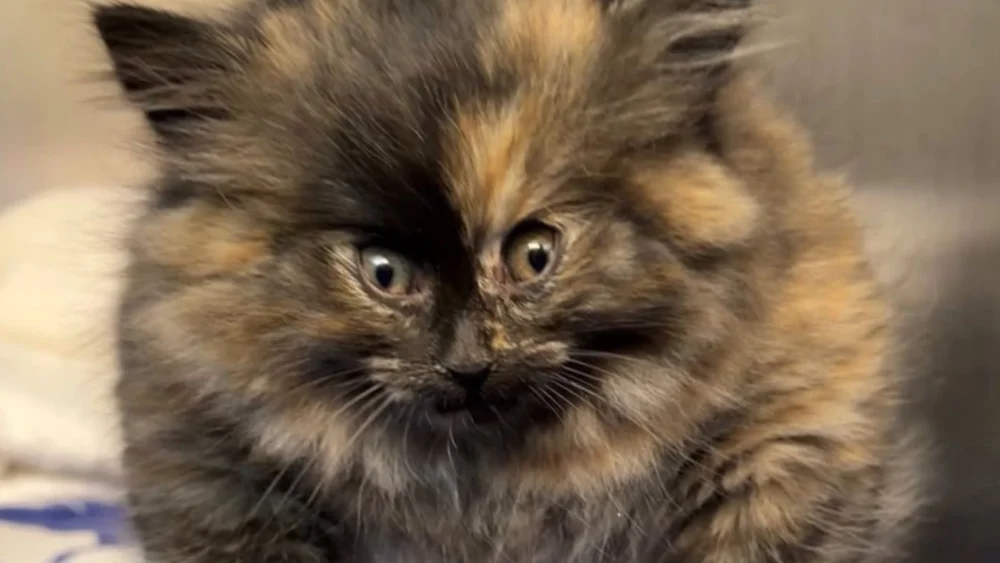
A stray tortoiseshell kitten named Zoe has captured global attention after a series of clinical updates revealed she required specialized veterinary intervention to "deflate" her body. The feline, who arrived at a rescue facility in a state of severe physical distress, was diagnosed with a rare and visually striking medical condition known as subcutaneous emphysema. The condition caused air to become trapped beneath her skin, inflating her small frame to several times its natural size and giving her the appearance of a spherical balloon.
The case was brought to public prominence by Dr. Phil Caldwell, a veterinarian at the shelter where Zoe was admitted. Through a series of detailed clinical updates shared on social media, Dr. Caldwell documented the kitten’s journey from a critically "puffed up" state to the early stages of recovery. The footage, which shows the kitten struggling with her mobility due to the internal air pressure, has sparked a broader conversation regarding the challenges of shelter medicine and the physiological resilience of stray animals.
Clinical Presentation and Initial Diagnosis
When Zoe was first surrendered to the veterinary shelter, her appearance was immediately flagged as an emergency. While kittens often present with bloating due to malnutrition or parasitic infections, Zoe’s swelling was systemic, extending from her neck down to her hindquarters. Her skin was taut, and her limbs were splayed outward by the volume of air trapped in the subcutaneous layers of her tissue.
Dr. Caldwell performed a physical examination, noting a characteristic clinical sign of subcutaneous emphysema known as crepitus. This is a crackling or popping sensation felt under the skin, similar to the feeling of pressing on bubble wrap or dry cereal, caused by the movement of air bubbles through the soft tissues.
"This stray kitten came into the shelter yesterday, and I have to figure out how to fix it," Dr. Caldwell stated during his initial assessment. "She’s filled with air. She’s blown up like a blimp. Oh my gosh, she’s like a big puffball."
To confirm the extent of the condition and identify the source of the air leak, the veterinary team conducted a series of diagnostic X-rays. The imaging revealed a significant accumulation of air pockets separating the skin from the underlying musculature. In severe cases of subcutaneous emphysema, the air can migrate into the mediastinum (the space between the lungs) or the pleural cavity, potentially leading to a life-threatening collapse of the lungs. Fortunately for Zoe, the primary accumulation remained in the subcutaneous space, though the sheer volume necessitated immediate stabilization.
Pathophysiology of Subcutaneous Emphysema in Felines
Subcutaneous emphysema is not a disease in itself but rather a clinical manifestation of an underlying injury or anatomical defect. In feline patients, the condition typically arises from one of three primary sources:
- Traumatic Airway Injury: A tear in the trachea, larynx, or bronchial tubes allows air to escape the respiratory tract during inhalation. This air then follows the path of least resistance into the surrounding tissues.
- Pneumothorax: If a lung is punctured—often due to blunt force trauma like being struck by a vehicle or a fall from a height—air can leak into the chest cavity and eventually force its way under the skin.
- External Puncture Wounds: In rare instances, a "one-way valve" wound in the skin can suck air in during movement but prevent it from escaping, though this is less common than internal respiratory leaks.
Given Zoe’s status as a stray, the exact cause of her condition remains speculative, though Dr. Caldwell’s team suggested that a traumatic event, such as a crush injury or a sharp impact, likely caused a small perforation in her respiratory lining. The air she breathed was effectively being pumped into her body cavity with every breath, causing the dramatic "inflation" observed upon intake.
The Treatment and "Deflation" Process
The management of subcutaneous emphysema requires a dual approach: addressing the immediate pressure and identifying the leak. For Zoe, the primary goal was to prevent the air from encroaching on her internal organs, which could have compromised her ability to breathe or circulate blood.
Treatment protocols for this condition often involve strict cage rest to minimize the amount of air being forced through the leak by physical exertion. In some instances, veterinarians may use a sterile needle or a small catheter to manually aspirate the air—a process colloquially referred to as "deflating" the patient. However, if the underlying leak is not sealed, the air will quickly return.
In Zoe’s case, the veterinary team focused on stabilization and supportive care. By keeping her in a controlled, low-stress environment, they allowed her body’s natural healing mechanisms to begin sealing the respiratory tear. As the leak slows, the body begins to reabsorb the trapped gas into the bloodstream, where it is eventually exhaled through the lungs.
Recent updates from Dr. Caldwell indicate that this conservative management strategy is yielding positive results. "Zoe update! Everyone’s favorite puff kitty is making progress and looking much better, though she’s not out of the woods yet," he shared. The kitten has begun to show a reduction in body circumference, and her mobility has improved as the pressure on her joints and skin subsides.
Public Response and the Digital Veterinary Community
The visual nature of Zoe’s condition led to an immediate viral response. On Instagram and other social media platforms, thousands of viewers expressed concern and offered support for the kitten’s recovery. The comments section of Dr. Caldwell’s posts became a hub for feline advocates and concerned citizens.
"Oh my gosh, what can we do besides pray?" wrote one supporter. "Sweet angel is in the best care." Others expressed an interest in adopting the kitten once she is cleared for a forever home, highlighting the role that social media plays in finding placement for high-needs shelter animals.
This phenomenon is part of a growing trend in 2026, where rare or unusual veterinary cases gain significant traction online. Earlier this year, a kitten with macrophthalmia (abnormally large eyes) and another born with four ears also went viral, leading to successful fundraising efforts for their respective shelters. While some experts worry about the "spectacle" of medical anomalies, most veterinarians agree that the increased visibility provides crucial education on animal health and the importance of supporting local rescues.
Broader Implications for Shelter Medicine
Zoe’s case underscores the unpredictable nature of shelter medicine, where practitioners must often treat complex conditions with limited patient history. Strays like Zoe frequently present with "hidden" traumas that only manifest through unusual symptoms like systemic swelling.
The cost of treating such rare conditions can be prohibitive for smaller shelters. Cases involving subcutaneous emphysema may require multiple rounds of imaging, oxygen therapy, and potentially thoracic surgery if the leak does not close on its own. The viral success of Zoe’s story has served as a catalyst for donations, ensuring that the shelter can provide the high level of care required for her survival.
Furthermore, Zoe’s recovery offers a case study in feline resilience. Despite the discomfort of her condition, she has remained "sweet" and continued to eat, according to Dr. Caldwell. Maintaining a steady caloric intake is vital for kittens, as it provides the energy necessary for tissue repair.
Future Outlook and Recovery Timeline
As of the latest clinical update, Zoe remains under close observation. The "deflation" process is a gradual one; while the most dramatic swelling has subsided, it may take several weeks for the remaining air to be fully reabsorbed. During this time, the veterinary team will monitor her for signs of infection or a recurrence of the leak.
If Zoe continues to improve at her current rate, she will eventually be moved from the intensive care unit to a foster home, where she can continue her recovery in a domestic environment. Once she is fully healed and has undergone routine procedures such as vaccinations and spaying, she will be made available for adoption.
The story of the "balloon kitten" serves as a reminder of the critical role played by veterinary professionals in intervening in cases of severe trauma. Through a combination of diagnostic expertise and supportive care, Dr. Caldwell and his team have moved Zoe from a state of life-threatening inflation to a path of steady recovery. Her journey continues to inspire a global audience, proving that even the most unusual medical hurdles can be overcome with timely intervention and community support.



 Yuyun Lusiyani
 Joko Widodo
 Eva Lovia
 Jia Lissa
 admin
admin