
 Yuyun Lusiyani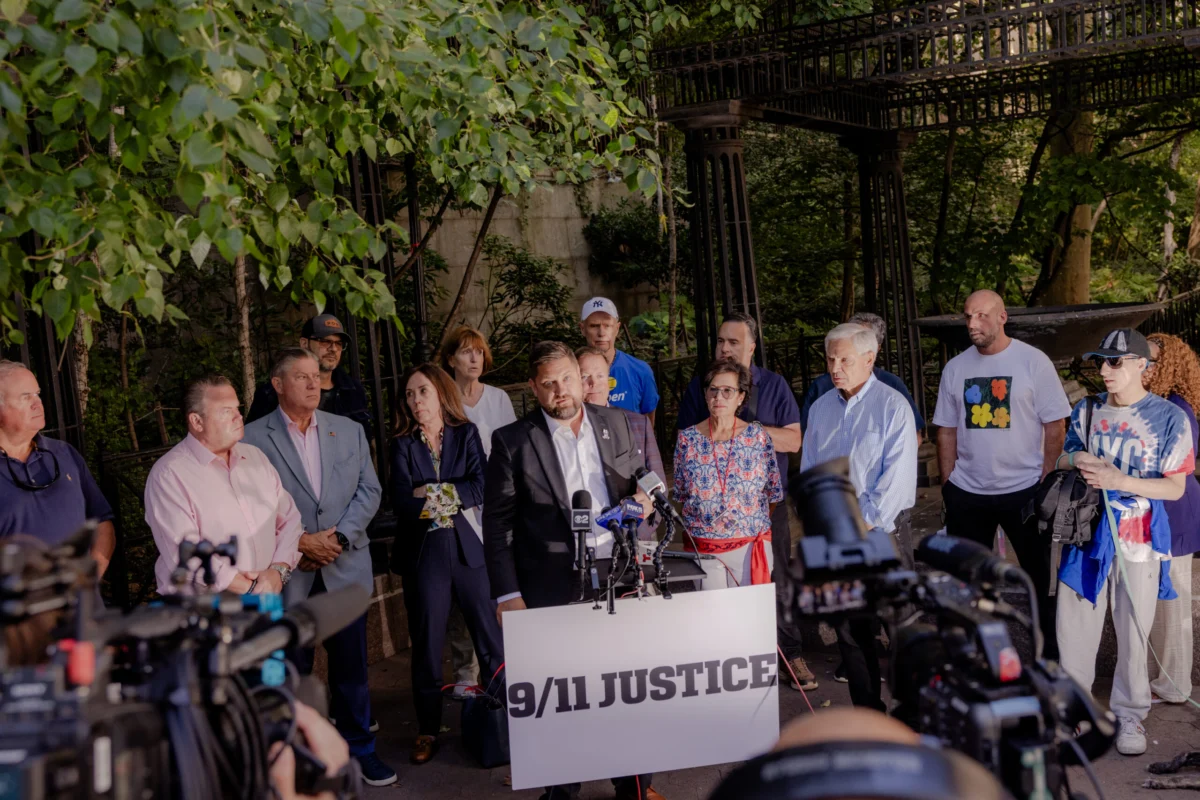
More than two decades after the devastating terror attacks of September 11, 2001, which claimed nearly 3,000 lives, persistent questions continue to surround the FBI’s investigation into potential Saudi involvement, particularly concerning a figure named Omar al-Bayoumi. This middle-aged Saudi graduate student was swiftly identified by FBI agents in the immediate aftermath of the attacks as a crucial associate who provided significant assistance to two of the al-Qaeda hijackers, Nawaf al-Hazmi and Khalid al-Mihdhar, as they established themselves in San Diego in early 2000. Despite a trove of evidence seized from Bayoumi, much of which deepened suspicions about his dealings with the terrorists, its subsequent handling by the FBI remains a contentious mystery, fueling ongoing demands for transparency from victims’ families.
Initial Suspicions and a Critical Arrest
The FBI’s focus on Bayoumi began within days of the 9/11 attacks. Investigators quickly tracked him to England, where he had relocated to pursue graduate business studies at Aston University in Birmingham. At the FBI’s request, British authorities arrested Bayoumi, leading to a police search of his home and office that yielded a significant collection of materials. This evidence included various documents, correspondence, photographs, computer disks, videotapes, and an address book, which investigators immediately flagged as potentially important. Among the most concerning items were a diagram in Bayoumi’s handwriting that appeared to calculate an airplane’s trajectory to a point on the horizon, and a video of Bayoumi touring and describing the U.S. Capitol, a known prospective al-Qaeda target.
Despite the gravity of the situation and the immediate suspicion surrounding Bayoumi, his interrogation in London, involving both British Metropolitan Police Service terrorism investigator David Campbell and FBI agents, was notably hampered by a lack of shared information. Campbell later recounted that he and his British colleagues were "really in the dark," never informed of Bayoumi’s prior investigation by the FBI in San Diego in 1998, nor fully briefed on the crucial evidence that had just been seized from his premises. This apparent disconnect between different investigative teams would foreshadow broader issues in the FBI’s approach to the case.
The FBI’s Contradictory Stance and Bayoumi’s Release

Following a week of questioning, British officials, in consultation with Justice Department attorneys and federal prosecutors in the U.S., concluded there was insufficient evidence to seek Bayoumi’s extradition. He was subsequently released by British police and later returned to Saudi Arabia. For years, the FBI publicly maintained that Bayoumi was not a true suspect, portraying his interactions with the hijackers as a "random encounter" and describing him as a genial, pro-American civil servant who unknowingly provided aid. This narrative suggested he helped the hijackers out of mere hospitality, having supposedly met them by chance in a Los Angeles halal cafe and then later at a San Diego mosque, subsequently arranging their housing and bank accounts.
This official stance, however, has been increasingly challenged by evidence that has only recently come to light, some of it declassified years after the initial investigation. This newly revealed information, now central to a federal lawsuit filed against the Saudi government by 9/11 victims’ families, paints a starkly different picture of Bayoumi. Documents indicate that while publicly a student, Bayoumi worked closely with Saudi religious officials, operated as a Saudi intelligence asset, and collaborated with several clerics who would later emerge as militant Islamists with ties to al-Qaeda.
The Troubling Path of Evidence and Internal Disagreements
The journey of the evidence seized from Bayoumi is a critical point of contention. An October 11, 2001, FBI memorandum confirmed that New Scotland Yard provided the FBI attache’s office with "copies of all recovered exhibits, including mirror images of all computers," and a complete copy was sent to the FBI’s New York Field Office. However, under then-director Robert Mueller, the 9/11 investigation, known as the Penttbom team, was centralized in Washington D.C. It appears that the headquarters team did not widely disseminate or thoroughly analyze all the materials.
A May 2002 memo from the San Diego FBI office, for example, noted that it was asked to review only five of the more than 80 VHS tapes seized, finding "nothing of significant investigative/evidential value." This suggests a systemic failure to fully leverage the intelligence gathered, or perhaps a deliberate limitation of access for field agents. Despite evidence that Bayoumi’s associates helped the hijackers with various aspects of their stay, from part-time jobs to flying lessons, FBI leaders, including Mueller, publicly stated that no one in the U.S. except the hijackers themselves knew of the plot.
This narrative was echoed by FBI Special Agent Jacqueline Maguire, who led the Flight 77 investigation team, in her 2004 testimony to the bipartisan 9/11 Commission. She reiterated that Bayoumi’s meeting with the hijackers was a "random encounter" and dismissed the idea of a support network. Michael Jacobson, a key commission investigator, recalled that while some FBI agents in California were convinced of deliberate assistance from Bayoumi and another suspicious figure, Fahad al-Thumairy (imam of the King Fahd Mosque in Culver City), Maguire and her superior, Mary Galligan, consistently "pushed back hard on any narrative of a support network." This highlights a significant internal division and disagreement within the FBI regarding the scope and nature of the hijackers’ support system.

Uncovering Deeper Connections: Operation Encore’s Breakthroughs
The official narrative of "no witting assistance" persisted for years, even after subsequent investigations began to chip away at its foundations. Daniel Gonzalez, a San Diego FBI agent who had been investigating Hazmi and Mihdhar’s circle since the day after the attacks, became the case agent for Operation Encore, a follow-on inquiry to the original 9/11 case. Gonzalez and his team faced persistent skepticism and even obstruction from FBI headquarters, but they made significant breakthroughs.
In 2007, a key source led Gonzalez to two other Muslim immigrants in Los Angeles who had assisted the hijackers. These witnesses corroborated that the hijackers had indeed visited the King Fahd Mosque after arriving in Los Angeles and had met repeatedly with Thumairy. Crucially, one witness stated that Thumairy had arranged for the hijackers to be driven to their first meeting with Bayoumi at the halal cafe, directly contradicting Bayoumi’s claim of a chance encounter.
The Encore team also struggled for years to access the full scope of evidence seized from Bayoumi in Britain. In a revealing incident, Gonzalez received a call from Washington inquiring if he wanted old Penttbom evidence that was slated for destruction. The materials received – copies of some of Bayoumi’s long-sought papers, including the suspicious flight diagram – astonished the Encore team, underscoring how critical evidence had been overlooked or withheld from those actively pursuing leads.
In June 2012, a small group of Encore investigators finally traveled to London to thoroughly review the Bayoumi evidence. While they viewed many hours of videotapes and obtained new copies, some critical tapes, including the video of Bayoumi at the U.S. Capitol, were either not seen or not fully appreciated at the time. These tapes would later become significant evidence in the 9/11 families’ lawsuit, with some experts interpreting the Capitol footage as Bayoumi "casing" the site, a claim Saudi government lawyers dismiss as a tourist video.
Further deepening the web of connections, Bayoumi’s videos also contained extensive footage of two Saudi religious officials, Adel al-Sadhan and Mutaeb al-Sudairy, emissaries of the Saudi Ministry of Islamic Affairs, whose travels around the U.S. had already drawn FBI and CIA attention. These clerics had visited Los Angeles and San Diego a year before the hijackers, even staying at a residence where Hazmi and Mihdhar later lived. Sudairy, in particular, had spent months living with an American al-Qaeda member, Ziyad Khaleel, who supplied Osama bin Laden with the satellite phone used in the 1998 U.S. embassy bombings. Telephone records further showed Bayoumi making calls to Sudairy, Thumairy, and Anwar al-Aulaqi—a Yemeni American cleric and spiritual adviser to the hijackers who later became a prominent al-Qaeda leader before being killed in a 2011 U.S. drone strike—just before and after the hijackers arrived in San Diego.

Commissions, Continued Resistance, and Declassified Revelations
In 2014 and 2015, the 9/11 Review Commission, tasked with examining the FBI’s reforms and lingering questions about the plot, again encountered resistance. Jacqueline Maguire, serving as the FBI’s primary liaison, continued to dispute suspicions about Bayoumi, asserting that his actions were purely accidental. Despite this, Tim Roemer, a former congressman who served on multiple 9/11-related commissions, insisted on further investigation into the Saudi question, noting "consistent feedback from some levels of the FBI that simply wanted to close the case."
Roemer’s persistence led the Review Commission to formally recommend that the FBI continue examining the Saudi issue. However, shortly thereafter, FBI headquarters renewed pressure to shut down Operation Encore. In 2016, the agency’s Joint Terrorism Task Forces leadership eventually relented, reassigning the case and disbanding the dedicated team.
The most damning revelations came in 2017, when a pair of memorandums from the FBI’s Washington field office confirmed what the Encore agents had long suspected: between the late 1990s and September 11, 2001, Omar al-Bayoumi received a monthly stipend as a "co-optee," or part-time agent, of the Saudi intelligence services. These memos, along with other critical documents, were initially withheld from the 9/11 families by the Justice Department, classified as state secrets during the Trump administration. They were finally made public in 2022 under an executive order by President Biden, allowing the retired Daniel Gonzalez and other former Encore agents to see the information for the first time. Gonzalez voiced the frustration of many: "Somebody needs to explain to the American people why we didn’t see this information before."
The Ongoing Pursuit of Justice and Broader Implications
Today, the 9/11 families continue their fight for full transparency, demanding an end to what they call the Justice Department’s silence regarding the handling of Bayoumi’s evidence and the broader lack of aggressive pursuit of other Saudis. Organizations like 9/11 Justice, represented by figures like Brett Eagleson, press for further investigation into alleged collusion by Saudi officials. The families have also questioned the commitment of past administrations, including the Trump administration, which strengthened U.S. diplomatic and business ties with the Saudi royal family, to fully disclose the truth.

The Saudi government has consistently denied any role in the attacks, frequently citing earlier FBI and CIA statements that the royal family was an adversary of al-Qaeda and Osama bin Laden. However, the declassified documents and the persistent efforts of the 9/11 families and some former investigators have fundamentally challenged this narrative, raising profound questions about intelligence failures, inter-agency communication, and potential political considerations that may have influenced the course of the investigation.
The revelations surrounding Omar al-Bayoumi highlight a complex and often opaque chapter in the post-9/11 intelligence landscape. The discrepancies between the FBI’s initial public statements and later declassified evidence, coupled with the internal conflicts among investigators, underscore the enduring quest for truth and accountability. The continued legal battles by the victims’ families serve as a powerful reminder that for many, the story of 9/11, particularly regarding its international support networks, remains incomplete and demands a comprehensive and unvarnished reckoning.




 Joko Widodo
 Eva Lovia
 Pevita Pearce
 admin
admin
 Lina Irawan