
 Yuyun Lusiyani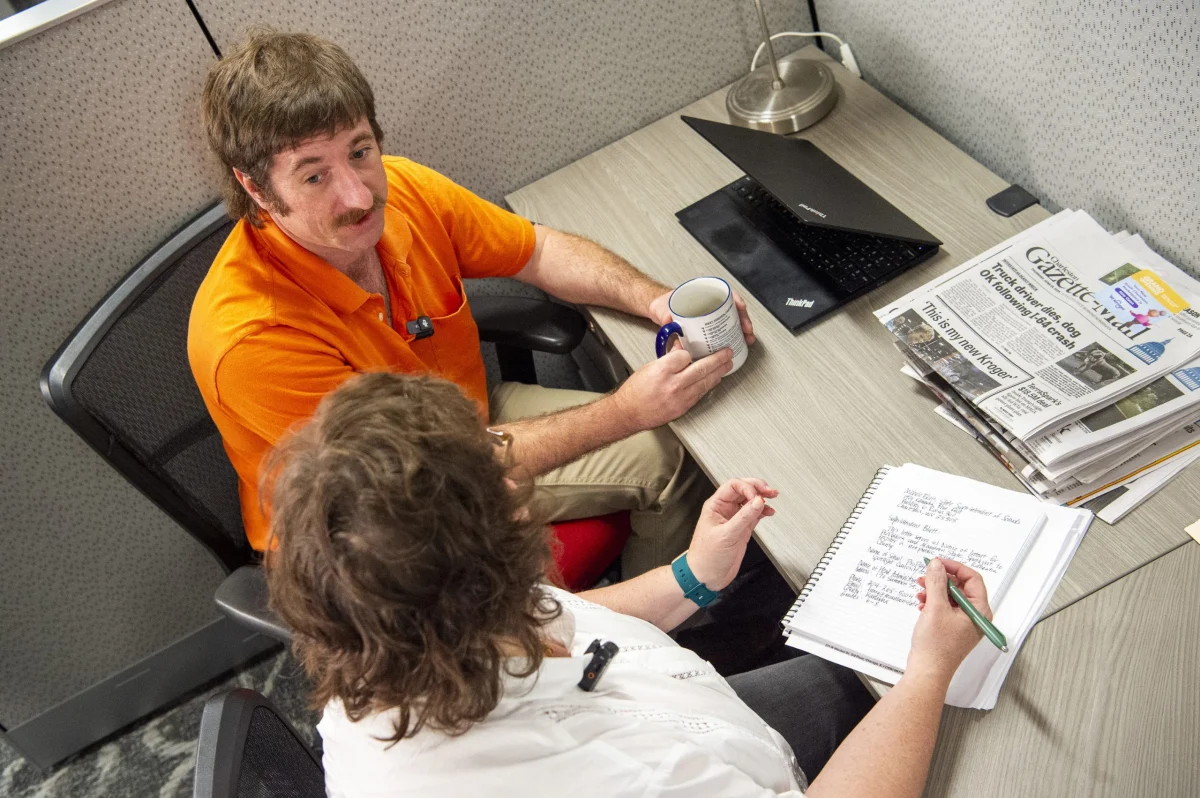
A groundbreaking investigative project by ProPublica, in collaboration with local journalists across three states, has exposed a disconcerting lack of regulatory oversight in the establishment of private and microschools, revealing that reporters, with no pedagogical experience, could effortlessly found educational institutions and, in some cases, qualify them for public funding. The investigation, part of ProPublica’s ongoing series documenting the dramatic shifts in the American education landscape, underscores critical vulnerabilities in state systems increasingly funneling taxpayer money into private school choice programs. The findings raise serious questions about accountability, educational standards, and student safety within a rapidly expanding sector.
The Shifting Landscape of American Education and the Rise of School Choice
The American education system is undergoing a profound transformation, driven by a national push for "school choice" initiatives. These programs, often championed under the banner of parental empowerment and educational freedom, seek to provide families with alternatives to traditional public schools. Central to this movement are voucher-style programs and education savings accounts (ESAs), which allocate public funds directly to parents to cover private school tuition, homeschooling expenses, or other approved educational services. Proponents argue that such programs foster competition, leading to improved educational outcomes for all students and allowing parents to select environments best suited to their children’s needs.
However, critics voice significant concerns about the potential consequences of these policies. They argue that diverting public funds to private institutions, which often lack the same level of accountability and transparency as public schools, can weaken the public education system, exacerbate educational inequities, and open the door to fraud and substandard educational offerings. The rapid proliferation of new private and microschools—smaller, often home-based or community-based educational models—has amplified these concerns, particularly given the varying, and often minimal, regulatory frameworks governing their operation. ProPublica’s extensive reporting this year has systematically documented how states, in their eagerness to expand school choice, have frequently overlooked the need for robust oversight, leading to a landscape where almost anyone, regardless of background or qualifications, can open a school and potentially access public money.
The Undercover Investigation: A Multi-State Experiment
To rigorously test the efficacy and robustness of these regulatory processes, ProPublica reporters embarked on an unprecedented undercover investigation. Partnering with local news organizations in Arkansas, West Virginia, and North Carolina, they set out to establish private schools themselves. The premise was simple yet profound: If the barriers to entry for opening a private school were genuinely low, could seasoned journalists, whose expertise lies in reporting, not teaching, successfully navigate the process? The results were stark, revealing an alarming ease of establishment and a conspicuous absence of scrutiny regarding educational qualifications, curriculum plans, or student welfare.
The reporters meticulously followed each state’s prescribed rules for starting private schools or microschools, a subset of private education often designed for a limited number of students. Crucially, they used their real names and news organization email addresses, maintaining transparency about their journalistic intent where possible without compromising the integrity of the test. What they discovered was a system largely devoid of checks and balances, where the act of creating a school often amounted to little more than a bureaucratic formality.
Arkansas: A Few Clicks, a Small Fee, and a Flag
The journey began in Arkansas, a state that adopted a private school funding plan in 2023. The process of establishing a private school there proved astonishingly straightforward. Collaborating with the Arkansas Times, ProPublica reporters formed the "ProPublica-Arkansas Times Curiosity Academy LLC." The entire endeavor required merely a few clicks on the Arkansas secretary of state website, a $45 filing fee, and the acquisition of an American flag, a symbolic but legally mandated item for schools in the state.
Arkansas state law, as the reporters discovered, imposes minimal requirements for opening a private school. There are no stipulations concerning teacher qualifications, curriculum content, or methods for assessing student learning. In a telling exchange, Kaelin Clay, a spokesperson for the Arkansas Department of Education, informed the reporters that the state "doesn’t have rules for opening a private school." Indeed, the Education Department itself didn’t even require any direct filing. The registration of their LLC as a business with the secretary of state’s office was sufficient. The application was approved the same day, yielding an official certificate of organization. The physical location chosen for the "school"—the Arkansas Times newsroom—was never inspected, nor were the reporters’ backgrounds or qualifications ever questioned by state officials.
The state’s Education Freedom Accounts (EFA) program, which provides voucher-style funding for private schools, has dramatically altered the educational landscape in Arkansas. Before the program’s inception in 2023, fewer than 100 private schools were on record. Today, that number has surged to over 220. Additionally, 143 microschools, a distinct category in Arkansas, have been approved to receive public funds this year, an increase from approximately 100 in the previous school year.
Given the shocking ease of establishment, the reporters took their investigation a step further: they applied to make the "Curiosity Academy" eligible for public funds. They clarified their journalistic intent in their application and stated no intention of accepting funds. The application process for microschools seeking public funds was equally undemanding, requiring about 10 minutes to complete in early September. Beyond contact information, only two documents were necessary: a proposed tuition and fees schedule and a refund policy. The reporters indicated a per-student tuition of $7,208, precisely matching the annual EFA allocation per student in Arkansas, and committed to refunding tuition for any unprovided educational services.
While their application was not immediately processed due to the school year being underway, an Education Department employee not only looked up their application but also actively encouraged them to pursue public money. The official suggested applying as a vendor for educational services or reapplying as a microschool for the next academic year, even offering advice on refining their tuition policy language. When pressed on the appropriateness of a publicly funded microschool operated by journalists, spokesperson Kaelin Clay reiterated that the agency’s role is merely to ensure schools meet state requirements, emphasizing that microschool families "have the freedom to choose the educators and learning environments that best meet their children’s needs." This stance highlights a philosophical commitment to parental choice that, in practice, appears to prioritize access over stringent oversight.
West Virginia: A Notebook Paper Notice and the Microschool Loophole
The investigation moved to West Virginia, a state where the "Hope Scholarship" offers approximately $5,400 per student to support private school tuition, spurring the growth of dozens of new private and microschools. Partnering with Mountain State Spotlight, reporters began by scrawling an official notice of intent for their new school in a spiral-bound notebook, listing the Mountain State Spotlight newsroom in Charleston as the location and indicating it would serve middle school students. This informal approach mirrored the casual filings observed from other new private school operators in the state.
The initial attempt to register a traditional private school encountered a significant hurdle: a requirement for a letter from the fire marshal confirming the school building’s safety for children. As the newsroom had not been inspected as a school site, and the reporters ethically declined to consume public resources for an unnecessary inspection, this seemed to mark the end of their West Virginia experiment.

However, the story took an unexpected turn. Upon inquiry about safety clearance for virtual schools, Dustin Lambert, a manager in the Office of Student Enrichment and Support at the West Virginia Department of Education, suggested the "microschool route." This designation, it turned out, circumvented the department’s involvement in oversight, as state law provides no mechanism for regulating microschools. West Virginia defines microschools as tuition-charging institutions started by one or more teachers, with no statutory limit on enrollment, effectively allowing a "micro" school to be "macro" in practice.
The requirements for a microschool were significantly less stringent: proof of a high school diploma was the primary mandate. After notifying the local Kanawha County school district of their new venture and submitting a college transcript, the "ProPublica-Mountain State Spotlight Curiosity Academy" was officially established, bypassing critical building health and safety requirements. Department of Education officials confirmed their awareness of the journalists’ endeavor but stated they had no authority over the state’s microschools. An official statement from the department’s spokesperson underscored this lack of oversight: the department "does not approve or deny the operation of microschools for any reason, including the qualifications of the owner/operator." This glaring loophole effectively allows any individual with a high school diploma to establish a school, enroll an unlimited number of students, and potentially access public funds without any state-level scrutiny of the learning environment or educational quality.
North Carolina: A Brewery as a School, and a Regulatory Snag
The final leg of the investigation took place in North Carolina, a state that has seen over 169 new private schools open since the 2021-22 school year, concurrent with expansions to its publicly funded private school tuition vouchers. In collaboration with The Assembly, reporters chose an unconventional location for their proposed school: Ponysaurus Brewing Co., a trendy brewery in Durham. The brewery’s owners graciously allowed the use of their building and existing fire and sanitation inspection reports, which are prerequisites for opening a private school in the state.
Reporters navigated an online state portal detailing the process for filing a notice of intent to open a private school. North Carolina’s statutory requirements included reporting the school’s name and address, administering standardized tests in certain grades (for actual operation), and maintaining records on student attendance and immunizations. After watching a four-minute, 39-second instructional video, the team created a login and filled in the necessary details: the brewery’s address, reporters as owner and chief administrator, and the name "ProPublica-Assembly Academy." They specified high schoolers as their target demographic and stated it would not be a religious school.
The critical step involved uploading fire and sanitation inspection reports. The City of Durham Fire Department had recently provided Ponysaurus with a fresh business occupancy inspection, which was uploaded. The brewery’s current food establishment inspection, boasting an impressive score of 99, was also submitted. A confirmation message flashed, indicating receipt of their request and an expected school identification number within three to five business days. While the school could potentially tap into voucher money, this would require additional steps like criminal background checks, which the reporters, due to their ethical boundaries, did not pursue.
However, the North Carolina experiment hit a snag. The following day, a garbled email from the state’s Division of Non-Public Education requested "fire and sanitation inspections to" and then abruptly ended. Upon seeking clarification, an official explained via phone that the school’s name needed to be explicitly on the inspection reports—a detail not found in state statutes, rules, or the instructional video. In a follow-up call, the official clarified that her division specifically checks for building inspections for a school, rather than general occupancy or food service. While state statute doesn’t allow them to deny an application, an incomplete one—lacking the "proper" school-specific inspections—would not be processed.
This requirement for a school-specific inspection, unforeseen based on the available guidance, posed an ethical dilemma. The reporters had established a clear red line: they would not consume additional public resources, such as the time of fire or health inspectors, for their journalistic pursuit. While Ponysaurus might have passed such inspections, the principle of not diverting public services for a simulated school led to the conclusion of their North Carolina investigation. The experience highlighted a more rigorous, albeit still somewhat opaque, regulatory step compared to Arkansas and West Virginia, yet still demonstrated the willingness of the state to consider a brewery as a potential school site, contingent on specific paperwork.
Implications of Deregulation: Risks and Debates
The collective findings of ProPublica’s multi-state investigation paint a concerning picture of a deregulated educational landscape. The ease with which private and microschools can be established, often with minimal oversight and without rigorous checks on operator qualifications, curriculum, or student outcomes, carries profound implications.
- Quality of Education: The absence of requirements for teacher qualifications or curriculum standards raises serious questions about the quality of education students would receive in such schools. Children in publicly funded private schools could be subjected to substandard instruction, untested pedagogical approaches, or even curricula designed with ulterior motives, without any state-level mechanism to ensure academic rigor or basic competency.
- Accountability and Public Funds: When public money, through vouchers or ESAs, is directed to these lightly regulated institutions, the issue of accountability becomes paramount. Without mechanisms to verify educational quality, track student progress, or audit financial expenditures, there is a significant risk of public funds being misused or supporting ineffective or even harmful educational environments. The Arkansas example, where reporters could easily qualify for public funds with minimal effort, vividly illustrates this vulnerability.
- Student Safety and Welfare: The West Virginia case, where the microschool loophole allowed the bypassing of building health and safety inspections, is particularly alarming. Students, especially young children, could be placed in environments that are not certified as safe or appropriate for educational purposes. This raises fundamental concerns about the state’s duty to protect children enrolled in schools, regardless of their public or private status. ProPublica’s previous reporting has already highlighted instances of individuals with "questionable backgrounds" founding schools in unusual and potentially unsafe locations like barns, strip malls, and churches.
- Erosion of Public Trust: A lack of transparency and accountability in the private school sector could erode public trust in the entire education system, including legitimate private schools and the broader concept of school choice. If public funds are perceived to be supporting unregulated or even fraudulent entities, it undermines the very premise of using taxpayer money for educational alternatives.
Official Responses and Advocacy for Oversight
While state education officials, as seen in the responses from Arkansas and West Virginia, often emphasize parental choice and the reduction of bureaucratic hurdles, the ProPublica investigation provides potent ammunition for advocates calling for greater oversight. Legislative bodies might face increased pressure to introduce more stringent regulations for private and microschools, particularly those receiving public funds. This could include mandatory background checks for all operators, minimum teacher certification requirements, curriculum standards, regular safety inspections for all school types (including microschools), and mechanisms for tracking student academic progress and financial accountability.
Conversely, school choice proponents might argue that the investigation highlights isolated incidents or journalistic stunts that don’t reflect the broader landscape of private education, emphasizing that many private schools are high-quality institutions with their own accreditation processes. However, the investigation’s methodology—following state-mandated processes—demonstrates systemic gaps, not anomalies.
The Broader Landscape of School Choice and Ongoing Reporting
The ProPublica investigation serves as a stark reminder of the unintended consequences that can arise when policy reforms outpace regulatory frameworks. The rapid expansion of school choice programs across the United States, while offering diverse educational pathways, necessitates a parallel commitment to ensuring quality, safety, and accountability. The findings from Arkansas, West Virginia, and North Carolina are not merely anecdotal; they are indicative of a national trend where the push for "freedom" in education has inadvertently created a void in governmental oversight.
ProPublica remains committed to documenting this evolving American education landscape. The ease with which reporters, without any background in pedagogy or school administration, could establish educational entities underscores the critical need for a re-evaluation of current regulations. As states continue to allocate significant public resources to private education, the imperative for robust oversight, ensuring that every dollar spent genuinely contributes to a safe, high-quality learning environment for all students, becomes ever more urgent. The integrity of educational choice hinges not just on access, but equally on accountability.



 Jia Lissa
 Joko Widodo
 Eva Lovia

 Pevita Pearce