
 Eva Lovia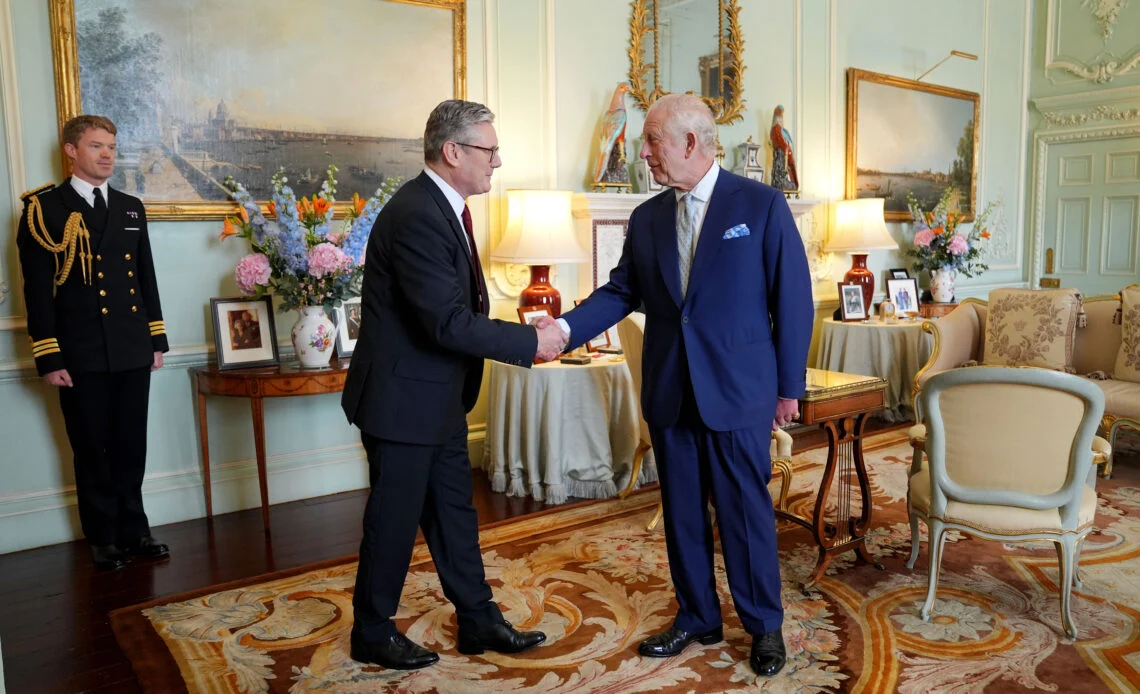
The transition of political leadership in the United Kingdom, a cornerstone of its constitutional framework, culminates in one of the nation’s most discreet yet profoundly significant ceremonies: the private audience between the reigning Monarch and an incoming Prime Minister at Buckingham Palace. This brief, almost fleeting, exchange, often lasting no more than thirty minutes, represents the formal endorsement of a new government and the peaceful, constitutional transfer of executive authority. While the public observes the comings and goings of political figures at the Palace gates, the substantive moments within remain a strictly private affair, a tradition steeped in centuries of British governance.
The Constitutional Mechanism of Succession
The process is initiated only after the outgoing Prime Minister has formally tendered their resignation to the Sovereign. In this hypothetical scenario, should Sir Keir Starmer, as the current leader of the Labour Party, be the individual designated to form a government, his first official act would be a private audience at Buckingham Palace to present his resignation to His Majesty King Charles III. This act formally relinquishes his duties as head of His Majesty’s Government.
Following Sir Keir Starmer’s departure, the focus shifts to the arrival of the individual tasked with forming the next administration. In this specific instance, Andy Burnham, the current Mayor of Greater Manchester, would be escorted into the Palace and guided to the Audience Room. It is within this intimate setting, with no other officials present, that the confidential conversation between the Monarch and the prospective Prime Minister takes place. This deliberate absence of witnesses underscores the personal and confidential nature of this constitutional interaction, ensuring that the dialogue is unfettered by external pressures or public scrutiny.
The Invitation to Form a Government
At the heart of this private audience lies the Monarch’s invitation to the leader of the party commanding the confidence of the House of Commons to form a government. The traditional phrasing, understood to be along the lines of "Will you form a government?", serves as the formal constitutional recognition of the incoming administration. Upon acceptance of this invitation, the individual legally and constitutionally becomes the Prime Minister and First Lord of the Treasury, assuming the immense responsibilities of leading the United Kingdom.
Evolution of a Historic Tradition: From Kissing Hands to Handshakes
For centuries, the formal appointment of a new Prime Minister was colloquially known as the "kissing of hands." This ritual was a visible symbol of fealty and loyalty, where the incoming leader would physically kiss the Sovereign’s hand. This practice, deeply rooted in historical custom, symbolized the personal relationship and deference owed to the Crown. However, in a move towards modernizing royal protocol while retaining historical resonance, the ceremony has evolved. Today, the act of kissing hands has been replaced by a formal handshake, a gesture that signifies mutual respect and professional partnership, though the historic designation of the "kissing of hands" ceremony persists in common parlance. This adaptation reflects a broader trend within the monarchy to balance tradition with contemporary expectations and accessibility.
The Official Record: A Glimpse Behind the Scenes
Following the private deliberation and the acceptance of the invitation to form a government, a Palace photographer is permitted to enter the Audience Room. This marks the sole public-facing element of the formal appointment. The photographer captures an official image of the Sovereign greeting the new Prime Minister. This photograph, usually released to the public within minutes, serves as an important historical record, documenting the moment of leadership transition and becoming part of the visual archive of the King’s reign and the nation’s political history. The speed of its release underscores the modern approach to disseminating information, even from within the traditionally secretive confines of Buckingham Palace.
The Brief but Crucial Audience
The audience itself, while brief, is far from superficial. Typically lasting between twenty and thirty minutes, it can be extended based on the specific circumstances and the nature of the political landscape. Beyond the formal invitation, this period allows for essential constitutional and security briefings to be delivered to the new Prime Minister by senior Palace officials and, in some cases, representatives from national security agencies. These briefings are critical, covering a range of vital matters, including national security concerns, the operational framework of government, and any immediate challenges or priorities facing the nation. This ensures that the new leader is as informed as possible from the outset of their tenure.
The Path to Downing Street
Upon concluding his audience at Buckingham Palace, the newly appointed Prime Minister undertakes the short journey to 10 Downing Street, the official residence and workplace of the Prime Minister. Here, the customary public address is delivered from the steps of Number 10, marking the formal commencement of their premiership and outlining their vision for the country. This speech often sets the tone for the incoming government and provides the public with an initial insight into their policy agenda. Following this public pronouncement, the Prime Minister crosses the iconic black door to begin the crucial task of forming their Cabinet, selecting individuals to head government departments and implement their policies.
A Timeless Constitutional Role
The entire process, from the outgoing Prime Minister’s resignation to the incoming leader’s first speech at Downing Street, is a meticulously choreographed sequence of events, refined over generations. It exemplifies the enduring constitutional role of the Monarch as the ultimate guarantor of stability and continuity in British governance. While governments rise and fall, and political ideologies shift, the Sovereign’s function remains constant: to ensure the smooth and peaceful transfer of power. This is achieved by formally appointing the individual who demonstrably commands the confidence of the democratically elected House of Commons, thereby upholding the fundamental principles of parliamentary democracy.
Supporting Data and Historical Context
The concept of the Monarch appointing the Prime Minister is deeply embedded in the uncodified British constitution. While the Prime Minister is the political leader, their authority is derived from the Monarch’s commission. Historically, the Prime Minister was the Monarch’s principal advisor, and the relationship was often more personal. The evolution towards a parliamentary democracy has shifted the locus of power towards the elected House of Commons, but the Monarch’s role as the formal appointer remains. This constitutional arrangement has been a defining feature of British political stability for centuries, differentiating the UK from many other constitutional monarchies where the head of state’s role might be more ceremonial or where a directly elected president holds executive power. The speed of modern communication has, in recent decades, accelerated the public dissemination of information surrounding these events, with official photographs and statements being released almost instantaneously, a stark contrast to the slower pace of news dissemination in previous eras. For instance, the official photographs from Prime Ministerial appointments have become a common feature in news cycles, instantly recognisable symbols of governmental change.
Broader Implications and Analysis
The private audience between the Monarch and the Prime Minister, though brief and discreet, carries significant weight. It is a tangible representation of the continuity of the state, transcending the often-turbulent nature of party politics. The Monarch acts as a neutral arbiter, a symbol of national unity above partisan divides. This role is particularly crucial during periods of political uncertainty or when the outcome of a general election results in a hung parliament, where the formation of a government may be more complex. In such scenarios, the Monarch’s judicious role in ensuring a stable and legitimate government can be paramount. The modern adaptation of the "kissing of hands" to a handshake further illustrates the monarchy’s capacity to adapt and remain relevant in a changing social and political landscape, while still acknowledging its historical lineage. This ceremony, therefore, is not merely a symbolic act but a vital mechanism that underpins the stability and legitimacy of British governance, ensuring that power is transferred according to constitutional norms and the will of Parliament. The continued adherence to this tradition, even in its modernized form, highlights the enduring strength of Britain’s constitutional monarchy as a force for continuity and order in the nation’s political life.


 Yuyun Lusiyani
 Joko Widodo
 Jia Lissa
 Pevita Pearce
 admin
admin
