
 Eva Lovia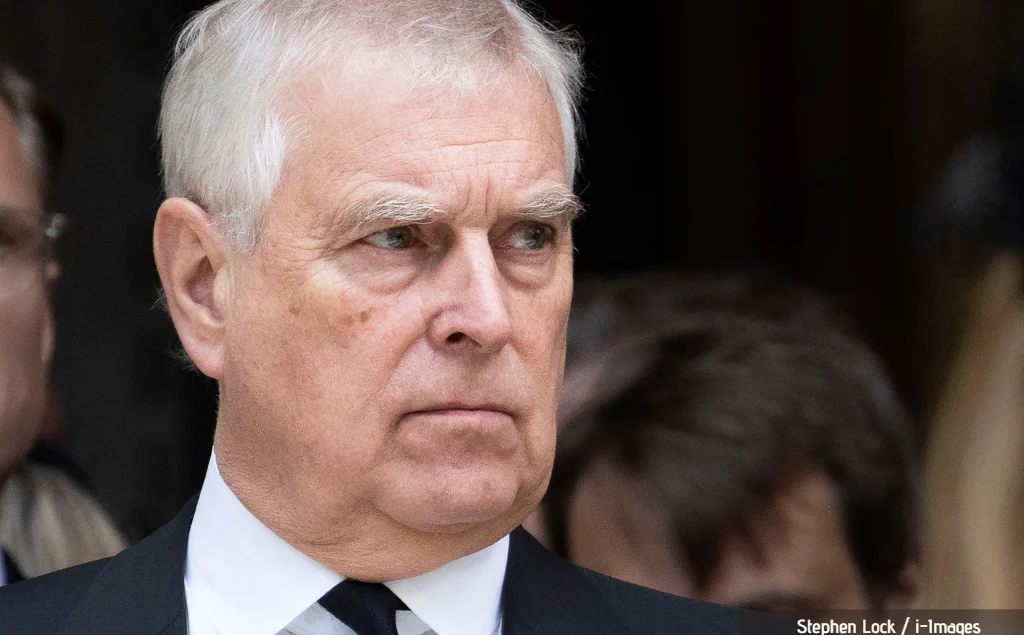
Buckingham Palace has, for years, diligently sought to relegate Prince Andrew to the periphery of public royal life. The objective has been to present a streamlined, modern monarchy focused on active duty and devoid of controversy. This strategy has manifested in tangible ways: the removal of public duties, the relinquishing of military titles and the HRH style, and the conspicuous absence from prominent royal events such as the Buckingham Palace balcony appearances. These measures, formalized through Letters Patent signed by King Charles III in 2025, aimed to definitively distance the institution from the former Duke of York and the controversies that have shadowed his public image.
However, the persistent nature of public attention means that despite these concerted efforts, Prince Andrew continues to resurface in media narratives, often in unforeseen circumstances. The latest instance, which has placed the Palace in a familiar and unwelcome communications quandary, involves an alleged threat made against the Prince while he was walking his dogs near the Royal Family’s Sandringham estate. This incident, scheduled for evidence via video link in December, underscores the enduring challenge Buckingham Palace faces in managing the narrative surrounding Prince Andrew.
Background to the Incident
The alleged threat occurred on a date yet to be specified in public court documents but is understood to have taken place in the vicinity of Sandringham, a Norfolk estate historically significant to the Royal Family. While the specifics of the alleged threat and the identity of the accused remain under judicial review, reports indicate that an individual allegedly confronted and threatened Prince Andrew during a routine walk with his dogs. The Royal Family has a long-standing connection to Sandringham, which serves as a private retreat for the monarch and his family, particularly during the Christmas period. Prince Andrew, despite his reduced public role, is understood to retain a private residence on the estate, further emphasizing his continued, albeit personal, proximity to the Royal Family’s traditional grounds.
The criminal justice system is expected to handle the allegations impartially. As the alleged victim in this case, Prince Andrew is entitled to the same due process as any other citizen. The legal proceedings will focus solely on the alleged actions of the accused, aiming for a fair and unbiased resolution. However, within the hushed corridors of Buckingham Palace, the anticipation of this legal engagement is likely accompanied by a sense of resignation. This incident, while ostensibly a matter for the courts, inevitably reignites public discourse and media scrutiny concerning Prince Andrew, a situation the Palace has worked assiduously to avoid.
The Palace’s Communications Strategy: A Persistent Challenge
For Buckingham Palace, Prince Andrew represents a complex and enduring communications dilemma. Each legal proceeding, every court document, and indeed every news report concerning him, inevitably brings to the forefront a well-documented history. This history includes his association with the late Jeffrey Epstein, the widely criticized Newsnight interview in 2019, the civil lawsuit settlement with Virginia Giuffre, and his subsequent removal from public royal life.
The upcoming December evidence session, while focusing on an alleged threat and not the aforementioned controversies, is intrinsically linked to them in the public consciousness. The media coverage is almost certain to reference these past events, casting a long shadow over any contemporary proceedings. This reality is a direct consequence of Prince Andrew’s established public reputation, a reputation that the Palace has been unable to entirely recalibrate despite its strategic distancing.
The Royal Household’s strategy over the past several years has been characterized by a deliberate policy of minimal engagement. The directive has been to "say little, do less," a mantra aimed at keeping Prince Andrew as far removed as possible from official royal business and public events. This approach is not driven by personal animosity but by a pragmatic necessity to safeguard the institution’s image and objectives.
King Charles’s Vision and the Andrew Factor
King Charles III has dedicated a significant portion of his reign to presenting a vision of a modern, focused monarchy. This vision prioritizes a core group of working royals who undertake official duties and represent the Crown. Any renewed or prolonged media attention on Prince Andrew, regardless of the circumstances, risks diverting attention from this carefully curated objective. It introduces an element of distraction and potential controversy that can undermine the efforts to project an image of continuity, stability, and relevance in the 21st century.
The irony of the current situation is that Buckingham Palace possesses limited power to prevent Prince Andrew from participating as a witness in criminal proceedings. His role as a witness in this specific case is a matter of judicial process, independent of the Palace’s wishes. While careful communications planning can influence how an institution responds to events, it cannot fundamentally alter the legal requirements for evidence in a criminal trial.
Managing the Fallout: The Art of Silence
What Palace officials can, and are expected to, control is the institution’s own response. In situations involving Prince Andrew, the prevailing approach has become one of strategic silence. The expectation is that Buckingham Palace will issue no official statements and offer no public commentary on the upcoming evidence session. This commitment to complete silence is a well-honed tactic, designed to prevent the Royal Household from becoming entangled in the narrative and to avoid inadvertently amplifying the story.
The effectiveness of this silence, however, remains a subject of ongoing observation. The Palace has learned a profound and often difficult lesson through its dealings with Prince Andrew: even when he is not the direct subject of legal scrutiny or public trial, the monarchy itself can find itself scrutinized in the court of public opinion. The association, however distant, can still cast a shadow, raising questions about the institution’s judgment, its past decisions, and its ongoing management of royal affairs.
A Chronology of Estrangement and Re-emergence
The public journey of Prince Andrew from a prominent royal figure to a peripheral one can be traced through a series of significant events:
- Early Career and Public Service: For decades, Prince Andrew was a popular figure, serving in the Royal Navy and undertaking numerous royal engagements. He was often seen as a more accessible and relatable royal.
- Association with Jeffrey Epstein: In the early 2000s, Prince Andrew’s friendship with the convicted sex offender Jeffrey Epstein began to draw public attention. This association would later become a significant point of contention.
- The Newsnight Interview (2019): In a now-infamous interview with Emily Maitlis on BBC’s Newsnight, Prince Andrew attempted to address his association with Epstein. The interview was widely perceived as a public relations disaster, failing to assuage public concerns and instead raising further questions about his judgment and his account of events.
- Withdrawal from Public Duties (2020): Following intense public pressure and criticism stemming from the Newsnight interview and ongoing allegations, Prince Andrew announced his decision to step back from all public royal duties.
- Civil Lawsuit and Settlement (2022): Virginia Giuffre filed a civil lawsuit against Prince Andrew in the United States, alleging sexual abuse. While Prince Andrew has consistently denied the allegations, he reached an out-of-court settlement with Giuffre in February 2022, reportedly involving a substantial financial sum.
- Loss of Royal Titles and Style (2023-2025): Following the settlement and continuing public disapproval, King Charles III made definitive moves to formalize Prince Andrew’s removal from the core of the Royal Family. In November 2025, Letters Patent were issued, officially removing Prince Andrew’s "HRH" style and his title of Prince. While he remains a Duke, his public-facing royal status was irrevocably altered.
- Current Incident (December Evidence): The upcoming testimony via video link in December concerning the alleged threat near Sandringham marks another chapter in Prince Andrew’s complex relationship with the public eye, demonstrating that even in his reduced capacity, he continues to be a subject of news and legal proceedings.
Supporting Data and Precedents
The management of royal controversies is a long-standing challenge for the British monarchy. Historical precedents, such as the handling of the abdication crisis involving Edward VIII or the fallout from Princess Diana’s Panorama interview, demonstrate the delicate balance between institutional control and public perception. In each instance, the monarchy has adapted its communications strategies, often relying on periods of quiet reflection and a carefully curated presentation of continuity.
The specific financial details surrounding Prince Andrew’s settlement with Virginia Giuffre remain confidential, but reports at the time suggested a figure in the region of £12 million. This settlement, while resolving the civil claim, did not erase the underlying reputational damage. Furthermore, the public’s memory of the Epstein scandal and the Newsnight interview remains a significant factor in how Prince Andrew is perceived. This enduring public memory makes the Palace’s strategy of silence all the more critical, as any misstep in communication could re-ignite a firestorm of negative publicity.
Broader Impact and Implications
The continued presence of Prince Andrew in public discourse, even as an alleged victim in a criminal case, has broader implications for the monarchy. It tests the resilience of King Charles’s vision for a slimmed-down, modern monarchy. It also raises questions about succession and the future roles of other less active royal figures. The Royal Family’s ability to navigate such situations with grace and efficacy is crucial for maintaining public trust and support.
The strategy of silence, while often effective in preventing immediate damage, carries its own risks. In an era of constant digital communication and immediate news cycles, prolonged silence can sometimes be interpreted as evasiveness or a lack of transparency, particularly if the situation evolves or new information emerges. However, for Buckingham Palace, the alternative – engaging with every minor incident involving Prince Andrew – is likely deemed far more detrimental to the long-term objectives of the institution. The current situation underscores the enduring complexity of managing the public image of a royal figure whose past continues to cast a long shadow, even as the institution strives to forge a path toward a more focused and unblemished future.


 Yuyun Lusiyani
 Joko Widodo
 Pevita Pearce
 admin
admin
 Lina Irawan