
 Yuyun Lusiyani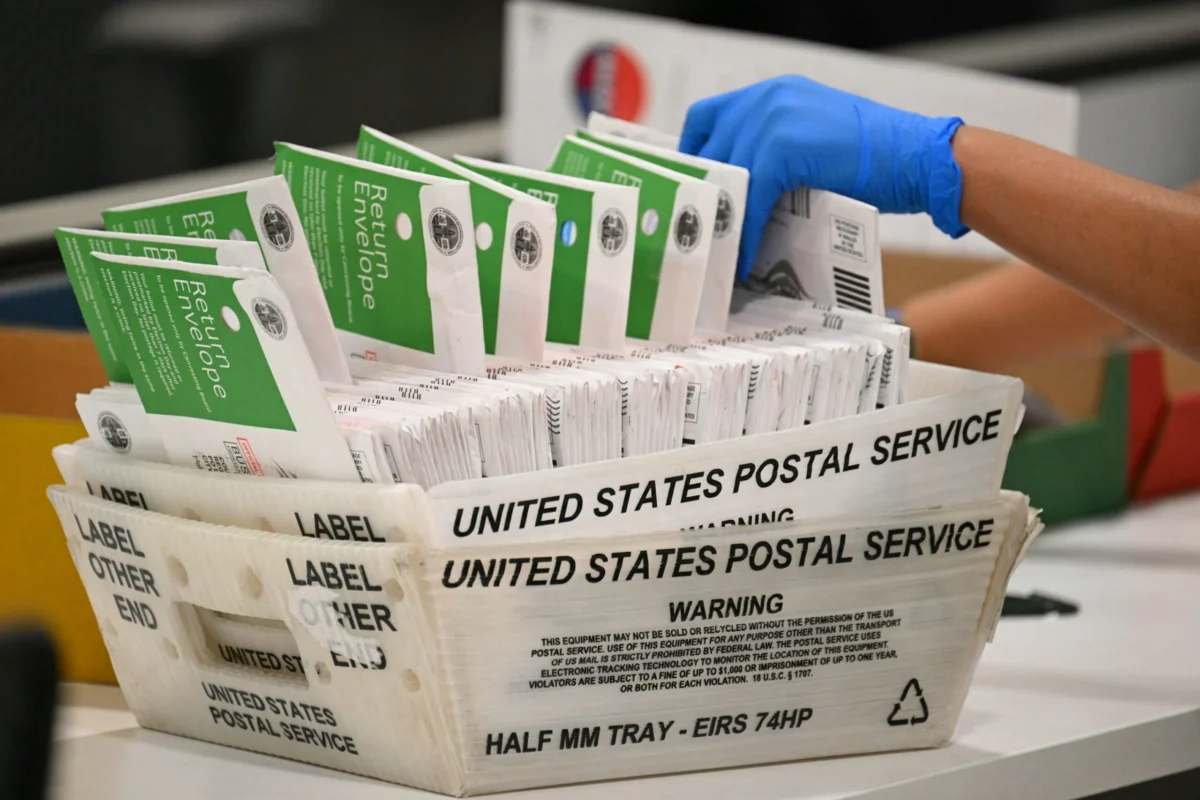
A recently disclosed audit from the U.S. Postal Service’s Office of Inspector General (OIG) has uncovered significant deficiencies in how certain Postal Service facilities managed ballots during this year’s primary elections. The findings, dated September 4 but not widely reported until now, detail a concerning lack of staff training, inadequate ballot tracking, and procedural errors that risked timely delivery and proper postmarking of mail-in ballots. This revelation comes at a critical juncture, as the U.S. Supreme Court deliberates on whether to permit the Postal Service to implement expansive new mail voting regulations ahead of the November general election, prompting election experts to question the agency’s capacity to handle the potentially unprecedented demands.
The Audit’s Damning Details and Systemic Flaws
The comprehensive audit by the USPS OIG identified a range of failures across various facilities, raising alarms about the integrity of election mail processing. Key issues highlighted include insufficient training for post office personnel on the proper and expeditious handling of mail ballots, considerable deficiencies in how ballots were monitored and tracked through the postal system, and specific errors that led to delays. These shortcomings collectively increased the risk of ballots receiving incorrect postmarks or arriving too late to election officials, potentially leading to their rejection and the disenfranchisement of voters.
Auditors meticulously observed election mail operations at 14 processing facilities and 73 delivery units spanning eight states. Their investigations revealed systemic rather than isolated problems. For instance, a striking 22 out of 73 delivery units, approximately 30%, lacked any posted election-related training materials. In some of these locations, local management and employees demonstrated a clear unfamiliarity with the specific requirements for processing election mail, indicating a widespread knowledge gap.
The issue of proper postmarking emerged as a particularly critical concern. In 14 states and the District of Columbia, election officials rely on ballots being postmarked by Election Day to be counted. The audit, however, found that management in 10 out of 82 facilities, roughly 12%, were unaware of the correct postmarking procedures. Some mistakenly believed ballots should be postmarked upon their dispatch to election offices, rather than earlier when they first arrived at a processing facility or retail counter. Compounding this, at five of nine mail processing facilities examined, retail clerks using hand stamps sometimes applied inaccurate dates. A stark example occurred at a Pennsylvania facility on the state’s primary election day, where 56 ballots were erroneously postmarked with the wrong date, jeopardizing their validity.
Further procedural lapses were evident in the daily dispatch of election mail. In 13 out of 82 facilities, Postal Service workers failed to complete necessary procedures to ensure all election mail had been sent out from delivery units each day. One egregious instance involved a Harrisburg, Pennsylvania, processing plant where 108 ballots were inadvertently grouped with regular mail, necessitating an urgent, expedited transfer to Pittsburgh on the morning of the election to ensure they would be counted. Another notable incident, which the Postal Service later described as an "isolated incident," involved New Jersey ballots being mistakenly delivered to Tennessee before being rerouted to their correct destination.
While the audit did note that "most facilities we visited generally adhered to Postal Service’s election-related policies and procedures" and that nearly 99% of ballots reached election officials in a timely manner during the primaries, it emphasized that "instances of non-compliance were low relative to overall volume, the presence of similar procedural gaps across multiple facilities indicates a need for improved understanding and increased enforcement of Postal Service policies among its employees." This 99% figure, while seemingly high, also comes with important caveats: it applies to the approximately 6.3 million ballots the Postal Service was able to track, and the report does not define "on time," clarifying only that it refers to the speed of handling by USPS, not necessarily arrival at election officials by their specific deadlines. This distinction is crucial, as even a small percentage of delays or errors, given the expected volume of mail-in ballots in a national election, could affect thousands, if not tens of thousands, of votes.
A Record of Concern: The Trump Executive Order and Its Critics
The audit’s findings are magnified by the ongoing debate and legal challenges surrounding a March executive order signed by President Donald Trump. This order seeks to fundamentally alter the landscape of mail voting by allowing the Postal Service to regulate the process. Specifically, it mandates that states provide the USPS with comprehensive lists of all voters eligible to receive a ballot via mail. The Postal Service would then be required to utilize these lists to determine which ballots are sent to voters.
This executive order has ignited a firestorm of criticism and concern from various stakeholders. Top Postal Service employees, along with a whistleblower who formally disclosed concerns to U.S. Senator Richard Blumenthal (D-Conn.), have vehemently expressed apprehension that the new system could disenfranchise vast segments of eligible voters. Their worries stem from both the inherent design of the proposed system and, crucially, the severe lack of adequate testing it has undergone. ProPublica previously reported on these internal anxieties, highlighting the potential for widespread disruption and voter suppression.
The timing of the audit’s release, just weeks before the November general election, is particularly salient. Mail ballots for the upcoming election are already beginning to be dispatched this month, meaning any new rules or systemic deficiencies could have immediate and far-reaching consequences.
The Supreme Court’s Pivotal Role
Currently, the U.S. Supreme Court is weighing whether to permit the Postal Service to move forward with implementing the new rules outlined in the March executive order. The court’s decision will be a defining moment for the 2024 election, directly impacting how millions of Americans cast their votes by mail. Election experts, including David Becker, executive director of the Center for Election Innovation and Research and a former Justice Department civil rights lawyer, have underscored the imperative for the Supreme Court to consider the OIG audit findings. Becker articulated that the audit "confirms that USPS has a long way to go to meet its core obligations of delivering election mail in a timely manner." He further asserted that "The administration and USPS are simply incapable of successfully meeting vast and radical new responsibilities under the president’s executive order," reinforcing the argument that imposing new, untested regulations so close to an election is a recipe for disaster.
Voices of Alarm: Experts, Unions, and Election Officials Weigh In
The chorus of concern extends beyond election experts. The American Postal Workers Union (APWU), representing postal workers, formally intervened in the debate by filing a brief with the Supreme Court on Wednesday. In their brief, the union argued that the implementation of the proposed rules is simply "not practical" given the current operational realities of the Postal Service. They warned of a "significant risk of wide swaths of Americans not being able to vote by mail," echoing the fears of voter disenfranchisement. The union’s perspective is particularly potent, as it comes from the frontline workers who would be directly responsible for executing these new, complex procedures.
State election officials have also raised their voices in opposition, with some stating that even if the Supreme Court were to allow the new rules to proceed, the requirements would be "impossible" to meet for the November election. The logistical challenges of adapting to entirely new protocols with ballots already in the process of being mailed out are immense. Chelsey Wininger, executive director of the Democratic Association of Secretaries of State, characterized the audit’s findings as evidence that the Postal Service "struggles to implement even basic changes to postal process consistently." This reinforces the organization’s strong opposition to the imposition of any new rules or regulations so close to a national election, arguing that stability and proven procedures are paramount during such a critical period.
USPS Responds: Acknowledging Flaws While Defending Performance
In response to the audit’s findings, the U.S. Postal Service acknowledged some shortcomings while simultaneously asserting the overall strength of its ballot mail performance. In a written response included with the OIG report, the agency stated, "while we acknowledge that we can always reinforce and amplify our internal processes and procedures (and will continue to do so between now and November) – overall ballot mail performance is strong." The Postal Service admitted to instances where employees failed to adhere to established policies and procedures but largely dismissed other identified errors as "isolated incidents," citing the example of the New Jersey ballots erroneously sent to Tennessee.
The agency indicated its agreement with nearly all of the audit’s recommendations designed to mitigate future problems. However, it notably disagreed with one specific recommendation: the suggestion to promptly notify customers impacted by new regional transportation plans. This particular point of disagreement raises further questions about transparency and proactive communication with the public regarding changes that could affect mail delivery, especially for time-sensitive election materials. The Postal Service did not immediately provide further comment when requested on Wednesday evening.
Historically, the Postal Service has prided itself on its rigorous and careful handling of election mail, often going to great lengths to ensure its expedited processing. The fact that the OIG, an internal watchdog, identified such pervasive issues underscores the gravity of the current situation. The 99% on-time delivery rate during the primaries, while commendable in isolation, must be weighed against the systemic failures in training, tracking, and postmarking that the audit brought to light. The reliability of this figure is also constrained by the fact that it only accounts for ballots the USPS could track, leaving a potential blind spot for other mail-in ballots.
The Broader Stakes: Implications for Voter Access and Election Integrity
The implications of the audit’s findings, coupled with the ongoing legal battle over the executive order, are profound for the integrity of the 2024 general election and the broader landscape of voter access. The identified deficiencies, if not swiftly and effectively addressed, pose a direct threat to the ability of eligible voters to cast their ballots and have them counted. Incorrect postmarks, processing delays, and a lack of clear procedural understanding among staff can directly lead to the rejection of legitimate ballots, thereby disenfranchising voters.
The sheer volume of mail-in ballots anticipated for the November election presents an unprecedented logistical challenge for the Postal Service. With public health concerns driving a surge in absentee voting, the system will be under immense strain. Layering new, untested, and complex regulations on top of existing operational vulnerabilities creates a perilous situation. Election officials across the country are already grappling with tight deadlines, limited resources, and evolving state-specific voting laws. The additional burden of complying with a new federal mandate from the USPS, especially one that has not been thoroughly vetted or pilot-tested, could overwhelm local and state election infrastructures.
Moreover, the controversies surrounding mail-in voting and the Postal Service’s capacity have become highly politicized, contributing to a broader erosion of public trust in the electoral process. Reports of mishandling or potential disenfranchisement, even if affecting a relatively small percentage of the total vote, can fuel skepticism and undermine confidence in election outcomes. The ability of the Postal Service, a venerable and historically trusted institution, to reliably deliver election mail is now a central component of national election security and democratic function.
The Supreme Court’s decision on the executive order will not only determine the immediate operational framework for mail voting but will also send a powerful signal about the federal government’s role in regulating state elections. Regardless of the ruling, the audit serves as a stark warning: the existing processes for handling election mail require urgent and comprehensive improvement.
Looking Ahead: The November Election Challenge
As the nation hurtles towards the November general election, the U.S. Postal Service faces an extraordinary test. The OIG audit provides a critical roadmap for areas requiring immediate attention, from enhanced employee training and clearer procedural guidelines to improved ballot tracking and postmarking accuracy. The agency’s commitment to addressing these recommendations, even while disagreeing on certain transparency measures, will be closely scrutinized.
The fate of millions of mail-in ballots and, by extension, the perceived legitimacy of the 2024 election, hinges on the Postal Service’s ability to not only deliver mail efficiently but to do so with the precision and integrity demanded by democratic processes. The challenges are formidable, encompassing not just logistical hurdles but also the restoration of public confidence in a system under intense political pressure and operational strain. The coming weeks will reveal whether the Postal Service, guided by the audit’s findings and the Supreme Court’s ultimate decision, can rise to meet this defining moment in American electoral history.




 Joko Widodo
 Eva Lovia
 Pevita Pearce
 admin
admin
 Lina Irawan