
 Yuyun Lusiyani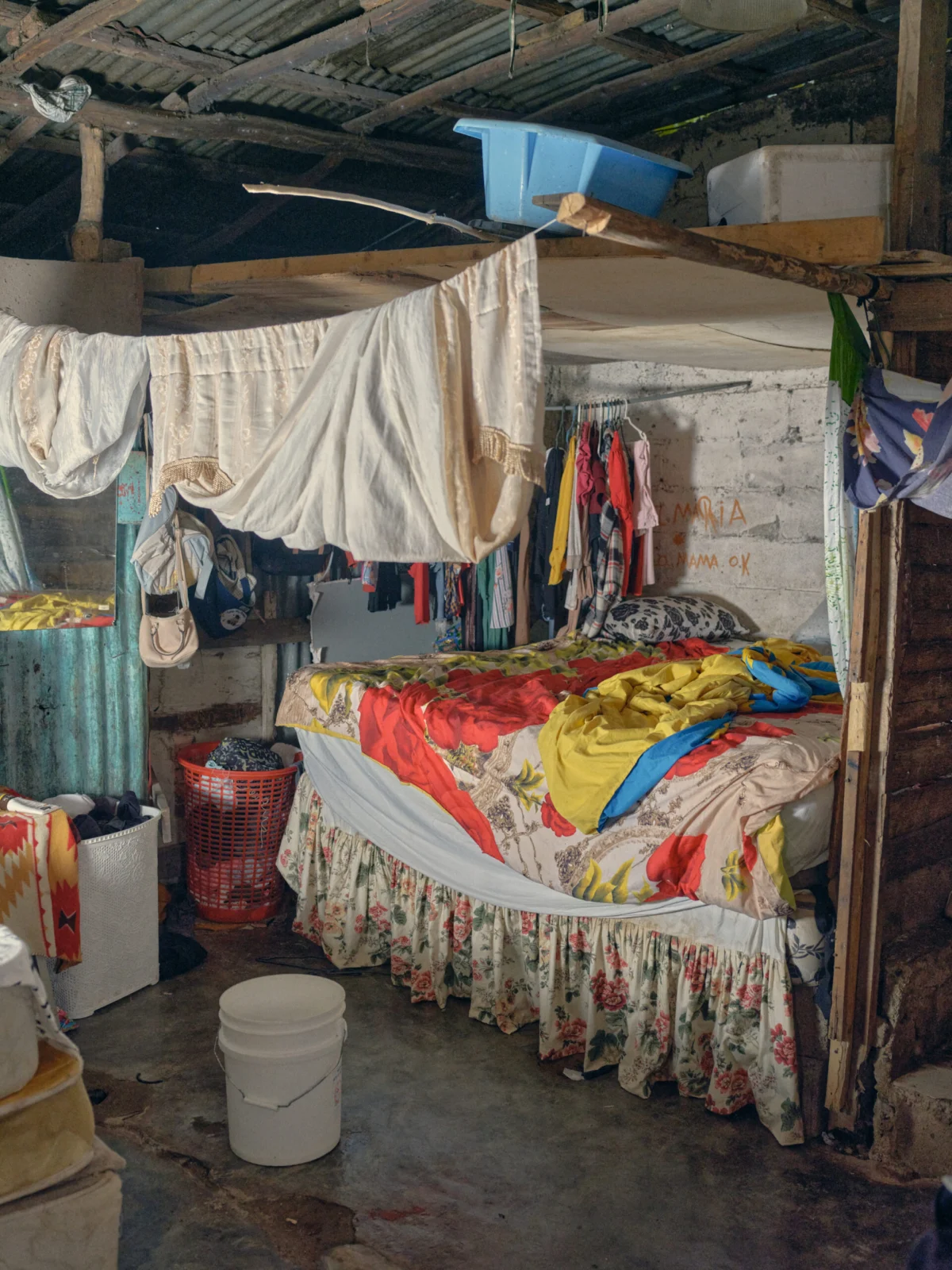
On a crisp evening in late 2021, within the manicured grounds of a state-of-the-art baseball complex in central Santo Domingo, 14-year-old outfielder Belfi Rivera, his face still boyish, sat before a computer screen. Beside him was John Carmona, his trainer and surrogate guardian since Belfi was 11. In a nearby office, Belfi’s parents watched another screen, their anxiety palpable. On the call, connecting from the United States to the Dominican Republic, were representatives of the Arizona Diamondbacks, poised to deliver news that promised to irrevocably alter the trajectory of young Belfi’s life and lift his family from the clutches of poverty.
The news arrived: the team had agreed to a $1.8 million signing bonus for Belfi, to be paid after his 16th birthday. This agreement, a "preacuerdo" or early deal, had been negotiated by Carmona without direct consultation with Belfi or his parents. It also flagrantly skirted Major League Baseball’s (MLB) regulations, which explicitly prohibit teams from signing players younger than 16. Despite these clear rules, the practice of early agreements with hundreds of Dominican prospects is an open secret among all 30 major league teams, with little effort made to conceal it. The Diamondbacks, when approached for comment, offered no response.

During the video call, the baseball executives welcomed Belfi into "la familia," asking about his favorite player, his swift bat swing, and his understanding of discipline. The conversation was largely a blur for Belfi, who, when he spoke, did so with a hesitant, tumbling cadence. His childhood had been spent in a shanty town outside the capital, where meals often comprised meager portions of sugary cornmeal or a piece of bread. Yet, he possessed a talent an early trainer described as "gifted by God," showcasing skills—speed, arm strength, fielding, and contact hitting—highly coveted by scouts. This substantial bonus, once officially disbursed, would position him as one of the highest-paid international prospects outside the United States.
Belfi’s aspirations were rooted in a long, illustrious line of Dominican baseball legends. From San Francisco Giant Juan Marichal, the dominant pitcher of the 1960s, to Toronto Blue Jays teammates Tony Fernandez and George Bell, both hailing from the baseball-obsessed town of San Pedro de Macoris, the Dominican Republic has consistently produced stars. Pedro Martinez, Manny Ramirez, and David Ortiz ignited a fervent Red Sox fandom in the Caribbean in the early 2000s, while modern superstars like Vladimir Guerrero Jr. (Toronto), Juan Soto (New York Mets), and Fernando Tatis Jr. (San Diego Padres) — whose combined playing contracts exceed $1.6 billion — have captivated global audiences and revitalized baseball’s popularity.
For four decades, the Dominican Republic has been an unparalleled talent pipeline, sending more players to the majors than any other country outside the U.S. Despite a population of under 12 million, roughly the size of Ohio (which last year supplied two dozen MLB players), the Dominican Republic contributed 144 players, representing approximately 10% of the entire league. This "baseball factory" funnels talented boys, some as young as 10, into hundreds of training academies for full-time practice.

Belfi himself began this journey at age 10, tearfully leaving his home to live with a stranger who trained boys on a rough ball field in Santo Domingo. The system operates in a tiered fashion: promising players are "sold" to increasingly prominent trainers until they reach elite academies run by figures like Carmona, who cultivate close ties with major league teams and, in return, receive a significant percentage of a player’s signing bonus.
As a child, Belfi held no particular affection for baseball. He started playing at seven, he recounted, because a local coach would physically coerce him from his home, even cuffing him on the head if he attempted to escape to a nearby river with friends. Yet, even then, he understood the sport represented his family’s sole opportunity to escape pervasive poverty. During that video call in 2021, it appeared he had seized it.
The Shadow Economy: Predatory Lending Takes Hold

However, within two and a half years, the vast majority of Belfi’s promised $1.8 million would vanish. Carmona received his 35% commission, totaling $630,000. But an astonishing $950,000-plus was siphoned off by an individual who had played no role in Belfi’s baseball development: Santo Caraballo, a notorious moneylender whose business partner is none other than national hero and former Boston Red Sox slugger, David Ortiz, universally known as "Big Papi."
In a brief interaction, Caraballo dismissed his business as neither large nor "that lucrative." Subsequent attempts to reach him, including a summary of findings, went unanswered. Thanks to the widespread "preacuerdos," "prestamistas" (moneylenders) like Caraballo wield immense power within Dominican baseball. They amass fortunes by exploiting undereducated, desperate parents, coercing them into signing away substantial portions of their sons’ future bonuses in exchange for loans burdened with usurious interest rates. MLB has been acutely aware of these early agreements and the predatory industry they foster for years. Despite its significant economic and political influence in the Dominican Republic, the league has taken minimal action. It has never publicly sanctioned or penalized a team for making an early deal, and its efforts to educate families about moneylenders have proven largely ineffective. An MLB spokesperson declined comment, referencing previous statements calling for a systemic overhaul.
Moreover, the continuation of this corrosive system is not solely attributable to MLB. When the league proposed reforms that would have eliminated early deals and curtailed the moneylenders’ predatory practices, David Ortiz leveraged his influence within the powerful players’ union to help block these changes. At the time, his financial interest in preserving the existing system was unknown outside of a select circle within Dominican baseball. Ortiz, through his lawyer, later stated that his opposition to the league’s proposal "was never motivated by personal interests."

A System "A Hundred Times Worse"
The pervasive abuse and exploitation within the Dominican Republic’s highly successful baseball industry have been a long-standing concern. Many involved in the industry, from trainers (integral as instructors, surrogate parents, and agents) to team executives, scouts, and parents, expressed feeling compelled to participate in a system they universally describe as broken and costly. "This is a system that is allowing corruption at all levels," stated veteran trainer Eddy Fontana.
MLB itself recently acknowledged the need for reform, declaring it "long past time to reform" Dominican baseball. The players’ union also conceded the industry is troubled but characterized it as "a people issue, not a system issue." What is most striking is the consensus that, despite widespread acknowledgment, the exploitation has intensified. Arturo J. Marcano, a sports attorney who in 2002 authored a book comparing the Dominican baseball pipeline to human trafficking, unequivocally stated that today’s industry is "a hundred times worse."

The Fabric of Dominican Baseball
A journey across the Dominican Republic reveals constant reminders of "el pelotero" who achieved the American baseball dream. Nearly every village boasts "el play," a ball field, often lovingly maintained and teeming with boys of all ages, even during downpours. Veteran eyes meticulously refine adolescent swings, hitting balls toward elementary-aged outfielders yet too young to take their own cuts. Road signs proudly announce not just town names, but also their native sons who made it to a major league roster. Hall of Famers are immortalized in grandiose murals across the capital. All 30 MLB teams operate training academies, which rise from the rural landscape like modern castles, symbols of hope and, often, despair.
The Dominican Summer League provides a platform for 1,500 Latin American prospects to compete for promotion to the lowest minor league teams in the U.S. In the offseason, hundreds more professional players, including established stars, draw sellout crowds in the winter league. Steven Puig, president of BHD, a Dominican bank and MLB corporate partner, estimates the sport generates up to $400 million annually for the national economy.

American baseball executives began earnestly scouting, signing, and developing Dominican teenagers in the 1980s. Recognizing the island as a source of affordable talent, a few teams established rudimentary training academies on former sugar plantations. They initially relied on "buscones," or finders, to identify promising players. However, these "buscones" soon realized they could earn more by opening their own academies. Today, a national trade association estimates over 6,000 trainers exist, ranging from part-time car mechanics to millionaire former big leaguers. In exchange for providing room, board, equipment, coaching, and purportedly, education, these trainers typically receive between 35% and 50% of a player’s signing bonus, which they actively negotiate.
MLB teams, in their relentless pursuit of the next Dominican star, employ what one general manager termed a "boatload mentality." Annually, approximately 450 Dominican prospects are signed, most for bonuses around $30,000. MLB data indicates that fewer than two-thirds of these will reach the lowest minor leagues, and less than 10% will ever play a day in the majors. This Darwinian system is implicitly subsidized by players like Belfi; the hundreds of thousands of dollars taken from his bonus effectively finance dozens of other prospects who sacrificed their childhoods only to fall short.
The Broken Regulatory Landscape

Unlike professional sports in the United States, where players are selected in a draft with signing bonuses largely dictated by draft order (e.g., last year’s top pick was $11.1 million, while final slots were $187,000, with agents typically receiving a 5% commission), the Dominican Republic operates as a free-for-all. While MLB does cap team spending on international players annually (ranging from $5.4 million to $8 million in 2026), its other primary safeguard—that players can only be signed if they will be 17 by the following September—is widely ignored. "Everybody makes early agreements," an MLB scout confessed, "You got to do it. If not, the system will eat you."
During a recent offseason, trainers openly advertised early deals on social media: an 11-year-old allegedly agreed to $1.8 million with the Philadelphia Phillies, a 12-year-old to $2.8 million with the Cincinnati Reds, and a 13-year-old to $2 million with the Milwaukee Brewers. None of these teams responded to requests for comment. The legal landscape further illustrates this breakdown: in 2022, the parents of 14-year-old prospect Willy Fañas sued the Los Angeles Angels for reneging on a $1.8 million early agreement, with an Angels scout testifying that the general manager had authorized the deal. Though the case was dismissed, an appeal is pending. Sandy Alderson, a former top MLB executive and emissary to the Dominican Republic, estimates that the vast majority of signed players were offered deals before their 16th birthday.
The absence of enforcement by MLB has inadvertently created ideal market conditions for "las prestamistas" like Santo Caraballo, who has become an omnipresent force in Dominican baseball over the last six years. The loans he offers carry interest rates that would be illegal in many countries, including the U.S. However, the Dominican Republic repealed its usury laws 24 years ago, effectively legitimizing high-interest lenders who now operate as an ingrained part of the baseball ecosystem, even advertising online, as evidenced by WhatsApp banners offering "préstamo para jugadores de beisbol que tenga acuerdos" ("loan for baseball players who have agreements").

Yaniris Paula, an attorney representing teenage ballplayers, estimates that 80% of all major league bonuses paid to Dominican prospects are encumbered by a loan. From 2012 to early 2026, MLB teams disbursed $1.042 billion in bonuses to Dominican prospects. However, experts familiar with the industry suggest that up to half of this — $500 million — is immediately siphoned off by trainers and lenders. "Major League Baseball knows how dirty the business is here," asserted Piñao Ortiz, former Dominican Commissioner of Baseball (1996-2000), "but it’s not doing anything to stop it."
Belfi’s Family Entangled
The night Belfi’s parents, Eduardo Rivera and Rita Muñoz, learned of the Diamondbacks’ promise, they were forced to spend the night at a nearby baseball academy, their vehicle lacking functional headlights for the journey home. Upon returning to their tiny, dilapidated home in Pedro Brand, a town outside the capital, it appeared starkly different. Eduardo had constructed it from wood planks and tin, with buckets catching leaks from the roof, musty beds scattered on concrete floors, and a salvaged climbing wall serving as a room divider. Facing profound poverty while an unimaginable windfall awaited them in just over two years presented a new, agonizing mental challenge.

Eduardo, a farmhand by day and school watchman by night, earned a paltry $150 a month, struggling with a foot ailment he couldn’t afford to treat. Rita, who had primarily stayed home raising 11 children, now found herself on the precipice of becoming a millionaire. The pressure to repay those who had assisted them was immediate. Belfi’s first trainer, who had received a mere few hundred dollars for trading Belfi to another trainer, sought a "thank you." He connected them with a man who introduced them to Santo Caraballo.
Unbeknownst to the Riveras, Caraballo cultivated a network of informants, many of them trainers, who alerted him to early deals and bonus amounts. Once a name surfaced, Caraballo dispatched a "finder" to approach the parents. Eduardo and Rita visited Caraballo’s unassuming strip mall office in Santo Domingo. They described him as impeccably groomed, dressed like a "deportista" (sportsman) in athletic gear, with diplomas adorning his wall. Charming and familiar, he boasted of having served as a Dominican government consul and repeatedly emphasized his status as "la mano derecha" ("the right hand") of David Ortiz. This association, they admitted, instilled a crucial sense of trust.
The Riveras initially sought to sell just 5% of Belfi’s future bonus, approximately $90,000, for upfront cash to cover debts, offer a token to Belfi’s first trainer, and weatherproof their home. Caraballo, they said, advised them to sell 10%. They left his office with a paper bag of pesos, their thumbs stained with ink from contracts they had stamped. They were not given a copy, and even if they had been, Eduardo is illiterate and Rita struggles to read. They recalled receiving 1.6 million pesos, roughly $25,000.

Miguel Hidalgo, a former employee of Caraballo’s who later had a financial dispute with him, explained Caraballo’s strategy: "That’s the trick." Without a copy, clients struggle to comprehend their obligations. When Belfi’s parents shared their recollections with one of their sons, who then consulted former trainer Jhonatan Jimenez, the math was grim. For $25,000, Eduardo and Rita had agreed to pay Caraballo $180,000 from Belfi’s bonus—an astronomical interest rate. "Tú estás loco?" ("Are you crazy?"), Jimenez reportedly exclaimed. This was the first of many deals with Santo Caraballo.
Soon after, Caraballo dispatched men to assess their home, declaring it beyond repair. A new residence, befitting a ballplayer’s family, was necessary. An adjacent building, offering a three-bedroom apartment upstairs for the Riveras and a ground-floor storefront for one of Belfi’s brothers who envisioned a barbershop serving alcohol, became the next target.
Caraballo, now a frequent visitor, integrated himself into their family life. He shared meals, drank Presidente beers, offered Belfi advice on girls, and continuously urged Rita and Eduardo to upgrade their new home. "You’re already rich," he reportedly told them. "You can’t live this way." He offered them an additional $70,000 loan at 7% monthly interest, assuring them it was "mejor que banco" ("better than the bank"). Bank records show Caraballo disbursed this money in dozens of payments ranging from $88 to $8,350 throughout 2023 and early 2024. Rita recounted that Caraballo justified this staggered approach by claiming they would squander the money if given all at once. Approximately $7,000 of the loan was provided in supermarket certificates, redeemable at a store Caraballo owned near his office. Rita found the prices "carisimo" ("extremely expensive") and noted that the only other customers were families of young ballplayers.

The Enigmatic Moneylender and His Famous Partner
Caraballo’s origins of wealth and power remain shrouded in mystery, a striking anomaly for someone with such extensive reach in the sport. Some industry insiders describe him as a shrewd hustler exploiting MLB’s flawed system, others as an opportunist leveraging his connection to David Ortiz. Many expressed fear, demanding to know if the reporter was a spy for him. One former minor league pitcher, whom Caraballo briefly represented, stated, "I already have problems, and you’re asking me about a boss." A longtime trainer spat on the ground, calling him a "ladrón" (thief) and refusing further comment, fearing for his life.
A major league agent specializing in Dominican players estimates Caraballo has a stake in dozens of prospects’ bonuses each year. Two former employees corroborated this, claiming they helped Caraballo secure loan agreements with 60 to 70 players’ parents annually. On official signing days, Caraballo reportedly appears to remind families of their obligations.

Interviews with parents, trainers, and lawyers reveal six other prospect families who took high-interest loans from Caraballo. Ricki Moneys’ father borrowed $27,000 from Caraballo after the Brewers offered his son a $1.15 million early agreement. Thirteen months later, after Moneys signed, his father said Caraballo collected $75,000—an effective annual interest rate of nearly 150%. Another Brewers prospect, Kenny Fenelon, secured a $1.3 million early agreement. His father borrowed $50,000 from Caraballo at 5% monthly interest, only to be told nearly three years later, in 2025, that he owed $400,000. They eventually settled on a $75,000 interest payment. Caraballo defended his practices by noting the inherent risk: "you never know if it will succeed or not because if the player doesn’t get signed, you don’t get paid."
Caraballo has also diversified into lending money to trainers at similarly high rates, often securing the loans against a percentage of the trainer’s share of a player’s bonus. He has even entered the training business himself, signing players as young as 10 to contracts demanding half or more of their potential bonuses. Yet, as trainer Edgar Mercedes quipped, Caraballo "doesn’t even know how to hold the bat, bro." Instead, he sends these boys to trainers with whom he has separate financial agreements.
Caraballo, born in 1986 in the mountain city of Constanza, began with humble origins, pumping gas in Santo Domingo before opening various small businesses, including a fruit pulp and juice company and a vehicle financing operation. He also established a legal services firm, Caraballo Lora & Asociados, despite not being an attorney. A Facebook banner for one of his companies depicts a man with an empty pocket being offered a full wallet, with the text "Podemos Ayudarte" ("We can help you"). His 2016 mayoral bid in Constanza, supported by President Danilo Medina, ended in defeat. Medina subsequently appointed him as an ambassador attached to the foreign affairs minister, a largely ceremonial role with a diplomatic passport and a $600 monthly salary, which he held until 2021.

Caraballo’s rise in Dominican baseball can be partly attributed to his crucial, albeit shadowy, role in salvaging the career of Oneil Cruz, a Pittsburgh Pirates star. In late 2020, Cruz was involved in a fatal car crash, killing three people. Prosecutors initially alleged he had been drinking, and he faced a potential three-year prison sentence. Caraballo was reportedly brought in by Cruz’s parents, negotiating payments to the victims’ families, who subsequently withdrew all "penal, civil or judicial" claims. Prosecutors never presented evidence of drinking, and a judge dismissed the case. Cruz denied wrongdoing.
By 2021, corporate records indicate Caraballo secured a partner that instantly bolstered his credibility: David Ortiz. Ortiz, a three-time World Series champion and Hall of Famer, is revered in baseball. Retiring in 2016, he became a popular Fox Sports analyst and remains a commanding figure in the Dominican Republic, a "muchacho de abajo" who rose from a Santo Domingo slum and never forgot his roots.
The precise origins of Ortiz’s partnership with the obscure moneylender remain a mystery to mutual acquaintances. Ortiz claims they first met when he managed a gas station. Their closeness was evident when Ortiz announced his divorce in 2021 with a post featuring Caraballo, captioned "My compadre, the show must go on." Caraballo sat with Ortiz’s family at his 2022 Baseball Hall of Fame induction, and they appeared in videos together at the presidential palace.

The financial aspects of their relationship are less transparent. In 2021, both were listed on corporate records for Big Papi Sports Group in Florida, a company dissolved the following year. This was the earliest record of a partnership Caraballo frequently publicized. Parents, trainers, and lawyers who dealt with Caraballo reported that he claimed Ortiz, whose signed jersey hangs in his office, bankrolled his operations. "Every time he did business with [my client], Caraballo would mention it," stated lawyer Jose Eduardo Martinez.
Ortiz, when first confronted with these findings, expressed surprise. He acknowledged investing millions in Caraballo’s baseball business, though he wouldn’t name the company. Social media photos, however, show them wearing matching caps with the "CS" logo for Caraballo Sports Enterprise, a company Caraballo founded in both the Dominican Republic and the U.S. Dominican records state the company’s goal is to "promote education and sports as a mechanism for the social development of underprivileged youth throughout the country."
Ortiz stated his business with Caraballo was limited to lending to trainers, as repayment from parents was "too difficult." Yet, court records contradict this: Ortiz’s name appears on at least one contract with a player’s parents. This contract, similar to others Caraballo used, involved Ortiz and Caraballo providing a 13-year-old son with "economic support, food, studies, housing, training, clothing for practice and games, supply of protein and vitamins" and scouting opportunities in exchange for 35% of his potential signing bonus. The boy was never signed, leading to a lawsuit eventually dismissed on procedural grounds.

These contracts granted Caraballo and Ortiz extraordinary control, including clauses prohibiting the boy from leaving or abandoning the assigned academy without "prior permission" and granting them power of attorney to receive "all kinds of information," including bonus payment schedules, from MLB and signing teams. The contracts explicitly stipulated that the boy could not escape the deal, even if emancipated, and would still owe the percentage if signed, even if Caraballo and Ortiz terminated their responsibilities due to "poor performance."
In a conversation, Ortiz distanced himself from Caraballo’s various ventures: "Caraballo, my compadre, he has a whole bunch of different businesses that I don’t know. I know the one that I know. But I’m not his guard. Hopefully, he’s not doing anything illegal — not that I know." Later, through his lawyer, Ortiz issued a statement claiming he "never authorized Santo Caraballo to use my name or reputation to gain the trust of young baseball players or their families, to promote loans or investments, or to represent financial transactions as being personally backed or endorsed by me. I have always sought to make a positive contribution to Dominican baseball. I would never knowingly participate in any operation intended to take advantage of a young player or his family." He further claimed to have ended his personal relationship with Caraballo "a year and a half to two years ago" due to "inappropriate conduct," placing matters in legal advisors’ hands. This statement, however, is contradicted by social media posts from September of last year, showing Ortiz and Caraballo together on a private jet, drinking and dancing en route to a Bad Bunny concert in Puerto Rico.
Signing Day: The Unraveling of a Dream

Around 4 a.m. on January 15, 2024, Belfi Rivera awoke in his bunk bed at John Carmona’s academy. The complex was largely empty, most boys home for winter holidays. Belfi donned his first business suit—a navy blue—a white dress shirt, Alexander McQueen shoes, and a gold necklace, all purchased by Caraballo. Years earlier, he had promised himself that if he made it as a "pelotero," he would wear a glittering chain over his dirt-stained jersey, just like the pros. It was signing day.
Belfi’s parents arrived, and they drove to Baseball City, the headquarters for the Diamondbacks and several other major league teams. The facility buzzed with teenage boys and their families, all similarly dressed for the momentous occasion. Belfi leaned over a desk and affixed his signature to the contract promised two years prior. He and another Dominican outfielder were the only Diamondbacks prospects to receive bonuses exceeding $55




 Joko Widodo
 Eva Lovia
 Pevita Pearce
 admin
admin
 Lina Irawan