
 Yuyun Lusiyani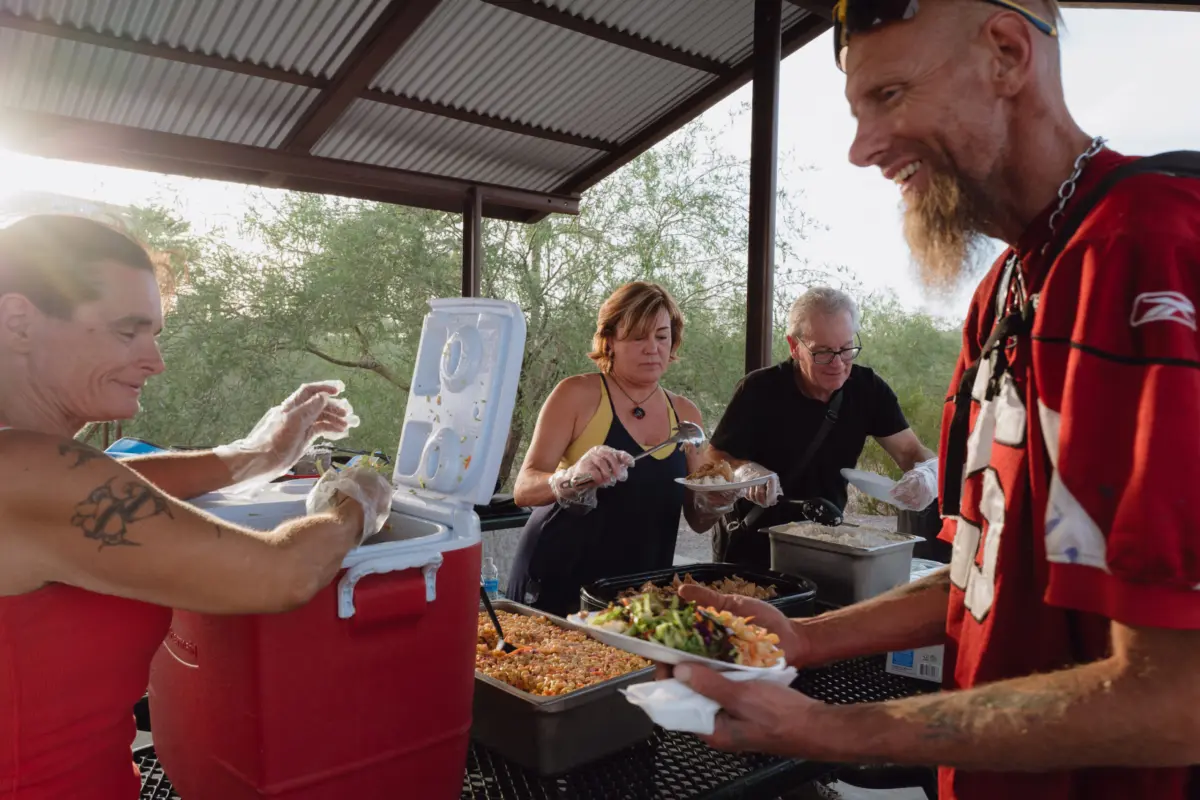
For about a year, the personal phone of Austin Davis, a 26-year-old poet and fervent advocate for the homeless, has transformed into an unofficial emergency hotline, besieged by hundreds of desperate pleas for help from across the vast Phoenix metropolitan area. These aren’t just random calls; they are cries for assistance from school employees trying to aid homeless families, mothers of five living in storage units, and parents panhandling with their children, all directed to Davis after exhausting official channels. The burgeoning crisis in Maricopa County, Arizona, reveals a systemic breakdown in addressing family homelessness, forcing a young individual to shoulder an immense burden that established multi-million dollar organizations and government agencies seemingly cannot, or will not, adequately address.
The Unofficial Hotline: Austin Davis’s Daily Reality
Davis’s phone buzzes constantly with messages that paint a grim picture of escalating desperation. A school employee, unable to secure shelter space for a homeless family, asks if Davis can fund a hotel room. A mother of five, relegated to living in a storage unit, is told by a homeless services organization to call Davis. Another mother, panhandling with her six children, receives Davis’s number from passersby, accompanied by the hopeful suggestion that he might provide shelter. Her text to him, "I feel like the worst mother in the world," encapsulates the profound despair many parents face.
Alarmingly, nearly every individual reaching out to Davis reports having first contacted 211, the official statewide information and referral service, only to be informed that shelter or housing placement could be months away. This revelation underscores a critical flaw in the formal support structure: the designated pathways to assistance are often impassable, leading caseworkers, teachers, social workers, police, and even staff from 211 and the Family Housing Hub – the primary coordinated entry point for families experiencing homelessness in Maricopa County – to redirect vulnerable families to Davis. His personal mobile, initially intended for personal connections, has become a conduit for urgent social services, highlighting a severe gap between official resources and immediate need.

A System in Crisis: The Failure of Official Channels
ProPublica’s investigation into Maricopa County’s system for aiding homeless families reveals a disheartening reality: engaging with the official channels, such as calling 211 or visiting the Family Housing Hub, frequently yields no tangible offers of help, leaving families feeling abandoned and hopeless. The journey to becoming the de facto advocate of last resort for Austin Davis vividly illustrates this systemic failure.
The 211 line, operated by the nonprofit Solari, serves as a crucial initial point of contact for many seeking assistance. However, its effectiveness in guiding homeless families to immediate shelter appears severely hampered. Solari indicates that the eligibility criteria for placement on the shelter waitlist are set by the Family Housing Hub, which is run by UMOM New Day Centers, a prominent local nonprofit. This bureaucratic division of responsibility, coupled with stringent or narrowly defined eligibility, creates bottlenecks and leaves many without access. Families are often forced into a holding pattern, enduring long waitlists that stretch for months, an untenable situation for those facing immediate housing insecurity, especially with children.
Candice Ortiz: A Portrait of Systemic Frustration
The ordeal of Candice Ortiz, a mother desperately seeking stable shelter and housing since spring, serves as a poignant illustration of these systemic shortcomings. Ortiz repeatedly contacted 211, answering the same intrusive questions about her living situation, only to receive generic information readily available online. Her experience with the Family Housing Hub was particularly frustrating; a worker informed her that sleeping in her car with her children did not technically qualify her as "homeless," effectively barring her from the waitlist. Another simply stated the waitlist was full.

In June, facing extreme heat, Ortiz sought refuge at a Phoenix cooling center. A representative there advised her to go directly to UMOM, which operates an emergency shelter for families. Investing her last $20 on a rideshare to the facility, she was met with another dead end: UMOM staff took her information but claimed she wasn’t "in the system" and that no space was available. UMOM, citing client privacy, declined to comment on individual cases. This series of rejections, despite following official directives, highlights a profound disconnect between the intent of these services and their practical delivery.
Later, in August, Ortiz connected with the Phoenix Rescue Mission, another nonprofit offering programs for homeless individuals. She was shown an apartment, only to be informed by a mission worker that funding for the unit had run out. This incident, documented through text messages reviewed by ProPublica, further underscores the precarious and often transient nature of assistance even when it appears within reach. Phoenix Rescue Mission did not respond to requests for comment, leaving the question of accountability unanswered.
Maricopa County’s Deepening Crisis: Numbers and Realities
The official statistics paint a stark picture of the escalating crisis. The number of individuals in homeless families in Maricopa County reached 2,103 this year, marking its highest level since 2015, according to the latest figures compiled locally and reported to the federal government. These numbers, derived from a single-night "Point-in-Time" count by volunteers, are widely considered an undercount, as many experiencing homelessness, particularly families, strive to remain out of sight to protect their children and avoid stigma. In late September, nearly 200 families languished on the county’s shelter waitlist. This figure, however, excludes those who were unable to get on the list, were removed due to narrow eligibility criteria (like Candice Ortiz), or simply gave up after finding 211 unhelpful.
This surge in family homelessness is not an isolated phenomenon but rather a confluence of several socio-economic factors impacting the broader Phoenix metropolitan area. Rapidly escalating housing costs, fueled by population growth and an overheated real estate market, have made affordable housing increasingly scarce. According to reports from the Arizona Department of Housing and local real estate analysts, average rents in Maricopa County have seen double-digit percentage increases in recent years, far outstripping wage growth for many low-income families. The end of pandemic-era eviction moratoriums further exacerbated the situation, pushing more families onto the streets or into unstable living conditions. Moreover, economic inflation, stagnant wages, and the ongoing challenges of domestic violence continue to disproportionately affect vulnerable families, forcing them into homelessness. The average household income required to afford a modest two-bedroom apartment in Phoenix now significantly exceeds what many service-sector workers earn, illustrating the profound affordability gap.

The consequences for children are particularly severe. Research consistently demonstrates that homelessness inflicts lasting harm on children, disrupting crucial brain development and growth. The stress, instability, and exposure to trauma associated with homelessness can lead to permanent changes in brain architecture and physiological responses, impacting cognitive function, emotional regulation, and physical health throughout their lives. Parents interviewed by ProPublica expressed deep worries about these effects, noting instances like an 8-year-old hospitalized for heat exhaustion after prolonged outdoor exposure and significant disruptions to schooling, highlighting the immediate and long-term tolls on their children’s well-being and future prospects.
Austin Davis: The Maverick Advocate and His Battle
Austin Davis, through his small nonprofit AZ Hugs, operates largely "outside the system," a necessity born from the system’s own failings. With the help of dedicated volunteers, he organizes nightly meal distributions for homeless individuals at Tempe’s Moeur Park, affectionately known as "The Hill." This direct action, while vital for survival, has not been without significant personal cost. Davis has faced the ire of Tempe officials, accumulating 35 citations for trespassing and holding picnics without permits. In 2024, he pleaded guilty to one permit violation, with the city dismissing the remaining citations, but not before he spent three nights in jail.
Undeterred, in 2025, Davis and two other homeless advocates filed a lawsuit against the City of Tempe, alleging violations of their free speech protections by citing them for feeding people in parks. The lawsuit prompted the city to revise its permit ordinance, leading Davis to withdraw his legal challenge. This episode underscores his commitment to advocating for basic human needs, even when it means challenging municipal regulations and enduring personal repercussions.
In recent months, Davis has intensified his efforts to highlight what he terms the "family homelessness crisis." He leverages social media to raise funds, often late into the night, to pay for hotel rooms for families, many with young children, who would otherwise be forced to sleep in their cars or on the streets. While he cannot assist everyone, his direct interventions provide immediate relief, preventing families from enduring the dangers of unsheltered homelessness. Davis consistently emphasizes that a much broader, coordinated effort is required, involving both established nonprofits and governmental bodies at local and state levels. However, he observes little evidence of such comprehensive action materializing.

Official Responses and the Policy Divide
In early April, Davis launched an online petition urging Arizona Governor Katie Hobbs, a Democrat, to declare a state of emergency for family homelessness. The petition, garnering over 5,000 signatures, suggested that such a declaration could unlock critical funding for emergency shelter and streamline access to the Family Housing Hub. A volunteer from AZ Hugs even attended a fundraiser for Governor Hobbs in June, delivering a letter that implored her to "consider the children who endure extreme heat without safe shelter," stressing that "No parent should be told to wait months for assistance while temperatures reach life-threatening levels."
However, the Governor’s office views the situation differently. Liliana Soto, Governor Hobbs’s press secretary, explained that emergency declarations are typically reserved for natural disasters and might not be an appropriate mechanism for addressing homelessness. Soto affirmed that the Governor is "deeply aware" of the challenges and has, since taking office in 2023, allocated at least $245 million statewide towards initiatives such as eviction prevention, affordable housing, emergency shelters, and rapid rehousing programs. "The governor believes no family, especially families with infants or young children, should be left without a safe place to go during the summer heat," Soto stated.
Despite these assurances and allocations, Davis expresses profound frustration, noting he has received no communication from the Governor’s office or other nonprofit leaders about collaborating on his efforts. His interactions remain limited to caseworkers seeking his help for families they cannot assist. He finds the silence from other organizations "frustrating" and a "disservice" to those in crisis, suggesting a disconnect between the reported funding and the urgent, ground-level need. The implication is that while funds are being allocated, the effectiveness of their deployment or the capacity of the existing infrastructure to translate these funds into immediate, accessible shelter for families remains critically insufficient.
The Human Cost and Glimmers of Hope

Davis continues to witness families in dire situations daily, often spending most nights on social media, pleading for donations to secure hotel rooms. Some nights, his appeals yield thousands of dollars, allowing him to provide temporary respite, with updates posted well into the early morning hours.
Recognizing the limitations of these ad-hoc solutions, Davis’s organization initiated an overnight shelter program in September at the First United Methodist Church of Mesa. This temporary shelter provides space for at least six families, offering a more structured, though still limited, form of aid. On a recent evening, families arrived with vehicles packed with their remaining belongings. Inside a large, air-conditioned room, volunteers had set up canopy tents equipped with cots, pillows, and blankets, and offered a warm dinner of chicken penne pasta. A mother and her two children took advantage of the showers before zipping themselves into their tent. Gradually, others, including those with toddlers, settled in, and the room grew quiet, offering a brief reprieve from the harsh realities of their lives.
Yet, this small haven comes with its own constraints: families must vacate by 6 a.m., returning to the uncertain daily search for stability. This cyclical pattern of temporary relief followed by renewed displacement underscores Davis’s conviction that his efforts, while critical, are merely a "Band-Aid on a much bigger problem." The burgeoning family homelessness crisis in Maricopa County highlights a profound systemic failure, where an individual’s extraordinary compassion and grit fill a void left by an overwhelmed or inadequate institutional framework. Until a more cohesive, scalable, and responsive system is established, the fate of many vulnerable families will continue to rest on the tireless, unofficial lifeline offered by Austin Davis and dedicated grassroots efforts like his.



 Jia Lissa
 Joko Widodo
 Eva Lovia

 Pevita Pearce