
 Ana Megawati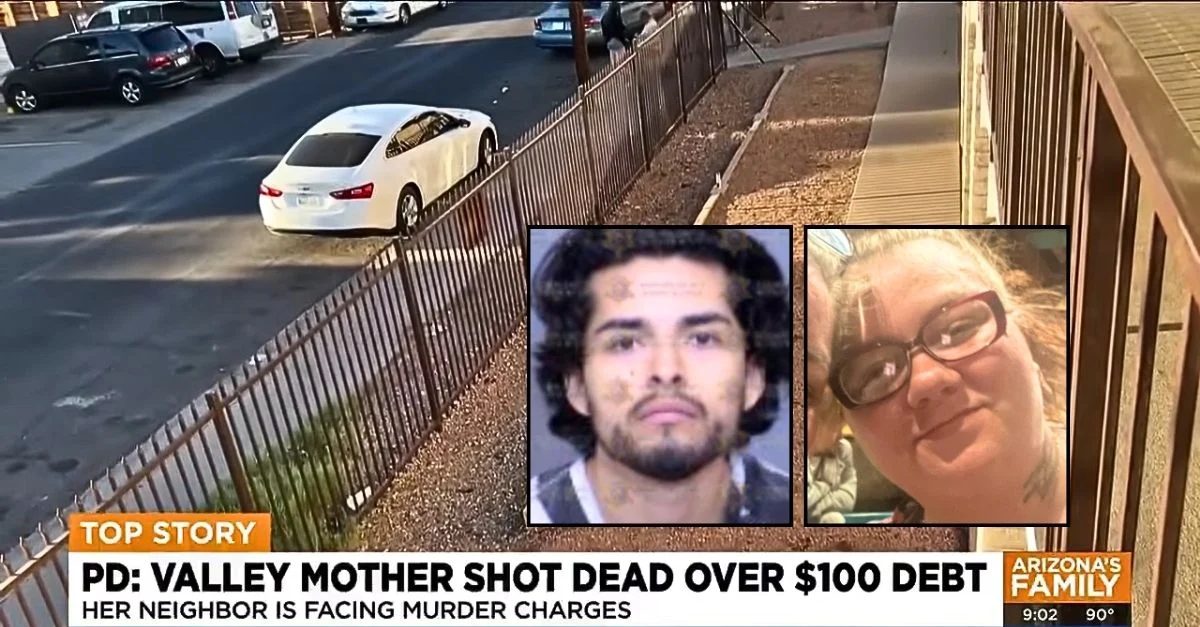
A minor fender bender, a promise of a $100 payment, and a heated argument tragically culminated in the fatal shooting of Danielle Little, a 35-year-old mother of seven, by her neighbor, Daniel Rombach Jr., 21, in front of her own children in Phoenix, Arizona. The devastating incident, stemming from a debt accrued after Little reportedly backed into Rombach’s vehicle a month prior, has sent shockwaves through the community, underscoring the profound and often irreversible consequences of disputes escalating with the introduction of firearms. Rombach has since been arrested and faces one count of second-degree murder, held on a $1 million cash-only bond, as the legal system begins to unravel the events of that fateful day.
The Fatal Confrontation: A Dispute Turned Deadly
The afternoon of the shooting began with an everyday neighborhood interaction that swiftly devolved into a nightmare. According to a probable cause affidavit obtained by Law&Crime and corroborated by statements from Little’s sister to local media outlet AZ Family, Daniel Rombach Jr. confronted Danielle Little about the outstanding $100 debt. The confrontation, which occurred within the apartment complex they both resided in, quickly intensified. Witnesses described Rombach brandishing a pistol, an action that Little reportedly challenged with defiant words. "Do it py," she allegedly stated, followed by, "You won’t do it py in front of my kids." These words, intended to call Rombach’s bluff, instead preceded a horrifying act. Rombach, holding the pistol in his right hand, discharged the weapon at point-blank range, causing Little to collapse. He then retreated to his apartment. Later, Rombach would tell investigators that it was "not his intention" to shoot Little, claiming he had "forgotten the gun did not have a safety device" and expressing remorse for his actions. However, the tragic outcome was undeniable: a life was extinguished over a trivial sum.
Roots of the Dispute: A Minor Accident and Financial Strain
The origins of the fatal confrontation trace back approximately a month before the shooting. Danielle Little had reportedly been involved in a minor collision, accidentally backing her vehicle into Daniel Rombach Jr.’s car. While Little’s sister, Hailey Byer, contended there were "no scratches or anything" visible on Rombach’s vehicle, Little, in an effort to de-escalate the situation and avoid police involvement, promised to pay Rombach $100 for the perceived damage. "She’s like, ‘I’ll pay you 100 bucks. Don’t call the cops,’" Byer recalled.
However, financial realities for a mother of seven often present significant challenges. Little, according to her sister, was experiencing financial difficulties and needed more time to gather the funds. "She didn’t have a lot of money but she was gonna pay it back in two weeks," Byer explained. "She didn’t have the money to pay that $100. She had to pay rent." This delay, understandable given her circumstances, appears to have been a point of growing contention for Rombach, escalating what should have been a minor, resolvable issue into a festering grievance. The inability to immediately fulfill a small financial obligation, compounded by the pressure of managing a large household, became a tragic pivot point in Little’s life.
Escalation and the Day of the Shooting: A Chronology of Events
The day of the shooting, March 25, 2026, saw the simmering dispute boil over. According to the probable cause affidavit, the catalyst for the direct confrontation was an unrelated incident involving one of Little’s sons. Little’s husband informed investigators that Rombach had emerged from his apartment after Little’s son "broke" a lawn ornament situated near Rombach’s unit. Rombach allegedly overheard the son apologizing for the damage, which seemingly provided an opening for him to reintroduce the matter of the outstanding $100.
Rombach then directly confronted Little, demanding the payment she had promised for the minor collision a month prior. Little’s husband was present during this confrontation, with their children inside their apartment, audibly exposed to the escalating argument. As the verbal exchange grew more heated, Little’s husband observed Rombach retrieving a handgun from his waistband. Recognizing the immediate danger, he instinctively backed away, prioritizing the safety of his children who were behind him.
The argument reached its horrifying climax when Little, seemingly incredulous that Rombach would resort to violence over such a paltry sum, challenged him directly. "[The husband] heard the victim say to Daniel, ‘You fing py, you’re bringing out a gun, and you’re not gonna shoot me in front of my kids,’" the court document recounts. In a horrifying instant, Rombach pointed the gun at Little and fired a single shot. The sound of the gunshot echoed through the apartment complex, marking the end of a life and the beginning of profound trauma for those who witnessed it. Immediately after firing, Rombach turned and walked back into his apartment, leaving Little mortally wounded on the ground.
Eyewitness Accounts: The Family’s Ordeal
The immediate aftermath of the shooting was chaotic and heart-wrenching. Little’s husband, who had just witnessed his wife being shot, quickly ushered their children back into their apartment, attempting to shield them further from the horrific reality that had just unfolded. In a desperate act born of grief and rage, he then attempted to kick in Rombach’s apartment door, though he was unsuccessful. Moments later, law enforcement officers, likely alerted by the gunshot or emergency calls, arrived on the scene.
The raw emotion and disbelief surrounding the incident were vividly captured in the statements of Little’s sister, Hailey Byer. Speaking to AZ Family, Byer expressed the profound anguish of the family, particularly the incomprehensible nature of the violence over such a minor sum. "Punch her, slap her. Don’t shoot her. She has seven kids," Byer pleaded, articulating the family’s despair and the senselessness of the act that claimed her sister’s life and orphaned her nieces and nephews. She emphasized that the $100 debt was a sum Little intended to pay, despite her financial constraints, highlighting the tragic misunderstanding and impatience that fueled the deadly encounter.
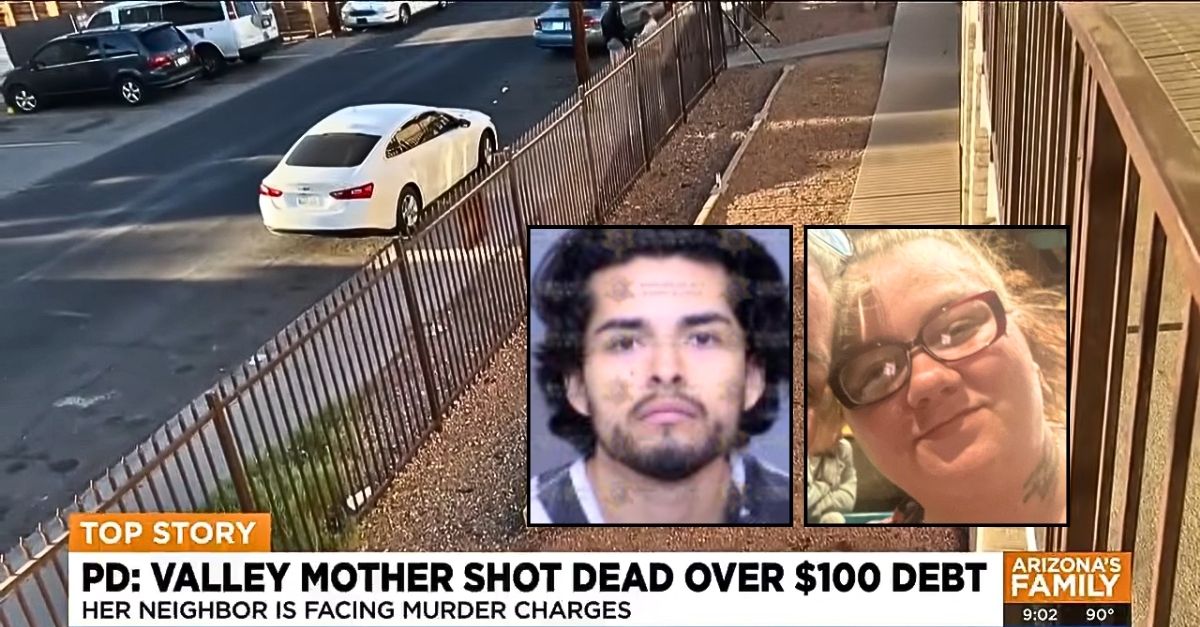
Little’s husband also recalled a detail indicating the underlying tension regarding the debt. He told police he had heard Little saying, "next time, be a man and say it to my face, don’t write a note," regarding Rombach’s previous attempts to collect the $100. This suggests a history of passive-aggressive communication that contributed to the volatile atmosphere leading up to the fatal confrontation.
Law Enforcement Response and Legal Proceedings
Following the rapid deployment of officers to the scene, Daniel Rombach Jr. was apprehended without further incident. He was subsequently booked into the Maricopa County Jail, facing a charge of second-degree murder. The probable cause affidavit became the foundational document for his arrest, detailing the sequence of events as witnessed by Little’s husband and Rombach’s own statements.
Rombach’s claim to investigators — that it was "not his intention" to actually shoot Little and that he "forgot the gun did not have a safety device" — will be a critical element in the ongoing legal proceedings. In Arizona, second-degree murder is defined as intentionally causing the death of another person, or acting with extreme indifference to human life, recklessly engaging in conduct that creates a grave risk of death and thereby causes the death of another person. While Rombach’s statement suggests a lack of premeditated intent to kill, the act of brandishing a firearm during a dispute and discharging it at close range, regardless of whether a safety was engaged or remembered, could still satisfy the criteria for second-degree murder, particularly concerning "extreme indifference to human life." The $1 million cash-only bond reflects the serious nature of the charge and the perceived flight risk or danger Rombach poses. This substantial bond amount is standard for severe felony charges where public safety is a primary concern. The legal process will now unfold, with prosecutors tasked with proving Rombach’s culpability beyond a reasonable doubt, while his defense will likely focus on his stated lack of intent to kill.
The Victim: Danielle Little’s Life and Legacy
Danielle Little was more than just a name in a police report; she was a 35-year-old mother of seven children, a woman whose life was centered around her family. Her untimely death leaves a gaping void in the lives of her children, who are now left without their mother, and her husband, who witnessed the horrific event. The emotional and financial toll on the family is immense. The mention of a GoFundMe in the original context suggests that the community is rallying to provide support for her children and funeral expenses, a common response to such profound and unexpected tragedies.
Little’s sister’s words, "She has seven kids," encapsulate the deep sorrow and the overwhelming sense of injustice felt by her loved ones. The ripple effect of this single act of violence extends far beyond Little herself, impacting a large family unit and forever altering their future. Her struggle to pay a $100 debt, prioritizing rent over what she considered a minor obligation, paints a picture of a woman navigating the complexities and financial pressures of everyday life, only to have it tragically cut short by a neighbor’s impatience and a firearm.
Broader Implications: The Escalation of Minor Disputes and Gun Violence
This tragic incident serves as a stark reminder of the volatile nature of minor disputes when exacerbated by the presence of firearms. What began as a disagreement over a paltry $100, stemming from a minor car accident, escalated into a fatal shooting, highlighting a disturbing trend of violence in seemingly ordinary neighborhood conflicts. The immediate accessibility of firearms can transform routine arguments into life-or-death situations, even when "intent to kill" may not be explicitly present, as Rombach claimed. The ease with which a gun was produced and discharged in this residential setting raises significant concerns about responsible gun ownership and conflict resolution in communities.
Studies and national trends consistently demonstrate that the presence of a firearm significantly increases the likelihood of a dispute turning lethal, regardless of the initial intent. In the United States, incidents of gun violence stemming from personal arguments or altercations are a persistent societal challenge. The Phoenix shooting underscores the critical need for individuals to de-escalate conflicts, to seek non-violent resolutions, and to exercise extreme caution when firearms are involved in any disagreement, however minor it may seem. The human cost of such escalations, as evidenced by Danielle Little’s death and the trauma inflicted upon her family, is immeasurable.
Community Impact and The Path Forward
The apartment complex where Danielle Little lived and died is now stained by tragedy. Such an event inevitably creates a climate of fear, grief, and mistrust among residents. Neighbors who once lived alongside each other are now grappling with the reality that a minor disagreement could lead to such extreme violence. The incident casts a pall over the sense of security typically associated with one’s home and community.
As Daniel Rombach Jr. awaits trial, the legal process will be long and arduous. His defense will undoubtedly attempt to mitigate the severity of the charge based on his statements of remorse and alleged lack of intent to kill. However, the fact remains that a life was lost, and a family shattered. The legal proceedings will not only determine Rombach’s fate but will also serve as a public forum to examine the circumstances that led to this devastating outcome. For Danielle Little’s family, the legal battle is a necessary step towards justice, but it will never fully heal the wounds left by her absence. The community, meanwhile, will grapple with the profound implications of this senseless act, reflecting on the fragility of life and the ever-present danger when disputes are allowed to escalate beyond control.

 Yuyun Lusiyani
 Joko Widodo
 Jia Lissa
 Pevita Pearce
 admin
admin
