
 Ana Megawati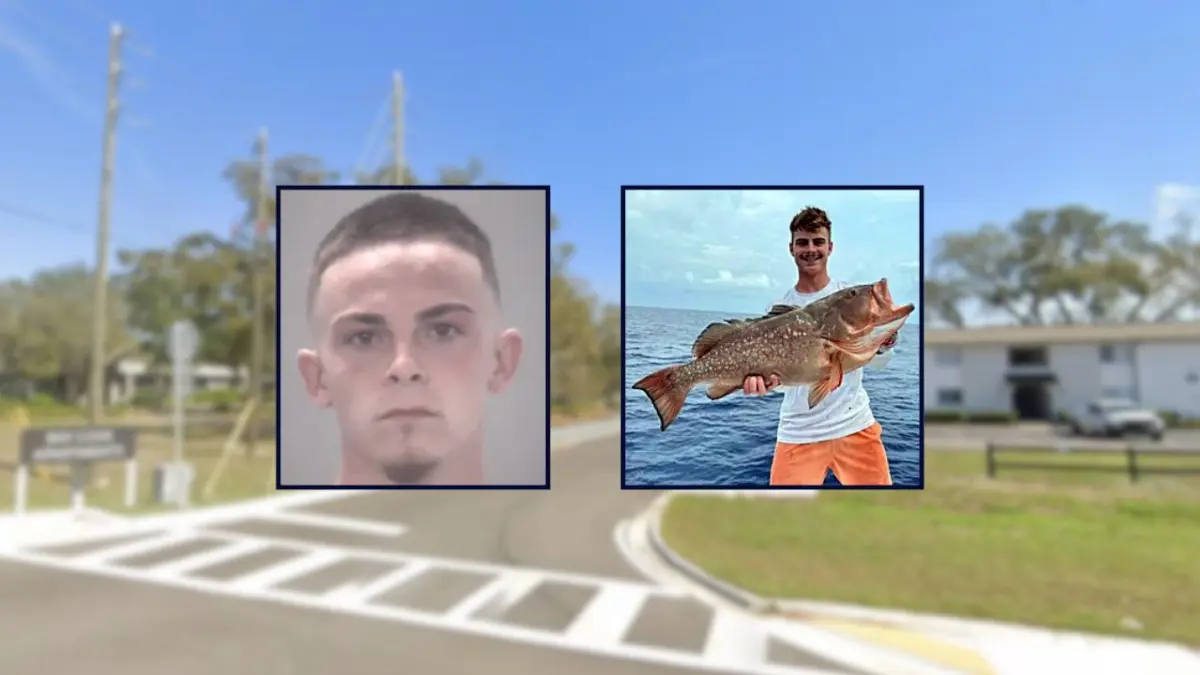
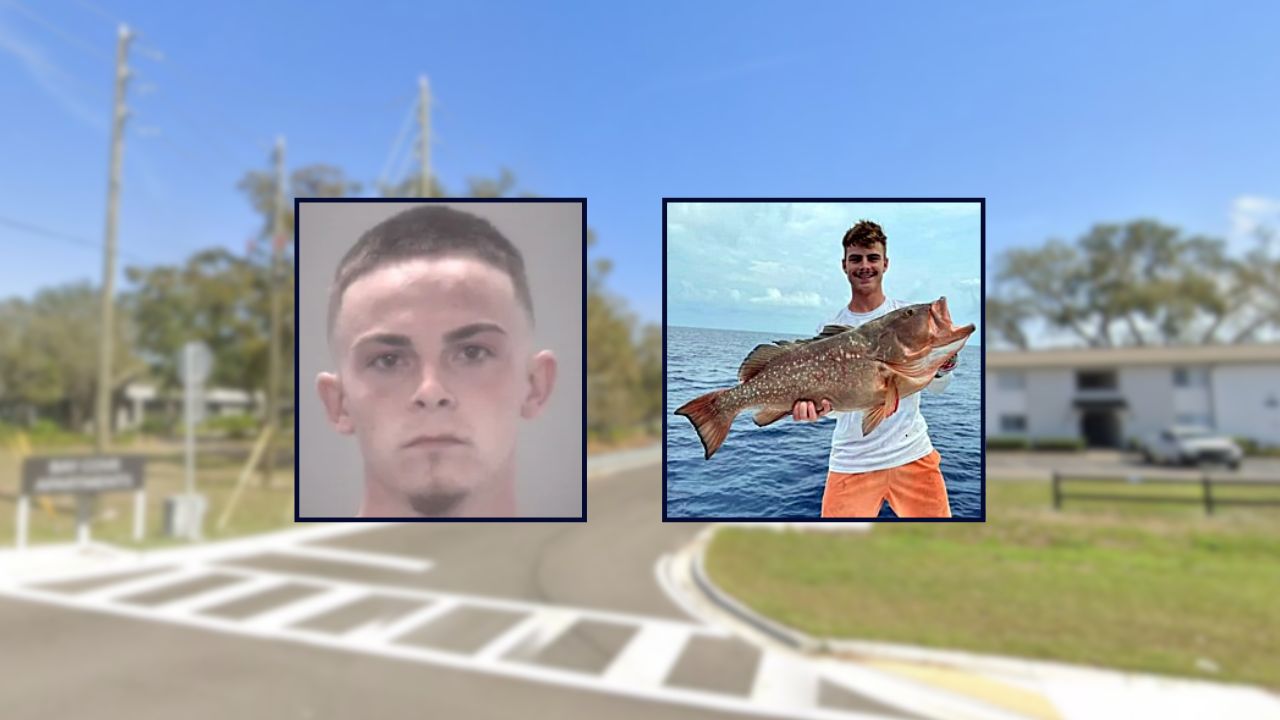
A Florida man will spend 30 years incarcerated after being convicted of second-degree murder for fatally shooting his ex-girlfriend’s new partner during a late-night confrontation in Clearwater. Stuart Beck, 25, received his sentence this week from Sixth Judicial Circuit Judge Philippe Matthey in Pinellas County, following a jury conviction in July 2023 for the July 2022 death of 20-year-old Michael Conrad. The incident, rooted in a tumultuous love triangle, unfolded at the now-defunct Bay Cove Apartments and exposed a complex narrative of self-defense claims against accusations of a vengeful attack.
The Fateful Night: A Confrontation in Clearwater
The tragic events that led to Michael Conrad’s death transpired in the early hours of July 6, 2022. Stuart Beck arrived at the Bay Cove Apartments, located at 19135 U.S. Highway 19 North in Clearwater, a populous city situated approximately 20 miles west of Tampa. At the heart of the dispute was Beck’s ex-girlfriend, who was present at the apartment with Conrad. While Beck’s name reportedly remained on the lease of the apartment, the woman testified that their romantic relationship had ended several months prior to the shooting, and she had since begun a relationship with Conrad, though she occasionally still socialized with Beck.
The circumstances surrounding Beck’s arrival and the ensuing confrontation were heavily contested throughout the legal proceedings. The prosecution presented evidence suggesting Beck was aware of Conrad’s presence before he arrived, including testimony from the ex-girlfriend that Beck had called her, stating he knew Conrad was there because he had seen the victim’s truck parked outside. This directly contradicted Beck’s assertion that he did not know Conrad was in the apartment when he arrived, a point crucial to undermining his self-defense claim by establishing a potential motive of jealousy or premeditation.
According to the state’s narrative, the confrontation escalated rapidly when Beck forcibly entered the apartment by kicking in the door. This act of unlawful entry became a cornerstone of the prosecution’s argument, challenging any notion of legitimate self-defense. Once inside, Beck confronted Conrad. The defense and prosecution presented vastly different accounts of the immediate moments leading up to the fatal shot, but what remained undisputed was that Beck fired the weapon that killed Conrad.
The Legal Battle: Self-Defense Versus Murder
From his initial arrest to his eventual trial, Stuart Beck’s explanation for the shooting underwent significant changes. Initially, Beck maintained that the shooting was purely accidental. However, during his testimony on the stand, his story evolved. He admitted that while he did not intend to kill Conrad, he "meant for the gun to go off." This shift in narrative was a critical point for the prosecution, casting doubt on his credibility and the validity of his self-defense plea.
Beck’s defense centered on the argument that he acted in self-defense. He claimed he felt "in fear for my life" during a final confrontation in a bedroom, stating he had been previously beaten by Conrad and two of his friends. Describing the struggle for the weapon, Beck testified, "We were basically wrestling for the gun and moving around the general area. I had tried to raise my hand to get him to let go, and at that time he had his other hand on the gun, and I started losing grip, and I tried to hit him with the gun to get him to let go, and he didn’t let go. I felt it was in my best interest to shoot him at that time otherwise he would get the gun."
The prosecution vehemently challenged this self-defense narrative. They emphasized the moments leading up to the shooting, particularly Beck’s forcible entry into the apartment. A prosecutor argued to the jury, "You cannot break down a door, break into an apartment, point a gun at someone who has nothing on him. That’s not self-defense, members of the jury, that’s murder. You don’t get so close to somebody and put a pistol up against their chest as an accident." The state painted a picture of an aggressor, not a victim, who initiated the violent encounter with a firearm.
Defense attorney Scott Tremblay, acknowledging the emotional context of the case, argued for a lesser charge, suggesting that the incident was a "heat-of-passion shooting" and a "love triangle" gone awry, contending it was "a manslaughter case at best." This argument aimed to persuade the jury that Beck lacked the premeditation required for a first-degree murder conviction and that the circumstances were more indicative of a spontaneous act driven by intense emotion rather than malicious intent.
Defining Second-Degree Murder in Florida
The jury’s verdict of second-degree murder reflects a specific interpretation of Florida law, distinguishing it from both first-degree murder and manslaughter. In Florida, second-degree murder is generally defined as the unlawful killing of a human being, when perpetrated by any act imminently dangerous to another and evincing a depraved mind regardless of human life, although without any premeditated design to effect the death of any particular individual. Unlike first-degree murder, which requires premeditation—a conscious decision to kill made before the act—second-degree murder implies a reckless disregard for human life.
The distinction between second-degree murder and manslaughter often lies in the degree of intent or recklessness. Manslaughter in Florida can involve either a "heat of passion" killing, where the killing occurs without premeditation but during a sudden quarrel or in the heat of passion, or a killing caused by the culpable negligence of another. Beck’s defense, arguing for "heat of passion," aimed for a manslaughter conviction. However, the jury, by finding him guilty of second-degree murder, concluded that his actions demonstrated a "depraved mind regardless of human life," rather than merely an emotional outburst, and that while there wasn’t premeditation to kill, there was an intent to commit an act that was inherently dangerous and likely to cause death or great bodily harm. The forcible entry, the possession of a firearm, and the direct confrontation likely contributed to the jury’s decision that Beck’s actions exceeded the threshold for manslaughter.
The Verdict and Sentencing: Justice and Grief
After hearing all the evidence, including the conflicting accounts and the emotional testimony, the jury ultimately sided largely with the prosecution’s narrative. They found Stuart Beck guilty of second-degree murder, concluding that his actions were indeed dangerous and evinced a depraved mind, but crucially, they rejected the charge of first-degree murder, indicating they did not find sufficient evidence of premeditation. This nuanced verdict underscores the complexities of intent in criminal law, particularly in cases involving interpersonal conflict and disputed circumstances.
During the sentencing hearing presided over by Sixth Judicial Circuit Judge Philippe Matthey, the profound impact of Michael Conrad’s death on his family was brought into sharp focus. A poignant victim impact statement was delivered by one of Conrad’s aunts, who spoke movingly about the irreplaceable loss inflicted by Beck’s actions. "You didn’t just kill him; you killed laughter in our home," she testified, her words painting a vivid picture of the void left behind. "You killed quiet moments that should have been filled with his voice. You condemned us to a lifetime of grief, and I hope you carry that same burden." Such statements are critical components of the sentencing phase, allowing victims’ families to articulate their suffering and providing the court with a fuller understanding of the crime’s ripple effects.
Judge Matthey’s decision to sentence Beck to 30 years in prison reflects the severity of the crime under Florida law for second-degree murder. While a life sentence is possible for this offense, a substantial term like 30 years indicates the court’s judgment on the gravity of Beck’s actions and the need for retribution, deterrence, and incapacitation. The sentence serves as a definitive closure to the legal proceedings, though it can never fully alleviate the grief of Conrad’s family.
Broader Implications and Societal Context
The case of Stuart Beck and Michael Conrad serves as a stark reminder of the devastating consequences that can arise from domestic disputes and interpersonal conflicts, especially when complicated by the presence of firearms. Fatal domestic violence incidents are a persistent issue across the United States, often escalating from emotional turmoil to tragic violence. According to national crime statistics, a significant percentage of homicides involve individuals known to each other, and disputes often stem from romantic relationships or jealousy. The availability of firearms can tragically transform arguments into deadly encounters, as seen in this case.
The incident also highlights the complexities of self-defense claims in legal contexts. While the right to self-defense is fundamental, its application is rigorously scrutinized, particularly when the accused is perceived as the initial aggressor or when their actions exceed what is deemed reasonable or necessary. Beck’s changing narrative and the evidence of his forced entry were pivotal in undermining his self-defense argument, illustrating how a defendant’s actions leading up to a fatal confrontation can define the legal outcome.
For the Clearwater community, the case represents a tragic loss of young life and a sobering example of how unresolved personal conflicts can spiral into irreversible violence. The Bay Cove Apartments, the scene of the crime, has since been defunct, underscoring the transient nature of places touched by such profound tragedies. The legal system, in rendering its verdict and sentence, aims to provide justice for the victim and accountability for the perpetrator, while also sending a message about the sanctity of life and the rule of law.
The enduring grief expressed by Michael Conrad’s aunt encapsulates the long-term impact of such crimes. Beyond the legal judgments, families are left with an indelible burden of loss, forever altering their lives. The case of Stuart Beck stands as a somber testament to the destructive power of jealousy and rage, and the profound, far-reaching consequences of a single, fatal decision.


 Yuyun Lusiyani
 Joko Widodo
 Eva Lovia
 Jia Lissa
 Pevita Pearce