
 Yuyun Lusiyani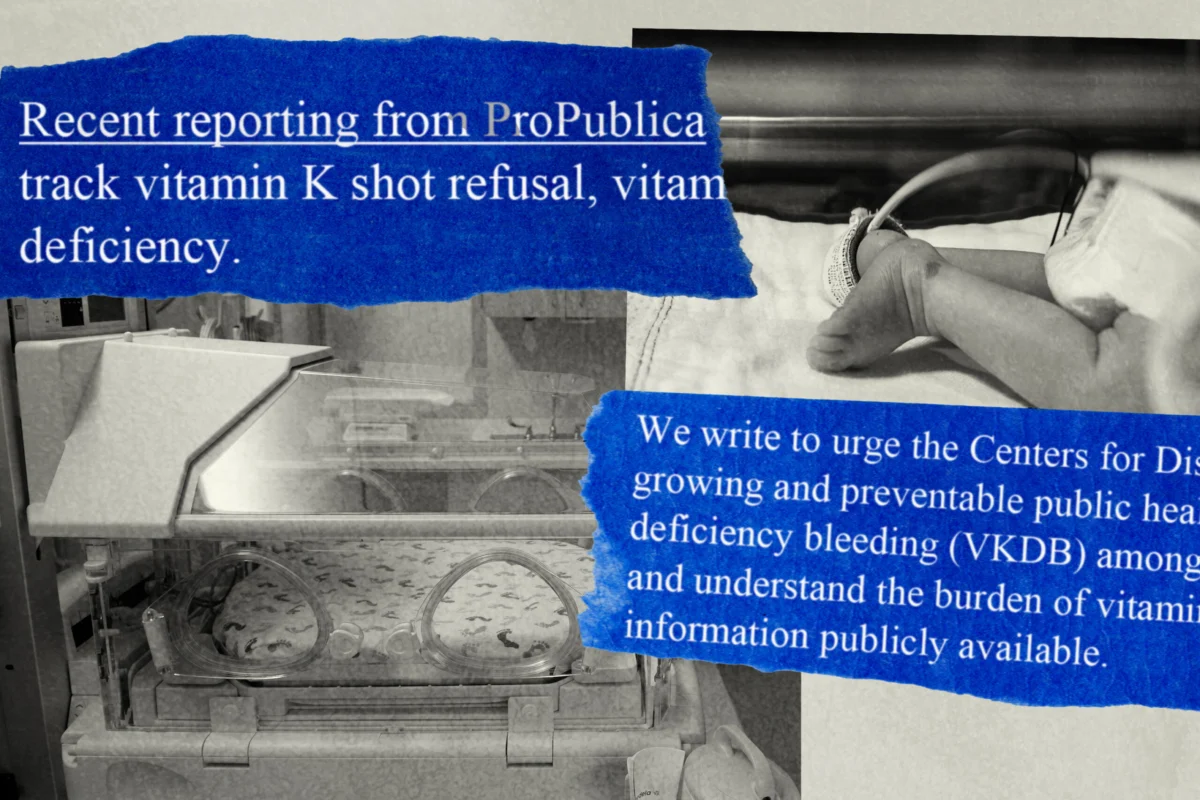
Two prominent members of Congress have issued an urgent appeal to federal health officials, demanding immediate intervention to address what they describe as a burgeoning and entirely preventable public health crisis. This crisis centers on a concerning trend: a growing number of families are declining the routine vitamin K injection for their newborns, a practice that has been standard medical protocol for decades. The alarming consequence of this refusal has been documented cases of severe, uncontrollable bleeding in infants, tragically leading to serious health complications and even fatalities. The call to action underscores a critical gap in federal data collection regarding this issue and highlights the dangerous proliferation of medical misinformation.
The Mounting Crisis: A Preventable Threat to Newborns
The vitamin K shot, a simple and inexpensive injection administered shortly after birth, plays a vital role in preventing Vitamin K Deficiency Bleeding (VKDB) in newborns. Babies are born with very low levels of vitamin K, a fat-soluble vitamin essential for the production of clotting factors in the blood. Without sufficient vitamin K, infants are at a significantly increased risk of spontaneous and potentially life-threatening hemorrhage. This can manifest in various forms, from bruising and bleeding from the nose or gums to severe internal bleeding, most critically, intracranial hemorrhage (bleeding in the brain). The Centers for Disease Control and Prevention (CDC) warns that babies who do not receive the vitamin K shot are an astonishing 81 times more likely to develop late VKDB compared to those who do, and tragically, one in five babies afflicted with VKDB will die.
For over six decades, since the American Academy of Pediatrics (AAP) first recommended it for all newborns in 1961, the vitamin K shot has been a cornerstone of neonatal care in the United States. Its widespread adoption virtually eliminated what was once a common and devastating condition. However, in recent years, a troubling pattern has emerged: a discernible increase in parental refusals. A comprehensive national study analyzing over 5 million births revealed that the rate of newborns not receiving the vitamin K shot climbed to over 5% in 2024. Furthermore, anecdotal reports from hospitals, as highlighted by a recent ProPublica investigation, indicate that refusal rates in some facilities have more than doubled. This alarming trend is attributed to a complex interplay of factors, including a rising tide of mistrust in established medical institutions, fueled by the rapid dissemination of false information online. It is crucial to emphasize that the vitamin K shot is not a vaccine; it is a prophylactic measure to ensure proper blood clotting.
Congressional Leaders Demand Federal Intervention
Last week, Rep. Kim Schrier (D-WA), a pediatrician by profession, and Sen. Angela Alsobrooks (D-MD) formally addressed Dr. Jay Bhattacharya, the acting director of the CDC, in a strongly worded letter. Their correspondence urged the CDC to "take immediate action" to confront this escalating public health threat. The lawmakers’ plea was directly prompted by a groundbreaking ProPublica investigation, which not only exposed the tragic deaths of infants due to VKDB following parental refusal of the shot but also uncovered a critical systemic failure: the federal and state agencies responsible for public health are not adequately tracking vital data related to this issue.
"Recent reporting from ProPublica has highlighted a major problem: the federal government does not currently track vitamin K shot refusal, vitamin K deficiency bleeding, or the preventable deaths related to vitamin K deficiency," Schrier and Alsobrooks articulated in their letter. They emphasized that this lack of comprehensive data severely hampers the ability of public health officials to accurately gauge the scope of the problem, identify high-risk areas, and develop targeted, effective interventions. Without a robust understanding of the prevalence of refusals and the subsequent incidence of VKDB, experts are essentially operating in the dark, unable to craft informed public health campaigns or provide clinicians with the necessary tools for rapid diagnosis and treatment.
Historically, the widespread acceptance of the vitamin K shot meant there was little need for extensive monitoring systems to track cases of VKDB. The problem was largely eradicated. However, the current resurgence of refusals has fundamentally altered this landscape, creating an urgent imperative for new data collection strategies. The lawmakers firmly believe that the CDC possesses the necessary tools and infrastructure to undertake this critical tracking and to launch a comprehensive public health response.
The Critical Data Gap and Its Implications
The absence of centralized, consistent data on vitamin K shot refusal rates and subsequent VKDB cases represents a significant blind spot in the nation’s public health surveillance system. As Dr. Andrew Racine, president of the American Academy of Pediatrics (AAP), pointed out, a fundamental function of government is to equip clinicians and the public with reliable data to facilitate informed decision-making. He drew a parallel to tracking measles cases: just as doctors need to know if they are in an area with a measles outbreak to quickly diagnose and treat patients, pediatricians should be aware of regions with high vitamin K refusal rates. This knowledge would allow them to consider VKDB earlier in the differential diagnosis for a sick infant, potentially saving lives by initiating prompt treatment. "We depend upon the CDC to let us know about that," Racine stated, highlighting that VKDB is a serious medical condition affecting newborns that pediatricians must be acutely aware of.
Beyond immediate clinical implications, the lack of data severely impedes the development of effective public health campaigns. Without understanding where refusals are highest, who is refusing, and why, it is exceedingly difficult to craft targeted educational materials or outreach programs. This information is crucial for dispelling misinformation and rebuilding trust within communities. The current situation leaves public health authorities unable to quantify the true burden of preventable illness and death, making it challenging to allocate resources effectively or justify large-scale interventions.
Reactions from Health Authorities and Political Figures
The congressional letter and the underlying ProPublica investigation have garnered significant attention and reaction from various stakeholders. The American Academy of Pediatrics, through its president Dr. Andrew Racine, expressed strong support for the lawmakers’ initiative and commended ProPublica for shedding light on an issue the organization has been concerned about for some time. Dr. Racine reiterated the AAP’s stance on the importance of the shot and the critical need for data. He also emphasized that the responsibility extends beyond merely tracking the problem; it also involves actively "messaging it" to the public. This means clear, consistent communication from high-level health officials about the safety and efficacy of the shot and the grave dangers of refusal.
An HHS spokesperson, in response to inquiries, reiterated the CDC’s official recommendation that parents allow newborns to receive the vitamin K shot within six hours of birth to prevent VKDB. The spokesperson also acknowledged the broader trend of declining uptake in recent years, linking it to a general erosion of "public trust in health care institutions," particularly during the COVID-19 pandemic, which was characterized by "heavy-handed mandates and inconsistent messaging during the Biden administration." This statement points to a complex environment where public health initiatives are increasingly viewed through a lens of skepticism and political polarization.
Sen. Alsobrooks, however, specifically called out Health and Human Services Secretary Robert F. Kennedy Jr. for his perceived silence on the issue. She urged him to publicly voice his unequivocal support for the vitamin K shot. Kennedy Jr. has previously declined to comment on the injection, stating he has "never said anything about" it. Alsobrooks strongly contended that given his influential position, Kennedy Jr. has a "moral obligation to state in clear and no uncertain terms that this is safe and effective, and that families should be giving this shot to their babies." She further noted that she has previously called for his resignation, underscoring the deep disagreement over the role of public figures in promoting established public health practices. The Senator’s comments highlight the significant impact that public figures can have on health decisions, particularly in an era rife with health misinformation.
Combating Misinformation and Rebuilding Trust
The increasing refusal of the vitamin K shot is symptomatic of a broader challenge facing public health: the struggle to combat medical misinformation and rebuild public trust in scientific institutions. Online platforms have become fertile ground for the spread of unfounded theories and anecdotal claims that often contradict established medical consensus. These narratives, frequently amplified by social media algorithms and influential personalities, can sway parental decisions, even when those decisions carry severe risks for their children.
The solution, as articulated by Rep. Schrier, lies in providing "modern-day, accurate information" to parents. She emphasized the predictable consequence of abandoning preventative measures: "Once you stop doing these things that are preventative, cases rise." This highlights the direct correlation between declining public health compliance and the resurgence of preventable diseases or conditions. The battle against VKDB is, in essence, a microcosm of the larger struggle to preserve evidence-based medicine in a society increasingly susceptible to health fads and conspiracy theories.
Effective public health messaging in this environment requires more than just repeating facts; it necessitates clear, empathetic communication that addresses parental concerns, acknowledges past failures in communication (as referenced by the HHS spokesperson regarding COVID-19), and directly refutes common myths. It also demands a coordinated effort from government agencies, medical organizations, and healthcare providers to present a united front and consistently champion the safety and efficacy of long-standing, life-saving interventions.
Broader Implications and the Path Forward
The growing trend of vitamin K shot refusals carries significant broader implications for public health. It underscores the fragility of public health achievements when trust erodes and misinformation proliferates. If a simple, highly effective intervention like the vitamin K shot can be widely rejected, it raises concerns about the future uptake of other crucial childhood immunizations and preventative care. This situation demands a multi-pronged approach:
- Robust Data Collection: The CDC must implement comprehensive systems to track refusal rates, VKDB incidence, and associated outcomes at both state and national levels. This data is indispensable for understanding the true scope of the crisis and for informing strategic interventions.
- Targeted Public Health Campaigns: Based on data, tailored educational campaigns are needed to reach communities and demographics where refusal rates are highest. These campaigns must be culturally sensitive, address specific concerns, and utilize trusted messengers.
- Clear Leadership and Messaging: High-ranking officials within HHS and other federal agencies must vocally and unequivocally support established medical practices. Ambiguity or silence from influential figures can inadvertently legitimize misinformation.
- Healthcare Provider Empowerment: Clinicians on the front lines need resources and training to effectively counsel parents, address their concerns, and counter misinformation with evidence-based information.
- Collaboration with Technology Platforms: Engagement with social media companies and other online platforms is crucial to address the spread of health misinformation and promote accurate information.
The potential for a preventable tragedy to escalate without coordinated and decisive action is significant. The vitamin K shot has protected countless newborns from severe bleeding and death for decades. Allowing this preventable public health crisis to deepen not only jeopardizes the lives of the most vulnerable but also signals a worrying erosion of public health principles. The urgent calls from Congress and medical experts are a clear mandate for federal agencies to step up, collect the necessary data, and launch a vigorous campaign to protect newborns from an entirely avoidable danger. The imperative is not merely to track the problem, but to communicate its gravity and reaffirm the critical importance of a simple, life-saving intervention.



 Jia Lissa
 Joko Widodo
 Eva Lovia

 Pevita Pearce