
 Yuyun Lusiyani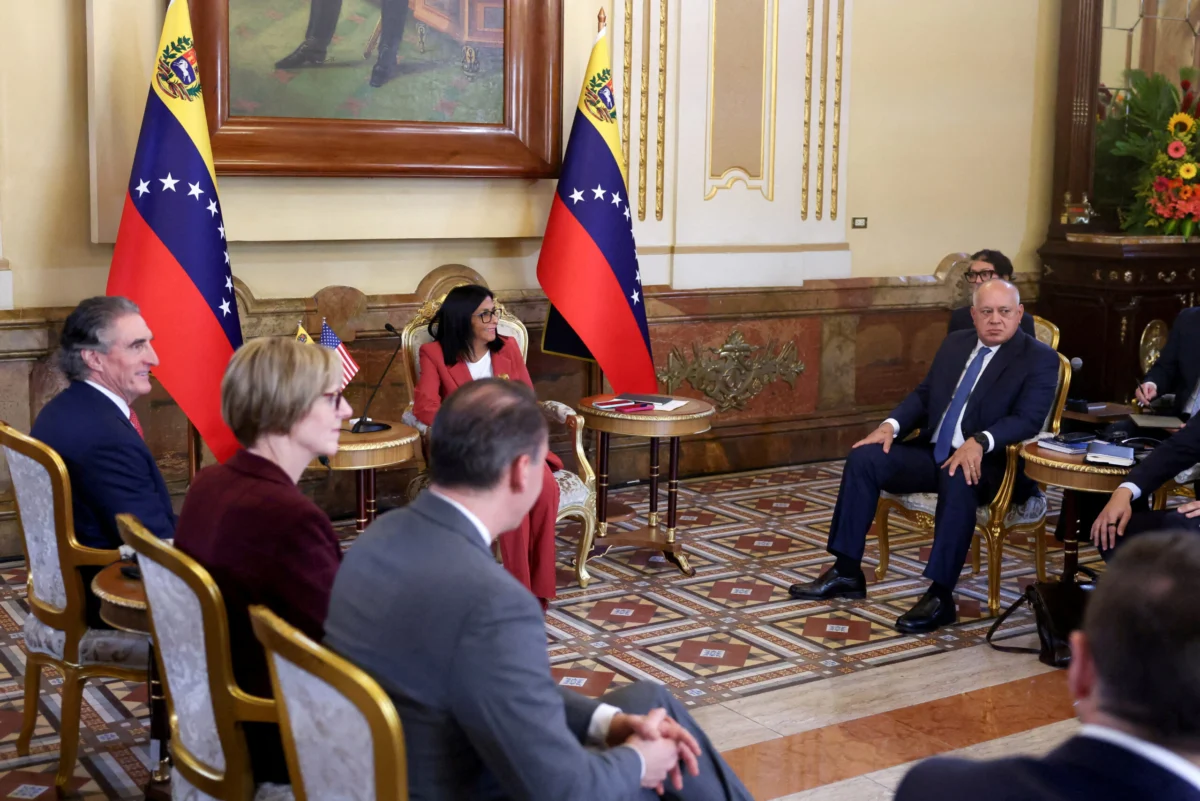
When Rafael Enrique Gámez Salas crossed the Mexican border in late 2024, U.S. Border Patrol agents initially categorized him among the hundreds of thousands of Venezuelan migrants seeking refuge from their country’s devastating economic and political crises. However, the true nature of the 40-year-old’s journey has since unraveled, revealing a far more sinister narrative that intertwines international organized crime with high-level political machinations. Today, Gámez Salas is held in a federal jail in Los Angeles, awaiting extradition to Chile, where prosecutors accuse him of being a key figure within Tren de Aragua, the notorious Venezuelan street gang. Chilean authorities allege that Gámez Salas orchestrated a kidnapping that culminated in the murder of an exiled Venezuelan dissident, Lieutenant Ronald Ojeda. Disturbingly, they believe he acted under the direct orders of Venezuela’s authoritarian government, specifically implicating Interior Minister Diosdado Cabello. This revelation casts a stark light on a profound paradox: for the past six months, the Trump administration has been actively collaborating with Cabello, the very Venezuelan official under investigation for allegedly masterminding the crime.
A Perilous Partnership: U.S. Engagement with Diosdado Cabello

The U.S. engagement with Diosdado Cabello, a figure long targeted by American sanctions and indictments, commenced in January of the current year (2026, as inferred from the article’s timeline). This period marked a dramatic shift in U.S.-Venezuelan relations, initiated by a bold operation where U.S. special operations forces reportedly swooped into Caracas, capturing Venezuelan President Nicolás Maduro and transporting him to New York to face drug trafficking charges. While this intervention drew widespread criticism as a blatant violation of Venezuelan sovereignty, the Trump administration asserted it was restoring law and order in a region plagued by instability. Following Maduro’s capture, the U.S. began efforts to restructure Venezuela’s beleaguered economy and gain influence over its vast oil industry, a critical strategic interest.
Despite a history of U.S. accusations linking Cabello to the repression of political opponents, illicit partnerships with criminal groups, and drug trafficking—even offering a $25 million reward for his capture—the Trump administration has maintained him in a position of power. Cabello has been a consistent presence in high-level discussions, including meetings with senior U.S. officials such as Interior Secretary Doug Burgum during visits to Caracas in March. These negotiations have encompassed crucial sectors like Venezuela’s lucrative mining industry. Prior to Maduro’s capture, U.S. authorities had indicted Cabello, along with a top leader of Tren de Aragua, in the same drug trafficking case as Maduro, highlighting the perceived depth of his criminal ties. This current alliance, therefore, represents a stark departure from previous U.S. policy, raising significant questions about the administration’s priorities and the implications for rule of law in the hemisphere.
The Shadow of Tren de Aragua and a Politically Charged Murder

The alleged involvement of Tren de Aragua and, by extension, the Venezuelan government, in the murder of Lieutenant Ronald Ojeda in Chile, underscores the far-reaching and dangerous influence of the gang. Tren de Aragua originated in Venezuela’s Tocorón prison, evolving from a local protection racket into a sophisticated transnational criminal enterprise. Its operations, spanning across the Americas, include drug and human trafficking, extortion, kidnapping, and migrant exploitation, making it a significant destabilizing force. The gang’s leadership, often directed from within Venezuelan prisons, has historically leveraged the country’s economic and political chaos to expand its illicit networks. The Trump administration, in response to its growing threat and alleged ties to the Venezuelan regime, designated Tren de Aragua as a terrorist group and asserted that Maduro had deployed it to "invade" the United States – a claim that some law enforcement officials found exaggerated, suggesting it was used to justify mass deportations.
The abduction and murder of Ojeda on February 21, 2024, in Santiago, Chile, shocked the relatively peaceful nation. Ojeda, a 32-year-old former military officer, had been granted asylum in Chile after a failed uprising against Maduro in 2017. He had endured torture in Venezuelan prisons, an ordeal he later attributed to Cabello in a posthumously published memoir. Weeks before his death, the Maduro regime had publicly branded Ojeda a traitor. Security footage from Santiago’s apartment tower at 3:05 a.m. captured four masked men, disguised as Chilean police, forcibly removing a barefoot and handcuffed Ojeda from his 14th-floor apartment in front of his wife and son. Court documents detail how he was then taken to a slum hideout, tortured to death, and his partially dismembered remains buried beneath a newly laid cement floor.
Chilean investigators quickly linked fingerprints from the abandoned Nissan used in the kidnapping to a Tren de Aragua member. More crucially, they uncovered evidence strongly suggesting a political assassination orchestrated by the Maduro regime. Chief prosecutor Héctor Barros noted, "Ojeda had already escaped from them at least once before. The regime took that personally. He was a high-priority target." According to Chilean authorities, Cabello allegedly paid Tren de Aragua’s top leadership, who then commissioned gang members in Chile, led by Rafael Gámez Salas, to carry out the kidnapping. Prosecutors believe Ojeda was tortured for information about the Venezuelan political opposition before his death.

The Journey of Rafael Gámez Salas: From Migrant to Alleged Kingpin
Rafael Enrique Gámez Salas’s trajectory, as detailed in hundreds of pages of Chilean and U.S. court records, paints a portrait far removed from that of a typical Venezuelan migrant. Born in Maracaibo, Venezuela, Gámez Salas had a prior criminal record, serving over four years for robbery and other charges stemming from a home invasion. However, there is no indication he was a member of Tren de Aragua during that period.
Around a decade ago, Gámez Salas joined the mass exodus from Venezuela, citing both economic hardship and his opposition to the increasingly repressive Maduro regime. He spent years in Chile, working in factories and as a barber, with no reported criminal activity during this time. In 2021, he migrated to the United States with his family, settling in Salt Lake City, Utah, where he worked long hours in a restaurant and as a DoorDash deliveryman. His time in the U.S. was disrupted in December 2022 when he was pulled over in Texas for expired plates, leading to charges of smuggling persons and a minor, as his Venezuelan passengers were undocumented. Gámez Salas claimed he was doing a favor for a friend, but was ultimately deported back to Venezuela in August 2023.

It was during this period, or shortly after, that Gámez Salas’s alleged ties to Tren de Aragua solidified. Chilean police recovered a WhatsApp status update from Gámez Salas after the August 2023 Tocorón prison raid, where he seemingly celebrated the escape of top gang boss Hector Rusthenford "Niño" Guerrero: "They toppled the castle, but not the king. So the game continues." Investigators interpret this as a strong indicator of his connection to the gang. By late 2023, Gámez Salas was reportedly back in Chile and, according to Chilean authorities, rapidly ascended to lead the Santiago offshoot of Tren de Aragua, known as the Pirates of Aragua. A former U.S. federal law enforcement official commented on his swift rise, "There is no way he moves up that quickly when he returns to Chile unless he’s already connected."
In early 2024, Chilean investigators began tracking "el Turko," a new gang boss overseeing a wave of extortion and kidnappings. Following Ojeda’s murder, senior Tren de Aragua leaders reportedly ordered the kidnappers to leave Chile. Gámez Salas allegedly complied, moving between Peru and Colombia while continuing to direct crimes in Santiago via his phone. Six weeks after Ojeda’s killing, Gámez Salas was caught communicating in real-time with his crew during a carjacking attempt that resulted in a fatal shootout with an off-duty Chilean police officer. Text exchanges revealed agitated instructions from Gámez Salas, including orders to "Dump [the clothes]… right away the shoes… everything." Phones recovered from arrested suspects for the officer’s murder identified Gámez Salas as "el Turko" and contained a trove of communications allegedly detailing his role in directing Ojeda’s kidnapping under instructions from higher gang bosses. "The order comes from above and they are putting their trust in me," Gámez Salas allegedly texted his crew.
Diplomatic Fallout and Ethical Quandaries

The U.S. administration’s continued collaboration with Diosdado Cabello, despite his alleged role in Ojeda’s death and his history of criminal accusations, has sparked significant controversy and diplomatic concerns. While U.S. officials have assisted Chilean counterparts with Gámez Salas’s extradition, they have not leveraged the case to pressure Venezuelan authorities to remove, arrest, or surrender Cabello. When asked in May if the U.S. still considered Cabello a narcoterrorist, Secretary of State Marco Rubio offered a terse response: "The policy of the United States on that topic has not changed, and when it changes we will let you know."
Retired U.S. diplomat Todd Robinson, who was expelled from Venezuela in 2018 for criticizing human rights abuses, expressed deep concerns: "It’s just a horrible, horrible idea to leave him in place. I don’t know what their aim is in doing that, unless it really is about oil, not democratic transition." Brian Naranjo, another retired U.S. diplomat, suggested the administration prioritizes appeasing corrupt actors over uprooting them, viewing Cabello as a "necessary evil" due to his control over security forces and alliances with criminal groups that could destabilize Venezuela. "As long as he figures out a way to keep handing over things the Trump administration wants, I think he endures," Naranjo stated.
The implications of this policy extend beyond the diplomatic sphere. Cabello and other U.S.-backed Venezuelan leaders faced severe criticism for their response to devastating earthquakes on June 24 that killed over 3,600 people and injured more than 16,000. An internationally televised confrontation saw Cabello exchange tense words with a U.S. search-and-rescue team. Critics, including U.S. congressional representatives in Miami, accused Cabello of obstructing rescue efforts and reiterated calls for his arrest, though a State Department spokesperson downplayed the incident as an "unfortunate misunderstanding." Just days later, Cabello participated in a meeting with Gen. Francis Donovan, head of U.S. Southern Command, to discuss relief operations, further highlighting the ongoing engagement.

In Chile, the investigation into Ojeda’s murder continues to gain momentum. Chilean police, with international aid, have apprehended other fugitives. Witness testimony, including from admitted kidnappers, has implicated Gámez Salas and directly pointed to the Venezuelan regime. Three witnesses specifically named Cabello. One admitted kidnapper stated, "Diosdado Cabello, who is a Venezuelan politician, gave the instruction to do the kidnapping," alleging Cabello paid Guerrero, the top boss of Tren de Aragua. Another alleged gang member testified that the crime was "ordered by the Government of Venezuela, planned by the leaders of Tren de Aragua, and executed by the members of the gang who were in Chile," adding that "The money was paid by the government."
While direct communicative evidence between Cabello and gang bosses is still lacking, Chile took the extraordinary step last year of appealing to the International Criminal Court, accusing the Maduro regime of involvement in Ojeda’s death. Former Chilean President Gabriel Boric publicly declared, "Dictatorships and authoritarian leaders cross borders to impose fear when they think they can do it with impunity." The Venezuelan government, in turn, dismissed Chile’s charges as baseless and politically motivated, designed to "please the agendas ordered by the United States."
Future Outlook: Justice and Stability

The U.S. agenda in Venezuela remains under scrutiny. The Venezuelan opposition continues to advocate for Cabello’s ouster and democratic reforms, yet the unspoken bargain between Cabello and the Trump administration persists. Critics argue that the U.S. uses the leverage of its indictment against Cabello to ensure his cooperation, while Cabello wields his power to maintain stability, or instability, as suits him. Naranjo suggested Cabello’s adaptability means he is "going to be around far longer than anybody wants."
In a dramatic development on June 13, Trump announced a U.S. missile strike had killed Hector Rusthenford "Niño" Guerrero, Tren de Aragua’s leader, in Venezuela’s mining region, stating the strike was "coordinated closely with our friends in Venezuela, with whom we are working very well." While Guerrero’s death complicates Chilean investigators’ pursuit of allegations that Cabello hired the gang to target Ojeda, Ojeda’s family and other dissidents hope the ongoing trial in Santiago will expose the Venezuelan regime’s alleged use of organized crime to terrorize its foes. "Diosdado Cabello is the person we want punished," stated Javier Ojeda, the victim’s brother.
Rafael Gámez Salas has consented to extradition, stating his intention to fight the charges in Chilean courts. He questions the credibility of witnesses against him, asserting he is being scapegoated for political reasons. "Obviously any leader boss has money to burn and I don’t have a penny to my name," he claimed, denying any role in Ojeda’s death or ties to Tren de Aragua or Cabello. He further accused both the Chilean and U.S. governments of exploiting the Ojeda case to persecute Venezuelans, stating, "Everyone they caught they connected to Tren de Aragua to arrest them and throw them out of the country." Chilean authorities hope Gámez Salas and other captured gang chiefs may yet provide further evidence to solidify the alleged links to Cabello, potentially shedding more light on the complex web of crime and power that defines Venezuela’s current political landscape.


 Jia Lissa
 Joko Widodo
 Eva Lovia

 Pevita Pearce