
 Yuyun Lusiyani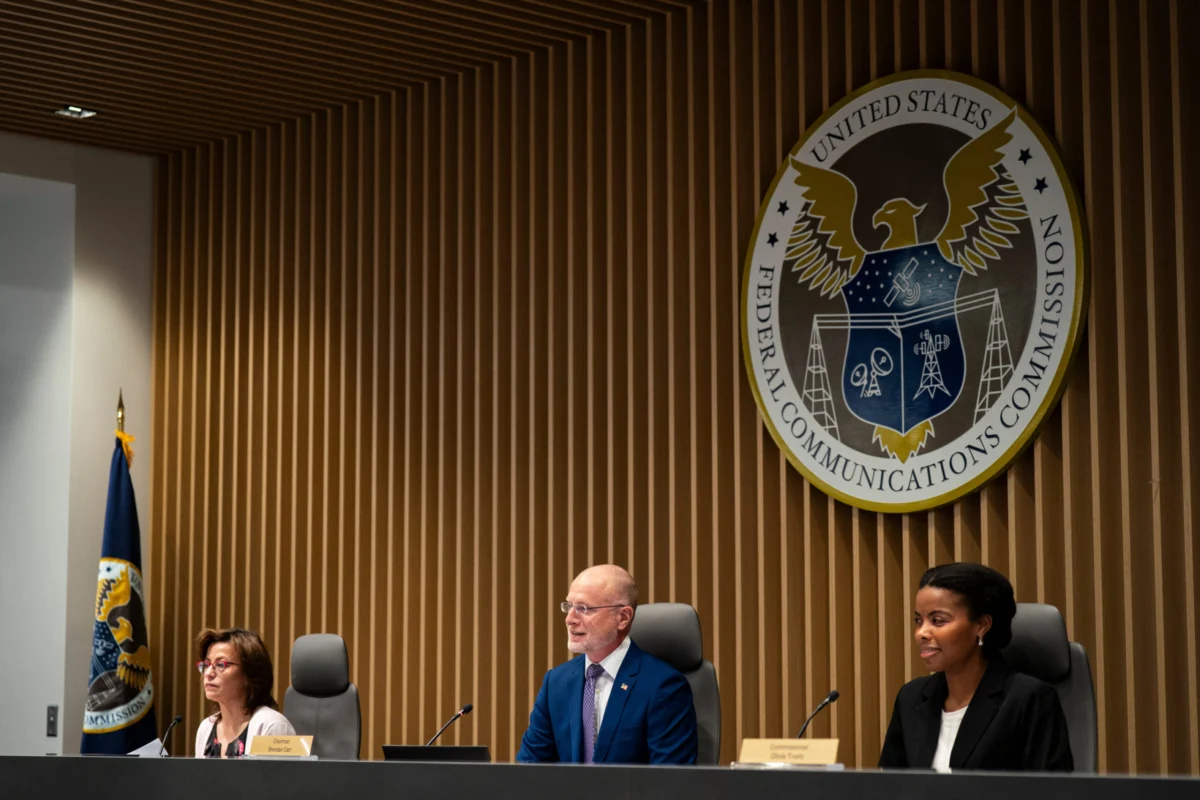
Washington D.C. finds itself embroiled in a deepening ethical controversy as top federal regulators, specifically commissioners of the Federal Communications Commission (FCC), are revealed to have accepted lavish gifts from Paramount Global, a media conglomerate under their direct regulatory oversight. This pattern of gift-taking, totaling hundreds of thousands of dollars over the past decade, has ignited fierce criticism from ethics experts, who warn of compromised impartiality and a severe erosion of public trust, particularly as the FCC grapples with approving a monumental $110 billion merger between Paramount Global and Warner Bros. Discovery.
The heart of the scandal was vividly displayed in December 2025, when the nation’s capital elite gathered for the exclusive Kennedy Center Honors gala. This black-tie event, a pinnacle of performing arts celebration, saw tickets prioritized for donors contributing over $75,000. Among the celebrated figures like Hollywood icon Sylvester Stallone, legendary rock band Kiss, and disco pioneer Gloria Gaynor, were two FCC officials whose recent regulatory decisions had profoundly impacted CBS, a subsidiary of Paramount, and its parent company.
Federal Communications Commissioner Olivia Trusty and FCC Chair Brendan Carr were prominent attendees. Just five months prior, Commissioner Trusty had cast a decisive vote approving Paramount’s historic $8 billion merger with Skydance Media. Records obtained by ProPublica reveal that Trusty and a guest enjoyed the star-studded evening thanks to tickets gifted by Paramount, valued at over $12,000. Meanwhile, Chair Carr and his wife occupied an even more exclusive vantage point, seated in a private skybox alongside Paramount CEO David Ellison and other senior executives from Paramount and CBS. Such premium seats, according to Kennedy Center guidelines, can command prices as high as $125,000 per ticket. While Carr’s financial disclosure for last year has yet to be made public, raising transparency concerns, his historical disclosures paint a troubling picture.
A Decade of Questionable Practices: The Gift Economy at the FCC
The December 2025 gala was not an isolated incident but rather the latest manifestation of a long-standing, ethically dubious practice within the FCC. ProPublica’s analysis of ethics disclosure records reveals that Carr and Trusty are among at least seven FCC commissioners who have accepted Kennedy Center gala tickets from CBS or its parent company over the past decade. This widespread acceptance of gifts, totaling over $260,000 in value from Paramount/CBS alone, has consistently raised red flags among ethics watchdogs.
Federal ethics rules explicitly prohibit government employees from accepting gifts from any entity that conducts business with, is regulated by, or seeks official action from their agency. These regulations are foundational to maintaining impartiality and preventing the appearance of undue influence. Yet, the FCC commissioners’ consistent acceptance of high-value tickets from a company they are tasked with regulating appears to fly in the face of these directives.
Walter Shaub, who directed the federal Office of Government Ethics from 2013 to 2017, minced no words in his condemnation. "There’s no way that any top federal regulator should ever, ever accept a gift from a regulated company with interests their work will foreseeably affect," Shaub asserted. "The appearance of taking gifts like that is terrible. What’s at stake is nothing less than the public’s trust in government."
Virginia Canter, a former ethics lawyer who served across four presidential administrations at the White House, Treasury, and SEC, echoed Shaub’s alarm. "This is shocking. Pretty disturbing, that’s what I would say. I just don’t understand what they were thinking," said Canter, now chief counsel for ethics and anti-corruption at Democracy Defenders Fund. Both experts unequivocally stated that commissioners who accepted these tickets should recuse themselves from any decisions impacting Paramount, arguing that their participation would severely damage the integrity of the government’s decision-making process.
The Stakes: Media Consolidation and Regulatory Oversight
The controversy unfolds against the backdrop of an unprecedented wave of media consolidation, with the FCC playing a pivotal role in shaping the future landscape of American media. The current focal point is the proposed $110 billion merger between Paramount Global and Warner Bros. Discovery. This colossal deal, if approved, would unite two of Hollywood’s five largest film studios, bringing under one corporate umbrella powerhouses like Paramount+ and HBO Max streaming services, major broadcast networks CBS and CNN, along with scores of other cable networks and digital platforms.
The implications of such a megacorporation are far-reaching, potentially reshaping how millions of consumers access news, movies, sports, and video games. The proposed merger has already drawn fierce opposition from within and outside Hollywood. An open letter decrying the consolidation and its potential to eliminate jobs and compromise "the integrity, independence, and diversity of our industry" garnered over 5,000 signatures from actors, producers, and entertainment workers, including high-profile names like Robert De Niro, Javier Bardem, Joaquin Phoenix, and Glenn Close.
Beyond industry concerns, the deal faces significant legal and regulatory hurdles. In a major development, California, New York, and ten other Democratic states filed a lawsuit seeking to block the merger under federal and state anti-monopoly laws. American and international regulators are also scrutinizing the deal for its potential national security implications and impacts on consumers worldwide, with the British government signaling its intent to investigate potential stifling of competition. The FCC’s ongoing review, for instance, includes examining the involvement of Middle Eastern sovereign wealth funds from Saudi Arabia, Qatar, and Abu Dhabi backing the deal.
A Pattern of Influence: Timeline of Events

The narrative of gift-taking and regulatory decisions is intertwined with a series of critical events:
- September 2024: Paramount files paperwork seeking FCC approval for its merger with Skydance Media.
- October 2024: The FCC launches an investigation into CBS following a conservative group’s complaint regarding a "60 Minutes" interview with Democratic presidential candidate Kamala Harris. Former President Donald Trump later files a lawsuit alleging deceptive editing.
- November 2024: Following his election victory, Trump announces his intention to appoint Brendan Carr as FCC chair. Almost immediately, Carr accuses CBS of biased election coverage and indicates it would be an obstacle to approving the Paramount-Skydance merger.
- December 2024: Carr and three other commissioners – Jessica Rosenworcel (then chair), Anna Gomez, and Geoffrey Starks – accept Kennedy Center gala tickets from Paramount totaling $48,156.
- January 16, 2025: Days before stepping down, then-Chair Rosenworcel announces the FCC is dismissing the election complaint against CBS, citing First Amendment protections.
- Days Later, January 2025: Incoming FCC Chair Carr reopens the investigation into CBS.
- Later in 2025: To resolve Trump’s lawsuit, CBS reportedly pays the former president $16 million in a settlement criticized by legal experts as baseless.
- Soon After Settlement: The FCC takes up the Paramount-Skydance merger. To meet Carr’s demands, Paramount agrees to appoint an independent ombudsperson to evaluate bias claims and pledges to eliminate its diversity, equity, and inclusion initiatives.
- Prior to Vote: Commissioners Starks and Simington unexpectedly step down. Olivia Trusty, a Trump appointee, is confirmed by the Senate.
- FCC Vote (Mid-2025): Trusty and Carr vote in favor of the Paramount-Skydance merger. Commissioner Anna Gomez votes against it, criticizing the approval for mandating "never-before-seen forms of government control over newsroom decisions and editorial judgment."
- December 5, 2025: Two days before the Kennedy Center gala, Warner Bros. initially rebuffs Paramount’s overtures and accepts a bid from Netflix to acquire its studio and streaming assets. Paramount CEO David Ellison reportedly makes numerous calls to administration officials and speaks at length with Trump.
- December 7, 2025 (Gala Night): Trump tells reporters the Netflix deal "could be a problem" and vows direct involvement in regulatory approval. Inside the Kennedy Center, Carr and his wife sit with Ellison in a private skybox. Commissioner Gomez, citing "serious concerns about press independence connected to conditions Paramount agreed to as part of its merger transaction," declines Paramount’s invitation.
- Hours After Gala: Paramount announces its hostile takeover bid of Warner Bros. Discovery.
- March 2026: Carr publicly endorses Paramount over Netflix on CNBC, promising swift approval.
Official Justifications and Ethics Experts’ Rebuttals
The FCC’s official stance, articulated by a spokesperson, is that agency ethics officers have consistently cleared commissioner appearances at the Kennedy Center Honors for years, deeming them consistent with ethics law. The spokesperson stated, "FCC Chairs and officials have attended the same event, in the same ways, consistently from the Trump Administration to the Biden Administration to the Obama Administration. There has been no change in recent years."
Commissioner Anna Gomez, while declining the most recent invitation due to concerns about press independence, stated she followed agency advice when she attended in 2023 and 2024, without elaborating on why taking gifts from Paramount did not pose a conflict of interest. Neither Carr nor Trusty responded to requests for comment from ProPublica.
However, ethics experts have vehemently rejected the FCC’s justification. Walter Shaub called the defense "outrageous," stating, "It’s no excuse to say that you took the gift because everyone else was doing it or that your agency has had a bad habit of indulging in gift taking for a long time. That kind of explanation doesn’t work for school children, and it sure as hell doesn’t work for government officials who are supposed to have better judgment than a fifth grader."
Central to the FCC’s defense appears to be an attempt to invoke an exemption to federal gift rules, which allows free entry to "widely attended gatherings" paid for by third parties, provided certain conditions are met. These conditions include that the event must "further agency programs or operations" and the agency’s interest in an official attending must outweigh concerns of improper influence. The Office of Government Ethics (OGE) offers examples like industry-wide seminars with over 100 attendees where ideas are exchanged. Crucially, a 2007 OGE memo clarified that performing arts presentations, even with receptions, would typically not qualify. Furthermore, a 2009 OGE memo explicitly stated that officials cannot accept free attendance "offered by persons other than the Kennedy Center and its trustees, officers and employees."
Canter dismissed the idea that the Kennedy Center Honors, a celebrity-laden performance and awards ceremony, could be considered a "widely attended gathering" under these exemptions. "It’s not what we would consider a widely attended gathering," she emphasized. Kedric Payne, general counsel at the Campaign Legal Center, highlighted additional criteria federal rules require agencies to weigh, including the market value of the attendance, its relevance to the agency’s mission, any sensitive pending matters involving the donor, and whether accepting free tickets creates an appearance of preferential treatment. "The ethics rules are designed to prevent this exact situation," Payne stated, calling it an "obvious conflict of interest" that undermines public trust.
The FCC official familiar with the legal guidance given to commissioners, speaking anonymously, stated that commissioners were told the event met the criteria for the "widely attended gathering" exception. However, the FCC failed to provide ProPublica with the required written authorizations for accepting these tickets or identify who authorized them, further fueling transparency concerns. Shaub remained incredulous, asking, "What possible reason could have outweighed the obvious ethics concerns?"
Broader Implications and Potential Legal Challenges
The current composition of the FCC adds another layer of complexity. Typically comprising five commissioners, the agency currently operates with only three. Any vote on the Paramount-Warner Bros. Discovery merger would likely hinge on the votes of Republicans Carr and Trusty, with Democrat Anna Gomez potentially dissenting. Given the FCC’s requirement of a three-commissioner quorum for a vote, any recusal due to ethical concerns could leave the panel unable to decide on the merger, potentially creating a regulatory paralysis.
Experts argue that even if federal rules only require prompt reimbursement for improper gifts, Carr and Trusty should, at minimum, recuse themselves from any decisions affecting Paramount. Shaub noted that while repayment might negate the requirement for recusal under strict gift rules, "common sense and any kind of conscience might lead you to recuse voluntarily for the good of the country." If repayment is not made, he added, "I don’t see how anything short of recusal could remotely remediate the problem."
The specter of legal challenges looms large. Richard Painter, a former White House ethics attorney, warned that courts, while often deferring to government judgment, can become "skeptical if a regulatory agency is shown to have violated ethics rules." He cautioned, "A judge may very well say that the merger decision of the FCC isn’t worth jack because the process was corrupted."
Carr also possesses the authority to bypass a full commission vote entirely, as he did with the recent acquisition of Tegna by Nexstar Media Group, delegating approval authority to FCC staff. However, any decision on the Paramount-Warner Bros. Discovery deal, whether by the full commission or by staff under the chair’s direction, is highly susceptible to legal challenges, particularly given the mounting evidence of potential ethics violations.
The public’s trust in government integrity, already fragile, stands to be further eroded by these revelations. The critical decisions regarding media consolidation, which will profoundly impact information access, cultural diversity, and economic competition, must be made free from even the appearance of impropriety. The ongoing scrutiny of the FCC’s practices underscores the urgent need for robust ethical oversight and unwavering adherence to the principles of impartiality in public service.



 Joko Widodo
 Eva Lovia
 Pevita Pearce
 admin
admin
 Lina Irawan