
 Yuyun Lusiyani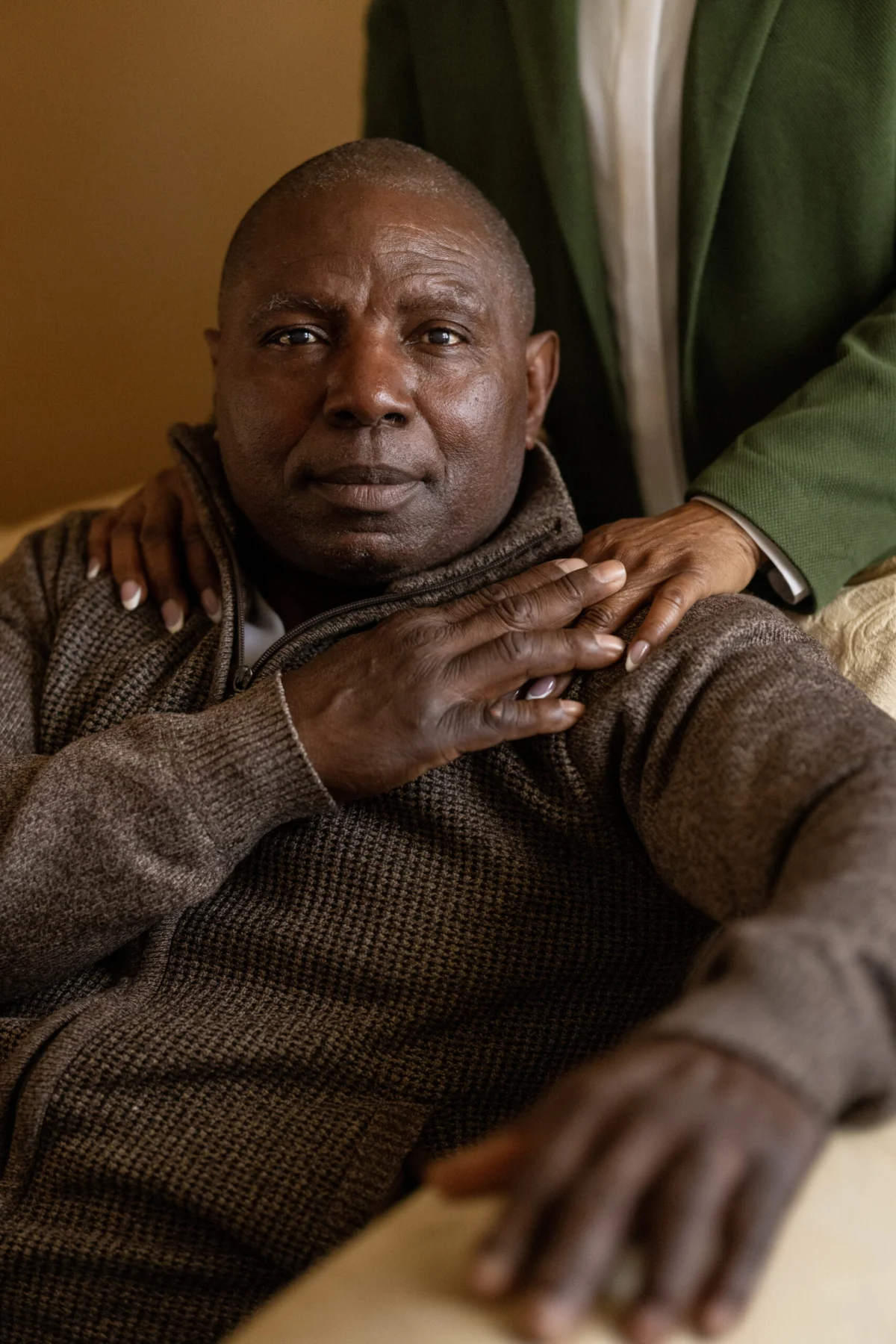
The upstate New York city of Syracuse finds itself mired in a complex legal and ethical quandary, wrestling with the lingering repercussions of a notorious miscarriage of justice that saw Anthony Broadwater wrongfully convicted of rape. Nearly five years after Onondaga County District Attorney William Fitzpatrick publicly denounced the decades-old prosecution of Broadwater for the rape of author Alice Sebold, leading to the overturning of his conviction, the county and city governments now stand in staunch opposition to Broadwater’s civil lawsuit seeking financial recompense for the 16 years he unjustly spent behind bars and the subsequent decades living as a registered sex offender. This internal conflict is further complicated by the dramatic shift in opinion of a key expert witness retained by the city and county, raising profound questions about legal ethics and the pursuit of justice.
The Broadwater Case: A Legacy of Flawed Justice
The saga began in the early hours of May 8, 1981, when Alice Sebold, then a freshman at Syracuse University, was brutally raped in a park near the campus. Despite initial police skepticism, a medical examination and physical evidence corroborated her harrowing account. Five months later, Sebold believed she spotted her assailant on a busy Syracuse street, leading to Anthony Broadwater’s arrest. This identification, however, would prove to be the first in a series of critical missteps that would ultimately dismantle the case against Broadwater, yet only after he had endured decades of suffering.
At a subsequent police lineup, Sebold initially identified a man other than Broadwater as her rapist. This crucial misidentification, a moment that should have halted the prosecution, instead became the nexus of alleged misconduct that Broadwater’s current lawsuit contends violated his constitutional rights. As current District Attorney William Fitzpatrick emphatically stated, "She didn’t pick out the wrong guy. She picked out the guy. She picked out the guy that she thought had raped her. And it wasn’t Anthony. Case is over. Stop." Yet, the prosecution, led by then-assistant district attorney Gail Uebelhoer, pressed on. Sebold eventually identified Broadwater as her rapist at trial, resulting in his conviction. He would spend 16 years in state prison and another 23 years burdened by the stigma and restrictions of being a registered sex offender.
The narrative surrounding Sebold’s post-lineup identification has been a focal point of scrutiny. Her 1999 memoir, "Lucky," suggested she was influenced by police officers and the prosecutor. In the book, she recounted searching the eyes of a uniformed officer for confirmation after her initial lineup pick, feeling a "wave of nausea," and becoming convinced she had "chosen the wrong man." However, her deposition testimony in June 2025 for the civil suit presented a subtly different account, where she claimed to have recognized her error independently before speaking with officers or Uebelhoer. Still, she conceded that "certain things happened that kept reinforcing" her belief that she had picked the wrong man, including a detective’s look of disappointment and Uebelhoer’s remarks. These distinctions are pivotal: if police or prosecutors influenced Sebold’s identification, it could establish prosecutorial misconduct, especially given the failure to pause the case or investigate further after the initial misidentification.
According to "Lucky," Uebelhoer had Sebold write an affidavit explaining her lineup choice, stating the men looked "almost identical" and that the man she chose was looking at her. Uebelhoer then reportedly suggested Sebold had been duped by Broadwater, who allegedly requested a similar-looking prisoner be included in the lineup, claiming, "He uses that friend or that friend uses him, in every lineup they do." Both Broadwater and the other man have maintained they had never been in a lineup before. Uebelhoer, who declined an interview with ProPublica, testified in a 2025 deposition that she had little memory of the Broadwater case, a common defense in cases involving historical events.
A Chronology of Injustice, Exoneration, and Ongoing Legal Battles
- May 8, 1981: Alice Sebold is raped near Syracuse University.
- October 1981: Sebold identifies Anthony Broadwater on the street, leading to his arrest.
- Early 1982: Pre-trial lineup where Sebold initially misidentifies another man. Allegations of police and prosecutorial influence emerge.
- February 1982: Broadwater is convicted, largely based on Sebold’s in-court identification, and sentenced to 16 years to life.
- 1982-1998: Broadwater serves his prison sentence.
- 1999: Alice Sebold publishes her memoir, "Lucky," detailing her rape and Broadwater’s conviction, hinting at post-lineup influence. The book becomes a bestseller.
- Early 2020s: A film adaptation of "Lucky" begins production. During this process, the film’s executive producer, Timothy Mucciante, becomes suspicious of the narrative and hires a private investigator, leading to a re-examination of the case.
- September 2021: Broadwater’s conviction is vacated by Judge Gordon Cuffy in Onondaga County Court, with the support of DA William Fitzpatrick, citing new evidence and a flawed original prosecution. Broadwater is officially exonerated.
- March 2023: The State of New York agrees to a $5.5 million settlement with Broadwater for his wrongful imprisonment.
- August 2024: Bennett Gershman, a renowned legal ethics expert, tells a reporter that the Broadwater prosecution was "tyranny" and "the most heinous kind of prosecutorial misconduct."
- June 2025: Alice Sebold gives her deposition testimony in Broadwater’s civil suit against the city and county, offering a nuanced account of the post-lineup events.
- December 2025: Gershman files an expert report on behalf of the city and county, asserting that the city’s prosecutors "did not engage in misconduct" in the Broadwater case.
- Current: Broadwater’s civil lawsuit against the city of Syracuse and Onondaga County remains ongoing, with the expert witness’s contradictory statements now a central point of contention.
The Expert’s Shifting Sands: Bennett Gershman’s Contradictory Positions
At the heart of the current legal imbroglio is Pace University law professor Bennett Gershman, widely recognized as one of the nation’s foremost experts on prosecutorial misconduct, having authored the seminal textbook on the subject. His extensive work has consistently warned against the dangers of eyewitness identifications, identifying them as "the largest single source of wrongful convictions." Given his expertise, his initial reaction to the Broadwater case, after reviewing trial transcripts and motions to vacate, was one of profound outrage. In August 2024, he told a reporter he had never witnessed anything comparable in his 60-year legal career. "I can’t think of a case where a prosecutor has so clearly manipulated the witness into testifying against the person accused of a crime," he declared, adding, "I haven’t seen anything so blatant; so grotesque as what I see here… ‘Misconduct’ is kind of glib in this case. It’s so much worse than plain misconduct. This is tyranny."
However, just over a year later, in December 2025, Gershman, now retained as a paid expert for the city and county in Broadwater’s civil suit, filed a report that dramatically contradicted his earlier condemnation. In this official capacity, he asserted that Uebelhoer had merely "expressed her opinions" about the lineup and was under no obligation to disclose her statements to the defense. He concluded that she "behaved properly and professionally, and there is nothing in the record that could remotely be used to undermine her integrity and professionalism."

When confronted about this stark reversal, Gershman offered several explanations. He initially claimed to have known "absolutely nothing about the case" during his first conversation with the reporter and had no recollection of reading the trial transcript, though he had been provided it. He also noted he hadn’t read Sebold’s memoir at that time. He stated his thinking "evolved" after delving deeper into the case, particularly after Sebold’s 2025 deposition testimony became available. He emphasized that Sebold’s claim of independently recognizing her erroneous lineup pick was crucial, leading him to dismiss the memoir’s account and downplay ambiguous parts of her deposition. In his current view, Uebelhoer’s remarks were "totally, almost, gratuitous" and "didn’t have any bearing on her identification or the verdict," because Sebold was questioned about her botched identification at trial.
Yet, in a further twist, Gershman unprompted called the reporter hours after their recent interview, offering another "zigzag" in his position. He now conceded that Uebelhoer did commit misconduct, but that it "hadn’t affected the outcome." He then qualified his report’s explicit statement of "no misconduct," stating, "The prosecutors did not engage in misconduct, as I see it, which prejudiced the defendant’s constitutional rights. That’s what I intended to say." He summarized his nuanced (and arguably contradictory) stance: "She shouldn’t have said what she said, but it didn’t matter." He further referred to the detective’s and prosecutor’s statements as "irrelevant and incompetent" deeper in his report.
Gershman stressed that his role as an expert was to assess legality, not ethics. He was tasked with determining whether Uebelhoer’s remarks constituted "Brady evidence"—favorable evidence that prosecutors are constitutionally required to disclose to the defense—and therefore needed to be disclosed before trial. He concluded they did not. "I don’t do this for the money," he testified in his deposition, despite being paid $10,000 for the assignment, claiming his interest lay in education and the work itself.
Ethical Implications and Credibility Concerns
The dramatic shift in Professor Gershman’s expert opinion has drawn sharp criticism from legal ethics specialists. Stephen Gillers, an emeritus professor and ethics expert at New York University School of Law, acknowledged that "it’s not unethical to change your mind." However, he added, Gershman’s reversal is "an embarrassment and it’s going to undermine his credibility going forward." Gillers highlighted the potential impact on a jury, who might reasonably "wonder what he truly believes."
Rebecca Roiphe, a professor at New York Law School specializing in criminal law and ethics, echoed these concerns, calling it "odd" that Gershman would "be willing to give such a strongly worded comment and then take a position as an expert on behalf of one of the parties. That in itself is problematic. It raises concerns." Roiphe distinguished between the role of a neutral commentator for a news story and a partisan expert in a legal case, arguing that conflating the two can lead to confusion and ethical dilemmas. "I think it gets confused if you do both," she remarked, suggesting that the inherent partisan aspect of expert testimony clashes with the presumed neutrality of a public commentator.
These observations underscore a broader issue in the legal system regarding expert witnesses. While lawyers routinely retain experts, a public, recorded reversal of such magnitude is rare and almost certainly guarantees intense scrutiny in court. Should Broadwater’s civil suit proceed to trial, Gershman will face rigorous cross-examination, where the challenge will be to convince a jury that his latest, more favorable interpretation of events for the city and county is more credible than his earlier, unequivocally damning assessment of prosecutorial conduct.
The Ongoing Battle for Reparations and Systemic Accountability
Broadwater’s attorneys contend that the detective and prosecutor engaged in deliberate misconduct by making "false and highly suggestive statements to [Sebold] that led her to identify Mr. Broadwater in court," and then compounded this by withholding these critical statements from the defense, thereby undermining his right to a fair trial. The city of Syracuse and Onondaga County, in contrast to the State of New York which settled Broadwater’s claim for $5.5 million in March 2023, have thus far resisted his claims, relying on expert testimony like Gershman’s to argue against malicious prosecution and constitutional rights violations.
This ongoing litigation highlights the persistent struggle for accountability in cases of wrongful conviction. While the criminal justice system, through DA Fitzpatrick, acknowledged the severe injustice suffered by Broadwater, the civil authorities are now tasked with defending the actions of their predecessors, creating a paradoxical scenario where different arms of the same government hold conflicting views on the same historical events.
Beyond Broadwater’s individual quest for justice, this case resonates with broader implications for criminal justice reform. A previous ProPublica investigation into the original criminal case highlighted multiple lapses in Broadwater’s prosecution and uncovered a systemic failure within the Syracuse criminal justice system at the time. This allowed one or more serial rapists, whose assaults often bore striking similarities to Sebold’s, to continue their crimes for years, suggesting that the flawed focus on Broadwater diverted resources and attention from the true perpetrator(s). The Anthony Broadwater case serves as a stark reminder of the profound human cost of wrongful convictions, the critical importance of ethical conduct by legal professionals, and the enduring need for vigilance and transparency in the pursuit of justice. The outcome of his civil suit, particularly in light of the expert witness’s evolving narrative, will undoubtedly set a precedent for future cases involving historical prosecutorial actions and the long road to reparations for those unjustly imprisoned.


 Jia Lissa
 Joko Widodo
 Eva Lovia

 Pevita Pearce