
 Jia Lissa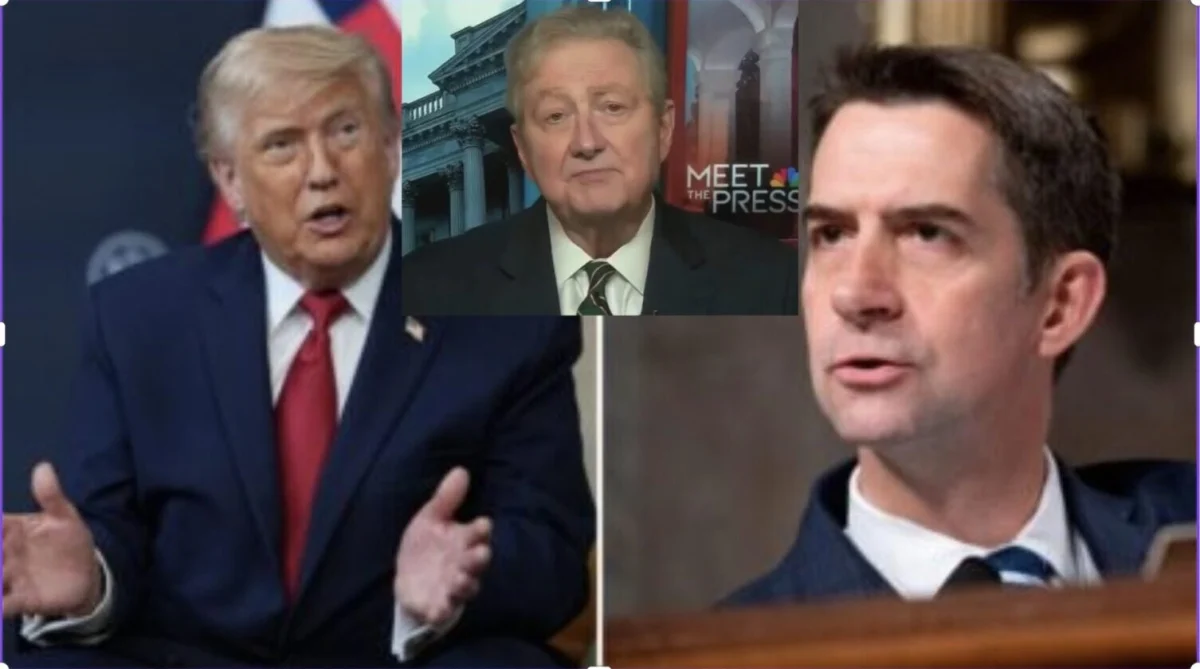
The political landscape within the Republican Party faced a moment of internal friction on Sunday as United States Senator John Kennedy of Louisiana addressed the recent actions of former President Donald Trump. During an appearance on NBC News’s Meet the Press, Kennedy responded to the President’s decision to publicly disclose the personal cellular telephone number of Senator Tom Cotton, a Republican from Arkansas. The incident, which stems from a legislative disagreement regarding the permanence of Daylight Savings Time, has sparked a broader conversation about decorum, party unity, and the personal security of elected officials as the 2026 midterm elections approach.
The controversy began on Saturday when Donald Trump utilized his social media platform, Truth Social, to target Senator Cotton. The former President expressed frustration over Cotton’s reported role in stalling the Sunshine Protection Act, a bill aimed at ending the biannual tradition of changing clocks. Trump’s post included Cotton’s direct mobile number and an exhortation for his followers to contact the Senator to demand a vote. The post read: “Call Tom on his cellphone at, 479-453-0533, and let him know. ‘The Sunshine Protection Act’ was passed in the House by a Vote of 308 to 117. HAVE THE SENATE VOTE, NOW!”
The Kennedy Response and the Zero to A-Hole Commentary
During his interview with Meet the Press moderator Kristen Welker, Senator Kennedy, known for his idiosyncratic and often colorful rhetorical style, did not shy away from criticizing the President’s tactics. While Kennedy maintained a level of personal cordiality by referring to Trump as “my friend,” he was blunt regarding the escalation of the dispute. Kennedy characterized the President’s behavior as “tempestuous,” a term reflecting a volatile or turbulent nature.
The most striking moment of the interview occurred when Kennedy described the speed with which Trump can shift from a standard political posture to one of open hostility. Kennedy remarked that the President “can go from zero to a-hole in about three seconds.” This assessment was delivered in Kennedy’s signature dry tone, highlighting the Louisiana Senator’s belief that while Trump “exists loudly,” the decision to dox a sitting colleague was counterproductive and inappropriate for the gravity of the legislative process.
Kennedy further defended Senator Cotton, describing him as a “rock star senator” and suggesting that the public disclosure of his private contact information would do little to influence Cotton’s legislative stance. Kennedy’s critique underscores a growing tension among Senate Republicans who, while often aligned with Trump’s policy goals, remain wary of the personal vitriol and unconventional methods he employs against members of his own party.
The Legislative Backdrop: The Sunshine Protection Act
The catalyst for this specific confrontation is the Sunshine Protection Act, a piece of legislation that has garnered significant bipartisan support but has faced procedural hurdles for several years. The bill seeks to make Daylight Savings Time permanent, thereby eliminating the “fall back” and “spring forward” adjustments that occur in most U.S. states. Proponents of the bill argue that permanent daylight savings would reduce seasonal depression, lower energy consumption, and provide more afternoon light for outdoor activities and commerce.
As noted in Trump’s social media post, the House of Representatives recently passed the measure with a substantial majority of 308 to 117, reflecting a rare moment of cross-aisle agreement in a polarized chamber. However, the bill has encountered resistance in the Senate. Senator Tom Cotton has been identified as a primary obstacle, reportedly raising concerns about the impact of permanent daylight savings on morning safety—specifically for children waiting for school buses in the dark—and the agricultural sector.
This is not the first time the Sunshine Protection Act has caused a stir in the Senate. In 2022, the bill passed the upper chamber by unanimous consent, a move that surprised many observers and even some senators who later claimed they were not fully aware the vote was occurring. Since then, more rigorous scrutiny has been applied to the bill, with Cotton leading the charge for a more deliberative approach, much to the chagrin of the former President and other supporters of the change.
A History of Public Disclosures as a Political Weapon
The act of “doxxing”—the public release of private contact information with the intent to invite harassment or pressure—is a tactic Donald Trump has employed previously. In 2015, during the Republican primary cycle, Trump famously read out the personal cell phone number of Senator Lindsey Graham during a televised event in South Carolina. At the time, Graham was a vocal critic of Trump’s candidacy. The move forced Graham to change his number and served as an early indicator of Trump’s willingness to bypass traditional political norms in favor of direct, confrontational engagement with his opponents.
The current incident with Senator Cotton, however, is viewed by some analysts as distinct because Cotton has historically been one of Trump’s most reliable allies in the Senate. Unlike the 2015 incident with Graham, the dispute with Cotton is purely policy-driven rather than personal or electoral. The willingness of the former President to target a loyal partisan over a relatively minor legislative disagreement regarding time zones has raised questions about the stability of the GOP’s internal alliances.
Security Concerns and the Ethics of Doxxing
The disclosure of a senator’s personal phone number carries significant security implications. Members of Congress are frequently the targets of threats, and the Senate Sergeant at Arms has historically advised lawmakers to maintain strict confidentiality regarding their private contact information. By broadcasting Cotton’s number to millions of followers, Trump effectively bypassed the professional gatekeeping of the Senator’s office, exposing him to an unfiltered and potentially hostile volume of communication.
Legal and ethical experts have often debated the boundaries of political pressure versus harassment. While constituents have a right to contact their representatives, the targeted release of a private number is generally viewed as an attempt to overwhelm an individual’s ability to function personally and professionally. In the current climate of heightened political violence and harassment, such actions are often criticized by security professionals as unnecessarily provocative.
Impact on the 2026 Midterm Elections
The timing of this internal rift is particularly sensitive as the Republican Party prepares for the 2026 midterm elections. Kristen Welker’s questioning of Senator Kennedy touched upon this concern, asking how such public infighting benefits the party’s prospects. Kennedy’s response—that Daylight Savings Time does not hold “existential significance for the future of Western civilization”—suggested that the President is magnifying a minor issue at the expense of party cohesion.
The Republican strategy for 2026 relies on presenting a unified front against the current administration’s policies. However, the "zero to a-hole" comment from Kennedy highlights a persistent challenge for the GOP: managing the unpredictable nature of their most prominent figure. While Trump remains the de facto leader of the party, his tendency to alienate key legislative allies like Cotton could complicate the party’s ability to pass a coherent agenda should they maintain or expand their influence in Congress.
Broader Implications for GOP Governance
The friction between Trump and Cotton, mediated by Kennedy’s public commentary, illustrates the broader struggle for the soul of the Republican Party’s legislative wing. On one side is the populist, direct-action approach favored by Trump, which seeks to use social media and public pressure to bypass traditional Senate procedures. On the other side is the more institutionalist approach favored by senators like Cotton and Kennedy, who prioritize committee work, debate, and the protection of internal party relationships.
Senator Kennedy’s remarks serve as a bellwether for how institutionalist Republicans may choose to handle Trump’s outbursts moving forward. By using humor and a "friend-to-friend" tone to deliver a sharp rebuke, Kennedy attempted to neutralize the vitriol without completely breaking ties with the former President. Whether this strategy will be effective in de-escalating the situation remains to be seen.
As of Sunday afternoon, Senator Tom Cotton’s office has not released a formal statement regarding the disclosure of his phone number, though sources close to the Senator suggest that he remains focused on the policy merits of the Sunshine Protection Act rather than the social media provocations. The former President, meanwhile, has continued to use Truth Social to promote his preferred legislative outcomes, showing no signs of walking back his comments or the disclosure.
The incident remains a stark reminder of the volatile nature of modern American politics, where a disagreement over a century-old time-keeping tradition can lead to the public doxxing of a high-ranking official and a public assessment of a former President’s character by one of his own party’s most prominent senators. Moving forward, the GOP will have to navigate these "tempestuous" waters if they hope to maintain a functional legislative coalition in the face of internal and external pressures.


 Yuyun Lusiyani
 Ana Megawati
 Joko Widodo
 Eva Lovia
 Pevita Pearce