
 Jia Lissa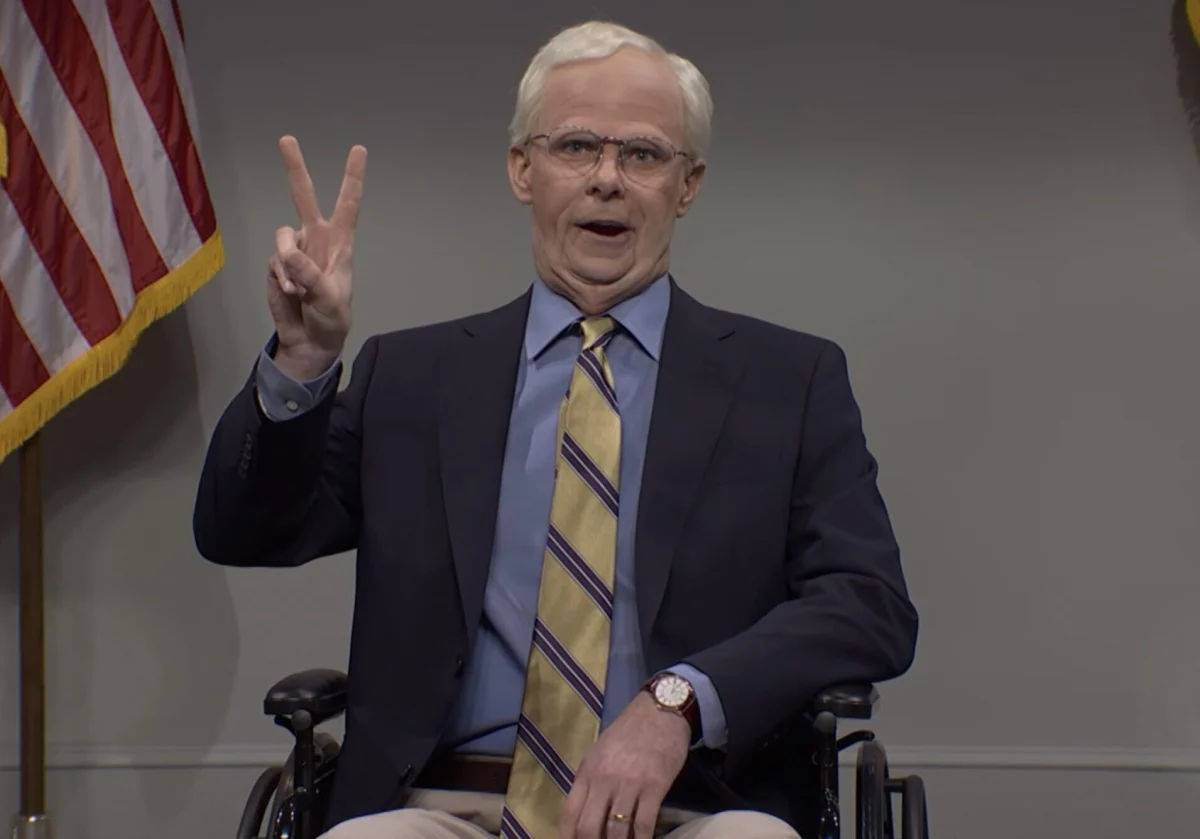
The long-running NBC sketch comedy series Saturday Night Live leveraged its latest cold open to provide a biting critique of the Republican Party’s current leadership and its roster of high-profile cabinet nominees. Set against the backdrop of a hypothetical campaign season with just four weeks remaining until a critical midterm vote, the seven-minute sketch targeted several prominent figures within the GOP, including Secretary of State nominee Marco Rubio, outgoing Senate Minority Leader Mitch McConnell, and the controversial pick for Secretary of Defense, Pete Hegseth. By utilizing a mix of physical comedy, linguistic satire, and pointed political commentary, the show aimed to highlight the internal tensions and public perception challenges currently facing the Republican establishment as it navigates a transition of power.
The Sketch Framework: A High-Stakes Ad Campaign
The sketch was set within the fictionalized headquarters of the Republican National Committee (RNC) in Washington, D.C. The premise involved a group of political consultants attempting to film a series of promotional advertisements intended to appeal to various demographics ahead of the November elections. This setting allowed the show’s writers to cycle through several key political figures, each portrayed by a member of the ensemble cast or a regular guest performer.
The production choice to frame the sketch around a "failing" ad campaign served as a narrative device to emphasize the perceived eccentricities or liabilities of the individuals being parodied. By showing the "behind-the-scenes" frustration of the consultants, the sketch amplified the satirical takes on the politicians’ public personas.
Marcello Hernández as Marco Rubio: A Linguistic Subversion
The first figure to take the stage was Senator Marco Rubio, portrayed by Marcello Hernández. In the sketch, Rubio is presented as the incoming Secretary of State, tasked with recording a message specifically tailored for Spanish-speaking voters. However, the humor derived from a disconnect between his spoken Spanish and the English subtitles provided for the audience.
While ostensibly delivering a standard GOP campaign message, the subtitles revealed a character who was secretly "trashing" President-elect Donald Trump. The fictionalized Rubio expressed frustration over being "tricked" into his role, lamenting the chaotic nature of foreign policy directives. The character’s dialogue touched upon the shifting focus between Venezuela and Iran, and eventually Canada, mocking the perceived unpredictability of the administration’s international agenda. A recurring gag involving Rubio’s complaints about the President’s repetitive diet—consisting solely of "hamburgers"—served to humanize the political friction while leaning into well-documented tropes regarding the President’s personal habits.
The Parody of Mitch McConnell’s "Freezing" Incidents
Following the Rubio segment, the sketch shifted focus to Senator Mitch McConnell, played by veteran cast member Mikey Day. The portrayal leaned heavily into physical comedy, referencing real-world concerns regarding the Kentucky senator’s health and recent public episodes of "freezing." In the sketch, McConnell is wheeled onto the set, appearing largely catatonic with his mouth agape.
The satire reached its peak when the character remained motionless for a full 20 seconds, only to eventually flash a peace sign without speaking. The comedic tension was built on the consultants’ attempts to get the Senator to deliver his lines, culminating in a meta-joke where McConnell attempted to say the show’s famous opening catchphrase, "Live from New York, it’s Saturday Night," prematurely. This segment highlighted the ongoing national conversation regarding the age and fitness of long-serving congressional leaders, a topic that has remained a fixture of political discourse throughout the 2024 election cycle.
Pete Hegseth and the "Anti-Woke" Military Narrative
Perhaps the most pointed segment of the cold open involved the portrayal of Pete Hegseth, the Fox News host and combat veteran nominated for Secretary of Defense. Played by Weekend Update co-anchor Colin Jost, the character of Hegseth entered the scene with a high-energy, aggressive persona, shotgunning a beer and addressing the staff with derogatory slang.
The sketch specifically spoofed Hegseth’s recent public statements regarding the military’s "woke" culture and his pledge to remove generals who support Diversity, Equity, and Inclusion (DEI) initiatives. Jost’s Hegseth performed a "slam poem" that distilled these complex policy debates into a series of rhyming barbs. The poem included lines such as "No DEI, no guy-on-guy" and "No Jills who became Joes," directly referencing the nominee’s stance on transgender service members and social programs within the Department of Defense.
This portion of the sketch reflected the real-world controversy surrounding Hegseth’s nomination. Critics have pointed to his lack of traditional administrative experience for such a massive department, while supporters praise his commitment to returning the military to what they describe as a "lethality-focused" mission. SNL’s take characterized this platform as a performance-based, populist movement rather than a standard policy shift.
James Austin Johnson’s Trump and the $5,000 Promise
The cold open concluded with James Austin Johnson’s widely acclaimed portrayal of Donald Trump. Johnson’s Trump addressed the "boning" the party was allegedly taking in the polls and offered a characteristically transactional solution. The character promised that if Republicans were to win the midterms, every adult American would receive a $5,000 payout.
The punchline of the segment—and the sketch—was the character’s admission that the promise was "not a bribe" because he had "no intention of following through on that promise." This commentary targeted the rhetorical style of the former President, which critics often describe as a blend of populism and hyperbole. The $5,000 figure was a direct reference to actual posts made by the President-elect on social media platforms like Truth Social, where he has floated various economic incentives for voters.
Real-World Context and Political Background
The timing of this sketch is significant, as it coincides with the transition period following the 2024 General Election and the announcement of various cabinet picks. The real-world Marco Rubio has indeed been tapped for Secretary of State, representing a significant shift from his "Never Trump" stance during the 2016 primary. Pete Hegseth’s nomination has been one of the most discussed of the transition, sparking debates across the political spectrum regarding the qualifications required to lead the Pentagon.
Furthermore, the parody of Mitch McConnell comes at a time when the Senator is preparing to step down from his long-held leadership position in the Senate. The "freezing" incidents referenced in the sketch occurred twice in 2023—once during a press conference at the U.S. Capitol in July and again during a gaggle with reporters in Covington, Kentucky, in August. While the Senator’s physician later cleared him for continued work, the images became viral moments that SNL has frequently revisited.
Chronology of Recent Political Satire on SNL
Saturday Night Live has a storied history of influencing public perception of political figures through its cold opens. This latest sketch follows a pattern established during the 2024 campaign:
- The Primary Season: Early sketches focused on the crowded GOP field and the eventual consolidation around Trump.
- The General Election: The show introduced Maya Rudolph’s portrayal of Vice President Kamala Harris and Dana Carvey’s take on President Joe Biden.
- The Post-Election Transition: Recent episodes have shifted focus toward the "new guard" of the GOP, including nominees like Hegseth, Rubio, and Matt Gaetz (who was also recently parodied).
Analysis of Implications
The use of satire in this context serves as more than just entertainment; it functions as a cultural barometer. When SNL targets specific policy stances—such as Hegseth’s opposition to DEI—it signals that these issues have moved from niche political debates into the broader public consciousness.
The portrayal of the $5,000 "bribe" highlights a recurring theme in political commentary regarding the transactional nature of modern campaigning. By framing the promise as an empty one, the show’s writers are tapping into a vein of cynicism regarding political manifestos and campaign pledges.
Additionally, the sketch underscores the generational divide within the GOP. The juxtaposition of the "frozen" McConnell (representing the old guard) with the high-energy, combative Hegseth (representing the new, media-savvy wing of the party) illustrates the ongoing transformation of the Republican identity.
Official Responses and Public Reception
While political figures parodied on SNL rarely issue formal statements in response to specific sketches, the "SNL effect" is well-documented in political science. Candidates often attempt to lean into the parody to appear "in on the joke," as seen when Donald Trump hosted the show in 2015 or when Nikki Haley made a cameo during the 2024 primaries.
However, the tone of this particular cold open was notably sharper than some of the more whimsical portrayals of the past. The focus on specific policy rhetoric (Hegseth) and health concerns (McConnell) suggests a move toward more pointed social commentary. Public reaction on social media platforms following the broadcast was divided along predictable partisan lines, with some praising the show for "speaking truth to power" and others accusing it of "left-wing bias."
Conclusion: Satire in a Polarized Era
As the United States moves toward a new administration and the subsequent midterm cycles, programs like Saturday Night Live continue to play a pivotal role in the American political landscape. By distilling complex news cycles into digestible, humorous segments, the show provides a shared cultural touchstone, even in a deeply polarized environment. This latest cold open, with its focus on the "new roster" of the GOP, suggests that the next four years will provide ample material for the show’s brand of topical humor, as it continues to hold a mirror up to the nation’s political leaders.

 Yuyun Lusiyani
 Joko Widodo
 Eva Lovia
 Pevita Pearce
 admin
admin