
 Yuyun Lusiyani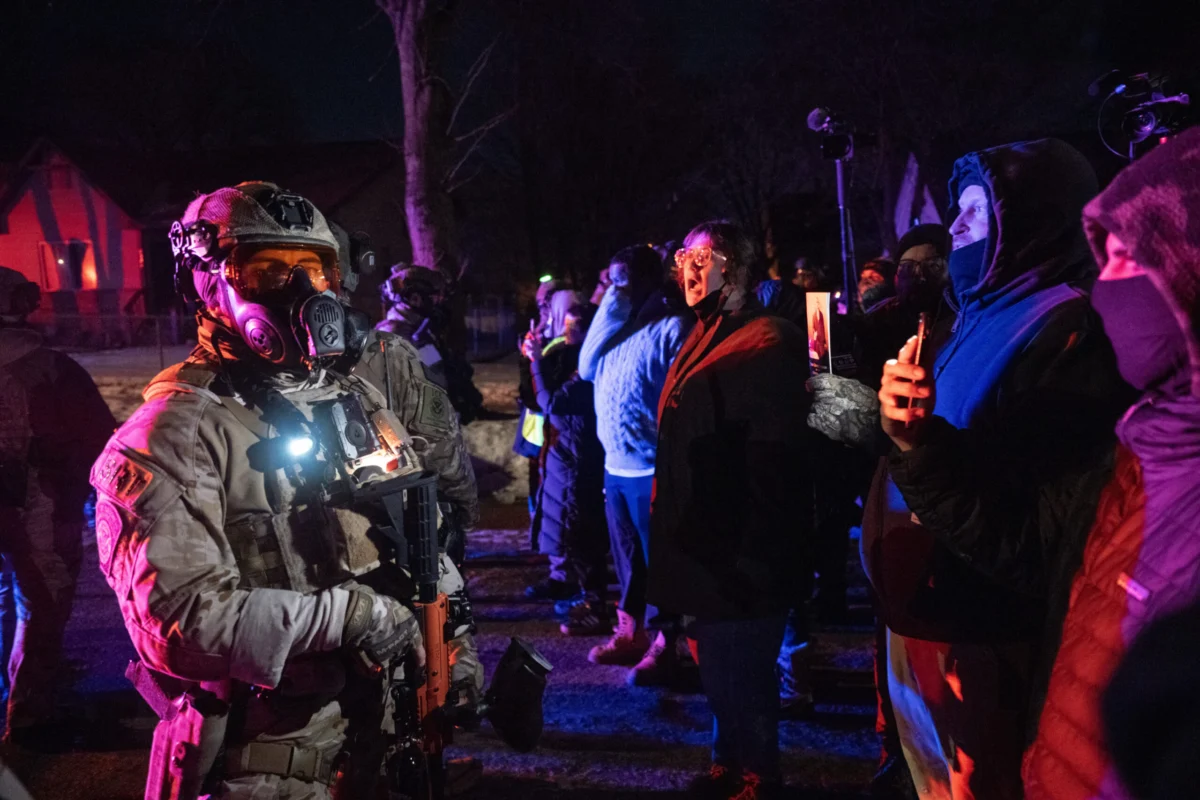
In a move that has ignited significant controversy and raised serious questions about federal accountability, the Department of Justice (DOJ) in Washington, D.C., has reportedly overruled its own federal prosecutor, quashing plans to pursue robust civil rights charges against an Immigration and Customs Enforcement (ICE) agent accused of shooting a Venezuelan immigrant and subsequently lying about the incident. This decision, made despite what the lead federal prosecutor described as "the strongest possible objections," narrows the scope of potential federal charges to "False Statements," a significantly less severe offense than the "deprivation of rights under color of law" initially sought. The development has sent ripples through legal circles and immigrant advocacy communities, drawing comparisons to past instances where federal authorities have been perceived as shielding agents from serious misconduct allegations.
The core of the controversy centers on 52-year-old ICE agent Christian Castro, who is alleged to have shot Julio Cesar Sosa-Celis in the leg in Minneapolis in January during "Operation Metro Surge." This operation was a highly criticized immigration enforcement blitz launched by the Trump administration, which deployed thousands of federal agents into various states, often leading to heightened tensions and increased scrutiny of enforcement tactics. The incident involving Sosa-Celis was one of three shootings by immigration agents in Minneapolis during this period, with the other two tragically resulting in fatalities. The implications of the DOJ’s decision extend beyond this individual case, touching upon the broader framework of federal law enforcement oversight, the independence of prosecutorial discretion, and the pursuit of justice for victims of alleged federal agent misconduct.
The Minneapolis Incident: A Chronology of Events
The fateful encounter unfolded on January 14, when agent Christian Castro and another ICE agent initiated a traffic stop involving Alfredo Aljorna, an immigrant from Venezuela. According to state charging documents and other court records, Aljorna fled the stop, running towards his residence, which he shared with Sosa-Celis. After a brief struggle, both men managed to enter the home. It was at this critical juncture that Castro allegedly fired through the closed door, "knowing [the home] was occupied by several people." A witness later corroborated this, stating that two children were present inside the house when Castro discharged his weapon. Sosa-Celis sustained a gunshot wound to the leg.
Following the shooting, ICE agents deployed tear gas into the residence, subsequently taking both Aljorna, Sosa-Celis, and their partners into custody. The initial narrative provided by the Department of Homeland Security (DHS) painted a vastly different picture. DHS initially claimed that Castro and his fellow agent were ambushed by the men, alleging they were beaten with a shovel or broomstick, leading Castro to fear for his life and fire in self-defense. In a public statement, DHS controversially labeled Sosa-Celis and Aljorna as "violent criminal illegal aliens," and federal prosecutors initially charged them with assault, reinforcing the agency’s narrative of agent endangerment.
However, this official account began to unravel in the subsequent weeks. Just a month after the incident, federal prosecutors dramatically dropped the assault charges against both Sosa-Celis and Aljorna. This reversal was prompted by compelling video evidence that directly contradicted the agents’ sworn testimony. In a rare admission of potential wrongdoing by its officers, then-acting ICE director Todd Lyons issued a statement acknowledging that "Video evidence has revealed the sworn testimony of the two agents appeared to be false." This stark admission fundamentally shifted the official understanding of the events, laying bare the alleged fabrication by the agents involved and paving the way for potential charges against Castro.
The Federal Prosecution’s Battle and Internal DOJ Conflict
In the wake of the altered narrative and compelling video evidence, federal prosecutors in Minnesota began preparing to charge Christian Castro with "deprivation of rights under color of law." This specific civil rights charge, codified under 18 U.S.C. § 242, is a potent legal tool designed to hold government officials, including law enforcement officers, accountable for abusing their authority. It carries the weight of serious penalties, including substantial prison sentences, particularly when bodily injury or death results from the alleged misconduct. As multiple sources familiar with the case confirmed, these charges are notably "similar to the ones leveled against Minneapolis police officers accused in George Floyd’s killing," underscoring their gravity and the Justice Department’s historical commitment to upholding civil rights against official overreach.
However, this path to potentially significant accountability was abruptly curtailed. Late on a Tuesday, Matthew Evans, the assistant U.S. attorney in Minnesota who had been spearheading the case, conveyed a startling update to lawyers representing Sosa-Celis and other victims. According to an email reviewed by ProPublica, Evans informed them to prepare for Castro to be charged "only with False Statements." This charge, typically brought under 18 U.S.C. § 1001, concerns knowingly and willfully making materially false statements to federal authorities. While a serious offense, it generally carries a far less severe punishment compared to civil rights violations involving alleged assault or excessive force.
Evans’s email was remarkably candid, offering an unprecedented glimpse into the internal deliberations and conflicts within the Justice Department. He explicitly stated, "This is being directed by the Main Justice and the US Attorney." In a powerful expression of his professional conviction, Evans continued, "I objected in the strongest possible terms and fought it as hard as I could. It wasn’t enough." He further indicated that the false statement charges could be filed soon and would likely be under seal, a common practice in sensitive federal investigations. Evans concluded his poignant message by writing, "It has been an honor and a privilege to try to get justice for your clients," a sentiment that underscored his personal commitment to the case despite the ultimate directive.
Broader Context: Operation Metro Surge and Federal Immigration Enforcement
The incident involving Agent Castro and Sosa-Celis did not occur in isolation but was a direct consequence of the Trump administration’s "Operation Metro Surge." Launched with the stated aim of bolstering immigration enforcement in "sanctuary cities" and other urban areas, this operation deployed thousands of federal agents from various agencies, including ICE and CBP, into major metropolitan centers across the United States. Its primary objective was to increase arrests and deportations of undocumented immigrants, often targeting individuals with minor infractions or no criminal record beyond their immigration status.
"Operation Metro Surge" was highly controversial from its inception. Critics argued that it militarized immigration enforcement, encroached upon local jurisdiction, and fostered an environment of fear within immigrant communities. The deployment of heavily armed federal agents, often operating without clear local oversight, led to numerous reports of aggressive tactics and confrontations. The three shootings by immigration agents in Minneapolis during this period, including the one involving Castro, tragically highlight the potential for escalation and violence inherent in such operations. These incidents intensified calls for greater transparency and accountability for federal agents operating within civilian populations, particularly when state and local authorities have limited jurisdiction over their actions. The ProPublica analysis referenced in the original report further underscores a concerning pattern: in almost every instance of immigration agents shooting people under the Trump administration, officials quickly blamed the injured or deceased, and federal or local police frequently declined to investigate the agents, thereby minimizing scrutiny of federal actions.
State-Level Accountability and the Extradition Saga
While the federal prosecution’s path narrowed, Agent Christian Castro continues to face significant legal challenges at the state level. Hennepin County in Minnesota has filed multiple felony charges against him, including assault with a dangerous weapon, a serious offense under state law. However, securing Castro’s presence in Minnesota to face these charges has been a protracted and politically charged battle.
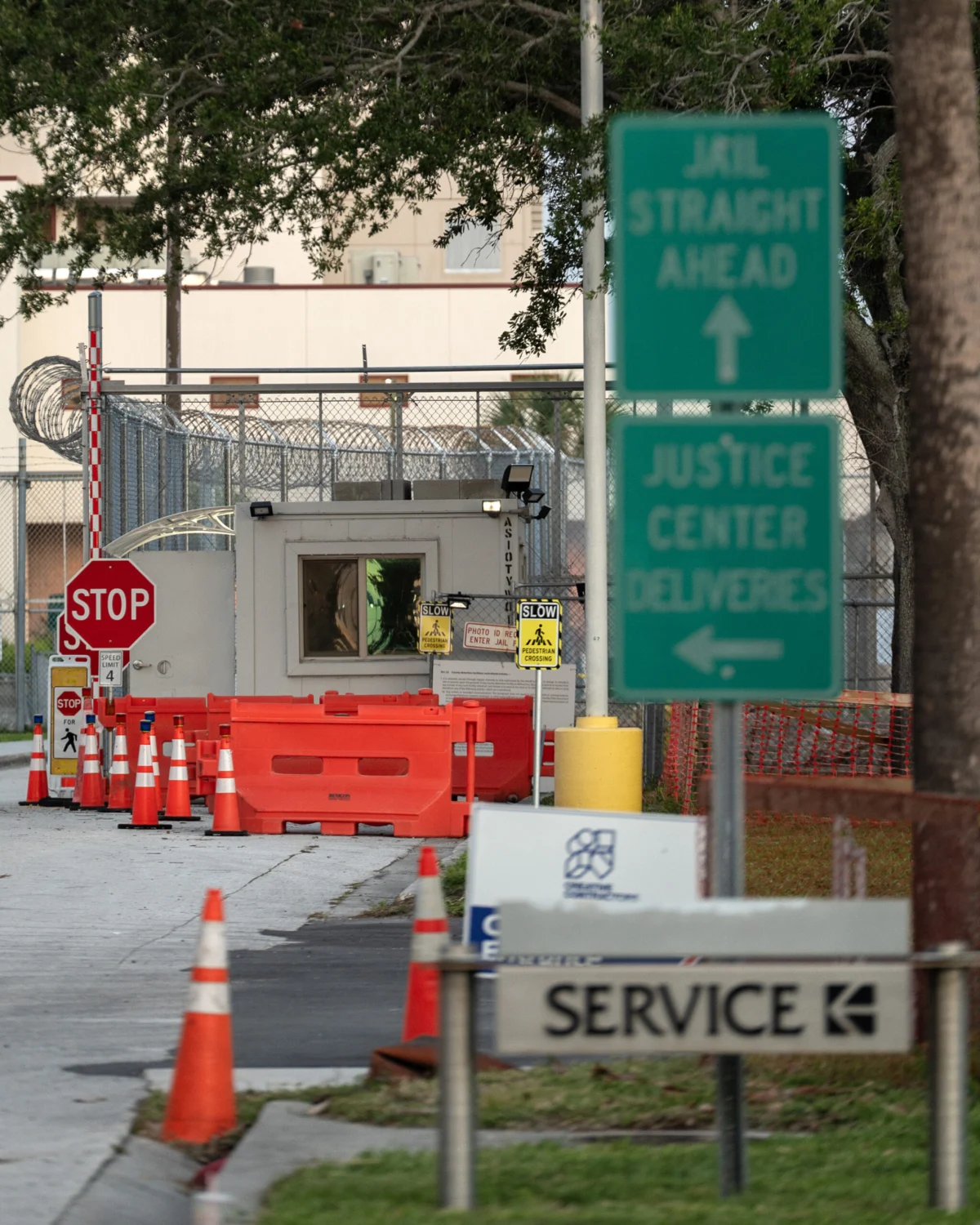
After the Minneapolis incident, Castro reportedly left Minnesota and returned to Texas. Minnesota officials, seeking to ensure justice for Sosa-Celis, formally requested that Texas extradite Castro to face the state felony charges. This request, however, was met with staunch refusal from Texas Governor Greg Abbott. Citing various legal and political arguments, Governor Abbott declined to cooperate with Minnesota’s extradition efforts, effectively creating a jurisdictional standoff that prevented Castro from being brought back to Minnesota. This refusal sparked outrage among Minnesota officials and legal experts, who viewed it as an obstruction of justice and an affront to the principle of interstate cooperation in law enforcement. Castro was held for 90 days in jail during this protracted legal and political battle between the two states, but he was ultimately released last week, leaving the state prosecution in a precarious position regarding his physical presence in Minnesota. Hennepin County Attorney Mary Moriarty, who is leading the state’s prosecution, has publicly expressed her deep concern that Castro may now flee to Mexico, further complicating efforts to hold him accountable.
DOJ’s Stance, Historical Precedent, and Implications for Justice
The Justice Department’s official response to the controversy was guarded. A DOJ official stated that civil rights charges require consultation with the civil rights division in Washington, and "any charging decisions that come out of such investigations are collaborative and deliberative and adhere to the facts and law of that specific case and controversy." The official further claimed that the agency "has not yet reached a conclusion on this matter and will never rush an investigative process and the thorough review of all evidence." This statement, however, stands in stark contrast to the explicit account provided by Assistant U.S. Attorney Matthew Evans, who detailed a directive from "Main Justice" overriding his "strongest possible objections."
Hennepin County Attorney Mary Moriarty, reached for comment, critically compared the Justice Department’s decision to overrule Evans to its actions in another high-profile case involving ICE agents. She cited the killing of Renee Good by ICE agent Jonathan Ross, which occurred just a week before the Sosa-Celis shooting. In that incident, agents alleged Good drove toward them, but video evidence revealed her vehicle’s wheels were turned away when she was shot. Federal authorities initially agreed to a joint investigation into Good’s death, but Justice Department officials later refused to cooperate with state police, deeming any federal review of the fatal shooting unnecessary. Moriarty’s comparison suggests a pattern of federal reluctance to fully cooperate with state investigations or to pursue aggressive charges against its own agents, particularly under the previous administration.
Indeed, the decision to narrow the charges against Agent Castro aligns with broader concerns about the Justice Department’s approach to civil rights enforcement under the Trump administration. During this period, the DOJ’s civil rights division was widely reported to have been thinned, and it notably scaled back or dropped several Biden-era oversight initiatives aimed at reforming law enforcement agencies. This perceived shift fueled criticisms that the department was operating more in support of the President’s political agenda – which heavily emphasized aggressive immigration enforcement – than in its traditional role of preserving the rule of law and ensuring accountability across all levels of government, including federal agencies. The ProPublica analysis, highlighting how the Trump administration consistently blamed victims in immigration agent shootings and how federal or local police often declined to investigate agents, further strengthens the argument that a culture of minimal accountability was prevalent.
The implications of this decision are far-reaching. For Julio Cesar Sosa-Celis and his legal team, the narrowing of federal charges from a serious civil rights violation to "False Statements" represents a significant setback in their pursuit of comprehensive justice. While a conviction for false statements would still hold Castro accountable for dishonesty, it fundamentally alters the narrative from an alleged abuse of power and potentially excessive force to one of mere deception. This distinction is critical in public perception and in setting precedents for federal agent conduct.
Furthermore, the public revelation of an internal conflict, where a dedicated federal prosecutor’s "strongest possible objections" were overridden by higher authorities, risks eroding public trust in the independence and integrity of the Justice Department. It fuels concerns that political considerations, rather than purely legal and factual assessments, may influence high-profile prosecutorial decisions, especially concerning federal agents operating under controversial mandates. This decision could be interpreted by some as a tacit message that federal agents, particularly those involved in immigration enforcement, may operate with a reduced risk of facing the most severe federal charges for alleged misconduct.
As the state-level prosecution against Christian Castro continues its challenging course in Minnesota, potentially without Castro’s physical presence, and as the federal "False Statements" charges remain under seal, the case stands as a stark reminder of the complex and often contentious landscape of law enforcement accountability, particularly when federal jurisdiction, political influence, and deeply held principles of justice collide. The pursuit of justice for Julio Cesar Sosa-Celis and the broader implications for federal oversight of agents remain deeply uncertain.



 Joko Widodo
 admin
admin
 Lina Irawan
 Jia Lissa
 Pevita Pearce