
 Ana Megawati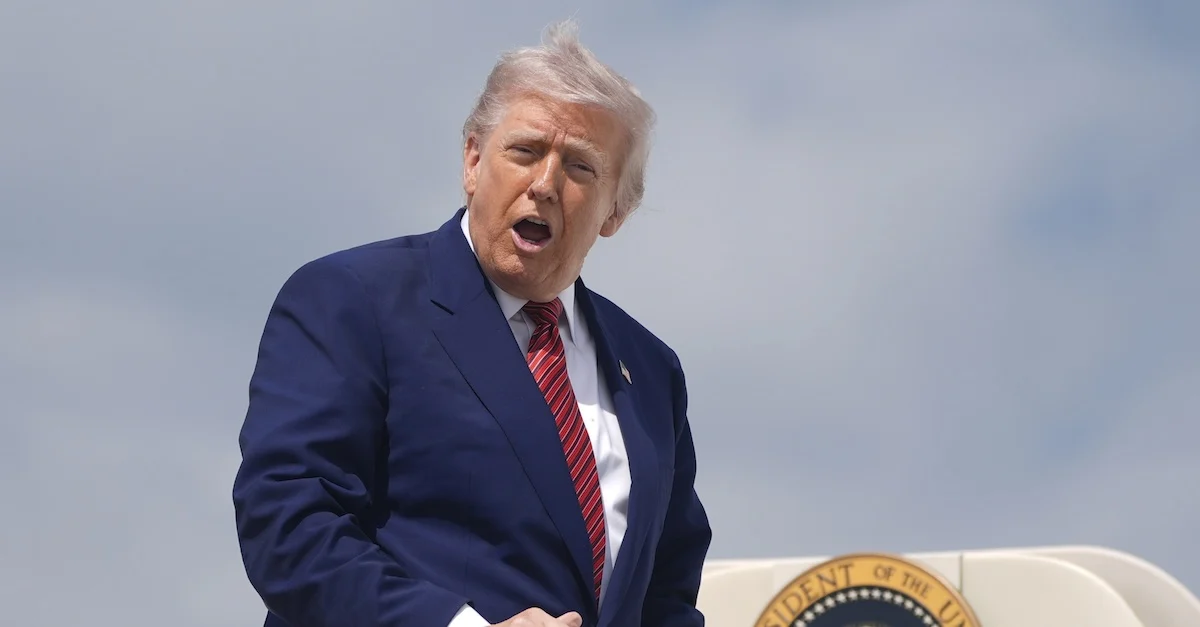
A man from Illinois has been formally charged with transmitting threats in interstate commerce after allegedly guaranteeing he would assassinate President Donald Trump on the White House lawn using a "heavy caliber" anti-materiel sniper rifle, and further threatening President Trump’s son, Barron Trump, along with U.S. Secret Service agents. Michael Kovco, 29, of Chicago, stands accused of sending a series of menacing messages to official government websites, including those of the Central Intelligence Agency (CIA) and the White House, detailing elaborate plots for deadly attacks. The gravity of these alleged communications has prompted swift federal intervention, underscoring the relentless vigilance required to protect national leaders and their families.
Unraveling a Pattern of Escalating Threats
The federal complaint filed by the Justice Department paints a disturbing picture of escalating aggression and explicit threats. According to court documents, Kovco’s alleged communications began in August 2025 and continued through March 2026, demonstrating a sustained intent to inflict harm. These messages were not vague allusions but detailed declarations of intent, specifying targets, methods, and even desired outcomes.
One of the earliest documented threats, sent to the CIA on August 15, 2025, allegedly stated, "Please make a clear line of fire from the white house to marine one on the presidents next departure from the garden." In this communication, Kovco reportedly guaranteed his intent to "assassinate President Donald Trump on the White House lawn with a ‘heavy caliber’ anti-materiel sniper rifle," explicitly informing the agency, "I am plotting to kill the president … in an ambush." The chilling specificity of mentioning "Marine One" — the presidential helicopter — and the White House South Lawn, a highly secured area, indicated a concerning level of focus on presidential movements and security protocols.
Targeting the President’s Son and Secret Service
The alleged threats intensified and broadened in scope. On March 17, 2026, Kovco reportedly sent another alarming message to the White House. This communication directly targeted President Trump’s youngest son, Barron Trump, stating, "I’m going to take a serrated knife and saw Barron Trump’s head off after I successfully stake out the president of the united states with a high caliber sniper rifle permanently aimed at the White House Lawn from a local vantage point." This alleged threat against a minor child of the President represents a particularly heinous escalation, crossing a line often considered sacrosanct in political discourse, regardless of partisan divides.
In the same message, Kovco allegedly reiterated his primary objective, stating, "I have absolutely every intent of plotting and carrying out an active assassination attempt against the President of the United States of America. This is a serious threat." The explicit acknowledgment of the seriousness of his intent further underscores the credible nature with which federal authorities would perceive such declarations.
Two days later, on March 19, Kovco allegedly continued his tirade, referring to himself as an "admiral." In this series of messages, he reportedly outlined plans to acquire more weaponry and construct explosive devices. "I intend to purchase a high caliber assault rifle with a large magazine and assemble several improvised explosive devices within my home … and leave them in several key places around Washington DC until I get justice for my rape from the US government," Kovco allegedly wrote. This statement introduces an alleged grievance as a motive, and the mention of IEDs in the nation’s capital added another layer of extreme danger to his purported plans.
Beyond the President and his son, Kovco also allegedly threatened the very agents tasked with their protection. The Department of Justice asserts that Kovco threatened to "hunt" any Secret Service agent who came to his door. "He better not tell me any identifying information at all like first or last name or pet name or address or place of work because im going to buy a small concealable firearm and go shoot up his place of work immediately if he tells me anything," Kovco allegedly stated in his March 19 messages to the White House. These threats against law enforcement personnel are particularly alarming, demonstrating a disregard for authority and a potential willingness to engage in direct confrontation.
The Secret Service’s Immediate Response and Investigative Process
The United States Secret Service, a federal law enforcement agency under the Department of Homeland Security, has a dual mission: protecting national leaders and investigating financial crimes. Its protective mission is paramount, extending to the President, Vice President, their immediate families, former Presidents and their spouses, visiting foreign heads of state, and other designated individuals. Any threat, credible or not, against a protectee is investigated with the utmost urgency.
The messages sent by Kovco immediately triggered a comprehensive investigation. The Secret Service’s protocols dictate that all threats are taken seriously and rapidly assessed. The agency’s intelligence division would have analyzed the content, language, and any associated metadata to gauge the credibility and potential danger. The inclusion of Kovco’s personal contact information, including his phone number and email address, with the alleged messages proved crucial in rapidly identifying him. This detail allowed federal authorities to link the digital threats directly to an individual, bypassing the often-complex process of anonymous online tracing.
Just two hours before Kovco allegedly sent his March 19 threats targeting Secret Service agents and outlining plans for IEDs, a federal agent and two Secret Service task force officers had visited his residence in Chicago. This visit was specifically to inquire about the threats he had made on March 17, which included the explicit threat against Barron Trump. The timing suggests that Kovco’s subsequent messages were a defiant and escalating response to the Secret Service’s direct engagement, indicating a continued and potentially heightened intent. This direct interaction likely provided investigators with valuable on-the-ground intelligence, further informing their assessment of the threat.
The Significance of the Weapons Mentioned
The types of weapons allegedly mentioned by Kovco underscore the seriousness of his purported intentions and demonstrate a disturbing level of research or fantasy.
An anti-materiel rifle is a large-caliber, long-range firearm specifically designed to destroy military equipment such as vehicles, radar units, or bunkers, rather than being primarily aimed at personnel. These rifles typically fire rounds like .50 BMG or larger, capable of tremendous kinetic energy and range. Their mention in a plot to assassinate a president suggests an intent for extreme lethality and a desire to overcome security measures from a distance. The White House perimeter, while robust, would be severely tested by such a weapon, especially if deployed from a concealed "local vantage point" as allegedly described.

The threat involving a serrated knife to attack Barron Trump is equally chilling, albeit employing a different methodology. This suggests a close-quarters, highly personal, and brutal form of violence. The alleged mention of "hunting" down Secret Service agents and using a "small concealable firearm" further illustrates a comprehensive, multi-faceted approach to violence, targeting various levels of protection and individuals.
The alleged intent to "assemble several improvised explosive devices within my home … and leave them in several key places around Washington DC" introduces the specter of domestic terrorism. IEDs are indiscriminate weapons designed to cause maximum damage and casualties, and their placement in public spaces would pose a severe threat to public safety and national security. The mention of such devices significantly raises the threat level from individual targeted violence to broader public endangerment.
Legal Ramifications: Transmitting a Threat in Interstate Commerce
On April 3, following the comprehensive investigation, Michael Kovco was arrested and subsequently charged with transmitting a threat in interstate commerce. This federal charge, codified under 18 U.S. Code § 875(c), makes it a crime to transmit in interstate or foreign commerce any communication containing any threat to kidnap any person or any threat to injure the person of another. While threats against the President specifically fall under 18 U.S. Code § 871, the broader charge of transmitting a threat in interstate commerce often encompasses such cases, especially when multiple individuals and methods are threatened via digital communication channels.
A conviction for transmitting a threat in interstate commerce carries significant penalties. If found guilty, Kovco faces a maximum sentence of up to five years in federal prison, along with substantial fines. The severity of the sentence often depends on the nature of the threats, the perceived credibility, the defendant’s prior criminal history, and any underlying motivations. In cases involving threats against the President or his family, prosecutors and judges tend to impose stringent penalties to deter similar actions and uphold the integrity of the nation’s leadership.
Broader Context: The Landscape of Presidential Threats
Threats against U.S. presidents and other public officials are unfortunately not new, but their volume and nature have evolved with technological advancements and a polarized political climate. The Secret Service investigates thousands of potential threats annually. While many are determined to be non-credible or the result of mental health crises, each must be thoroughly vetted.
The digital age has amplified the challenge, as individuals can disseminate threats anonymously or under pseudonyms across vast platforms. However, as demonstrated in Kovco’s case, leaving a digital trail, especially with personal contact information, can lead to swift identification and apprehension. The Secret Service, in conjunction with other federal agencies like the FBI and DOJ, employs sophisticated digital forensics and intelligence gathering techniques to monitor online activity and respond to credible threats.
The rise in political tensions, particularly in recent years, has been correlated with an increase in threats against public figures. This phenomenon extends beyond the presidency to members of Congress, state governors, and even local officials. The ease with which individuals can access information about public figures, coupled with the ability to communicate directly or indirectly with government entities, creates a complex security environment.
Implications for National Security and Public Discourse
The alleged actions of Michael Kovco highlight several critical implications for national security and the broader public discourse.
First, they underscore the continuous and ever-present danger faced by the President and their family. Despite layers of security, dedicated individuals with malicious intent can pose significant challenges, necessitating constant vigilance and adaptation by security forces. The ability of an individual to send direct, detailed threats to official government channels demonstrates a direct challenge to the protective apparatus.
Second, the case serves as a stark reminder of the legal consequences of making such threats. Federal authorities are resolute in prosecuting individuals who threaten the President, other government officials, or public safety, regardless of whether the individual truly intended to carry out the threat. The act of transmitting the threat itself is a federal crime, aimed at preventing harm and maintaining order.
Third, the alleged mention of "justice for my rape from the US government" as a motive, while not an excuse for illegal actions, points to potential underlying grievances or mental health issues that sometimes accompany such threats. While federal law enforcement’s primary role is to ensure public safety and prosecute crimes, society grapples with the intersection of mental health, personal grievances, and violent ideation. It is important to note that a legal defense might explore such factors, but they do not negate the criminality of the threats themselves.
Finally, such incidents contribute to an atmosphere of fear and distrust in political discourse. When political disagreement devolves into threats of violence, it erodes the foundations of democratic debate and civic engagement. Public officials and their families should not have to live under constant fear of physical harm for serving their country.
As Michael Kovco’s case moves through the federal court system, it will serve as a prominent example of the rigorous measures taken by the U.S. government to protect its leaders and maintain national security against individuals who threaten the peace and safety of the nation. The outcome will undoubtedly be closely watched as a testament to the unwavering commitment to prosecuting those who seek to undermine the safety of the highest office in the land.

 Yuyun Lusiyani
 Joko Widodo
 Jia Lissa
 Pevita Pearce
 admin
admin
