
 Jia Lissa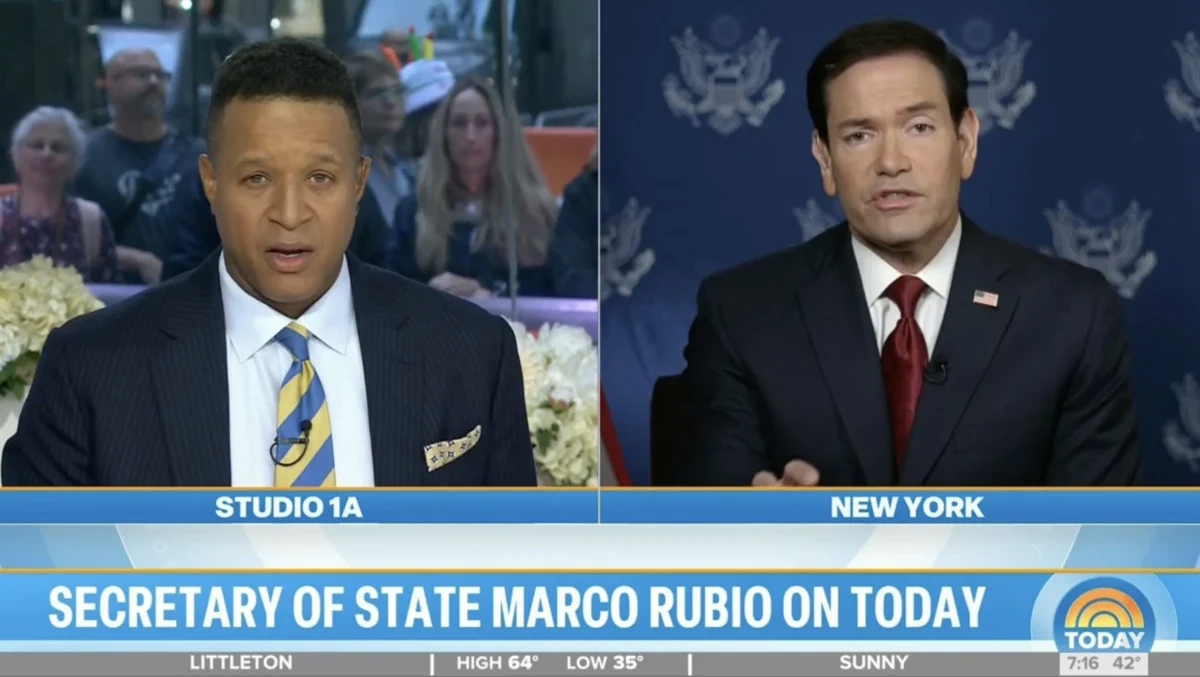
In a high-stakes interview on NBC’s "Today" show, Secretary of State Marco Rubio provided a staunch defense of the Trump administration’s decision to restrict access for several major news organizations, arguing that the President is within his rights to manage the physical workspace of the White House. The interview, conducted by co-host Craig Melvin, highlighted the deepening divide between the executive branch and the mainstream media, as Rubio asserted that he "can’t blame" President Donald Trump for the move. The Secretary of State specifically targeted the editorial tone of certain outlets, suggesting that their coverage of international conflicts, particularly regarding Iran, often appears to be at odds with American national interests.
The confrontation centered on the administration’s recent decision to bar reporters from CNN, MS NOW, and Politico from participating in White House briefings and utilizing the designated workspace within the West Wing. During the animated exchange, Rubio and Melvin clashed over the terminology used to describe the restrictions. While Melvin characterized the move as a "ban," Rubio insisted that the term was inaccurate, framing the issue as a matter of logistical access rather than a total prohibition on the outlets’ ability to report.
The Semantic Debate Over Media Access
The core of the disagreement during the NBC interview revolved around the definition of a "ban." When asked by Melvin if it was appropriate for media outlets to be banned because the President disliked their coverage, Rubio immediately pushed back. He argued that the administration was not "closing" the outlets or preventing them from broadcasting. "We’re not closing CNN," Rubio stated, adding that the administration was not deploying law enforcement to "kick down the doors" of MSNBC or "unplug it from the grid."
Instead, Rubio framed the decision as a management of the President’s personal workspace. He argued that the President feels strongly about not having individuals working within his immediate vicinity whom he perceives as being fundamentally biased against his administration. According to Rubio, the First Amendment does not grant news organizations a specific right to a desk or a permanent physical presence inside the White House. "They can cover the White House, they just can’t have a desk there," Rubio told Melvin, attempting to draw a distinction between the right to report and the privilege of being "embedded" in the building.
Melvin, however, countered that the practical effect of removing credentials and workspace access is indeed a ban from the premises where government business is conducted. The exchange underscored a fundamental disagreement over the nature of White House press credentials—whether they are a constitutionally protected necessity for a free press or a discretionary courtesy extended by the executive branch.
Geopolitical Rhetoric and the Iran Connection
A significant portion of Rubio’s justification for the administration’s actions was rooted in foreign policy. The Secretary of State expressed profound dissatisfaction with how mainstream outlets have reported on the ongoing conflict and tensions with Iran. Rubio claimed that some American news coverage sounds as if the reporters are "rooting for Iran," highlighting a perceived trend where the media validates statements from Iranian officials while skepticism is directed toward American representatives.
"I watch a lot of American news coverage, and it sounds, in some cases for example, like they’re rooting for Iran," Rubio said. He argued that the media’s tendency to "highlight anything Iran says in their public statements as true" while "downplaying everything American officials say as wrong" has contributed to the President’s frustration. This rhetoric aligns with the administration’s broader narrative that the press is not merely a neutral observer but an active participant in political and geopolitical opposition.
By linking the press ban to national security and foreign policy reporting, Rubio shifted the focus from domestic political grievances to the broader implications of how American media portrays the nation’s interests abroad. This line of reasoning suggests that the administration views certain reporting not just as "fake news," but as a potential threat to the efficacy of U.S. foreign policy.
Chronology of the Press Escalation
The current standoff is the result of a rapid series of escalations between the Trump administration and the press corps. The timeline of the recent restrictions reveals a deliberate strategy to marginalize specific outlets:
- Friday: The White House officially informs CNN, MS NOW, and Politico that their reporters will no longer be permitted to attend press gaggles or utilize the press workspace in the West Wing.
- Monday: The administration doubles down by removing CNN from its scheduled rotation for the television press pool. The pool is a critical system where one network provides footage and reporting for all other networks, ensuring coverage when space is limited. Stripping an outlet of this duty is seen as a significant disruption of the established media ecosystem.
- Tuesday Morning: Secretary of State Marco Rubio appears on "Today" to defend the move. Simultaneously, it is revealed that the three affected outlets have filed a joint lawsuit against the White House.
- Tuesday Afternoon: President Trump defends the ban on Truth Social, describing the "fake news" media as a "cancer" and a "threat to our National Security" that must be stopped.
The removal of CNN from the TV pool duty was particularly noted by media historians as a departure from long-standing norms. The pool system is designed to be non-partisan and administrative, managed largely by the networks themselves in coordination with the White House Correspondents’ Association (WHCA). By intervening in this process, the administration has signaled a willingness to dismantle the traditional structures that facilitate media access.
The Legal Challenge: Viewpoint Discrimination
In response to the administration’s actions, CNN, MS NOW, and Politico have initiated legal proceedings, filing a lawsuit that alleges a "brazen" violation of the First and Fifth Amendments. The lawsuit argues that the ban constitutes "viewpoint discrimination," a legal concept where the government penalizes an individual or organization based on the specific opinions or perspectives they express.
Legal experts point to several precedents that may influence the outcome of this case. In the 1977 case Sherrill v. Knight, the U.S. Court of Appeals for the D.C. Circuit ruled that the White House cannot arbitrarily deny press credentials. The court established that the White House must have "narrowly drawn" and "compelling" reasons for denying access, and it must provide the affected journalists with due process, including a written explanation and an opportunity to appeal.
The news organizations argue that the President’s own statements on social media provide evidence that the ban is retaliatory. On Truth Social, Trump wrote that the "fake news is corrupt and totally out of control," and described his actions as an "assault" on media outlets he deems untrustworthy. The plaintiffs contend that these statements prove the restrictions are based on the content of their reporting rather than legitimate security or logistical concerns.
Historical Context of Press-Executive Tensions
While friction between the presidency and the press is a constant in American history, the current level of hostility is viewed by many as unprecedented. Historically, administrations have used various tactics to manage the media, from the "selective leaking" favored by the Kennedy administration to the "off-the-record" briefings used by the Obama administration. However, the wholesale removal of access for multiple major outlets based on their editorial stance marks a significant shift.
During the first Trump administration, similar conflicts occurred, most notably when the White House revoked the press pass of CNN’s Jim Acosta in 2018. In that instance, a federal judge ordered the restoration of his credentials, citing a lack of due process. The current legal battle is expected to be more complex, as it involves multiple outlets and a broader argument regarding the administration’s right to control its internal environment.
The White House Correspondents’ Association has issued statements condemning the move, emphasizing that the "pool" and the briefing room belong to the public, as they are the primary conduits through which the American people receive information about their government.
Broader Implications for Media and Democracy
The defense offered by Marco Rubio and the subsequent legal actions by the media outlets raise fundamental questions about the future of government transparency. If the executive branch successfully establishes the right to exclude journalists based on the "honesty" or "tone" of their coverage, it could fundamentally alter the role of the White House press corps.
Critics of the administration’s move argue that it creates a "chilling effect," where journalists may feel pressured to temper their reporting to maintain access. Conversely, supporters of the President, like Rubio, argue that the media has become an "opposition party" and that the President should not be forced to provide a platform to those he believes are working to undermine his agenda.
From a national security perspective, Rubio’s comments regarding Iran suggest that the administration sees a direct link between media narratives and the country’s standing on the world stage. By framing the press ban as a response to "rooting for" a foreign adversary, the administration is positioning its media strategy as a component of its broader "America First" policy.
As the lawsuit moves through the federal court system, the outcome will likely define the legal boundaries of press access for decades to come. For now, the "Today" show interview serves as a stark reminder of the breakdown in communication between the State Department and the fourth estate, as the administration continues to challenge the traditional norms that have governed White House reporting for nearly a century.


 Yuyun Lusiyani
 Ana Megawati
 Joko Widodo
 Eva Lovia
 Pevita Pearce