
 Jia Lissa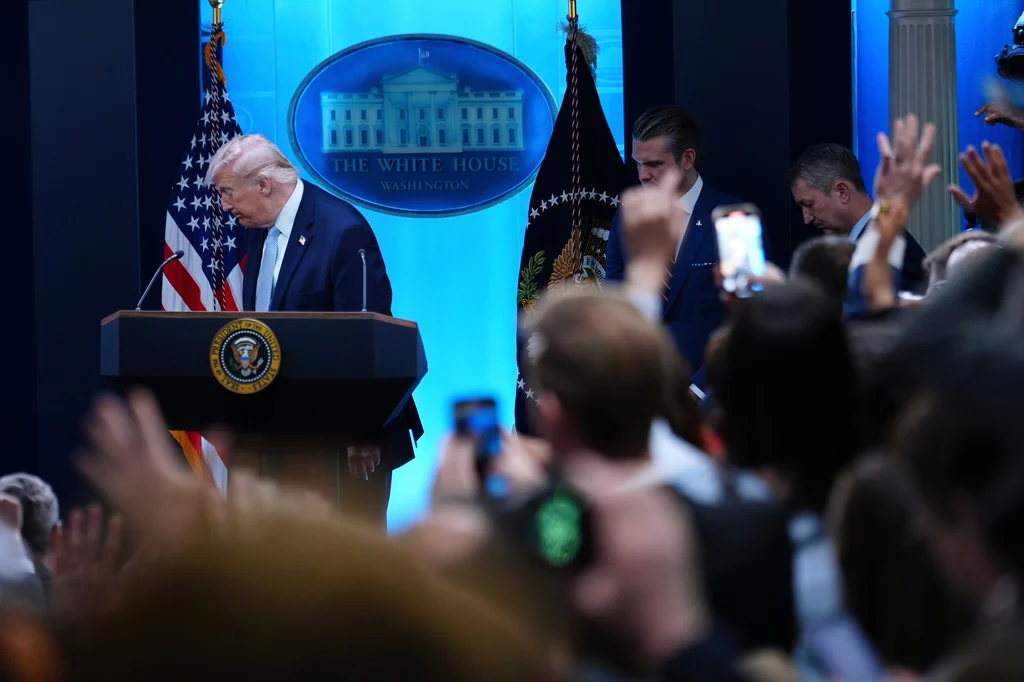
The ban on legacy outlets follows a period of heightened friction between the executive branch and the Fourth Estate. While the administration frames the move as a restructuring of media access, critics and First Amendment advocates view it as an unprecedented assault on press freedom. Despite the outcry, the administration has signaled no intention of reversing its policy, even as it continues to bypass traditional media channels in favor of direct-to-consumer social media platforms. This shift has forced news organizations to reconsider their reliance on the White House’s internal communications apparatus and, more importantly, whether the energy spent fighting for access would be better utilized in the field.
Chronology of the Media Standoff
The current crisis did not emerge in a vacuum. It is the culmination of a decade-long erosion of the traditional norms governing White House-media relations.
In early 2024, the administration began reducing the frequency of on-the-record press briefings, often replacing them with informal "pool sprays" where the President answers shouted questions over the noise of Marine One. By mid-2025, the role of the White House Press Secretary had been effectively minimized, with the office remaining vacant for several months as the administration transitioned to a model of communication led by Steven Cheung, the Communications Director.
The situation intensified in August 2026, when the White House announced that specific "legacy" outlets would no longer be issued "hard passes." The administration cited a "failure to provide objective coverage" as the rationale for the ban. In response, several other news organizations, including those not affected by the ban, initiated a partial boycott of White House events to show solidarity.
A pivotal moment occurred during a recent meeting at Gracie Mansion between President Donald Trump and Zohran Mamdani. During a brief window where the media ban was temporarily relaxed for the event, reporters focused their inquiries on the ban itself rather than pressing policy issues such as the ongoing conflict in Iran or the surge in domestic gas prices. This interaction highlighted the "recursive loop" of modern political journalism, where the media’s lack of access often becomes a larger story than the administration’s actual governance.
Data and the Evolving Landscape of Media Trust
The debate over White House access is occurring against a backdrop of declining public trust in traditional news institutions. According to 2025 data from the Pew Research Center, only 32% of Americans report having a "great deal" or "fair amount" of confidence in the media to report the news fully, accurately, and fairly. This represents a historic low, down from 54% in the early 2000s.
Furthermore, the "access-based" model of journalism is increasingly scrutinized for its return on investment. Analysis of White House press briefings over the last three administrations shows a marked decrease in "news-breaking" moments. In the current cycle, nearly 85% of major policy announcements—including tariff adjustments, executive orders on cryptocurrency, and diplomatic shifts—have been made via Truth Social or other direct digital platforms before being communicated to the press corps.
Industry analysts point out that while news organizations spend millions of dollars annually to maintain a presence in the White House briefing room, the most significant investigative stories of the last two years have originated from outside that room. For instance, the 2026 Pulitzer Prize for Investigative Reporting was awarded to a team that uncovered a multi-billion-dollar grift involving crypto-regulatory loopholes; only one of the twelve reporters on that team was assigned to the White House beat.
Official Responses and Perspectives
The administration has remained firm in its stance. Communications Director Steven Cheung has frequently stated that the White House is under no obligation to provide "special treatment" to outlets it deems hostile. "The President speaks directly to the American people every day," Cheung noted in a recent statement. "We don’t need a middleman who is more interested in their own celebrity than the facts of the administration’s successes."

Conversely, the White House Correspondents’ Association has condemned the bans as a violation of democratic principles. In a formal statement, the WHCA board argued: "A free and independent press is essential to the functioning of our republic. Denying access to journalists based on the content of their reporting is a dangerous precedent that undermines the public’s right to know."
Legal experts have also weighed in, with several organizations filing lawsuits to reinstate the banned outlets. These suits argue that while the White House has some discretion over its grounds, it cannot exercise that discretion in a "viewpoint-discriminatory" manner. While these legal battles are expected to take months or years to resolve, the immediate impact is a fractured press corps and a public that is increasingly siloed in its information consumption.
The Case for a Post-Access Journalism Model
As the standoff continues, a growing contingent of media critics suggests that the press corps should embrace this "gift" of exclusion. The argument posits that the traditional beat has become a "bariatric chamber" for the President’s ego, where the theater of the briefing room provides the administration with a platform for performative conflict while yielding little substantive information.
Historical precedents suggest that the most impactful journalism occurs when reporters move away from official centers of power.
- Watergate: Developed not through the White House press room, but through the "city desk" and deep investigative work into local police blotters and campaign finance records.
- The My Lai Massacre: Broken by independent journalist Seymour Hersh, who worked entirely outside the military’s official public affairs channels.
- The Epstein Investigation: Led by Julie K. Brown at the Miami Herald, who focused on the victims and the legal system rather than the high-profile social circles in Washington and New York.
By redirecting resources away from the "palace intrigue" of 1600 Pennsylvania Avenue, news organizations could potentially address the "affordability crisis" and other urgent domestic issues. Current critical stories that demand more attention include:
- The Immigration Crisis: Detailed reporting on the legal hurdles faced by unaccompanied minors in court.
- Rural Resource Depletion: The impact of massive data centers on water usage and local economies in the Midwest.
- Military Oversight: Investigating reports of malpractice and administrative failures within the Department of Defense.
- Economic Inequality: Analyzing the real-world effects of the "price of beef in Texas" and other commodity fluctuations that affect the average citizen’s quality of life.
Broader Impact and Long-term Implications
The long-term impact of a media-absent White House remains to be seen. On one hand, it allows the administration to control the narrative with fewer immediate challenges. On the other, it risks creating a "near-empty room" effect. If the media ceases to treat every presidential utterance as a major event, the "oxygen" required for the administration’s media-centric strategy may dissipate.
Furthermore, the "solidarity blackout" has forced a rare moment of unity among competing news organizations. If this unity could be channeled into a collective shift toward investigative, policy-focused reporting, it might serve to restore some of the public trust that has been lost.
The ultimate goal of journalism is to hold power accountable. If the current administration has made it clear that accountability will not be found within the walls of the White House, the responsibility of the press is to find it elsewhere. By abandoning the "briefing room drama" and focusing on the tangible effects of policy on the American population, the media may find that they are more essential than they ever were when they had a front-row seat.
In conclusion, the current ban, while censorious and problematic from a constitutional perspective, offers the media a chance to reinvent itself. By moving from a model of "access" to a model of "evidence," the press corps can move past the whining of the briefing room and return to the fundamental work of reporting. The strength of the free press lies not in its invitation to the table, but in its ability to report on what is happening in the rest of the house.


 Yuyun Lusiyani
 Ana Megawati
 Joko Widodo
 Eva Lovia
 Pevita Pearce