
 Eva Lovia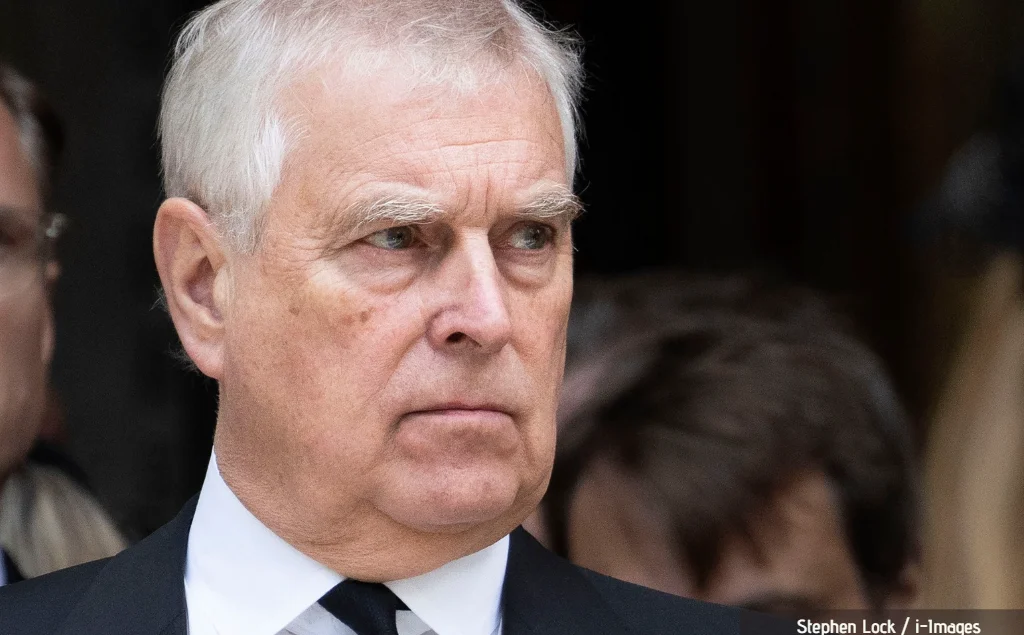
Buckingham Palace has long striven to delineate a clear boundary, asserting that Prince Andrew is no longer an active participant in the royal narrative. This strategy has manifested in concrete actions: the removal of public duties, the forfeiture of military titles, and the revocation of his HRH status through Letters Patent by King Charles III in 2025. His presence on the Buckingham Palace balcony has ceased, and even his title of Prince was formally rescinded by a royal decree signed by Charles III in November of the preceding year. Despite these deliberate measures to distance the former Duke of York from the institution, he continues to find his way back into public consciousness through unavoidable events.
This latest resurgence in media attention is not attributed to a voluntary interview or a candid photograph, but rather to an alleged incident near Sandringham. Prince Andrew is reportedly expected to provide evidence via video link in December concerning an incident where an individual allegedly threatened him while he was walking his dogs. While the legal system is mandated to address any criminal allegations fairly and impartially, irrespective of the individual involved, the Palace is undoubtedly facing another communications challenge it would prefer to avoid.
Background: A History of Royal Disassociation
The ongoing association of Prince Andrew with controversial figures and past legal entanglements has created a persistent communications dilemma for the Royal Household. Each legal proceeding, official document, or media report inevitably brings to the forefront a history that includes his association with convicted sex offender Jeffrey Epstein, the widely criticized Newsnight interview that preceded his stepping back from public duties, and the settlement of a civil claim brought by Virginia Giuffre. Although these specific issues are not the subject of the upcoming December court proceedings, their shadow is likely to loom large over any coverage. This enduring public reputation of Prince Andrew is a significant factor for the Palace.
The Palace’s Strategy: Silence and Distance
For several years, Buckingham Palace has maintained a remarkably consistent communication strategy: to minimize public engagement and commentary. The core objective has been to keep Prince Andrew as far removed as possible from official royal business. This approach is not driven by animosity but by strategic necessity. King Charles III has dedicated a substantial portion of his reign to cultivating a modern, streamlined monarchy, centered on a core group of working royals. Any renewed focus on Prince Andrew inevitably risks diverting attention from this central objective.
The inherent irony of the current situation is that Buckingham Palace cannot prevent Prince Andrew’s involvement as a witness in criminal proceedings. In this context, he is simply an individual participating in the justice system. No amount of meticulous public relations planning can alter this fundamental reality.
Palace Response: Strategic Silence
What Palace officials can and are expected to do is leverage their growing expertise in managing such situations: ensuring that the institution of the monarchy itself remains insulated from the narrative. Consequently, the public should anticipate no official statements or commentary from Buckingham Palace regarding this matter. The expected response is complete silence. Whether this strategy of deliberate non-engagement will prove effective remains to be seen.
The Enduring Specter of Public Opinion
The repeated instances of Prince Andrew’s involvement in public discourse have taught the Palace a difficult, albeit crucial, lesson. Even when Prince Andrew is not the direct subject of legal scrutiny, the monarchy itself often finds itself under the public’s critical examination. This recurring pattern underscores the enduring challenge the Palace faces in fully extricating itself from the fallout of his past actions and their continued reverberations.
Chronology of Key Events in Prince Andrew’s Public Disassociation
- 2019: Following the mounting public outcry and scrutiny surrounding his association with Jeffrey Epstein, Prince Andrew announced he was stepping back from public duties.
- January 2020: Prince Andrew officially relinquished his royal patronages and agreed to no longer undertake public engagements.
- February 2022: Following the filing of a civil lawsuit by Virginia Giuffre, Buckingham Palace announced that Prince Andrew would be stripped of his honorary military titles and royal patronages, and would cease to use the style "His Royal Highness" in any public capacity.
- November 2025: King Charles III officially removed Prince Andrew’s title of Prince through Letters Patent, further solidifying his removal from official royal life.
- December [Current Year]: Prince Andrew is expected to give evidence via video link in a criminal case stemming from an alleged threat made against him while walking his dogs near Sandringham.
Supporting Data and Analysis
The case highlights the complex interplay between the legal system and the public perception of the Royal Family. While the criminal justice system operates independently, the involvement of a former senior royal inevitably attracts heightened media and public interest. This is particularly true given the historical context of Prince Andrew’s public image, which has been significantly shaped by the Jeffrey Epstein scandal and the subsequent civil lawsuit.
The Palace’s strategy of silence is a calculated risk. On one hand, it prevents further entanglement and avoids amplifying the story. On the other hand, it can sometimes be interpreted as a lack of transparency or an attempt to distance the institution from uncomfortable truths. However, in this instance, where Prince Andrew is an alleged victim in a criminal matter, a more hands-off approach is likely deemed the most prudent course of action.
The economic and social impact of such events, while difficult to quantify precisely, can include damage to the monarchy’s brand and reputation. The cost of managing these situations, both in terms of public relations efforts and the potential impact on tourism and public sentiment, is substantial. Research from organizations studying royal influence has often pointed to the importance of a consistent and positive public image for the monarchy’s continued relevance and support. Any association with scandal, regardless of the individual’s current status, can erode public trust.
Broader Implications for the Monarchy
The continued prominence of Prince Andrew in public news cycles, even in peripheral roles, poses an ongoing challenge to King Charles III’s vision of a modern, focused monarchy. The King’s efforts to streamline the institution and concentrate on a smaller group of active working royals are designed to enhance efficiency and public engagement. Each instance that draws attention back to Prince Andrew, regardless of the specific circumstances, risks diluting this message and reigniting public debate about the monarchy’s past and its future.
The Palace’s reliance on strategic silence is a testament to the delicate balance they must strike. They aim to protect the institution from the reputational damage associated with Prince Andrew’s past while acknowledging his status as a private citizen subject to the law. The success of this strategy will ultimately be judged by the public’s perception and the media’s continued focus on the broader implications of the Royal Family’s involvement in such events. The enduring lesson for Buckingham Palace remains that with Prince Andrew, even when he is not the central figure in legal proceedings, the monarchy frequently finds itself under the intense scrutiny of public opinion.



 Yuyun Lusiyani
 Joko Widodo
 Pevita Pearce
 admin
admin
 Lina Irawan