
 Eva Lovia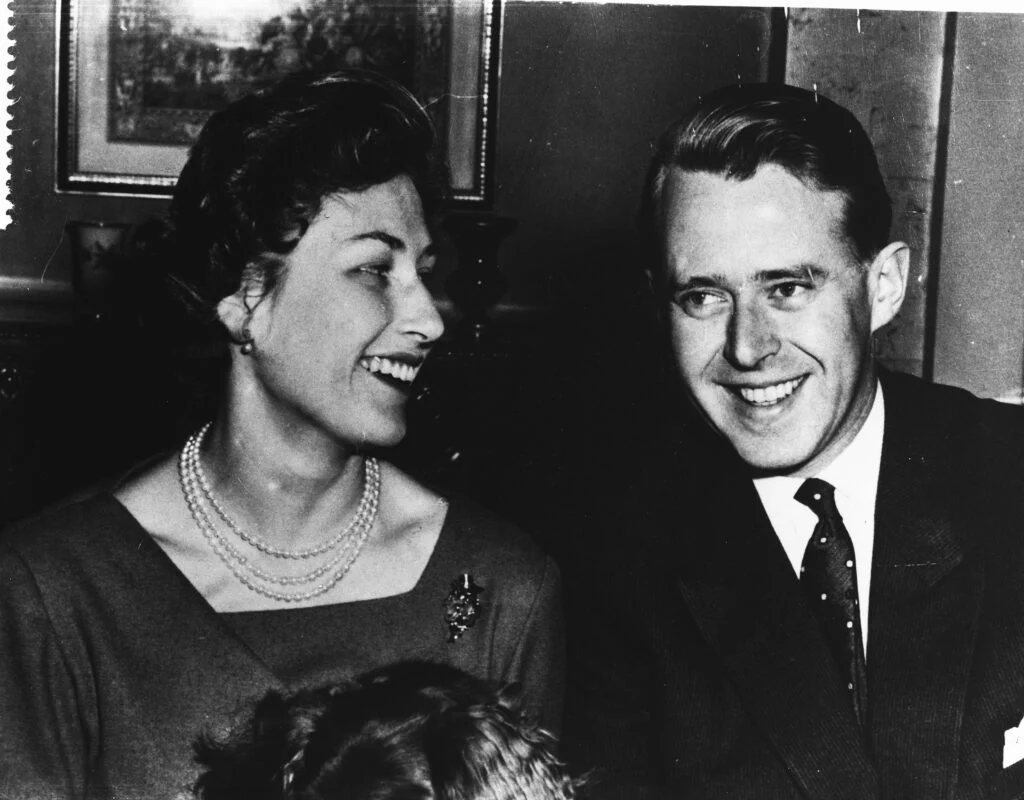
The passing of Princess Astrid Maud Ingeborg of Norway on September 11th, at the venerable age of 94, marks the end of an era for the Norwegian Royal Family and a poignant reminder of a life lived with both personal conviction and unwavering duty. While her death was announced with customary solemnity, it also casts a spotlight on a pivotal moment in her remarkable life: her 1961 marriage to Johan Martin Ferner. This union, far from the gilded spectacles often associated with royal weddings, was a deeply personal and, at the time, controversial affair that nevertheless signaled a profound shift in the evolution of royal protocol and romantic choice throughout the 20th century. King Haakon VIII, in his tribute, rightly remembered her as a woman unafraid to forge her own path, a sentiment that resonates powerfully when considering the circumstances of her celebrated marriage.
A Princess Thrust into the Limelight
Born in 1932, Princess Astrid Maud Ingeborg was the second daughter of King Olav V and Crown Princess Martha of Sweden. Her early life was shaped by profound personal loss and evolving familial responsibilities. The untimely death of her mother in 1954, even before her father’s accession to the throne, left a significant void. Compounding this, her elder sister, Princess Ragnhild, chose to marry outside royal circles and relocate to South America in 1953. These events, occurring as Princess Astrid came of age, naturally positioned her to assume the role of the de facto First Lady of Norway. This meant she was frequently by her father’s side at official engagements, a visible and graceful representative of the monarchy during a period of national rebuilding and evolving social norms following World War II.
The weight of this public role was considerable, and it became even more complex when Princess Astrid fell in love. Her heart was captured by Johan Martin Ferner, a man who possessed a keen business acumen and a distinguished sporting pedigree as an Olympian. However, their union presented a significant departure from established royal tradition. Ferner, while respected, did not possess the royal lineage deemed requisite for a consort to a princess of Astrid’s standing. More controversially, in the context of the mid-20th century, he was a divorced man. This fact alone presented a considerable hurdle within the more conservative circles of European royalty and the church.
Navigating the Labyrinth of Royal Approval
King Olav V, while a modern monarch for his time, was nonetheless bound by tradition and the expectations of his position. The path to his blessing for the marriage was undoubtedly one fraught with careful consideration and perhaps internal debate. Ultimately, he granted his consent, a crucial first step. However, the greater challenge lay in securing the necessary ecclesiastical approval. The prevailing attitudes within the Church of Norway regarding remarriage, particularly for someone marrying into the royal family, meant that finding a minister willing to officiate proved to be a significant obstacle.
The Bishop of Oslo, the highest ecclesiastical authority in the capital, reportedly refused to sanction the marriage. Similarly, the local minister at the Church of Asker, a parish close to Princess Astrid’s childhood home, also declined. This ecclesiastical resistance forced the couple to seek an alternative. It was the Bishop of Nidaros, the historical and spiritual heart of Norway, who eventually stepped forward, providing the crucial ecclesiastical endorsement. This decision allowed the wedding to proceed, albeit under a cloud of official uncertainty.
A Quiet Ceremony, A Resounding Statement
In light of the challenges, Princess Astrid and Johan Martin Ferner made a deliberate choice to keep their wedding ceremony a private and understated affair. The chosen venue was the Church at Asker, a location imbued with personal significance for the princess. The date was set for January 12th, 1961. The modest size of the church, with a capacity of around 200 guests, reflected the intimate nature of the occasion. While members of European royalty were present, signaling their support and acknowledging the significance of the union, there were no state representatives, a clear indication of the unofficial nature of the event.
Princess Astrid’s bridal attire was a testament to her personal style and the understated elegance that would define her public persona. She eschewed the ostentatious displays often associated with royal weddings. Instead, she chose a winter-white ensemble. Her gown, crafted from delicate point d’esprit fabric, featured a full skirt adorned with intricate rows of silver embroidery. Notably, there was no tiara. Her tulle veil was held in place by a garland of flowers, a charming and romantic touch. The absence of a traditional royal train further emphasized the ceremony’s departure from grander precedents.
Perhaps the most significant symbolic act of the day occurred at the altar. As Princess Astrid walked into the church, she did so as an HRH (Her Royal Highness). However, upon emerging as a married woman, she transitioned to the title of Princess Astrid, Mrs. Ferner. This relinquishing of the "HRH" prefix, while retaining her princely title, was a profound statement. It signified a conscious decision to embrace a more personal identity within her marriage, one that acknowledged her new status as a wife and mother while still honoring her royal heritage. This act, more than any other, marked her as a trailblazer, subtly redefining the boundaries of royal prerogative.
A Continued Role of Influence and Dedication
Despite the personal sacrifice in terms of formal title, Princess Astrid’s transition to Mrs. Ferner did not diminish her importance within the Norwegian Royal Family. With her elder sister residing abroad and her younger brother, Crown Prince Harald, still unmarried, the role of First Lady remained a crucial one. Princess Astrid continued to fulfill these duties with grace and dedication, accompanying her father to numerous significant national and international events. Her presence provided stability and continuity for the monarchy during a period of transition.
Even after Crown Prince Harald’s marriage to Sonja Haraldsen in 1968, which naturally shifted the primary First Lady role, Princess Astrid remained a steadfast pillar of support for her family. She continued to participate in royal engagements, offering her experience and wisdom. Her commitment to the monarchy and her family never wavered, demonstrating a deep-seated sense of duty that transcended personal title or preference.
A Legacy of Love and Service
Princess Astrid and Johan Martin Ferner built a life together and were blessed with five children: Cathrine, Benedikte, Alexander, Elisabeth, and Dag. Their marriage, though born of controversy, proved to be a lasting and loving partnership. Johan Martin Ferner passed away in 2015, leaving Princess Astrid to continue her life of service and familial engagement.
Her death on September 11th came as a shock, particularly as it occurred just two days after she attended the funeral of her brother, King Harald V, who had passed away on August 28th. This proximity of loss underscores the profound interconnectedness of the royal family and the personal grief Princess Astrid must have endured in her final days.
The Enduring Impact of a Royal Decision
Princess Astrid’s marriage to Johan Martin Ferner in 1961 was more than just a personal union; it was a quiet revolution within the confines of royal tradition. At a time when royal marriages were often dictated by political alliances and dynastic considerations, her choice to marry for love, even with the attendant complexities, demonstrated a growing emphasis on individual happiness and a willingness to challenge established norms. This precedent undoubtedly paved the way for future generations of princes and princesses across Europe to make similar choices, prioritizing personal fulfillment alongside their royal responsibilities. Her life serves as a powerful testament to the idea that tradition need not be an immutable cage, but rather a framework that can be adapted and evolved by those who embody its spirit with courage and conviction. The enduring memory of Princess Astrid is not just of a princess, but of a woman who embraced her destiny on her own terms, leaving an indelible mark on the history of the Norwegian monarchy.




 Yuyun Lusiyani
 Joko Widodo
 Pevita Pearce
 admin
admin
 Lina Irawan