
 Eva Lovia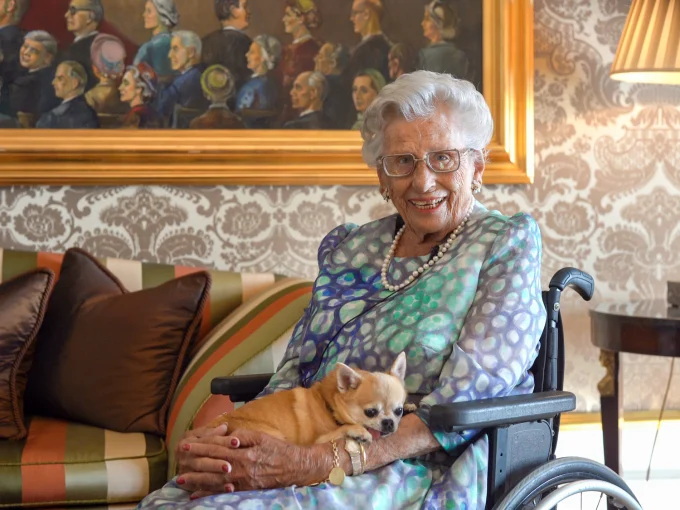
Norway mourns the passing of Her Royal Highness Princess Astrid, Mrs. Ferner, who died on September 11th, 2026, at the age of 94. Her death comes a mere two days after the solemn funeral of her younger brother, His Majesty King Harald V, who himself passed away just a fortnight prior. This profound loss marks a somber period for the Norwegian Royal Family and the nation, as it bids farewell to a beloved royal figure whose life spanned significant historical shifts and who consistently embodied grace and duty.
Princess Astrid had been unwell earlier in the year, necessitating a reduction in her public engagements. This period of ill health followed a hospital stay, and her withdrawal from public life had been a gradual process, allowing her to recuperate. Her final public appearance was a poignant one, at the funeral service for her brother, King Harald V, held at Oslo Cathedral on September 9th, 2026. In a moment that has since been widely shared, she was seen mourning at her brother’s coffin, a deeply touching image that now serves as a final, official photograph of the Princess.
The announcement of her death was made by King Haakon VIII, her nephew and successor to the throne. The news has sent ripples of sorrow across Norway, with many recalling Princess Astrid’s long and dedicated service to the nation and her unwavering commitment to the Royal Family.
A Life of Service and Royal Duty
Born Astrid Maud Ingeborg on February 12th, 1932, in Oslo, she was the second child and second daughter of Olav, then Crown Prince of Norway, and Crown Princess Märtha. Her birth placed her within a lineage of significant European royalty; she was a great-granddaughter of King Edward VII and Queen Alexandra of the United Kingdom. Her arrival was particularly noteworthy as she was only the second member of Norway’s relatively new monarchy, established in 1905, to be born on Norwegian soil.
Princess Astrid’s position in the line of succession was determined by the prevailing laws of the time. As women were not permitted to inherit the throne until reforms in the late 20th century, she was never in direct contention for the crown. The birth of her younger brother, Harald, when she was just five years old, solidified the line of succession, ensuring the continuation of the monarchy through the male line.
Exile and Education Amidst War
The formative years of Princess Astrid’s life were profoundly shaped by the tumultuous events of World War II. Following the Nazi occupation of Norway, she, along with her mother, Crown Princess Märtha, and her siblings, Princess Ragnhild and the future King Harald V, were forced into exile in the United States. This period of displacement, spent in the relative safety of the US, instilled in her a resilience and a deep appreciation for her homeland.
The Royal Family returned to Norway in 1945, a triumphant homecoming that signaled the end of the occupation. Princess Astrid was then thirteen years old and eager to resume her education. She pursued her studies with vigor, eventually attending the prestigious University of Oxford in England. There, she delved into the fields of economics and political history, acquiring a robust intellectual foundation that would serve her well throughout her life.
Stepping into the Role of First Lady
A significant turning point in Princess Astrid’s life came with the untimely death of her mother, Crown Princess Märtha, in 1954. Three years later, her father ascended to the throne as King Olav V. With her elder sister, Princess Ragnhild, already married and living abroad, Princess Astrid found herself assuming the crucial role of the First Lady of Norway. This position demanded a high degree of public visibility and responsibility, which she embraced with characteristic grace and dignity. She became a familiar and reassuring presence at official events, representing the Royal Family and the nation with poise.
A Love Story and a Personal Choice
Despite her prominent public role, Princess Astrid’s personal life was not without its challenges and individual choices that garnered attention. In 1961, she announced her intention to marry Johan Martin Ferner, a commoner who had previously been married. While this decision presented a departure from traditional royal expectations, Princess Astrid was resolute. The couple married in January 1961 at Asker Church, a union that, while initially met with some public discussion, ultimately proved to be a strong and enduring partnership. They went on to have five children, a testament to their shared life and commitment.
Continued Dedication and Shifting Roles
Princess Astrid continued to undertake a wide array of engagements on behalf of the Norwegian monarchy. Her role as First Lady formally concluded in 1968 when her younger brother, Harald, married Sonja Haraldsen. However, this transition did not diminish Princess Astrid’s commitment. She maintained a remarkably active schedule of public duties, demonstrating an unwavering dedication to serving Norway. Even as she approached her later years, her diary remained full, and she continued her work until her passing.
Her presence was consistently vital at significant national events, including State Visits, where her experience and understanding of diplomatic protocol were invaluable. Even as the Royal Family navigated periods of public scrutiny and challenges in recent years, Princess Astrid remained a steadfast pillar of support. Her loyalty and devotion to her brother, King Harald V, were evident throughout his reign. She provided a consistent source of strength and companionship, particularly in the twilight of his life.
The profound impact of King Harald’s passing on his elder sister was palpable. In the days leading up to his funeral, her grief was openly displayed as she paid her respects at his coffin. This image captured the deep bond between the siblings and served as a poignant premonition of her own imminent departure. Her attendance at his funeral marked a final, solemn duty before she retired to her own home, likely finding solace among her family in the wake of such profound loss.
Legacy and Family
Princess Astrid is survived by her five children, who will carry forward her legacy of family devotion and public service. She also leaves behind a growing number of grandchildren and great-grandchildren, ensuring that her influence will continue to shape future generations of the Ferner family. Her life was a testament to duty, resilience, and a deep love for her country and family. Her passing, so soon after that of her brother, leaves a void in the heart of Norway, but her memory will undoubtedly endure as a symbol of grace, strength, and unwavering commitment.
Broader Impact and Royal Succession
The passing of Princess Astrid, coupled with the recent death of King Harald V, marks a significant generational shift within the Norwegian Royal Family. Her nephew, Crown Prince Haakon, now reigns as King Haakon VIII, with his son, Prince Christian, as the heir apparent. The combined loss of King Harald and Princess Astrid undoubtedly brings a sense of introspection regarding the continuity and evolution of the monarchy. Princess Astrid, as a figure who bridged generations and witnessed immense societal change, represented a living link to Norway’s past. Her consistent presence and dedication provided a sense of stability and tradition that will be deeply missed. The coming years will see the new King and Crown Prince navigating the challenges and opportunities of leading the monarchy into the future, drawing upon the enduring values that figures like Princess Astrid so clearly embodied. Her life’s work, characterized by quiet dedication and a profound sense of duty, serves as an enduring example for all Norwegians.




 Yuyun Lusiyani
 Joko Widodo
 Jia Lissa
 Pevita Pearce
 admin
admin
